• Skip to main content

DEV Carolina Timberworks

Craftsmanship. Passion. Service.

  • Home
  • Portfolio
    • Places We Live
    • Places We Work
    • Places We Play
    • Timber Frame Videos
  • Learn
    • Timber Frame Blog
    • Timber Frame Glossary
  • For Professionals
    • Architects
    • Builders
  • Owners
  • About
    • The Crew
    • Our Story
    • Our Future
    • Our Home
    • How do you guys work?
    • Carolina Timberworks Testimonials & Reviews
    • In The News
  • Contact
    • Join Our Team

Sustainability

Nature’s Carbon Fiber: Wood in a Renovo Badash 29er

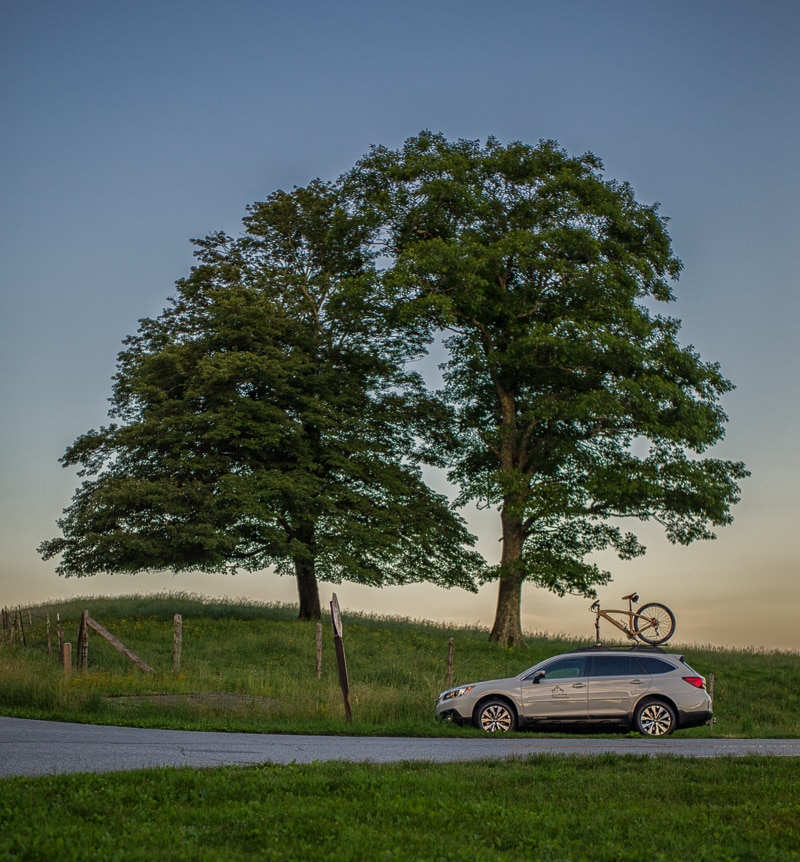
Carbon fiber wood in a Renovo wooden bicycle on the Blue Ridge Parkway

Two of the Prettiest Oak Trees on the Blue Ridge Parkway…and the Carolina Timberworks Renovo Badash 29er Carbon Fiber Wood Bike

Most people stop for a closer look when they see our wooden mountain bike, and have questions. “Is it really wood?” Yes. “Did you make it?” No. “How does it ride?” Amazing.
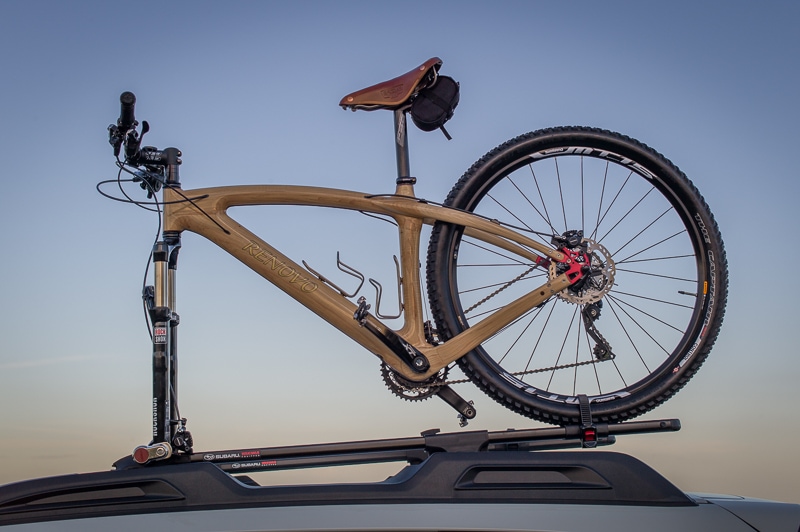
Nature's Carbon Fiber Wood Renovo Badash 29er atop Carolina Timberworks' Subaru on the Blue Ridge Parkway

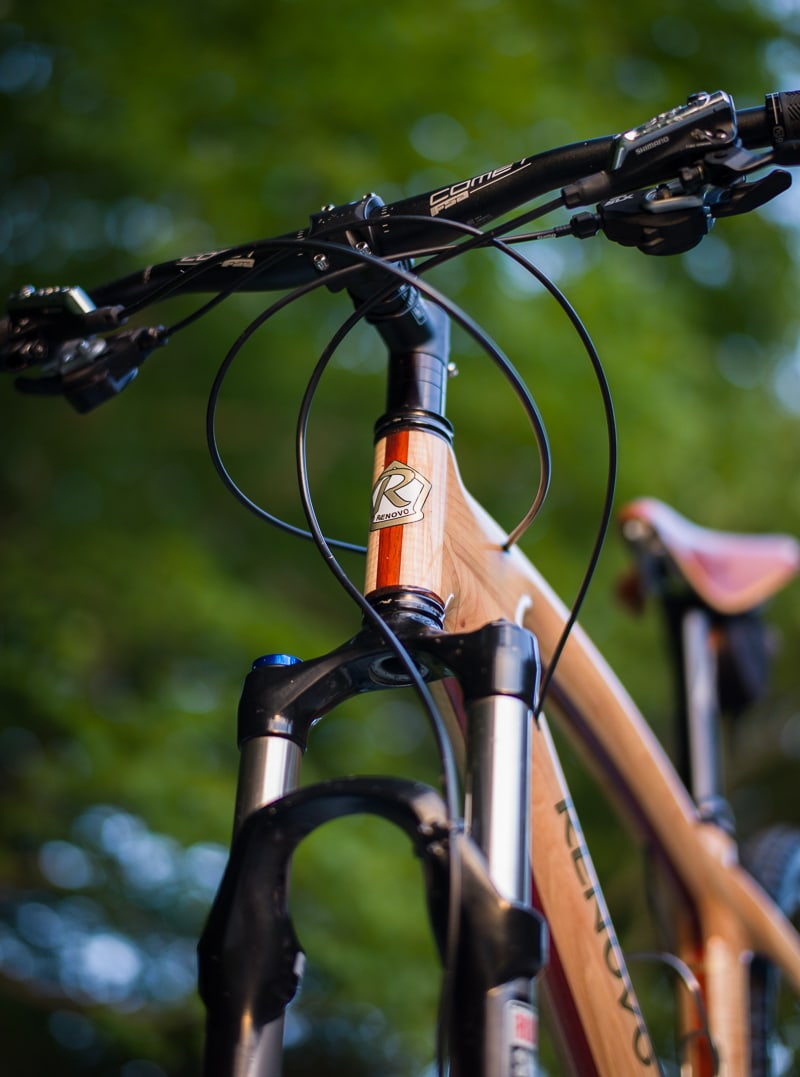
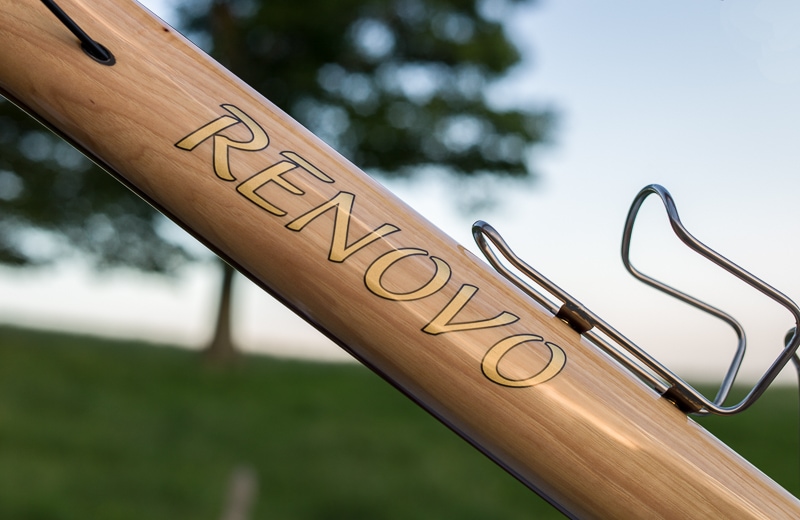
Meet the Renovo Badash 29er, hand made from Curly Hickory with Padauk accents by Renovo in Portland, Oregon.

Wood bikes, not unlike timber frames, are functional art. Both are hand made from Nature’s Carbon Fiber…wood.   Why wood?  Wood absorbs vibration better than metal or carbon fiber, and produces a smoother quieter ride.  Renovo’s owner, Ken Wheeler, is an engineer who started out designing composite aircraft.  He noticed that in many ways, wood’s properties are superior to composites and calls wood “nature’s carbon fiber”.  Wood is strong, lightweight, sustainable…and gorgeous.

Renovo Bikes

Renovo Wooden Bicycle viewed from the front

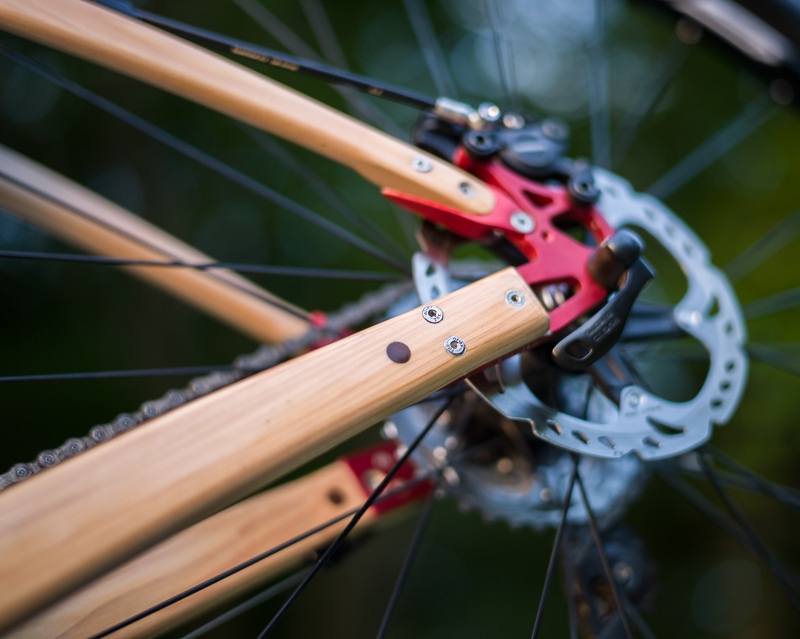
Rear disk brake on Renovo Badash 29er wooden bicycle

Brooks B29 Champion Special Leather Saddle on Carolina Timberworks' Renovo Badash 29er Wooden Bicycle

Renovo Badash 29er Wooden Bicycle

“The magnificence of the early 1900s WPA and Railroad Destination lodges captured my imagination years ago when I first visited the Ahwahnee Lodge in Yosemite. But I’ve always assumed the craftsmanship which created that art and beauty had long since disappeared. When Eric Morley of Carolina Timberworks called to order a bike, of course I had to take a look at their website. If you’re reading this, you know…their work is just stunning, giving nothing to the lodges I have always loved. So now Eric has one of my bikes and I have one of his screensavers. I need to raise prices.”    Ken Wheeler, Renovo Hardwood Bikes. 

2019 update:  Sadly, Renovo is no longer in business.  Check out https://connorcycles.com
Filed Under: Sustainability Tagged With: Sustainability

Is Timber Framing Sustainable?

Key Takeaway

Timber framing is often seen as sustainable because wood is renewable, stores carbon, and usually takes less energy to produce than steel or concrete. When the wood comes from well-managed forests and goes into long-lived buildings, the structure can lower environmental impact and stay easy to repair over time.

Wood is the world’s most environmentally-friendly building material.

Timber framing is one of the best ways to conserve our resources because post and beam homes are special places that people love, and because they are loved, they are maintained over the years, and because of that care, post and beam homes last for centuries rather than decades. Buildings that are loved get maintained, and well-maintained buildings last far longer.

Why is Timber Framing Sustainable?

  • Wood is one of our only renewable resources. Think about this sometimes overlooked and obvious fact.
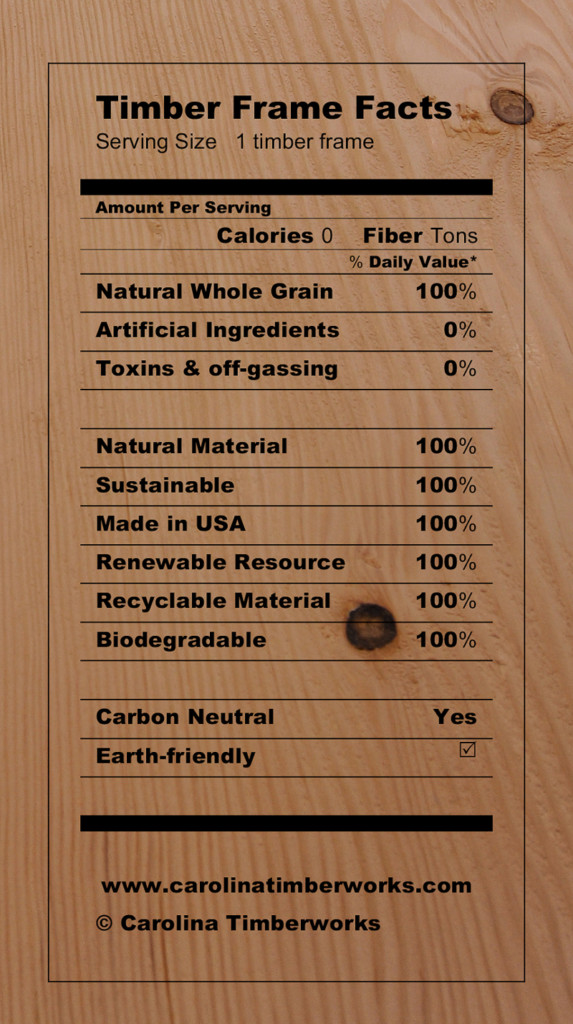
  • Timber is a natural product. Is timber sustainable? Yes! It is recyclable, biodegradable, and renewable. It does not off-gas toxins because there are none.

Timber, unlike 2×4 and 2×6 lumber, upon the end of the useful life of the timber frame or post and beam home, will be carefully dismantled and reused. Used 2x4s may one day be reused, but today are going into landfills, rotting, and releasing their stored carbon into the atmosphere.

Wood is a carbon sink. If kept dry, wood lasts indefinitely. If you leave a tree in the forest to die a natural death, it will rot and release its stored carbon. If you cut down a tree at the end of its natural life, it has spent years storing carbon and producing oxygen. If you then fabricate it into a timber frame, and keep it dry for centuries, the post and beam home is acting as a long-term carbon storage unit.

post and beam homes

Post and beam homes can, and often do, use less wood than stick-built homes. The figure we’ve heard is around 30% less. There are some caveats here, and it may seem counter-intuitive at first, but take a look at the photo (at left)  from Stewart Elliot of Riverbend Timber framing.

Timber frame homes use big timbers which come from big trees. Here’s another counter-intuitive one. Big timbers come from big trees–sometimes old-growth trees. Big trees have spent many, many years storing carbon and producing oxygen. Today’s 2x4s are manufactured from young, small trees – trees that have not lived long enough to store much carbon or to have produced much oxygen.

What we’re doing to make 2x4s cheaply is to grow genetically-engineered super fast-growing trees, cutting them down in 10 years, and then replanting. By the way, when we replant these crop trees, we’re not doing it by hand. We’re burning diesel fuel.  Is it a cheaper way to produce a 2×4?  Undoubtedly.  Is it greener wood?  We’re not so sure.

Timber frames or post and beam homes are the best use of old trees. In our view, it is far greener to cut down a majestic old-growth Douglas Fir tree at the end of its life, and fabricate it into a functional and gorgeous timber frame that will be treasured and maintained for centuries, than to cut it down and saw it into 2x4s that will eventually go into a landfill and rot, or produce window sashes which will rot, or make paper. Better to revere these fantastic trees by turning them into an architectural solution to a structural problem that is so stunning and useful that generations of people will benefit from, and take care of the building.

Some post and beam homes are built without cutting down a single tree by using reclaimed wood and beams from old buildings and factories. Adaptive reuse is growing in popularity across the timber frame and construction industries.

Is timber framing suistanable, like in this great room?
A working cattle farm on the New River, rich in flora and fauna…a marriage of modern amenities cloaked in old reclaimed wood…while inside fine art and fine craft engage in dialogue and soliloquy.

Nearby is a photograph of one of our timber homes that utilized reclaimed wood. We love putting old wood back to work, and the sustainable timber in this project is structural and is holding up the roof.

Timber framing is a darker shade of green. Having spent a week in a photovoltaic solar class, we’d note that no building material or technology is without consequences to the environment–not even solar panels. We contend that timber frame and post and beam homes, while not an environmentally perfect building solution, are demonstrably and quantifiably greener than most other conventional building methods.

Is there progress to be made? Sure! Yet, even so, timber framing, teamed with structural insulated panels and solar photovoltaic panels, is the most beautiful, green, and energy-efficient method of building we know of.

Speaking of progress, in 2022 we installed solar panels on our new building:

Timber Frame Sustainability

Curious how timber frames come together? Watch and learn

Filed Under: Blog, Sustainability Tagged With: Design, Sustainability, Timber Frame Construction

  • « Go to Previous Page
  • Page 1
  • Page 2

© 2026 Carolina Timberworks. 210 Industrial Park Way, West Jefferson, NC 28694 T: 1-828-266-9663


Our Privacy Policy