Category: Buying a Timber Frame

  • We’re Timber Frame Subcontractors Working with Timber Frame Builders

    We’re Timber Frame Subcontractors Working with Timber Frame Builders

    If you’re in the market for a timber frame builder, we’re happy you found us. But there’s something we should clarify. Technically, we aren’t builders—meaning we don’t usually fill the general contractor role.

    Put another way, we do build timber frames, but we don’t build houses. (That’s what general contractors and builders do.)
    timber frame post and beam builder

    Carolina Timberworks is a North Carolina-based timber frame subcontractor, meaning we specialize in:

    • Timber frame design
    • Timber frame engineering
    • Timber frame fabrication
    • Timber frame installation

    In short, we handle everything having to do with the timber framing portion of the building. Typically, we work for the general contractor or builder, in close collaboration with the architect and engineer(s).

    If that sounds like exactly what you need, then we’re extra happy you found us. Let us introduce ourselves, share what we do, and explain how our timber frame construction process usually works.

    What is Timber Frame Construction?

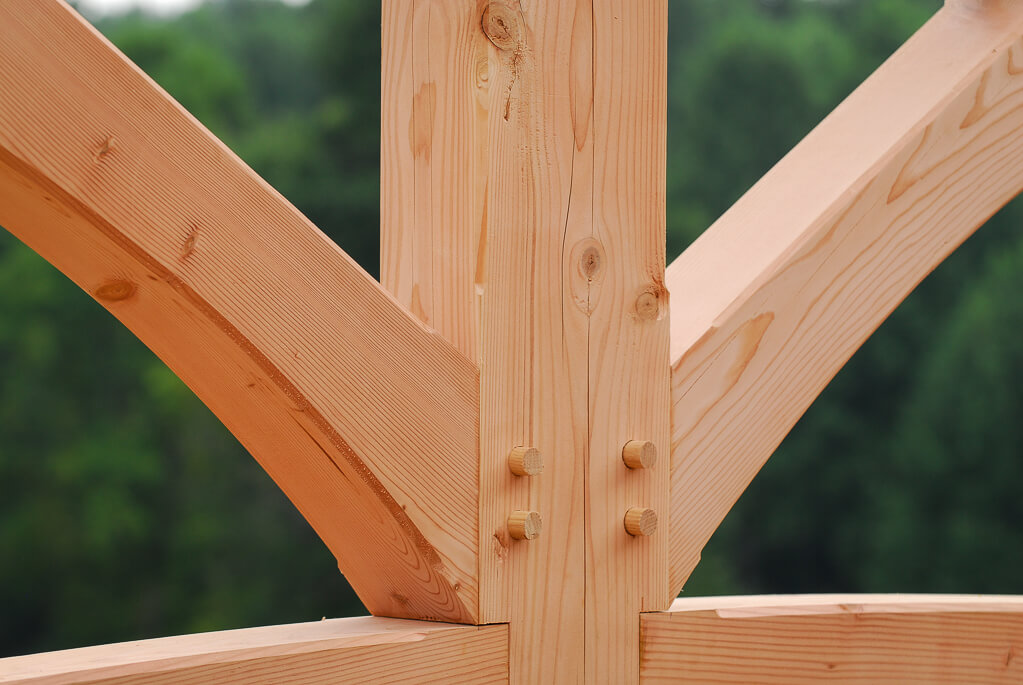
    Timber frame construction is a method that dates back nearly 2,000 years, and we think it’s still as relevant and beautiful as ever. A traditional timber frame uses wood-to-wood joinery (no nails, screws, bolts, or metal plates), creating structures that are gorgeous, sustainable, and incredibly durable.
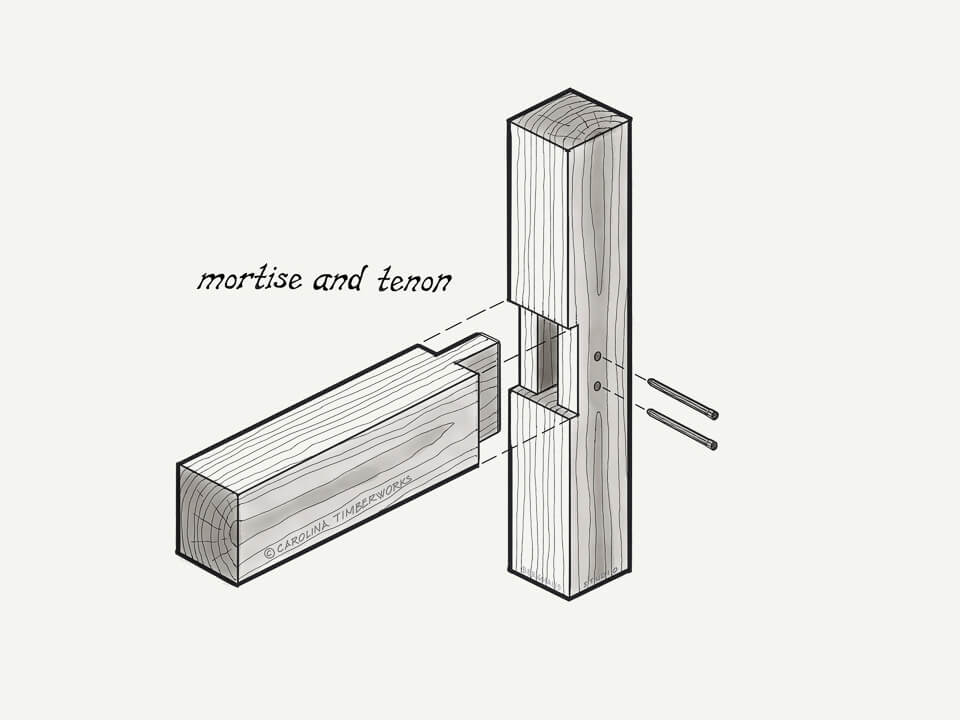
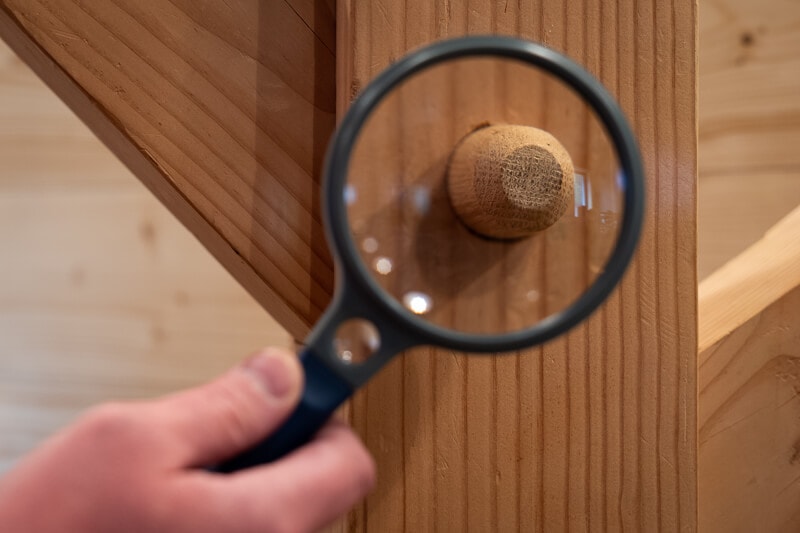
    timber frame mortise and tenon joint

    Timber frame buildings range from classic barns to custom homes to places we work. At Carolina Timberworks, we partner with architects and builders to integrate timber framing into your home construction project.

    How Do You Choose the Right Timber Frame Builder or Subcontractor?

    07:28 minutes about how the custom timber frame home building process works

    Finding the right builder or timber frame subcontractor isn’t always easy. Some companies are cost-efficient but less than great with communication. Others get behind schedule or lack clarity about their scope of work.

    After 20+ years in business, we’ve seen how easy it is to approach this role the wrong way. That’s why we provide detailed written proposals, weekly progress reports, stick to the schedule, and even clean up at the end of the day—in addition to designing, engineering, fabricating, and installing timber frame structures.

    We have plenty of tips on how to interview a timber frame company because we think it’s essential to find the right partner. (By the way, every one of these tips also applies to choosing a builder.) Here are some areas we think are most important.

    Experience

    If it’s their first rodeo, you’re putting a lot at risk. Ideally, you’ll want to find a builder or timber frame subcontractor who has been in business at least 15 years. That’s long enough for the marketplace (and recessions) to have weeded out the bad people and bad business models.

    It’s also long enough for the company to have made (and learned from) their mistakes. That’s a big part of how companies learn to build better buildings (and timber frames) while also ending up with happy customers.

    Fifteen years is enough time to have built a (good or bad) reputation, a portfolio of finished work, and a whole bunch of customers, to whom you can pose the single-most important question: What was it like to work with this company, and would you tell me some stories?

    As a general rule, the larger and more challenging the project, the more experience you’ll want. Carolina Timberworks has been in business for 20+ years and we’re looking for your challenging, difficult, big, and/or time-critical project.

    Reputation
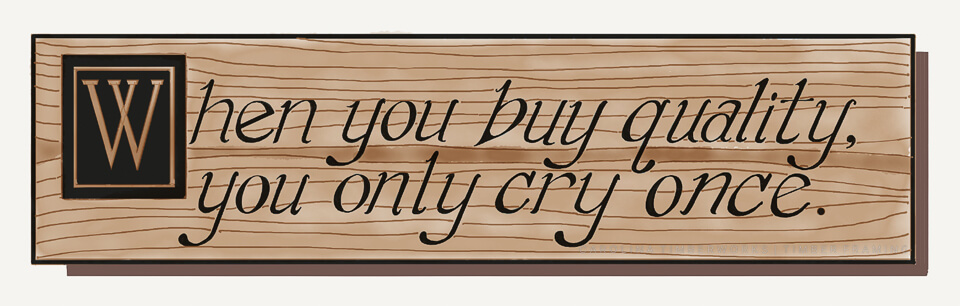
    When You Buy Quality You Only Cry Once

    Another important consideration is the builder or timber frame subcontractor’s reputation. Here’s the problem: unlike Amazon, no one in the building industry puts bad reviews on their website.

    Start by looking for testimonials on the builder or timber framer’s website. Even if they’re all positive reviews, what patterns can you see? Then, re-read them, looking for what people don’t say.

    It can be helpful to check online reviews. Naturally, the quality and content of the review matters, but if you only see five-star ratings, be skeptical.

    Every homeowner knows this, but you’d be surprised at how few actually take the time to ask for references, and then call them. You’re about to get married to a builder and his or her subcontractors for a year or more.

    Once you’ve made a choice to work with a particular builder or subcontractor, pause. Don’t fall in love just yet. Ask for references. And call them.

    Quality

    Does the builder or timber frame subcontractor’s work meet or exceed your quality expectations? Is it built to last?

    Here’s the problem.

    You’re undoubtedly very good at what you do for a living, but if you’re like most people, you don’t really know what makes one house better than another, or higher performance, or longer lasting. Or for that matter, what makes one timber frame company’s joinery better or worse than another’s.
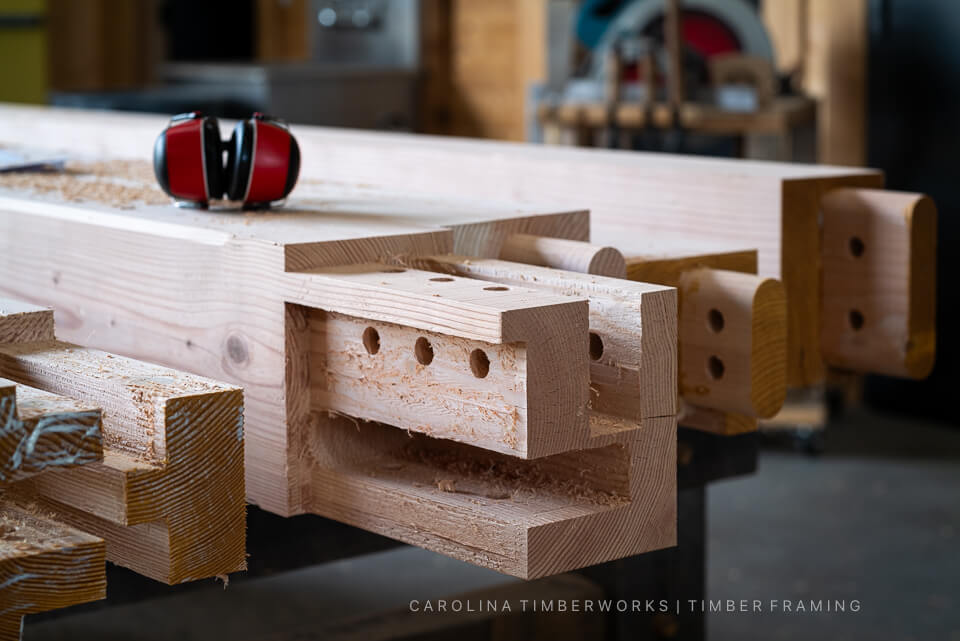
    Timber frame joinery

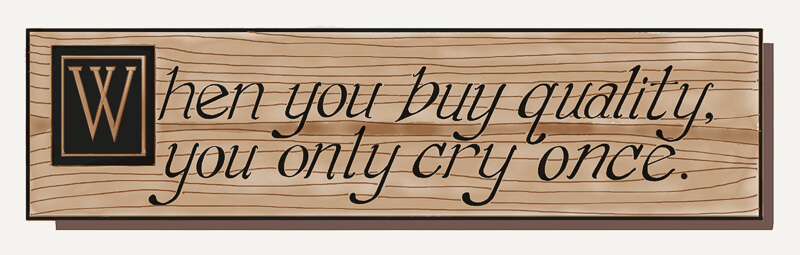
    Here at Carolina Timberworks, we live by the saying, “When you buy quality, you only cry once.” We’re committed to delivering a quality timber frame that’s built to last for generations.

    We’re equally committed to making the process enjoyable. If you don’t think that’s important, you might want to ask someone who has been through an unenjoyable building process to tell you some stories.

    Our Timber Frame Building Process
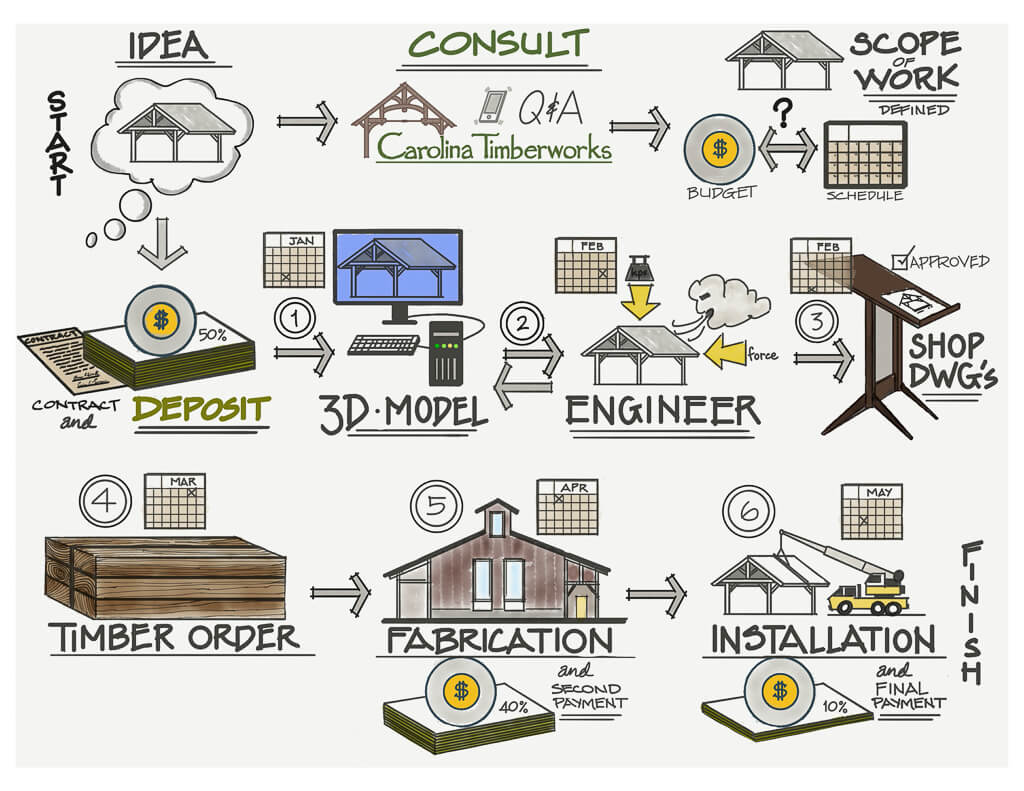
    Our timber frame process begins with a dream—yours. We start with a conversation (sometimes several) to see if we’re a good fit. If it seems like a potential partnership, we’ll move on to discussing details.

    From there, you can expect things like a scope of work, a budget, a timeline, and a contract. Then the fun really begins as we proceed with the 3D model, timber frame engineering, and shop drawings before placing the timber order.

    Interested in more details? We invite you to explore the steps of our timber frame process.

    What Cost Considerations Come with Timber Frame Construction?

    No one has ever told us “money is no object.” But over the last 20+ years we’ve had a few clients who’ve quietly explained that “time is more important than money.” But make no mistake, cost is always a part of the decision.

    In any building project, timber framed or not, four primary variables will determine the cost. They should be thoroughly understood, discussed and agreed in advance:

    • Scope
    • Cost
    • Time
    • Quality

    Once the scope is defined, you then need to pick two of the time, cost, and quality variables.
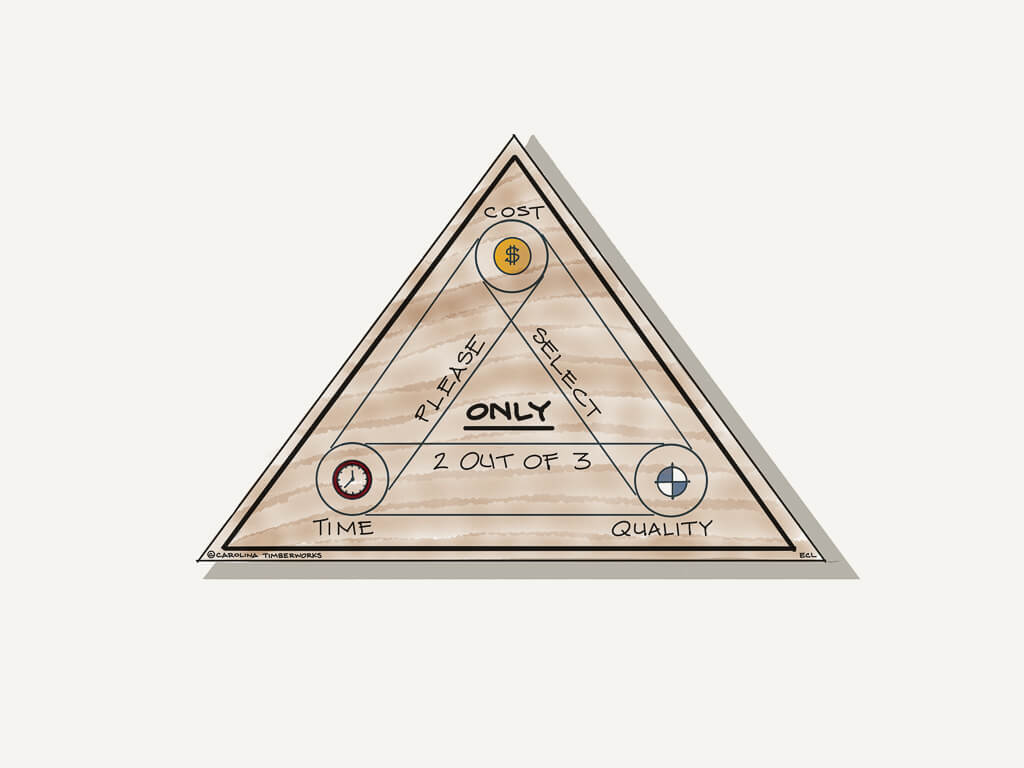
    good cheap fast triangle

    Rules of Thumb

    Rules of thumb are (almost) always wrong. They can, however, be useful in the very early phases of a construction project. For example, during the design process, you’ll be asked by your architect or design professional about your budget. He or she will then use historical data and rules of thumb to guide the resulting design.

    Once design is complete, you’ll probably ask a local builder what it costs per square foot to build in a certain neighborhood, town, or county. A good builder (or timber framer) won’t answer right away without asking you some questions about your project—i.e., do you have plans, when do you plan to build, what’s the property like, etc. But eventually you’ll probably receive an answer in the form of a range, which can be useful.

    An Estimate Is Just an Educated Guess
    apples and oranges

    Be very careful. It is impossible to accurately estimate the cost of a building project until it has been completely designed, engineered, and detailed specifications written.

    Nor is an accurate cost possible until all site-specific considerations are determined (e.g., land clearing, road, utilities, access, steepness, etc.).

    Garbage In, Garbage Out

    It’s wonderful when everything goes according to plan. However, if the plans you paid for are just pretty drawings, things might not go well. For one, it’s impossible for a builder (or timber framer) to accurately estimate the cost without good plans.

    A good set of building plans specifies in great detail exactly how your builder (and subs) will build everything—from the number and size of rebar in the footers to the species, grade and texture of your timber framed great room.

    Yes, good plans cost more. But every problem your builder encounters is going to get solved, eventually. In our experience, it’s a whole lot less expensive to figure them out in advance during the design process than it is on-site when you’re paying people to stop work and figure out what to do.
    Cost Plus vs. Fixed Price

    In the simplest terms (we’re not lawyers):

    A fixed price contract is exactly what it sounds like: the contract is for a fixed dollar amount.

    In a fixed price contract, the builder (or timber frame subcontractor) bears most of the financial risk because he or she has agreed to build the project for a fixed price.

    A cost plus contract is one where the builder adds a percentage for overhead and profit to the actual cost of building the project.

    In a cost plus contract, the owner bears most of the financial risk because the owner agrees to pay whatever the actual costs turn out to be (plus a percentage), regardless of the initial estimate (see garbage in, garbage out above).

    We’re all guilty of ignoring the following advice, but you should ask a qualified business law attorney to review the contract before you sign it. Most of the time it’s a waste of time and a relatively small amount of your money. Every once in a while, it’ll save you from a financial and emotional train wreck.

    Next Steps for Finding the Right Timber Frame Builders or Subcontractors
    Have we scared you away from building? If not, are you thinking about incorporating timber framing into your project? We’d be very happy to talk with you. Contact us and tell us a little about what you have in mind, or call us at 828-266-9663. We’re nice!
  • A Guide to Timber Frame Home Kits

    A Guide to Timber Frame Home Kits

    Key Takeaway

    A timber frame home kit is a packaged group of materials. It usually includes an engineered frame and roof decking, and sometimes wall panels, windows, doors, and finishes. It simplifies buying and planning, but the site still needs prep work, a foundation, and a builder to raise and complete the house.

    Are you considering building a timber frame home but wonder if there might be a simpler approach than designing a custom plan? At Carolina Timberworks, we get a lot of questions about timber frame home kits. While we don’t offer timber frame home kits, we want to share our expertise so if you choose to build one, you understand what the process looks like. We created a short guide that explores what you can expect from a kit and how it can streamline the building process.

    What Is a Timber Frame Home Kit?

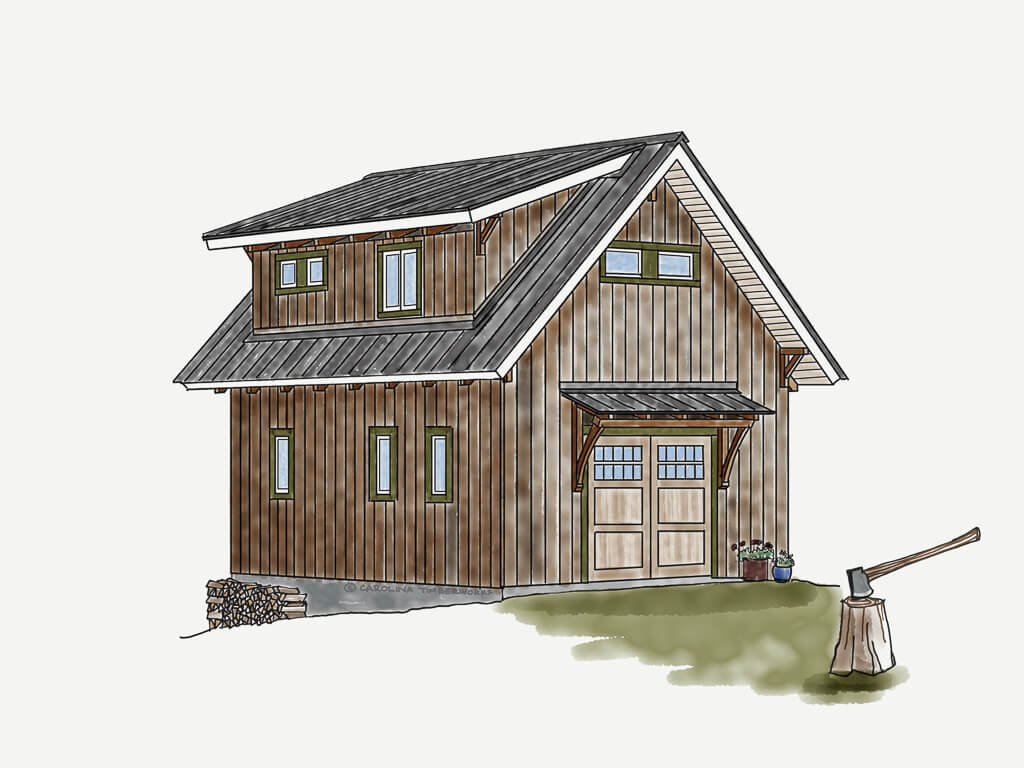
    Detached Garage Apartment or Home Offi

    A timber frame home kit is a pre-designed, pre-cut timber frame package delivered to your building site for assembly. Whether you want a simple timber frame gazebo, a timber frame barn, or a full package of materials for your new home, you can find a standardized option that includes some or most of what you or your builder needs to complete the job.

    Read More: The Experience of Living in Timber Frame Homes

    What Comes in a Timber Frame Home Kit?

    The contents of a timber frame home kit can widely vary based on the design you choose and the timber frame company you contract with. Many include these common components:

    Timber

    This is the common denominator. Timber frame home kits always include timber, but you can often choose the type. Perhaps you’d like Western Red Cedar, Eastern White Pine, or Douglas Fir?

    Most kits include joinery, posts, beams, rafters, joists, ties, and hardware—essentially everything you need to assemble the timber frame on top of your existing foundation. Everything comes pre-cut to spec, based on the plan you choose.

    Walls and Ceilings

    Home kits often include 2×6 tongue and groove loft and ceiling boards and interior 1×6 wall paneling. Some companies offer insulation and siding.

    Select kits also come with conventional framing elements like 2x wall and floor systems. In addition, your kit may include SIPs (structural insulated panels) screws, foam sealant, and other installation materials.

    Tools, Manuals, and Blueprints

    Some kits even come with timber frame tools, including chisels and sharpening stones. Most include blueprints and manuals to guide your builder or allow for DIY assembly if you’re up for a challenge.

    If you opt for a complete timber frame home kit, you can expect a few extras. For example, these kits may include interior and exterior doors, windows and trim, stairs, decks, and flooring.

    How Much Do Timber Frame Home Kits Cost?

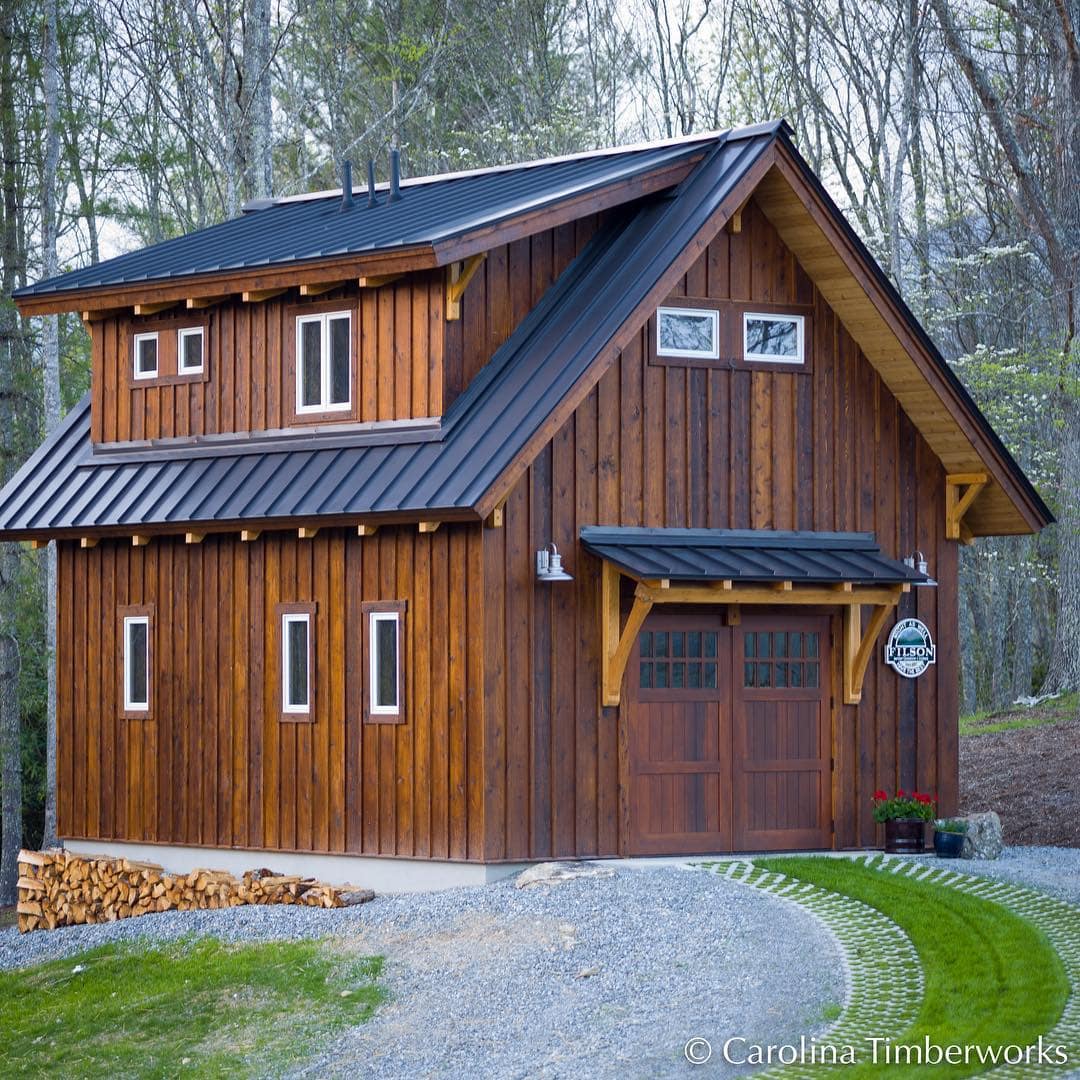
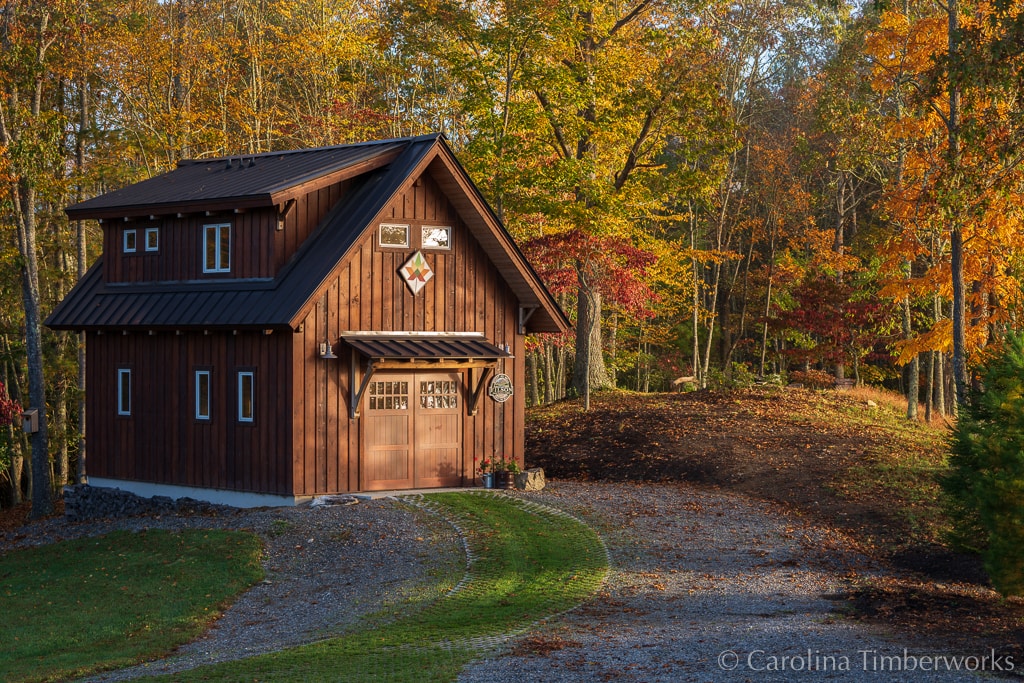
    We plan to offer this 18' x 22' Garage/Guest House as a kit (timber frame and SIPs). What should we name it?

    Just as the cost of conventional homes vary widely, so does the cost of timber frame homes. Keep in mind that the total cost to build varies significantly depending on the location of your property. As a general rule, timber frame homes cost 10% to 25% more than conventional 2×4 and 2×6 construction.  

    • Basic timber frame home kits only include the timber frame and 2×6 tongue & groove roof boards. Engineering of the timber frame and installation may, or may not, be included.
    • A more complete kit might include an engineered timber frame (and installation), 2×6 roof decking, 2×6 loft decking, and structural insulated panels (and installation). floor insulation, siding, as well as the windows and exterior doors necessary to secure the home.
    • A “complete” timber frame home kit might include everything above plus windows, doors, siding, interior wall framing, interior stairs, paneling, and trim. However, you may find that the level of quality may not meet your specifications, or your builder may be able to purchase the same for less money. In any event, a “complete” timber frame home kit is in no way complete. Among other things, it would typically not include, to name a few, site work, driveway, well and septic, foundation excavation, foundation, finished flooring, sheetrock, plumbing, electrical, HVAC, decks, roofing, painting, or appliances, etc.

    Other factors can affect the total cost. For example, the location of the building site and the type of timber you choose may increase the cost of your home kit.

    Why Build With Timber Frame Home Kits?

    Building with a kit can be a smart choice for several reasons:

    Quick Turnaround Time

    Kits are based on standardized designs and are delivered with pre-cut timber. They’re designed to be relatively easy to assemble, which means you can build them quickly, at least in theory. Ideally, you get greater control over the construction process and schedule.

    Versatile Plan Options

    Home kits typically have standard designs, but that doesn’t mean they all look exactly the same. No matter which plans you choose, you can select the wood type that best fits your budget or your aesthetic. Inside, there’s often no need for load-bearing walls, making for an open floor plan. Design and fill the space however you choose—it’s yours.

    Endless Customizations

    When you work with a timber frame company, you’re not limited to a pre-made kit. Instead, you can use a kit as a starting point for your simple timber frame house plan, customizing it by changing the size, adding extra interior space, decorative elements, or even stories.

    How to Buy a Timber Frame Home Kit

    At Carolina Timberworks, one question we frequently ask ourselves is, “What would we do if it were our home”? On the kit question, we’re torn. About 99% of all the timber frames we’ve ever built were custom-designed for the client and the client’s site.

    Over many years working with talented architects and design professionals, we’ve seen how the design process results in buildings that delight their owners and fit the land. And because they’re loved, they’ll be maintained and last generations (which is one of our definitions of sustainable timber framing).

    Whether you’re looking for a standardized house plan with a quick turnaround time or a timber frame home plan you can customize to meet your needs, a pre-designed timber frame home kit might—or might not—be a good fit.

    Overall, you probably won’t save money buying a kit. The cost of the kit isn’t nearly as important as what your total cost of the completed building on your property turns out to be. As you go through the list of included materials, you may think to yourself, “almost everything’s included, I can build this for less than I thought!” Experience teaches otherwise.

    All in all, you probably won’t save time either. Most people end up modifying the standard kit design at least a little—which means they must go through the design, drafting, and engineering process.

    If you do find the perfect kit design from the right company, before you write a check, ask to speak with their last five customers. Take the time to phone each one and ask this question:  “Knowing what you know now, would you make the same decision again?”

    Want some more good questions? Here’s an article about how to interview a timber frame company. Oh, and one more tip: don’t buy without visiting.

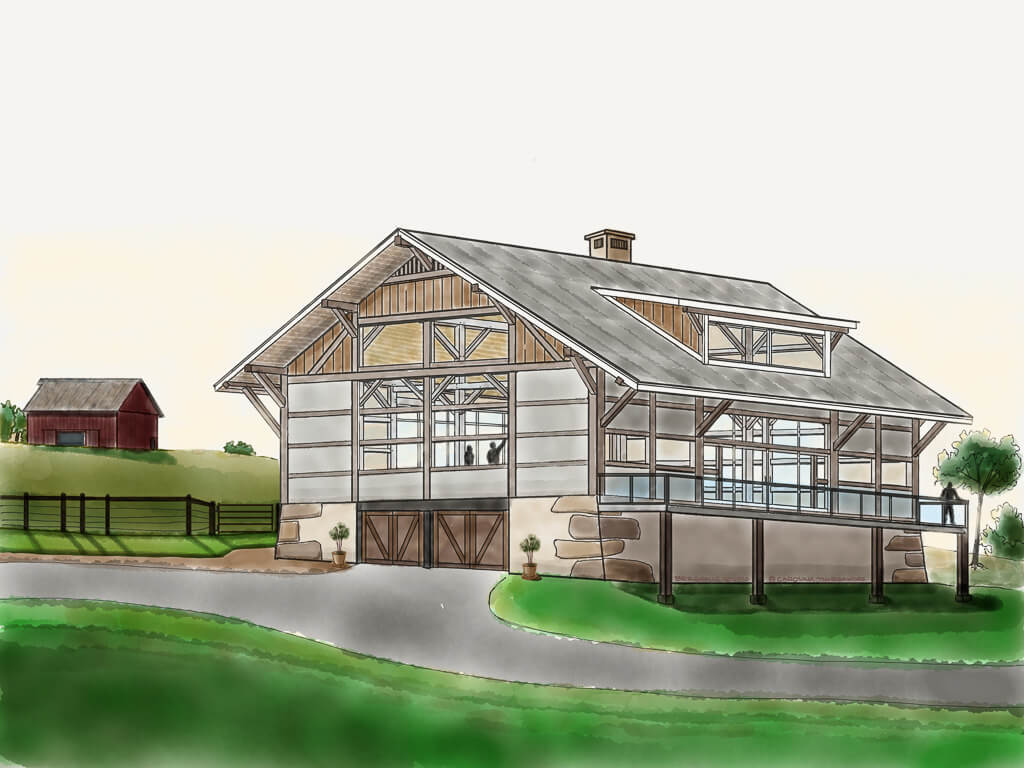
    Carolina Timberworks’ Timber Frame House Kit Concept

    During COVID-19, we came up with a few ready-to-build, high-end timber frame kits as a way to keep our people working. The idea was that our timber framers could take materials home in their trucks and cut the kits in their driveways in the event our building was shut down. While we no longer offer kits and are focused on custom timber framing projects, it’s fun to imagine all the different kits that could be created like our home concept above.

    New to timber frame kits? Visit our Timber Frame Glossary to familiarize yourself with the key terms and components involved.

  • Why You Should Visit Your Timber Frame Company

    Why You Should Visit Your Timber Frame Company

    “I hope you encourage all your future clients to come to your shop.”

    “A truly invaluable experience.”

    Visit A NC Timber Frame Company

    The trip to visit the Carolina Timberworks shop was the highlight of our project thus far! We were simply blown away by the whole experience. Even just driving to your beautiful shop through the gorgeous mountain environment with the leaves changing and stunning vistas around every corner.

    Driving up to the shop for the first time, quite impressive, understated and perfectly done to create the right environment exuding the extraordinary craftsmanship inside. First Impressions: Safe, Clean, Orderly and filled with incredibly focused craftsmen working busily inside and out shaping our beautiful South Carolina Southern Yellow Pine Beams, custom cut from trees on our land, years before. They are now coming to life right before our eyes! Every one of your customers must take advantage of a visit like to this to see this happen. To see and feel the emotion and even the smell of the wood, while these talented men create extremely difficult precision joinery. Unreal experience!

    Each one of your craftsmen were so polite and engaging as we communicated with them. Obviously very proud of what they are doing and eager to share the particular things they were doing.

    A truly invaluable experience for us all.

    How to interview a timber frame company

    Ask someone who builds timber frames for a living what makes their company different, and you’re likely to hear some variation on the theme of high quality, responsive service and talented people. Their answer may be truthful, but if you want an enjoyable experience, you haven’t learned what you need to know to make an informed decision. So how exactly do you do that? Come for a visit!

    While You’re Here

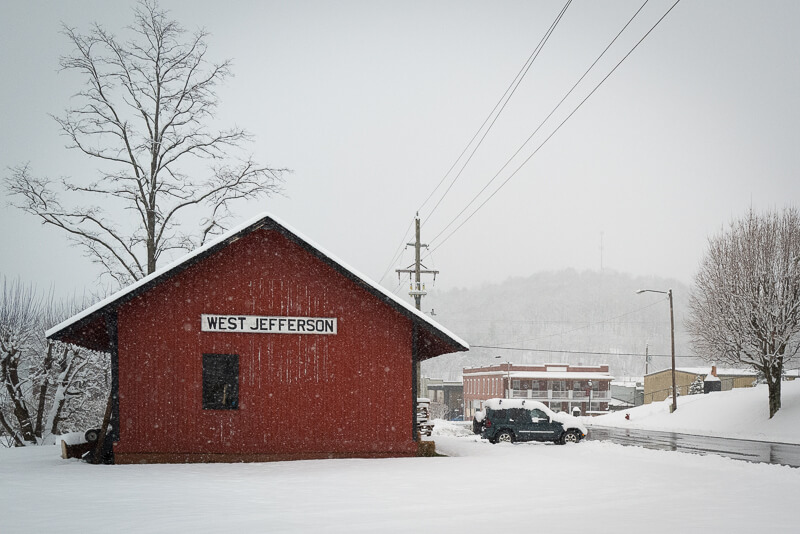
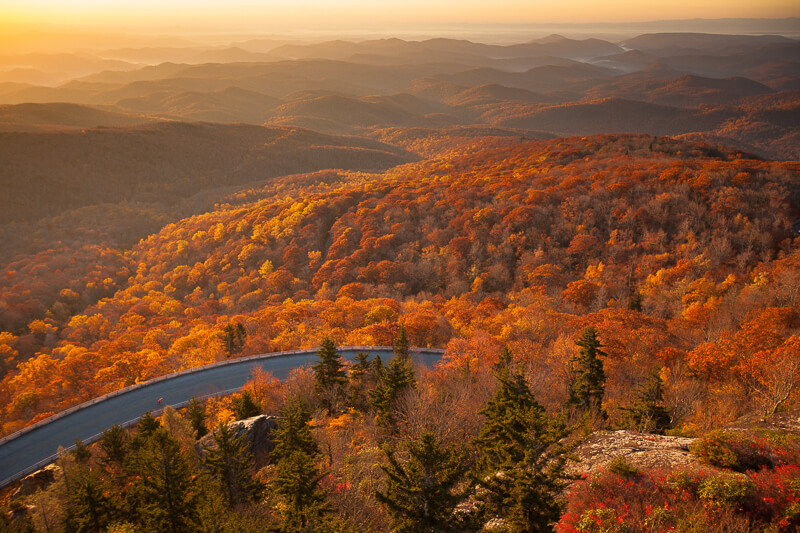
    With 5 peaks over 5,000′, 10 acres per inhabitant, a jet-capable airport, the North and South Forks of the New River, the Blue Ridge Parkway, and the picture postcard perfect town of West Jefferson, North Carolina, you’ll want to leave some extra time to explore the area.

    Downtown West Jefferson in Snow
    Blue Ridge Parkway
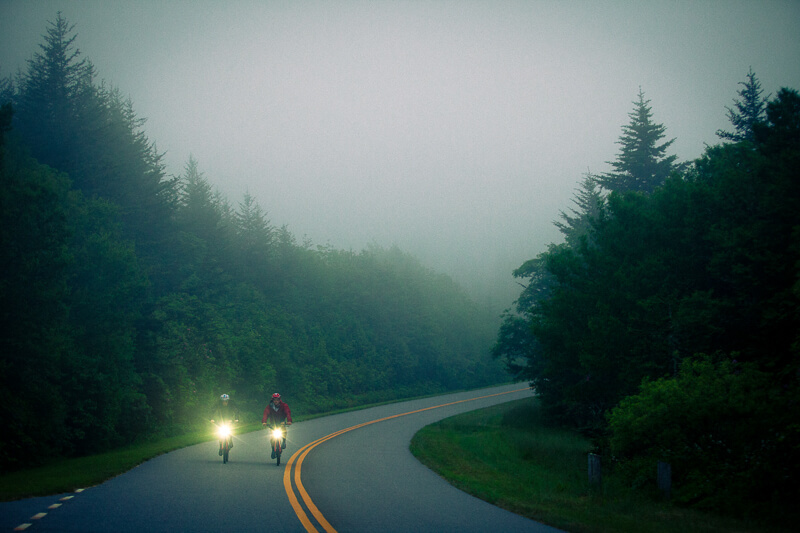
    Cycling on Blue Ridge Parkway
    Ashe County Airport
  • The Experience of Living in a Timber Frame Home

    The Experience of Living in a Timber Frame Home

    Living in a Timber Framed Home

    “I’ve never been in a timber frame home.”

    Joe Pinciotti’s words stopped me in my tracks. Hired by the Timber Framers Guild to convey what timber framing is about, Joe was trying to get up to speed on timber framing quickly. Despite knowing that timber framing represents a fraction of one percent of all construction, it had never occurred to me that most people have never actually been in timber frame homes. So this is my attempt to convey that feeling using quotes and observations I’ve jotted down over the years.

    “The primary interest in timber framing is the aesthetics and the experience of living in the structures.”

    -Jeff Arvin
    Timber Frame Home

    Timber framing is an architectural solution to a structural problem.

    NC timber frame home

    You can sense the appeal: simple lines, clear proportions, exposed construction.

    timber frame construction

    Wood is an aesthetic material. There’s a warm environment in these buildings.

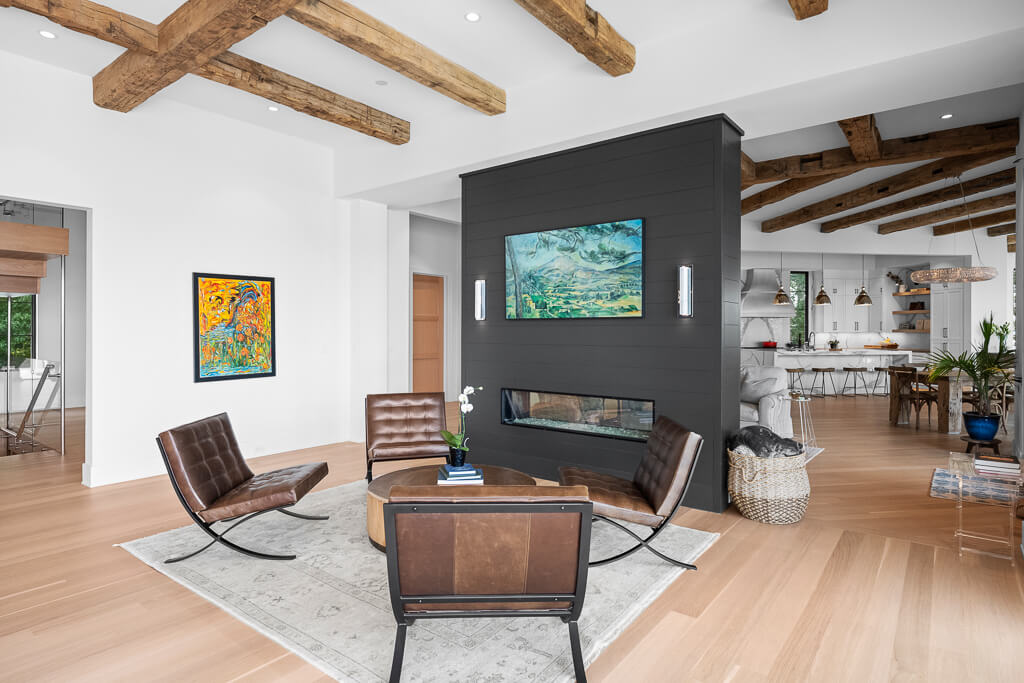
    timber frame home reclaimed beams

    It doesn’t have to be rustic.

    A take on the Modern Farmhouse with reclaimed hand hewn beams

    “True Authenticity is a lack of perfection.”

    – Architect Gil Schafer
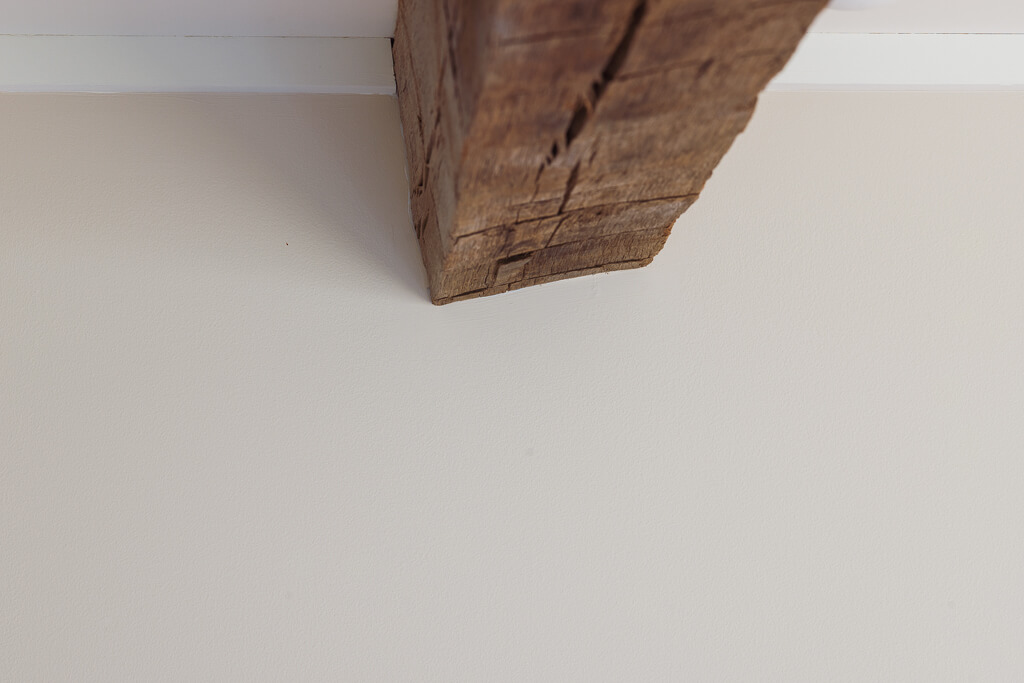
    twisted reclaimed beam

    Built Poetry.

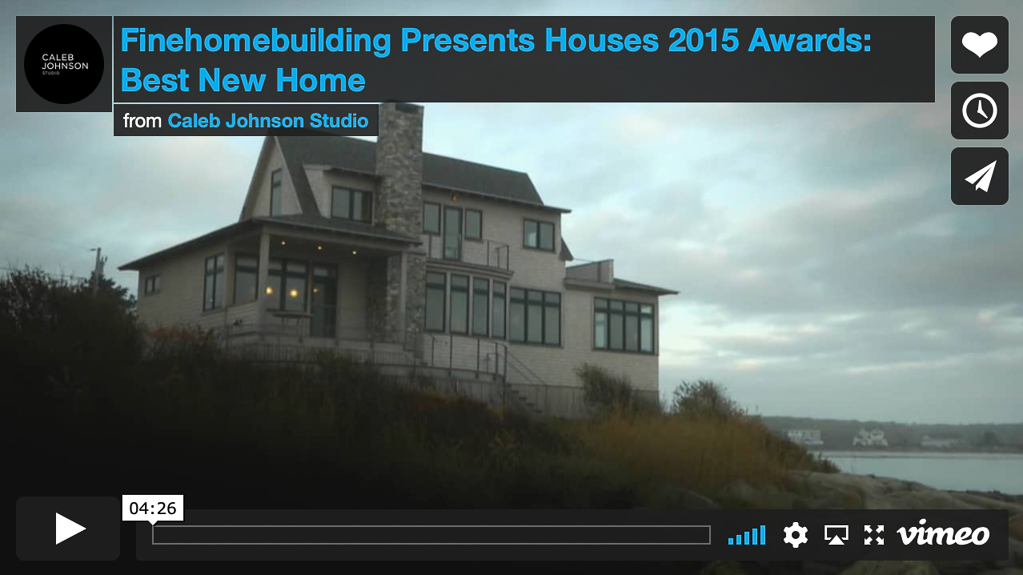
    While watching architect Caleb Johnson of Biddeford, Maine discuss the winner of the 2015 Best New Home award, we were struck by his profound insights into the benefits of timber framing and why we were drawn to, and love timber framing.

    timber frame home design winner

    “The whole structure can be understood as one thing, all the heavy timbers giving a clear integrity and visual coherence to it”.

    – Architect Sarah Susanka, author of The Not So Big House
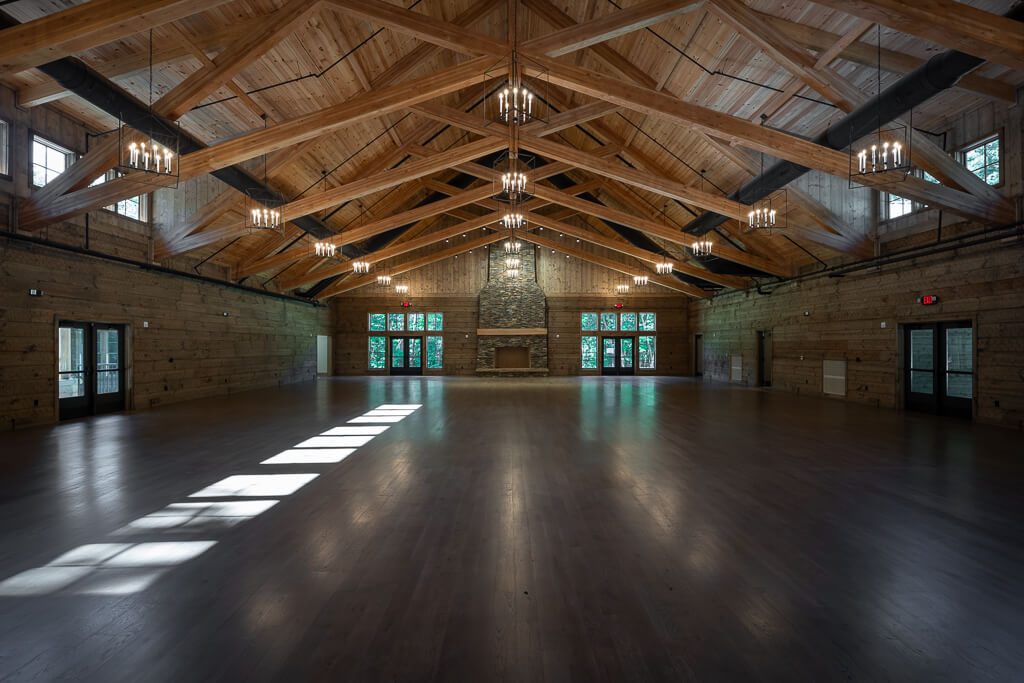
    timber frame scissor trusses

    Wood is part of the solution to climate change.

    Timber Frame Sustainability

    Ever notice that man-made materials look best the day they’re installed (and go downhill thereafter), while natural materials get better and better looking with every passing year?

    reclaimed antique heart pine

    “Buildings are a permanent record of ourselves—an effort to do something remarkable.”

    —Tedd Benson, author & founder of a timber frame company
    New Jersey Timber Frame Barn

    “Open pavilions are among the most compelling timber frames. There is no siding or interior portions to disrupt the concept’s pure architecture, engineering and craft at work”.

    —Ben Brungrabber, Ph.D., P.E. Fire Tower Engineered Timber
    virginia timber frame pavilion

    Broadly, timber framing is everything that today’s sleek, mass-produced, technology saturated culture isn’t.

    timber frame master craftsman

    “I sometimes dream in timber frame.”

    – James Lung
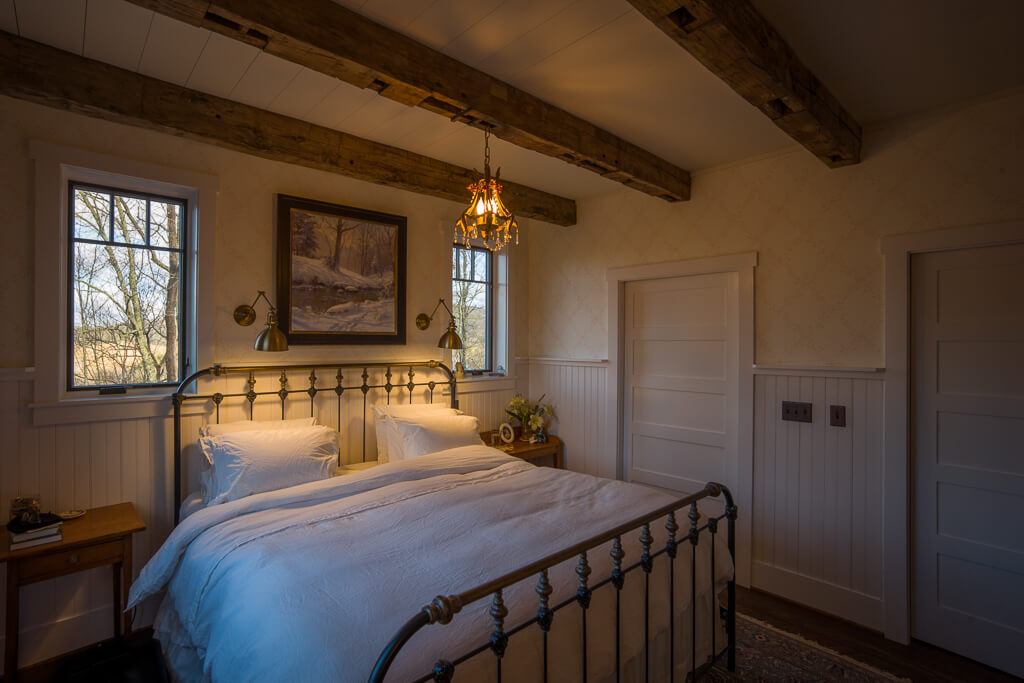
    reclaimed beams in bedroom

    We build some of the world’s best timber frames.

    modern timber frame porch

    And we’re nice.

  • Interviewing a Timber Frame Company

    Interviewing a Timber Frame Company

    Key Takeaway

    A good interview looks at skill, timing, cost control, and what it feels like to work with the crew. Open questions help more than leading ones. It also helps to check references, visit the shop, review licensing and insurance, and discuss possible risks and how disputes will be handled.

    Ask someone who builds timber frames for a living what makes their company different, and you’re likely to hear some variation on the theme of high quality, responsive service, and talented people.  

    Their answer may be truthful, but if you want to build a timber frame, you haven’t learned what you need to know to make an informed decision.  

    So, how exactly do you do that?  Ask better questions, listen carefully, and interview like a pro.   

    Here are some tips from newspaper reporters and the FBI about how to interview people (after all, they do this for a living):   

    Just like building a timber frame, start with the foundation

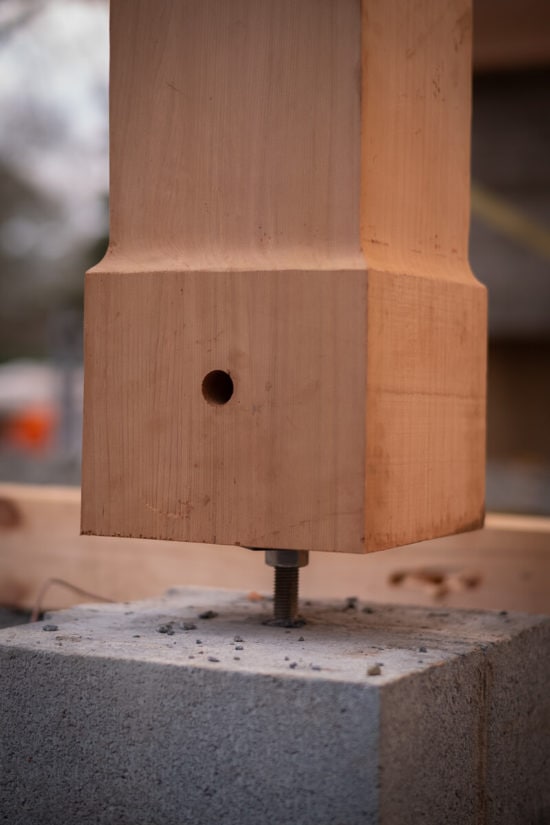
    Timber Frame Post Base Hardware

    There may be no such thing as a stupid question, but some are a lot better than others.  It can be helpful to play “let’s pretend”.  So, pretend for a moment you have a superpower—any question you ask will be answered.  What questions would you like to know the answers to? 

    As you develop your questions, start by asking yourself what you want to achieve.  For example, are you looking for a solution to a particular problem?  Are you looking to uncover something?  Are you looking for a better understanding?  Decided to build a timber frame, but trying to choose between 2 or 3 apparently equally qualified timber frame subcontractors?

    Typically, you’ll want to uncover:

    1. Can they do the work?
    2. Will they do it when you want it done?
    3. Can they do it for the investment you’re willing to make?
    4. What would it be like to work with this firm?
    5. Is this timber frame company the best fit, or not?
    6. What could possibly go wrong?

    Not familiar with some of the timber framing terms mentioned by your potential timber framer? Visit our Timber Frame Glossary for detailed explanations.

    Get comfortable asking questions

    You have a right to ask questions—you’re about to write a big check.  Furthermore, you have a responsibility to ask questions—if you don’t ask the right questions and bad things happen, you have only yourself to blame.  

    (Not everyone has to like what you ask.  You’re on safe ground as long as your intention and purpose for asking the question comes from a good place. ) 

    Visit their shop and use your powers of observation

    Building a Timber Frame Inspection

    Use the part of your brain that has evolved over tens of thousands of years to sense and observe the environment.  Do people seem to like working there? Is the phone ringing?  Do the other employees avert their eyes when you pass? Notice cigarette butts or litter as you step out of your car? Is the place generally organized or not? Tension in the air?  Do you see anyone you would be uncomfortable with in your home?

    Ask non-leading questions

    A leading question implies its own answer and subtly prompts the respondent how to answer.  You’ll learn more if you try not to give clues about how you feel or think about something.

    If you were to build a timber frame home, what wood would you choose?

                vs

    Oak shrinks a lot, correct?

    In general, ask open-ended questions

    An open-ended question is one that can’t be answered yes or no or by a limited set of possible answers. They encourage the respondent to talk thereby providing you the opportunity to learn things you wouldn’t otherwise.

    What are you most proud of about your company and why?  

                vs

    What are your company’s strengths?

    What Questions Should You Ask Your Timber Frame Company?

    Timber Frame Questions
    • What are the challenges you see in our project?
    • If we ask for references from recently completed jobs, how would that process work?  
    • Are you a member of the Timber Framers Guild? (if so, why? If not, why not?)
    • I don’t suppose your firm is currently in litigation with anyone?
    • We have to stick to our budget. How do we know the timber frame won’t end up costing more?
    • Are the people who work here employees or subcontractors?
    • Are there any outstanding tax liens or judgments against the company, or the owner(s)?
    • Have you ever had an unhappy client?  If so, would you share what happened?
    • What’s your process for handling changes?
    • What’s not included in your price?
    • How often will the business owner check in on my project?
    • How do we resolve any disagreements?
    • May I see your certificates of general liability and workers comp insurance?
    • Who would be overseeing my project? May I meet her?
    • What’s the best thing that’s happened to your company this year?
    • Is your firm licensed to do business in my state?
    • How long have you been in business? 

    According to the U.S. Bureau of Labor Statistics, about 20 percent of small businesses fail within their first year. By the end of their fifth year, roughly half of small businesses fail. After that, only about one in three small businesses get to the 10-year mark and live to tell the tale. After that, survival rates flatten out. Businesses fail in good times and bad, and to paraphrase Ernest Hemingway, it happens gradually, then suddenly.  Consider for a moment what would happen to the money you’d paid to date, were you in the middle of building a timber frame home and the timber frame manufacturer abruptly ceased operations and stopped returning your calls.

    Curious how timber frames come together? Watch and learn

  • When You Buy Quality You Only Cry Once

    When You Buy Quality You Only Cry Once

    timber frame quality
    I bought the boots pictured above 20 years ago. At the time, they seemed expensive.

    What do the old boots have to do with building?  Please bear with me.  I bought the boots pictured at right 20 years ago.  At the time, they seemed very expensive–say $200.  My Dad and I were on a fly fishing trip, and I needed a new pair of hiking boots.  I didn’t have a lot of money, (and still don’t) but I chose to buy the Italian-made boots versus a less expensive option.  Over the ensuing 20 years, I replaced the laces, and hiked a lot of miles.   Let’s calculate my cost per year as $10 ($200 / 20 years).

    Now suppose I’d bought the cheapest pair for $75, and suppose they lasted 5 years before wearing out.  My cost per year would be $15 ($75 / 5 years).

    Over 20 years, my cost for quality boots would be  $200 (plus laces).
    Over 20 years, my cost for cheap boots would be $300 (50% more expensive).

    Now, suppose we enter a period of higher than normal inflation.  If we  factor in inflation at 8.27% a year, those “cheap” boots would now cost $600 over the 20 years–three times the cost of the “expensive” choice.

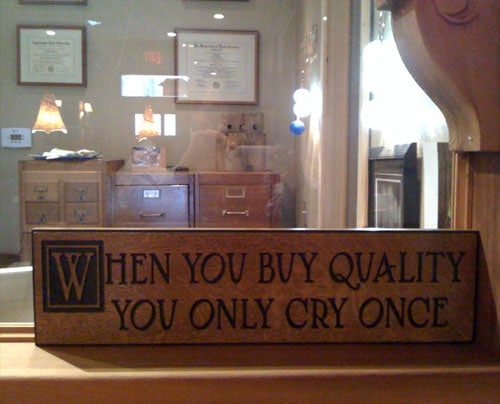
    My point is that quality is almost always less expensive in the long-run, and that initial price does not equal total cost.  Our clients know this.  They always pause, and nod their heads knowingly when they notice this plaque in our office:

    timber frame quality
    When You Buy Quality You Only Cry Once

    The Swiss have a saying,  “Build it once”.

    There’s another benefit to quality—you appreciate and enjoy your possessions more. Buy something serviceable but unremarkable, and it disappears. You simply don’t notice it any longer—like a battery powered clock on your wall. A family Grandfather clock is a different story. You appreciate it weekly—as you gently wind the mechanism and notice the 1878 date of manufacture and picture your father doing the same task every Sunday afternoon. Buy quality, and it becomes a friend, a loved possession.

    At some point after owning something of quality for many years, you’ll shake your head in disbelief that it’s lasted so long. And here’s the funny thing—you won’t be able to remember what it cost.

    This belief in quality is a big part of Sarah Susanka’s Not-So-Big-House philosophy. Design a smaller house, with higher quality design, materials & craftsmanship—to which I’d add, discipline yourself to make choices. You don’t need it all, and you’re not going to enjoy spending a big part of your life cleaning, maintaining, heating & cooling, storing, insuring and worrying about your things. Buy less things, but those you do buy, choose the best quality you can find. Choose quality over quantity and then discipline yourself to not buy or build everything you can afford. Don’t spend every dime you have or can borrow on quality. Buy only one pair of great boots, even if you can afford a second pair. Design your home so you have money left over at the end.  That way it won’t be a burden, and your children will want it (that last piece of advice comes from my Dad–an attorney who specializes in Estate Planning and Probate Law).  Follow this advice and you’ll have the time and money to experience a fuller and more meaningful life. You’ll be the one putting those boots on and going for a hike this weekend instead of the other person working Saturday and half of Sunday to make his or her mortgage payment this month.

    Design your home so you have money left over at the end.

    We hope to see changes to the way houses are built in America.  There’s a lot of talk about a “New Normal”, and we hope to see a “Return to Quality”.  Our grandparents believed in quality.  They paid more for something made in the USA, of good design and materials, and bought it once.  Their possessions are our prized antiques today.  We’re optimistic that these difficult times will indeed usher in a “New Normal” in building, and that more people will choose to build a high-quality timber frame, more energy efficient, smaller and sustainable homes–homes that will be loved, and taken care of for a hundred years or more.

    Many people believe both inflation and higher energy costs lie ahead.  Building a somewhat smaller, meticulously designed home with high quality materials and craftsmanship that is even more energy efficient than you think is required…and that doesn’t take every dollar you have…may turn out to be one of the smartest and most enjoyable investments you can make in the coming years.

    Best Regards,
    Eric Morley, Founder

    Ready to be blown away by timber framing craftsmanship? Watch now