Category: How We Work

  • How to Build a Home on an Island: Challenges, Solutions, and Lessons Learned

    How to Build a Home on an Island: Challenges, Solutions, and Lessons Learned

    Building on an Island: What You Need to Know

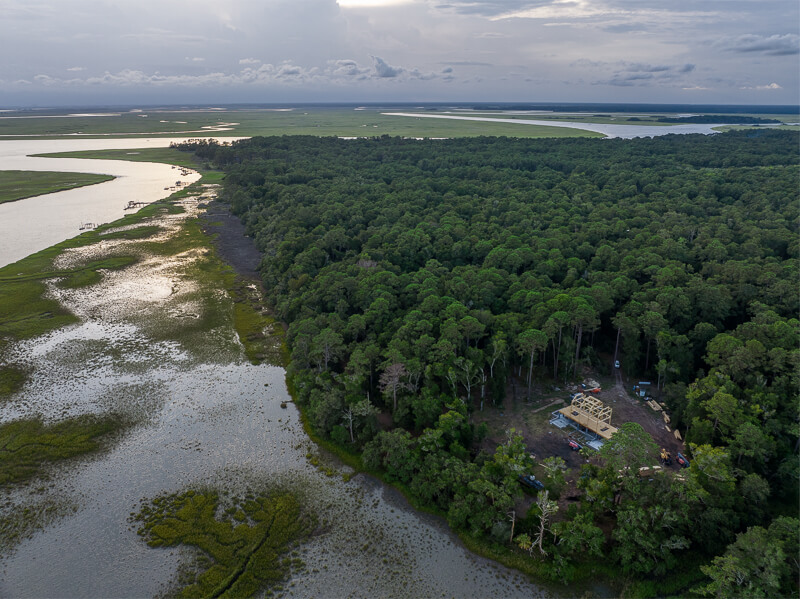
    Building a home on an island is a dream for many—but the logistics can quickly turn into a nightmare if you’re not prepared. From transporting materials by barge to dealing with unpredictable weather, island construction presents unique challenges. As a timber frame subcontractor specializing in complex builds, Carolina Timberworks recently completed an island project, and we’re sharing what we learned to help you plan your own remote build.


    Why Building on an Island is Different Than the Mainland
    At first glance, building a home on an island may seem similar to any other construction project. But in reality, every aspect—from materials to labor to scheduling—requires a different level of planning. Here’s what makes timber frame construction uniquely challenging on an island:

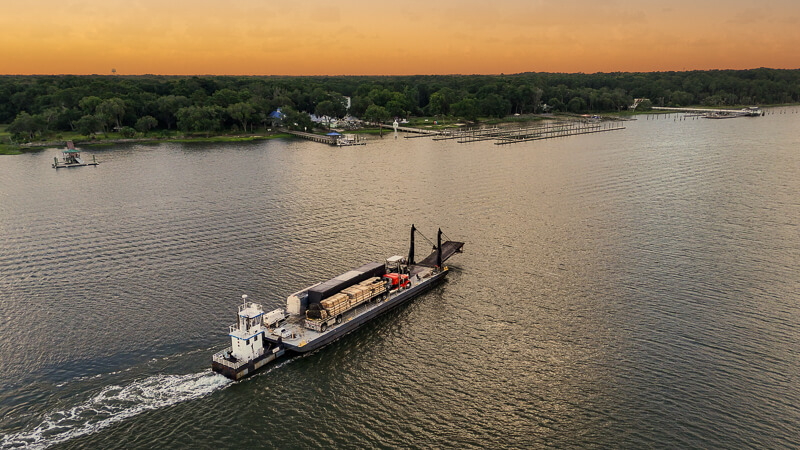
    1. Every Stick, Brick, and Person Arrives by Barge

    On the mainland, materials roll right off a truck and onto the job site. On an island? Not so much. Every single piece—timbers, nails, tools, even lunch—must be carefully staged, loaded, and ferried across the water. That means no last-minute hardware store runs, no quick resupplies, and no margin for error. The logistics resemble a military operation, requiring precision, planning, and a team that understands the stakes.

    2. Forget Something? Prepare for Costly Delays

    On a typical job site, a miscut timber or a forgotten handful of ¾” white oak pegs might cost you a day. On an island, that same mistake could set you back a week. There’s no quick trip to the supplier—every extra run across the water depends on barge schedules, tides, and availability, all of which are beyond your control. In remote construction, small problems don’t stay small for long.

    3. Rain, Tides, and Isolation Demand Next-Level Logistics

    On an island, nature calls the shots. Tides dictate when barges can run. Rain stalls work, but the crew is still on the clock. A passing storm can upend the schedule, while a broken-down barge can ripple delays across the entire project. It takes a certain mindset to thrive in conditions where predictability is a luxury.

    4. Food and Lodging: More than Just a Place to Sleep
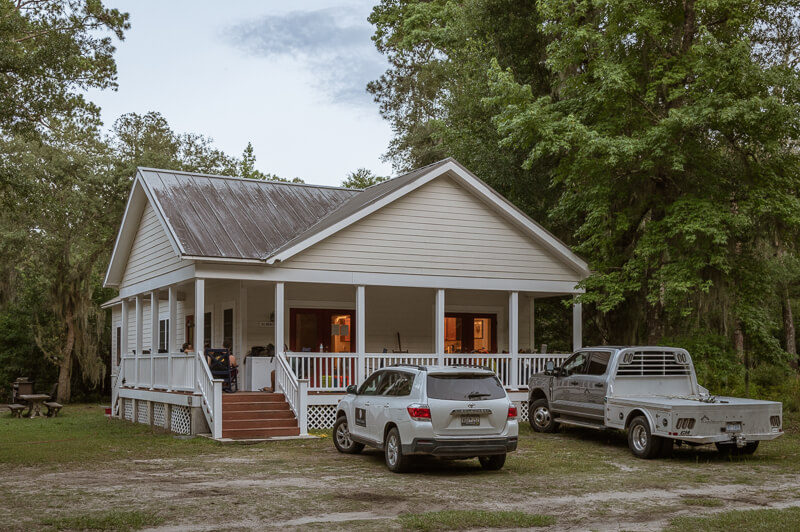
    Getting materials across the water is only part of the challenge—you also have to get the crew there and make sure they’re taken care of. Lodging is rarely luxurious, but it needs to be comfortable enough for a team working long, physically demanding days.

    And then there’s food. When the nearest grocery store is miles (and a boat ride) away, you don’t just “grab something” after work. That’s where having a crew member like Tommy makes all the difference. A former restaurant owner, he took charge of meals—wearing gloves, using a thermometer, and treating dinner prep with the same level of care and precision as a timber frame layout. One night, he put together a classic Low Country boil—shrimp, potatoes, corn, and sausage—the kind of meal that makes the challenges of building in a remote location a little more enjoyable, and a lot more memorable.


    Why Timber Frames Are Ideal for Island Homes

    1. Speed: Faster Assembly, Less Time on Site
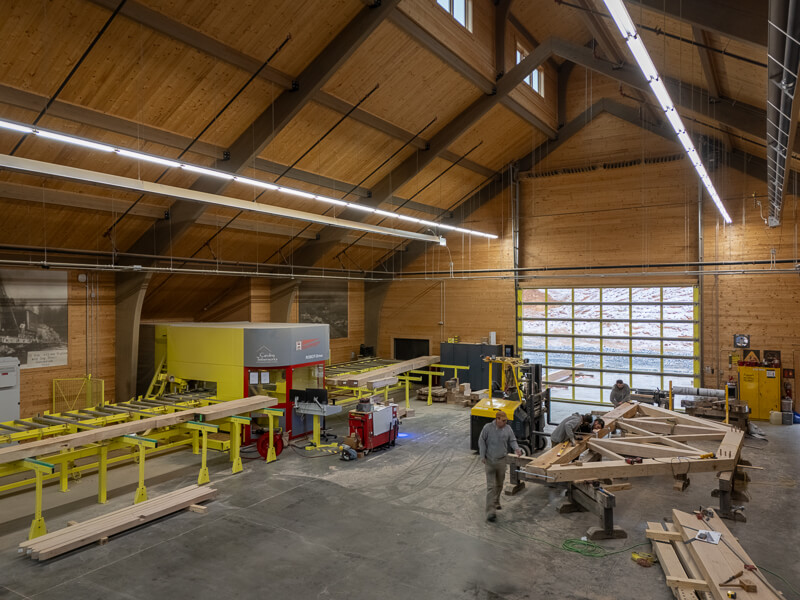
    On an island, every extra day of construction adds logistical headaches and costs. Timber framing changes the equation. Instead of cutting and fitting each piece on-site, the entire structure is precision-cut in our shop using state-of-the-art CNC machinery. When the timbers arrive, they’re ready to go—slotted together like a giant puzzle by the same crew that fabricated them. What takes months with conventional framing can often be completed in weeks, minimizing time, risk, and weather exposure.

    2. Strength: Built to Withstand Nature’s Fury
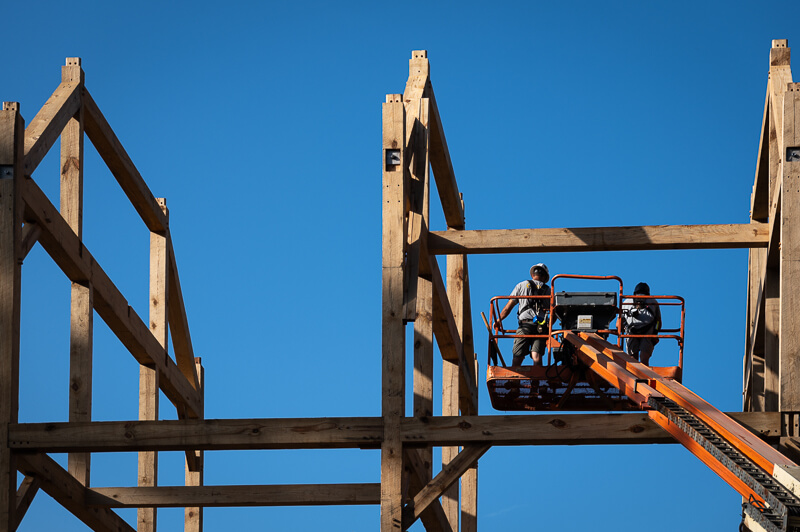
    Island homes don’t just need to be beautiful—they need to be strong. Timber frames are engineered to handle the extreme: hurricane-force winds, heavy storms, and the relentless coastal climate. The interlocking joinery and massive timbers create a structure that is as durable as it is stunning, standing firm where lighter, conventionally framed homes might flex or fail.

    3. Timelessness: Built to Last—and Loved for Generations

    Timber framing isn’t a trend—it’s a building tradition that has been relied upon for over two thousand years. Long before mass-produced lumber and steel-framed glass boxes, people built with heavy timbers because they worked. These homes don’t just stand the test of time structurally; they endure because people love them. Timber-framed homes are cherished, maintained, and restored rather than torn down for something new. Their warmth, character, and craftsmanship make them worth preserving—whether on an island or anywhere else.
    4. Less Waste, More Efficiency

    On the mainland, construction waste is an afterthought—just toss it in the dumpster and schedule a pickup. On an island, every scrap of excess material has to be barged back off, turning waste disposal into a costly logistical challenge. Because we pre-cut every timber in our shop, there’s almost zero job-site waste. Fewer cutoffs, no piles of unusable material, and no need for expensive, hard-to-schedule dumpster hauls.


    Considering Building on an Island? Here’s What to Know

    Island construction isn’t for the faint of heart, but with the right team, it’s absolutely possible. If you’re considering a timber frame home in a remote location, the most important decision you’ll make is choosing experienced professionals who understand the unique challenges involved.
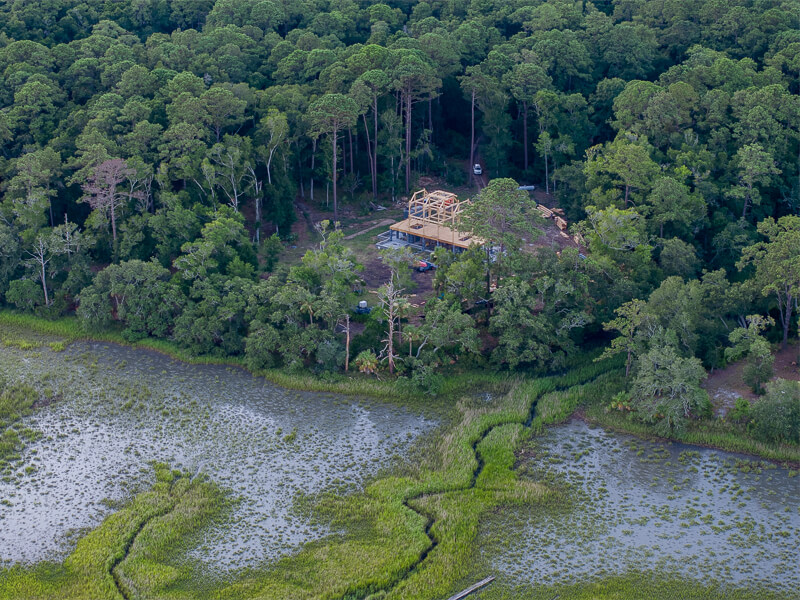
    At Carolina Timberworks, we specialize in tackling complex builds—whether on an island, in the mountains, or anywhere that demands more than just the ordinary. Want to talk about your project? Get in touch with us.


  • We’re Timber Frame Subcontractors Working with Timber Frame Builders

    We’re Timber Frame Subcontractors Working with Timber Frame Builders

    If you’re in the market for a timber frame builder, we’re happy you found us. But there’s something we should clarify. Technically, we aren’t builders—meaning we don’t usually fill the general contractor role.

    Put another way, we do build timber frames, but we don’t build houses. (That’s what general contractors and builders do.)

    timber frame post and beam builder

    Carolina Timberworks is a North Carolina-based timber frame subcontractor, meaning we specialize in:

    • Timber frame design
    • Timber frame engineering
    • Timber frame fabrication
    • Timber frame installation

    In short, we handle everything having to do with the timber framing portion of the building. Typically, we work for the general contractor or builder, in close collaboration with the architect and engineer(s).

    If that sounds like exactly what you need, then we’re extra happy you found us. Let us introduce ourselves, share what we do, and explain how our timber frame construction process usually works.

    What is Timber Frame Construction?

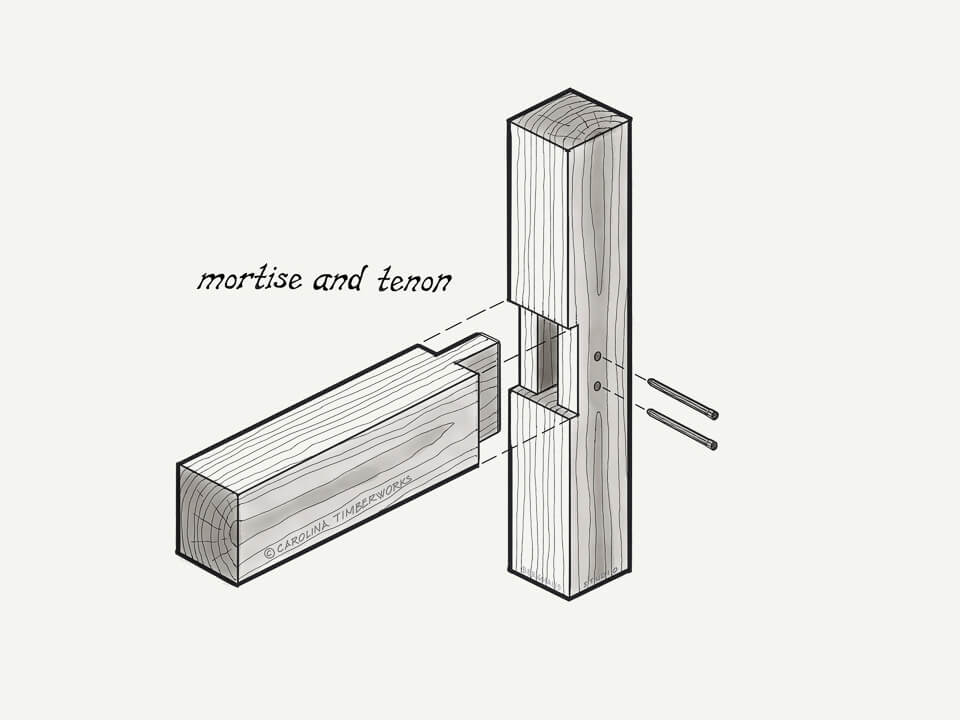
    Timber frame construction is a method that dates back nearly 2,000 years, and we think it’s still as relevant and beautiful as ever. A traditional timber frame uses wood-to-wood joinery (no nails, screws, bolts, or metal plates), creating structures that are gorgeous, sustainable, and incredibly durable.

    timber frame mortise and tenon joint

    Timber frame buildings range from classic barns to custom homes to places we work. At Carolina Timberworks, we partner with architects and builders to integrate timber framing into your home construction project.

    How Do You Choose the Right Timber Frame Builder or Subcontractor?

    07:28 minutes about how the custom timber frame home building process works

    Finding the right builder or timber frame subcontractor isn’t always easy. Some companies are cost-efficient but less than great with communication. Others get behind schedule or lack clarity about their scope of work.

    After 20+ years in business, we’ve seen how easy it is to approach this role the wrong way. That’s why we provide detailed written proposals, weekly progress reports, stick to the schedule, and even clean up at the end of the day—in addition to designing, engineering, fabricating, and installing timber frame structures.

    We have plenty of tips on how to interview a timber frame company because we think it’s essential to find the right partner. (By the way, every one of these tips also applies to choosing a builder.) Here are some areas we think are most important.

    Experience

    If it’s their first rodeo, you’re putting a lot at risk. Ideally, you’ll want to find a builder or timber frame subcontractor who has been in business at least 15 years. That’s long enough for the marketplace (and recessions) to have weeded out the bad people and bad business models.

    It’s also long enough for the company to have made (and learned from) their mistakes. That’s a big part of how companies learn to build better buildings (and timber frames) while also ending up with happy customers.

    Fifteen years is enough time to have built a (good or bad) reputation, a portfolio of finished work, and a whole bunch of customers, to whom you can pose the single-most important question: What was it like to work with this company, and would you tell me some stories?

    As a general rule, the larger and more challenging the project, the more experience you’ll want. Carolina Timberworks has been in business for 20+ years and we’re looking for your challenging, difficult, big, and/or time-critical project.

    Reputation

    When You Buy Quality You Only Cry Once

    Another important consideration is the builder or timber frame subcontractor’s reputation. Here’s the problem: unlike Amazon, no one in the building industry puts bad reviews on their website.

    Start by looking for testimonials on the builder or timber framer’s website. Even if they’re all positive reviews, what patterns can you see? Then, re-read them, looking for what people don’t say.

    It can be helpful to check online reviews. Naturally, the quality and content of the review matters, but if you only see five-star ratings, be skeptical.

    Every homeowner knows this, but you’d be surprised at how few actually take the time to ask for references, and then call them. You’re about to get married to a builder and his or her subcontractors for a year or more.

    Once you’ve made a choice to work with a particular builder or subcontractor, pause. Don’t fall in love just yet. Ask for references. And call them.

    Quality

    Does the builder or timber frame subcontractor’s work meet or exceed your quality expectations? Is it built to last?

    Here’s the problem.

    You’re undoubtedly very good at what you do for a living, but if you’re like most people, you don’t really know what makes one house better than another, or higher performance, or longer lasting. Or for that matter, what makes one timber frame company’s joinery better or worse than another’s.

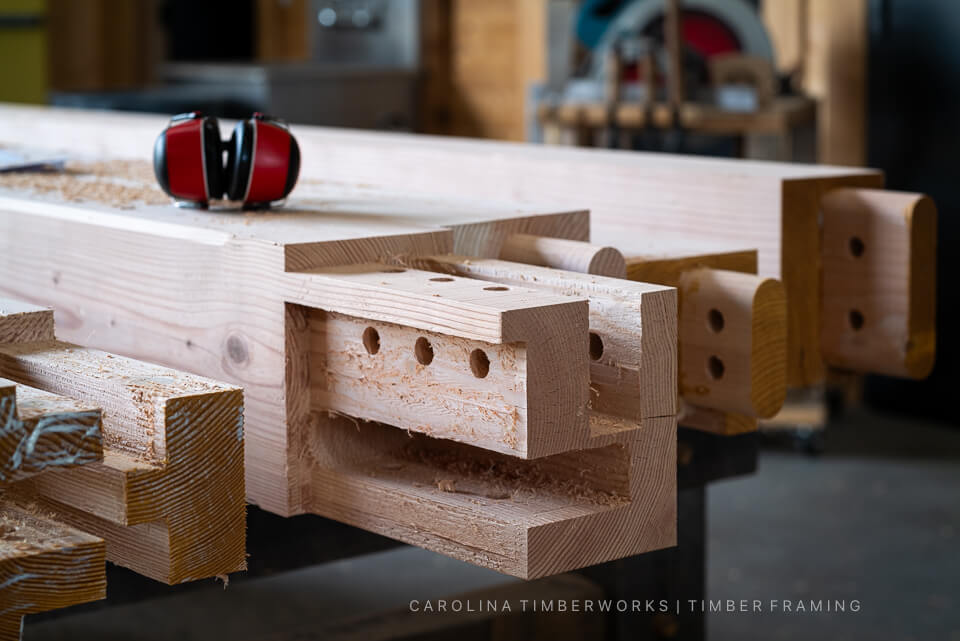
    Timber frame joinery

    Here at Carolina Timberworks, we live by the saying, “When you buy quality, you only cry once.” We’re committed to delivering a quality timber frame that’s built to last for generations.

    We’re equally committed to making the process enjoyable. If you don’t think that’s important, you might want to ask someone who has been through an unenjoyable building process to tell you some stories.

    Our Timber Frame Building Process

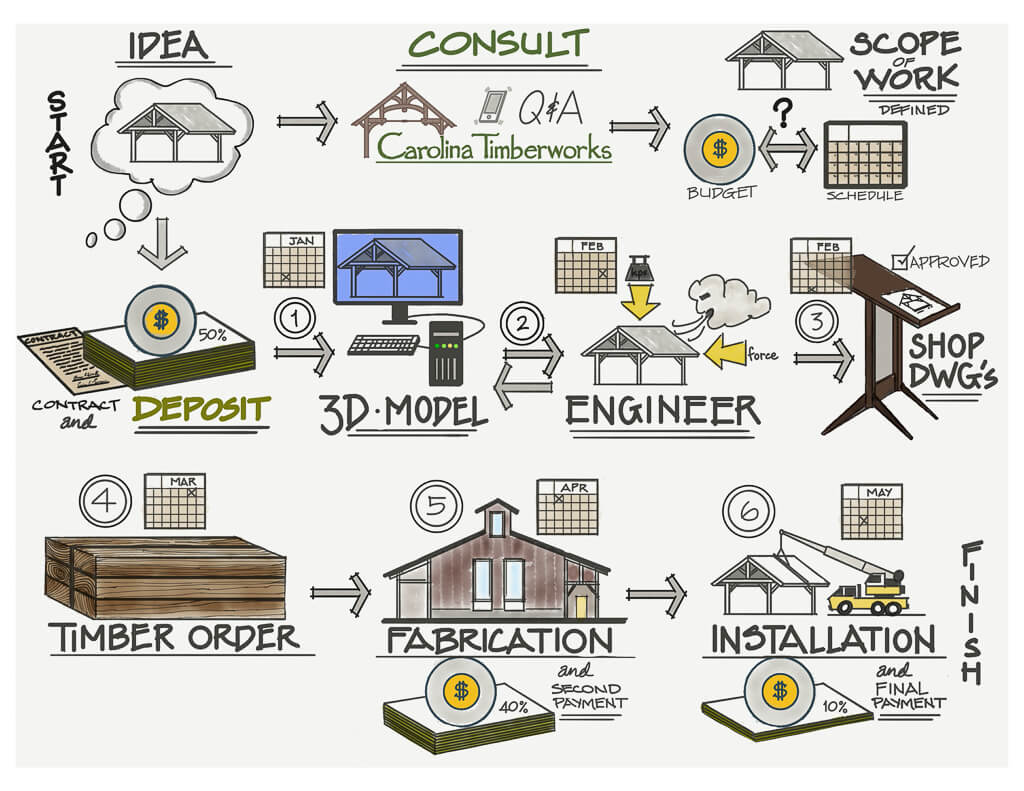
    Our timber frame process begins with a dream—yours. We start with a conversation (sometimes several) to see if we’re a good fit. If it seems like a potential partnership, we’ll move on to discussing details.

    From there, you can expect things like a scope of work, a budget, a timeline, and a contract. Then the fun really begins as we proceed with the 3D model, timber frame engineering, and shop drawings before placing the timber order.

    Interested in more details? We invite you to explore the steps of our timber frame process.

    What Cost Considerations Come with Timber Frame Construction?

    No one has ever told us “money is no object.” But over the last 20+ years we’ve had a few clients who’ve quietly explained that “time is more important than money.” But make no mistake, cost is always a part of the decision.

    In any building project, timber framed or not, four primary variables will determine the cost. They should be thoroughly understood, discussed and agreed in advance:

    • Scope
    • Cost
    • Time
    • Quality

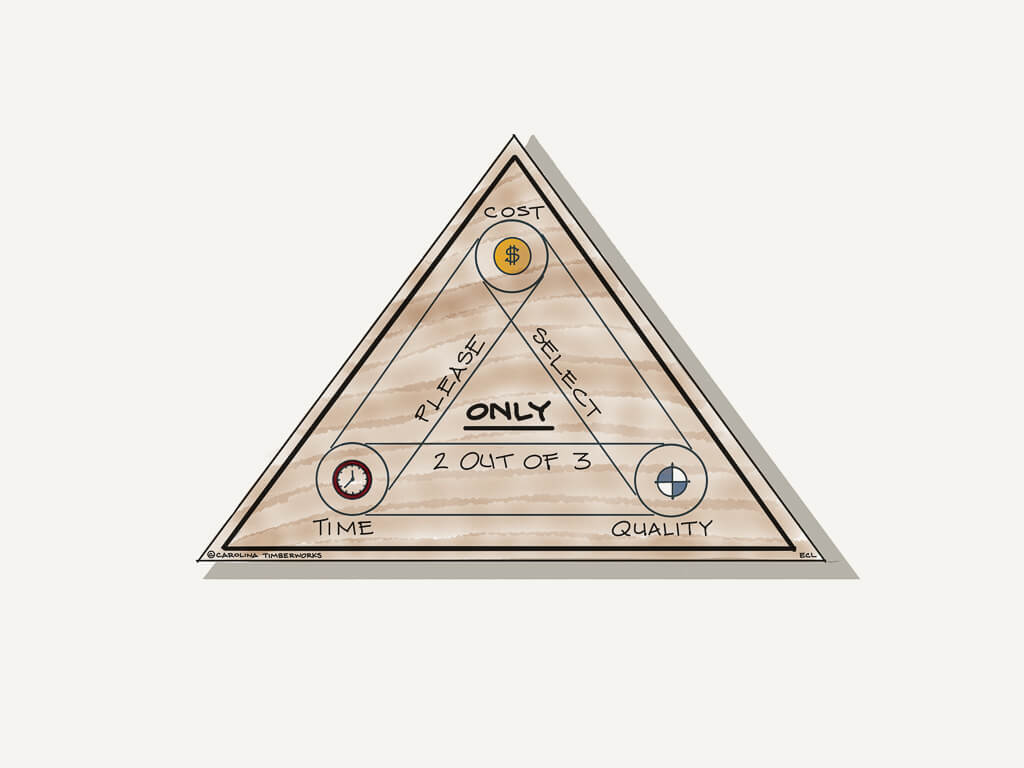
    Once the scope is defined, you then need to pick two of the time, cost, and quality variables.

    good cheap fast triangle

    Rules of Thumb

    Rules of thumb are (almost) always wrong. They can, however, be useful in the very early phases of a construction project. For example, during the design process, you’ll be asked by your architect or design professional about your budget. He or she will then use historical data and rules of thumb to guide the resulting design.

    Once design is complete, you’ll probably ask a local builder what it costs per square foot to build in a certain neighborhood, town, or county. A good builder (or timber framer) won’t answer right away without asking you some questions about your project—i.e., do you have plans, when do you plan to build, what’s the property like, etc. But eventually you’ll probably receive an answer in the form of a range, which can be useful.

    An Estimate Is Just an Educated Guess

    apples and oranges

    Be very careful. It is impossible to accurately estimate the cost of a building project until it has been completely designed, engineered, and detailed specifications written.

    Nor is an accurate cost possible until all site-specific considerations are determined (e.g., land clearing, road, utilities, access, steepness, etc.).

    Garbage In, Garbage Out

    It’s wonderful when everything goes according to plan. However, if the plans you paid for are just pretty drawings, things might not go well. For one, it’s impossible for a builder (or timber framer) to accurately estimate the cost without good plans.

    A good set of building plans specifies in great detail exactly how your builder (and subs) will build everything—from the number and size of rebar in the footers to the species, grade and texture of your timber framed great room.

    Yes, good plans cost more. But every problem your builder encounters is going to get solved, eventually. In our experience, it’s a whole lot less expensive to figure them out in advance during the design process than it is on-site when you’re paying people to stop work and figure out what to do.

    Cost Plus vs. Fixed Price

    In the simplest terms (we’re not lawyers):

    A fixed price contract is exactly what it sounds like: the contract is for a fixed dollar amount.

    In a fixed price contract, the builder (or timber frame subcontractor) bears most of the financial risk because he or she has agreed to build the project for a fixed price.

    A cost plus contract is one where the builder adds a percentage for overhead and profit to the actual cost of building the project.

    In a cost plus contract, the owner bears most of the financial risk because the owner agrees to pay whatever the actual costs turn out to be (plus a percentage), regardless of the initial estimate (see garbage in, garbage out above).

    We’re all guilty of ignoring the following advice, but you should ask a qualified business law attorney to review the contract before you sign it. Most of the time it’s a waste of time and a relatively small amount of your money. Every once in a while, it’ll save you from a financial and emotional train wreck.

    Next Steps for Finding the Right Timber Frame Builders or Subcontractors

    Have we scared you away from building? If not, are you thinking about incorporating timber framing into your project? We’d be very happy to talk with you. Contact us and tell us a little about what you have in mind, or call us at 828-266-9663. We’re nice!

  • What Tools Are Used in Timber Framing?

    What Tools Are Used in Timber Framing?

    Key Takeaway

    A timber framer can build with simple tools like a pencil, a square, a string line, chisels, a mallet, a saw, and a drill. Larger versions of these tools make the work quicker and more accurate. Many crews use power tools and layout systems made for cutting big joinery in heavy timbers.

    When you admire the majestic beamwork and intricate joinery of a timber frame structure, you might wonder just what it takes to build something like that. Although it’s possible to lay out and cut a timber frame with surprisingly few tools (pencil, square, string line, chisel, mallet, saw, and drill), it’s easier and faster to use specific timber frame tools. Most of these “timber frame” tools would be familiar to any woodworker—but they’re much larger versions.

    The first power tools most new timber frame companies acquire are a (large) circular saw and a chain mortiser. These two tools do a lot of work (and make a lot of sawdust), quickly. From there, the sky’s the limit—up to state-of-the-art, 6-axis computer-controlled timber frame joinery cutting machines.   

    So what’s in our timber frame shop in North Carolina? We compiled a list of our team’s preferred timber framing tools so you get a better sense of how we build timber frames—or so you can put together  your own tool set.

    Our Timber Frame Tools Guide

    Timber Frame Layout Tools

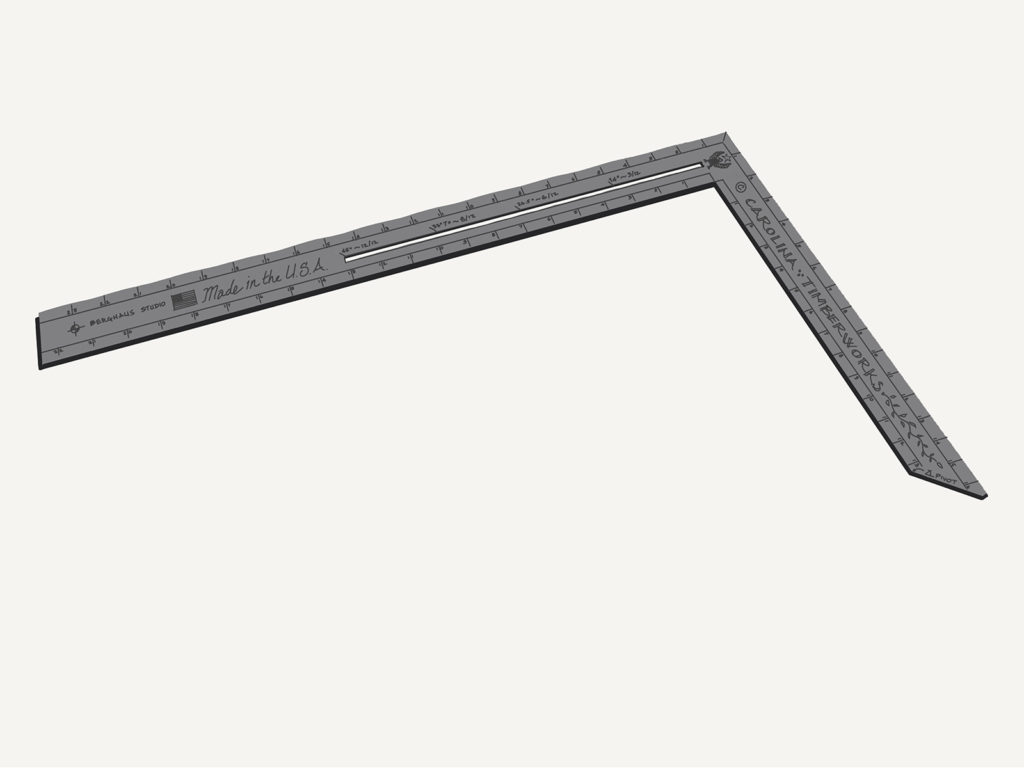
    Timber Framing Square

    A framing square, also known as a carpenter’s square, is an essential timber frame layout tool for measuring and marking angles. Despite its name, a framing square typically has an L shape—but some variations may be square.

    The L shape features a wider and longer side (body) that meets the shorter and thinner side (tongue) to create a perfect 90-degree angle (at least until it’s dropped—AKA the concrete kiss). The sides also act as rulers and have scribed notches that indicate measurements.

    We appreciate the versatility of framing squares, and in addition to using them daily to lay out and check angles and lines on timbers, we also use them as straightedges and winding sticks among other uses.

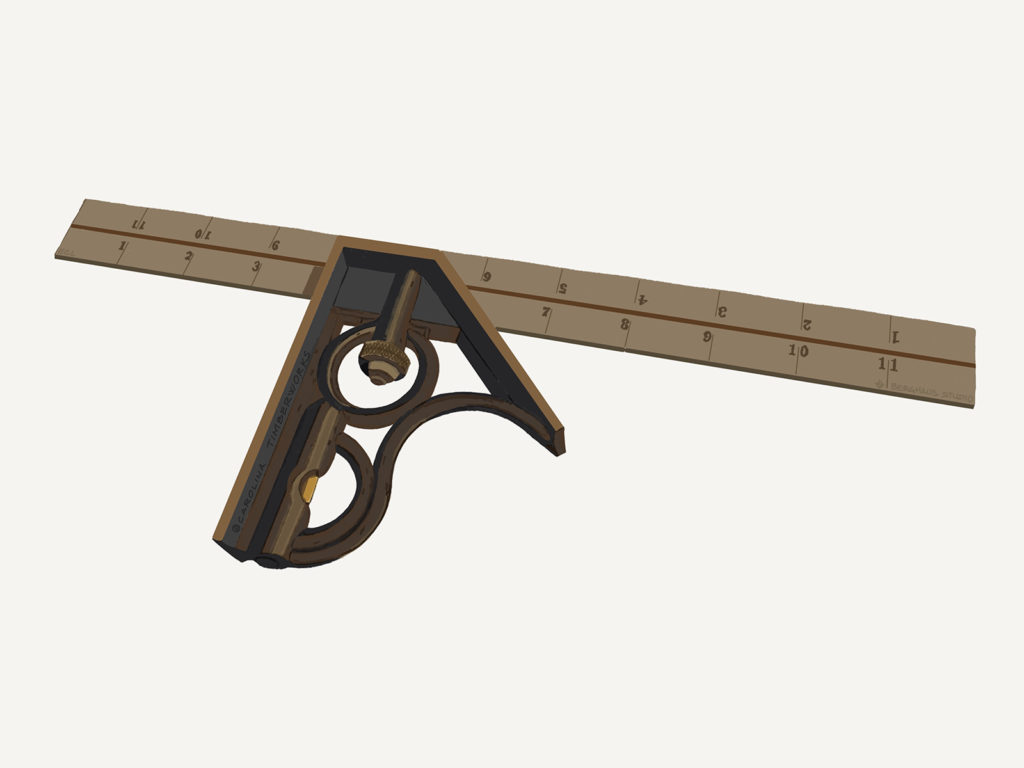
    Combination Square

    Combination squares are similar to framing squares in that the long flat arm acts as a ruler. However, combination squares also have adjustable heads that slide along the ruler. These components can include a simple fence for 90-degree angles, adjustable knobs to transfer measurements, bubble levels for measuring level and plumb, or protractor heads to change the ruler to any angle between 0 and 180 degrees.

    If you need to measure something, simply move the adjustable head to the specific measurement you need from the end of the ruler. We like to use combination squares for any project that requires measuring depth and squareness of adjacent surfaces such as mortise depth. By setting a specific measurement along the ruler, the combination square can speed up joinery layout for repetitive measurements.

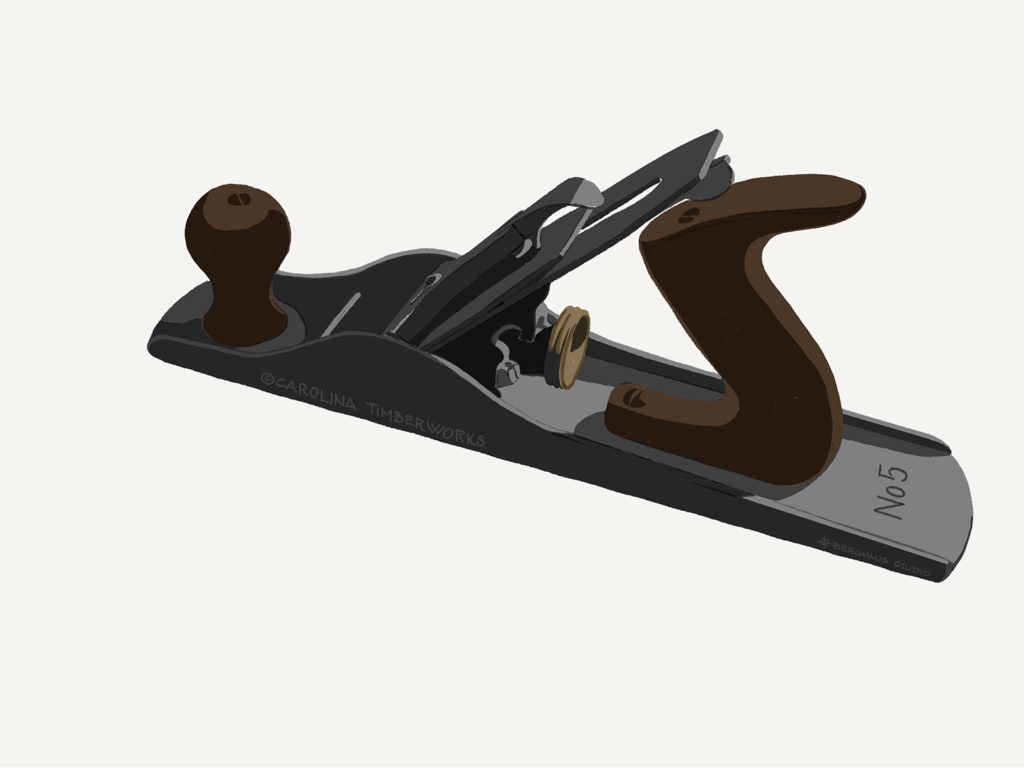
    Block Plane

    Block planes are small and versatile tools that can smooth the end grain of timber. Since the blade is set at a low angle, it performs this job better than a standard woodworking plane. These planes are great for beveling the edges of tenons on timber joinery.

    Timber Framing Hand Tools

    Framing Chisel

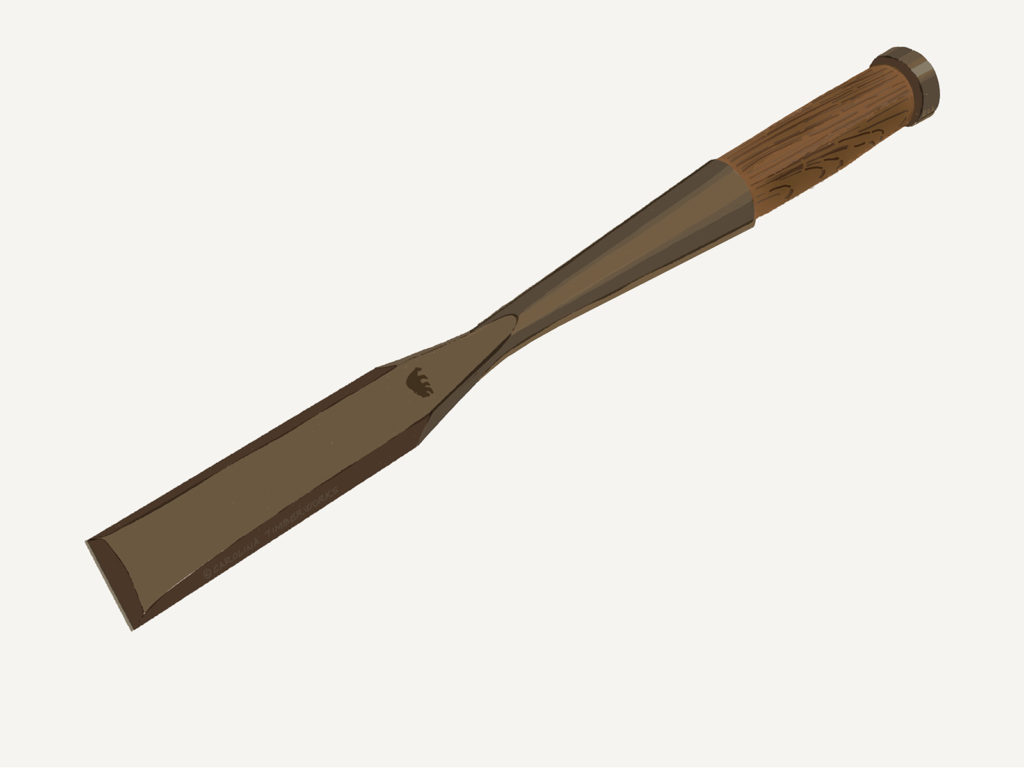
    A framing chisel is a handheld tool that can cut or shape timber joinery. These longer and more robust chisels typically have a 1- to 2-inch blade width. When pushed by hand or struck with a mallet, they can cut almost any type of joinery. Either way, when using a framing chisel, you aim for a close, precise cut.

    Timber Frame Mallet

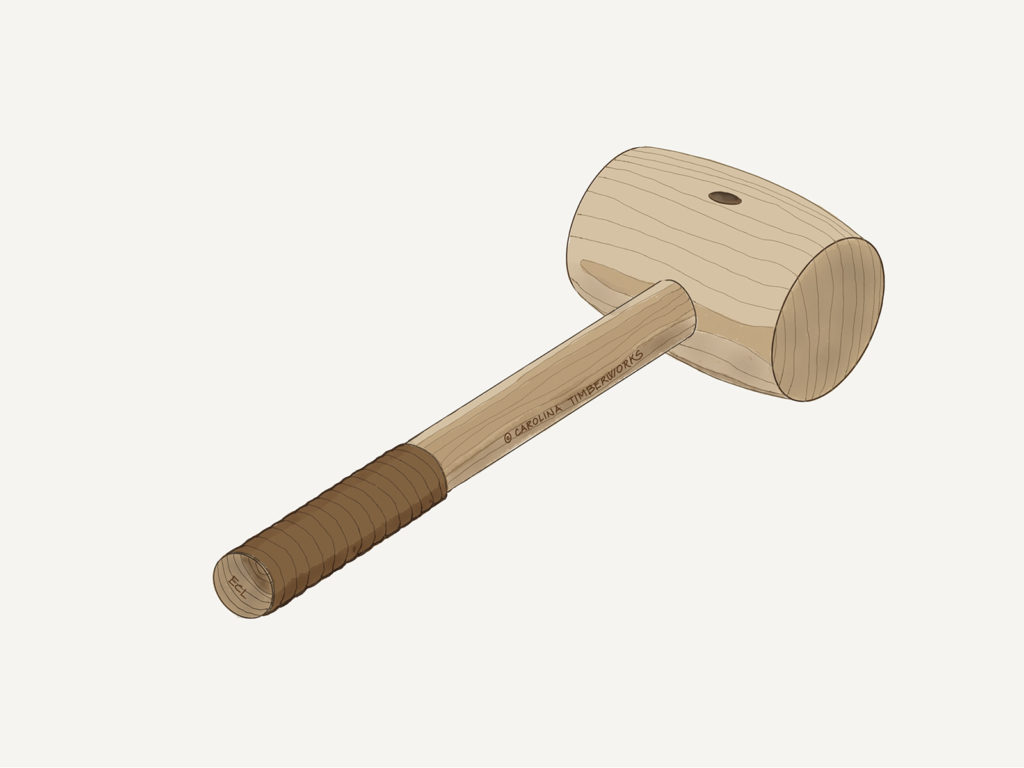
    Mallets and chisels go hand in hand, as we use the former to strike the latter. A good mallet is neither too heavy nor too light. We look for well-balanced mallets designed to minimize impact when striking the chisel. Dense wood makes a better mallet head than metal as it transfers all of the driving force through to the chisel, without splitting or damaging the chisel handle.

    Hand Saw

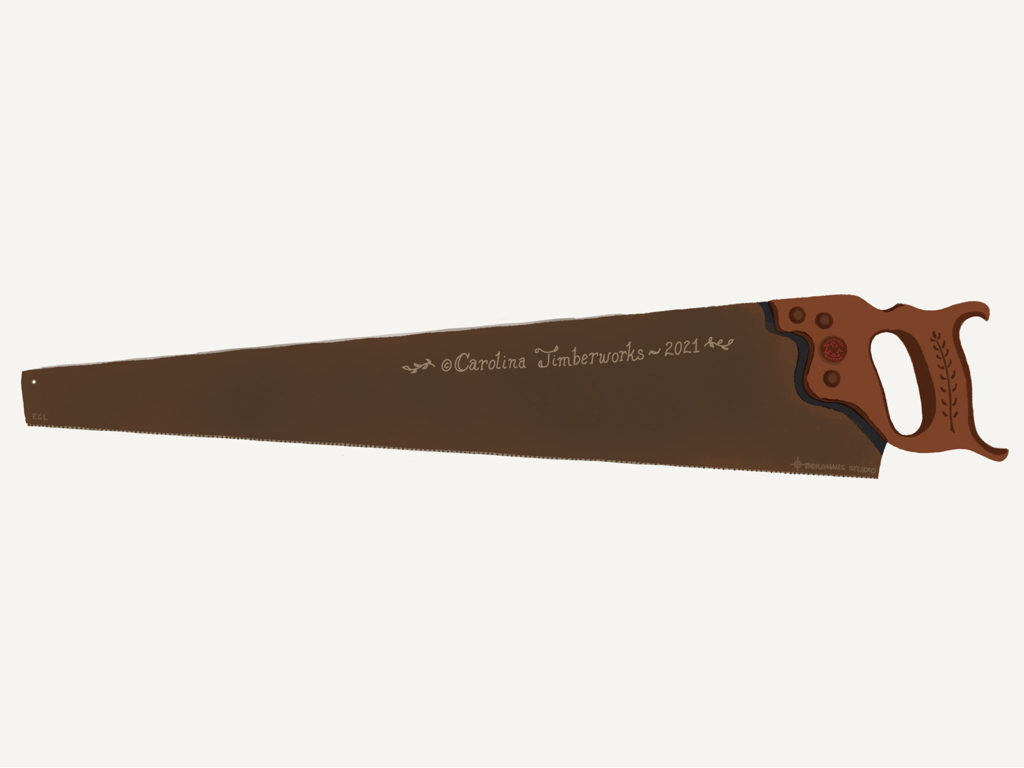
    Hand saws can come in many variations and can cut any type of wood. Some timber framers prefer a Japanese hand saw, which cuts on a pull stroke, while others prefer a western-style hand saw that cuts on a push stroke. We often prefer to cut with hand saws instead of electric saws for more control over finer details and small cuts.

    Power Tools

    Power Saw

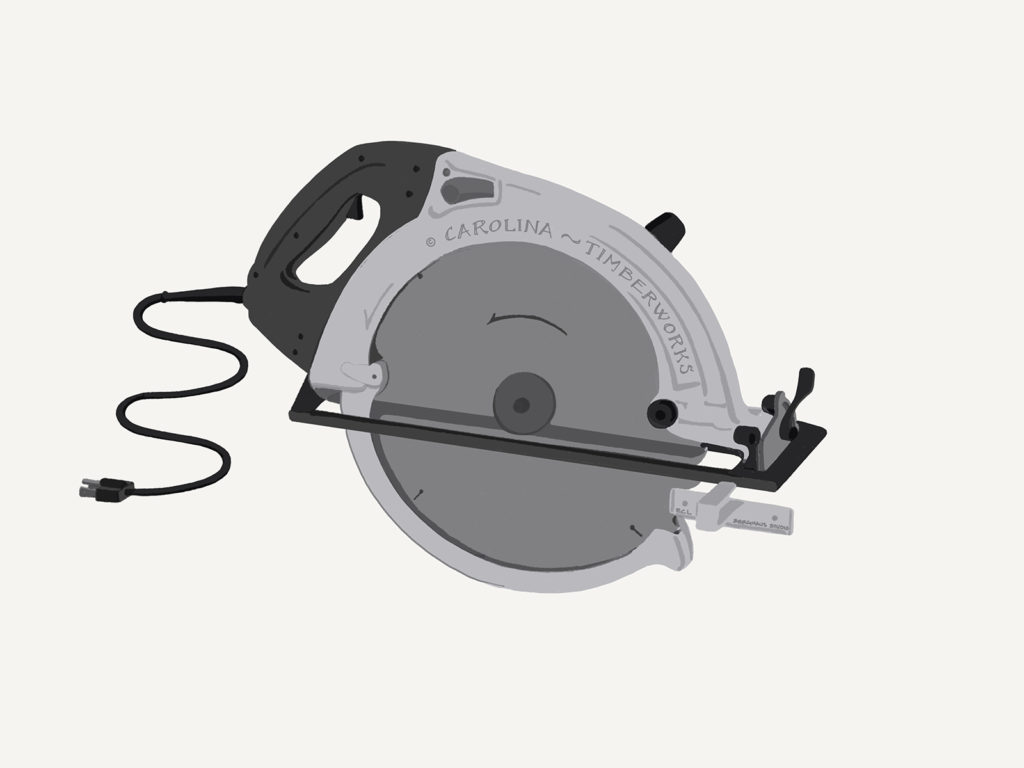
    Electric saws are similar to hand saws, but with built-in electrical motors for power. Some timber framers cut material using chainsaws, circular saws, or bandsaws (with metal guides and long blades):

    • Chainsaws can do the rough work of segmenting longer timbers into smaller pieces.
    • Circular saws do most of the cross and rip cuts for timber joinery.
    • Bandsaws are preferred for long radius cuts like curves in knee braces or arches.

    Chain Mortiser

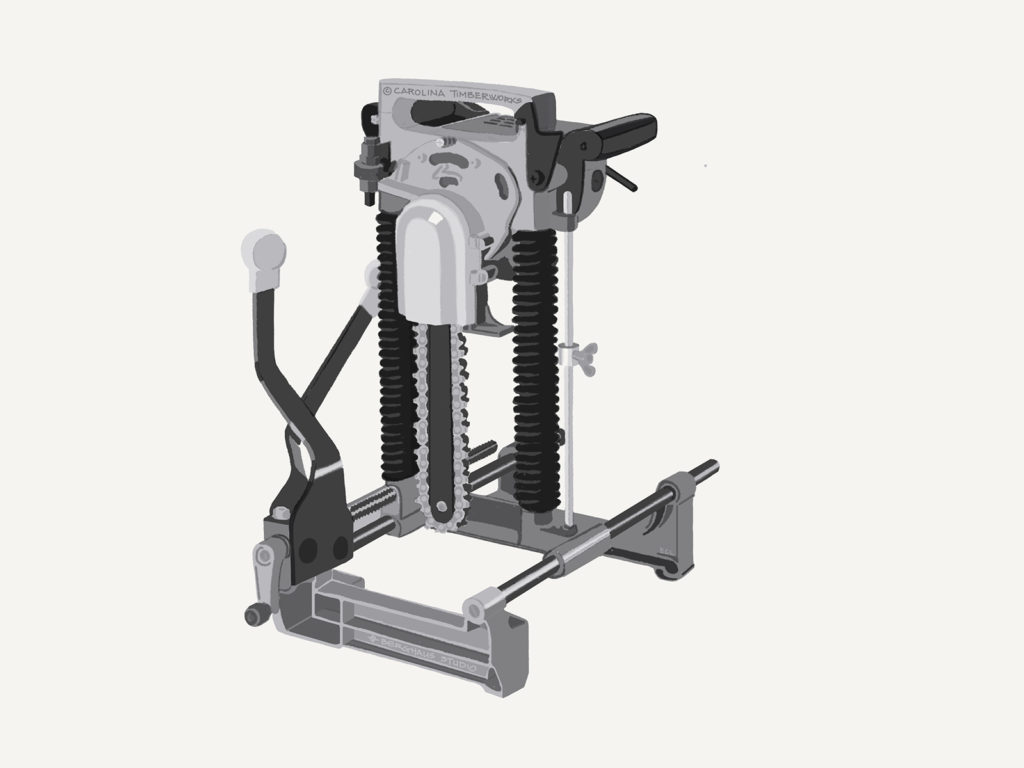
    Chain mortisers cut recessed “pockets” into timbers. Like a chainsaw, this tool has a rotating toothed chain that removes material from the timber to create the mortise. Because mortise and tenon joinery is integral to timber framing, this is one of our most used tools. This work was previously done in two steps by drilling and chisel work, but is now much faster with this specialized type of tool.

    Chain Slotters

    Similar to chain mortisers, chain slotters cut narrow “slots” into timber. This specialized timber frame tool is more precise than a chainsaw, although it is less common than a chain mortiser.

    Drilling Stations

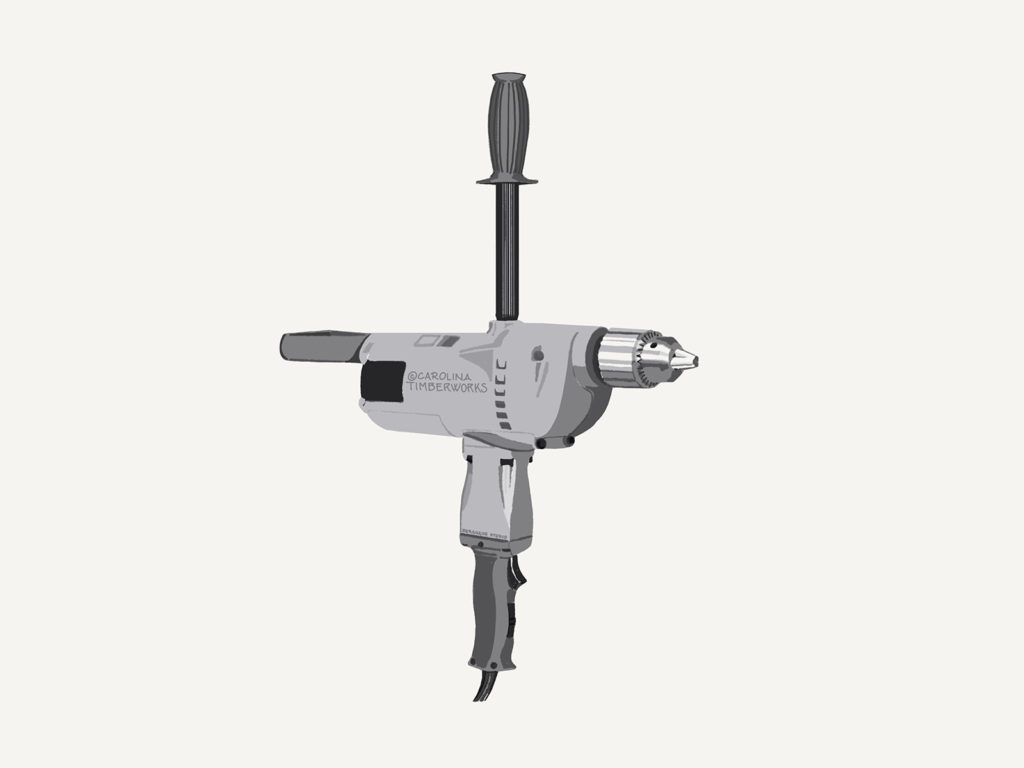
    Also known as a drill press, a drilling station is an alternative to a portable drill. This setup has an adjustable drill table, as well as a base and pillar to keep the drill stationary. A clamp keeps smaller timbers in place, allowing for more accurate drilling.

    Unlike handheld drills, drilling stations offer larger and more powerful motors that can speed up any repetitive processes and improve efficiency for larger projects or mass produced timber components. There are also portable drill presses that can be clamped to large timbers when moving the tool is more efficient than moving the timber.

    Planers and Sanders

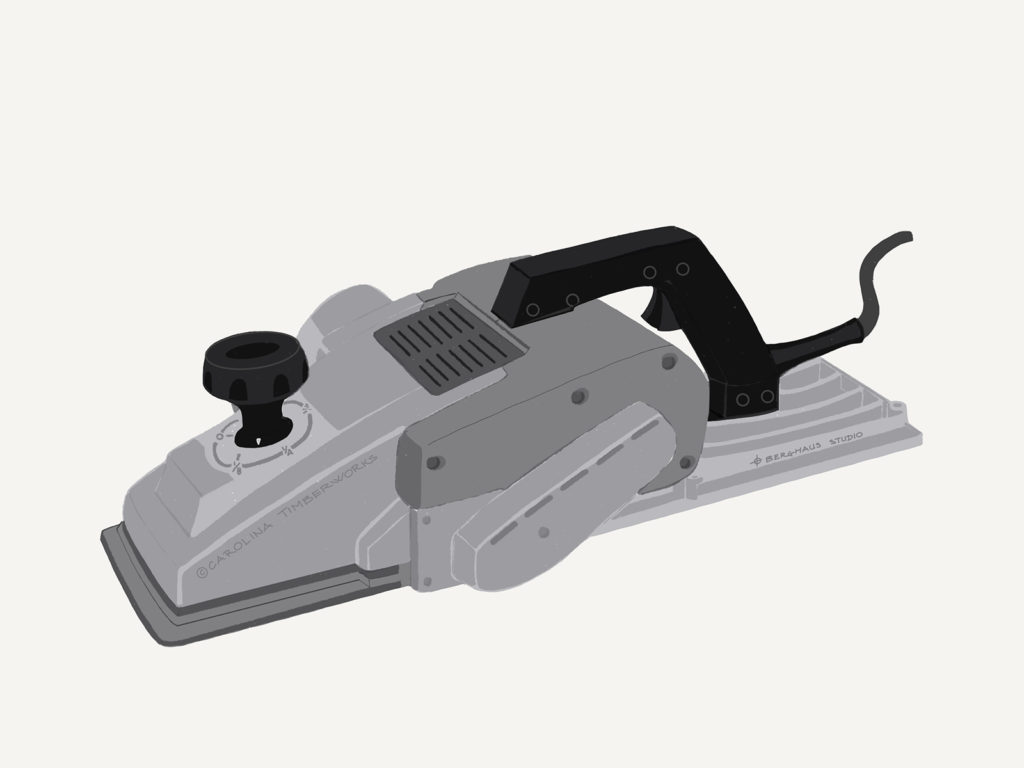
    Electric or power planers are mechanized versions of block planes in that they can quickly remove, even, and smooth out the surface of the wood.

    We typically opt for power planers when working with large timbers. Similar to planers, sanders smooth out imperfections and provide a softer finish using a rough or fine grit sandpaper disc or belt.

    Routers and Notchers

    Routers and notchers make grooves in the surface or certain profiles along the edge of timber components. A router can use a variety of differently shaped bits to create various decorative effects. We also rely on routers to create housings or notches for some specialized timber frame joints.

    Oversized Timbe Frame Tools

    Hundegger ROBOT-Drive CNC Machine

    By this point, you can likely tell that timber framers have a tool addiction problem. In photography, it’s known as GAS (Gear Acquisition Syndrome)—pity the spouses of timber framers who also dabble in photography.

    Craftsmen have always looked for the best tools for timber framing to execute their craft, and for us, that means robotics: state-of-the-art, CNC (computer numeric control), timber framing machines.

    These machines offer speed, precision, reliable delivery times, and sustainability.

    • Reliable delivery times because the software tells us, in advance, how many hours it’s going to take to cut a job—so we can schedule our workflow in the shop very precisely.  
    • And sustainability, because the software optimizes every cut—to get the most out of a given timber with the least possible waste.

    These machines are a fusion of old-world craftsmanship and new-world technology, combining the best of the nineteenth century with the best of the twenty-first.

    The 6-minute video below tells the story of a radical investment Carolina Timberworks made. It’s radical for two reasons:  

    1. There’s an inherent conflict with our passionate 16-year commitment to hand-cut traditional timber framing.
    2. The cost of the investment is significant.

    The story of why we did it is here.

    We’re not giving up traditional craftsmanship—in fact we’re growing and plan to hire even more craftspeople. And whether or not you’re a timber framer, we think you’ll agree that there’s something truly mesmerizing about watching our Hundegger in action.

  • Why You Should Visit Your Timber Frame Company
    Why You Should Visit Your Timber Frame Company
    “I hope you encourage all your future clients to come to your shop.”

    “A truly invaluable experience.”

    Visit A NC Timber Frame Company
    The trip to visit the Carolina Timberworks shop was the highlight of our project thus far! We were simply blown away by the whole experience. Even just driving to your beautiful shop through the gorgeous mountain environment with the leaves changing and stunning vistas around every corner.

    Driving up to the shop for the first time, quite impressive, understated and perfectly done to create the right environment exuding the extraordinary craftsmanship inside. First Impressions: Safe, Clean, Orderly and filled with incredibly focused craftsmen working busily inside and out shaping our beautiful South Carolina Southern Yellow Pine Beams, custom cut from trees on our land, years before. They are now coming to life right before our eyes! Every one of your customers must take advantage of a visit like to this to see this happen. To see and feel the emotion and even the smell of the wood, while these talented men create extremely difficult precision joinery. Unreal experience!

    Each one of your craftsmen were so polite and engaging as we communicated with them. Obviously very proud of what they are doing and eager to share the particular things they were doing.

    A truly invaluable experience for us all.

    How to interview a timber frame company
    Ask someone who builds timber frames for a living what makes their company different, and you’re likely to hear some variation on the theme of high quality, responsive service and talented people. Their answer may be truthful, but if you want an enjoyable experience, you haven’t learned what you need to know to make an informed decision. So how exactly do you do that? Come for a visit!
    While You’re Here

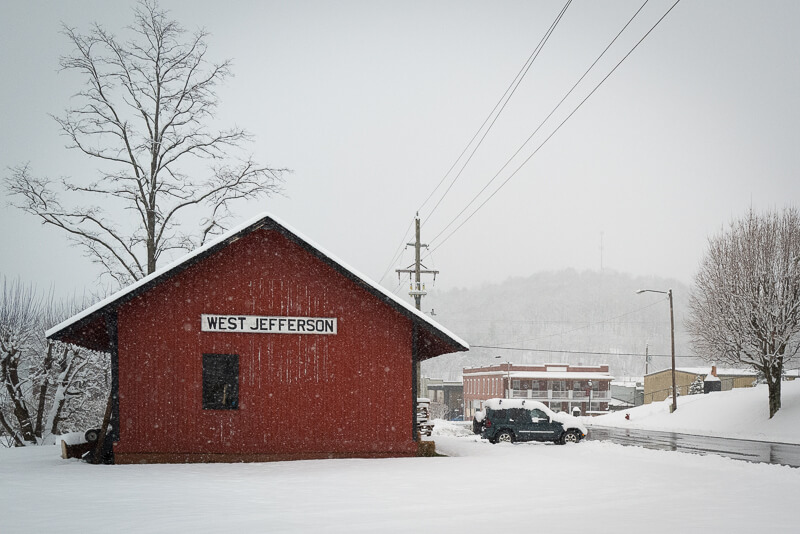
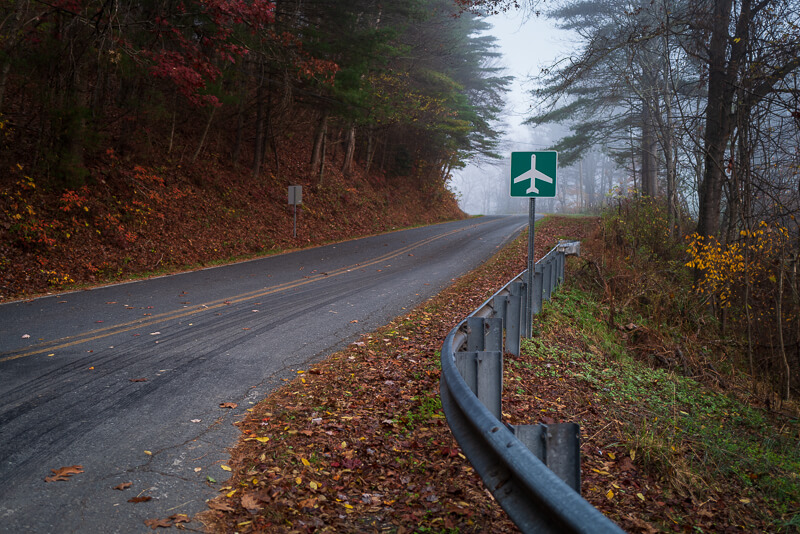
    With 5 peaks over 5,000′, 10 acres per inhabitant, a jet-capable airport, the North and South Forks of the New River, the Blue Ridge Parkway, and the picture postcard perfect town of West Jefferson, North Carolina, you’ll want to leave some extra time to explore the area.

    Downtown West Jefferson in Snow
    Blue Ridge Parkway
    Cycling on Blue Ridge Parkway
    Ashe County Airport
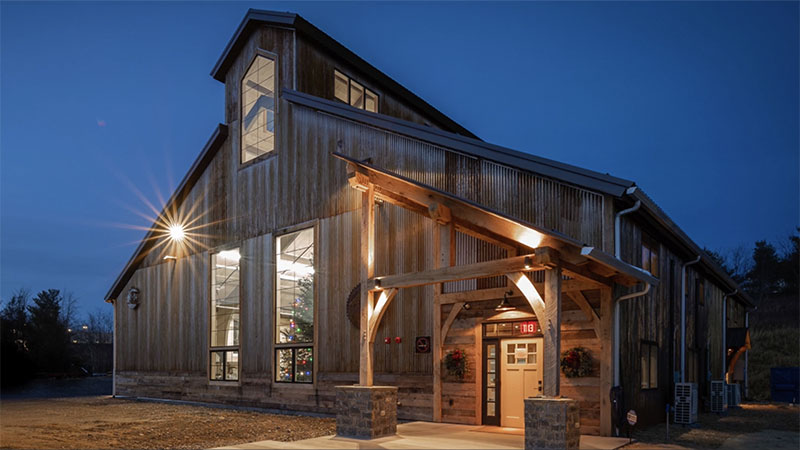
  • How We Built the Shop of Our Dreams

    How We Built the Shop of Our Dreams

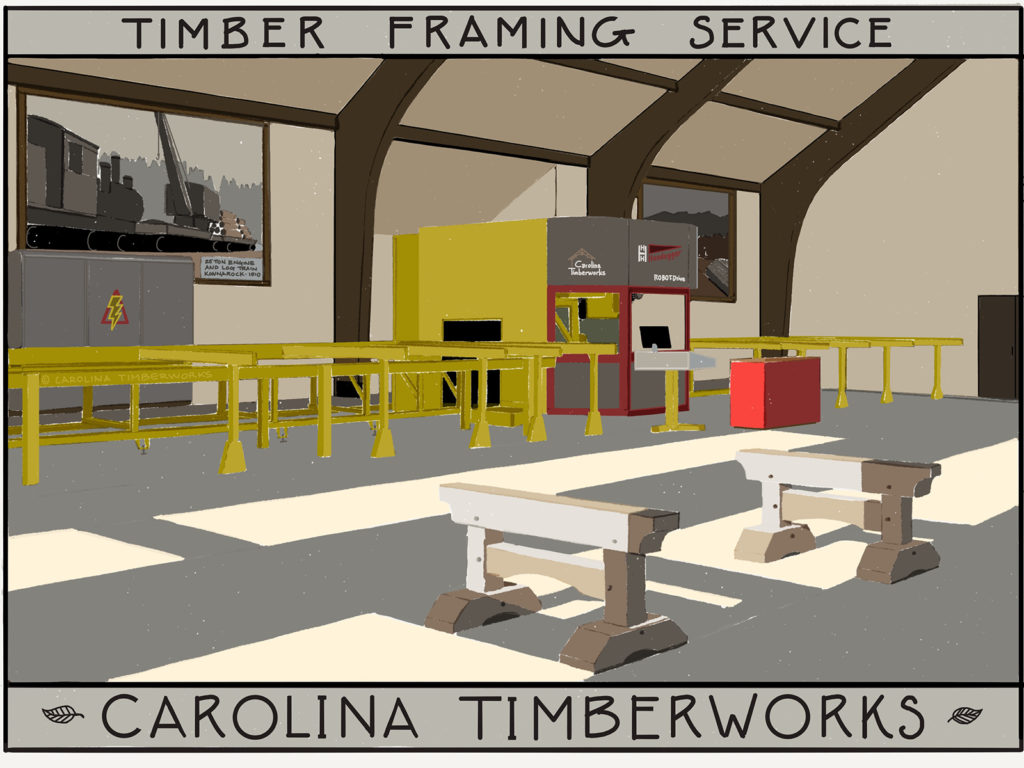
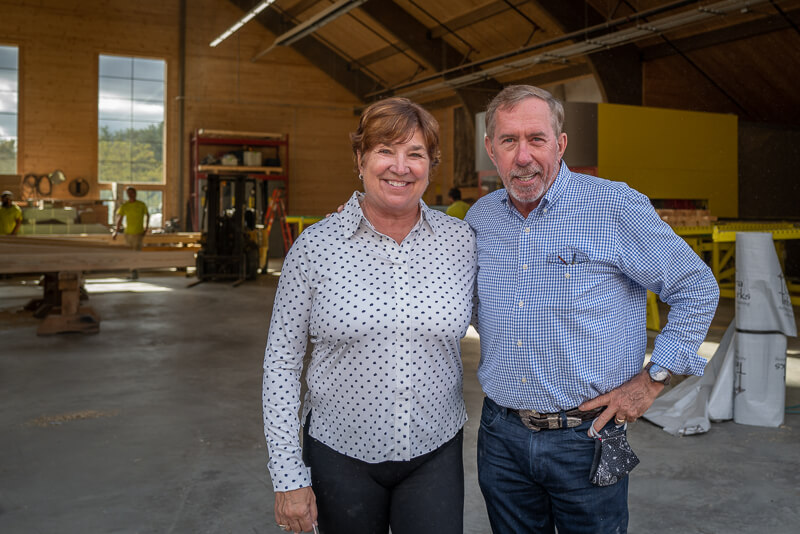
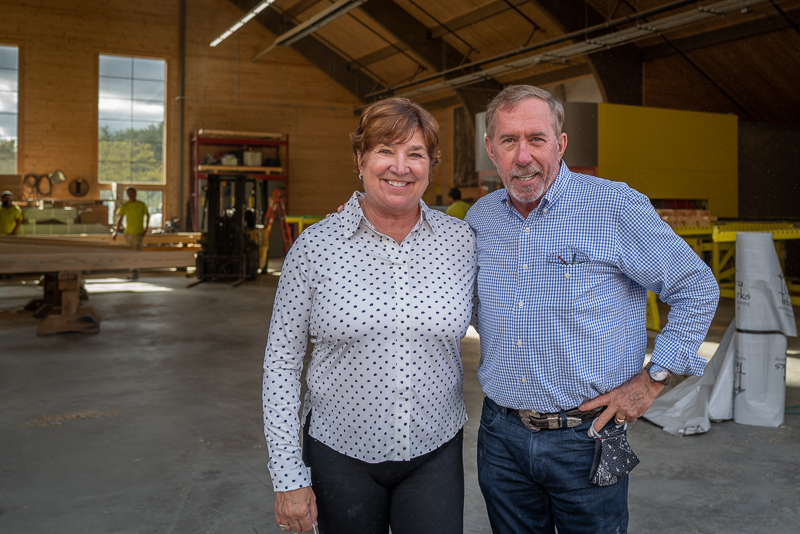
    When we built a new shop, we set out to up our game. And then we said to ourselves, let’s not just up our game, let’s go for best in class.

  • Carolina Timberworks Timber Frame Construction Process

    Carolina Timberworks Timber Frame Construction Process

    or… What to Expect When You’re Expecting a Timber Frame

    Timber frame construction process from Carolina Timberworks

    The timber frame construction process is important, regardless of how well the finished product turns out—just ask someone who endured a terrible process to obtain their timber frame.

    There is neither a shortcut, nor any secret to designing a timber frame. But whether good or bad, every timber frame company has a process. This is ours.
    Timber Frame Concept Drawing

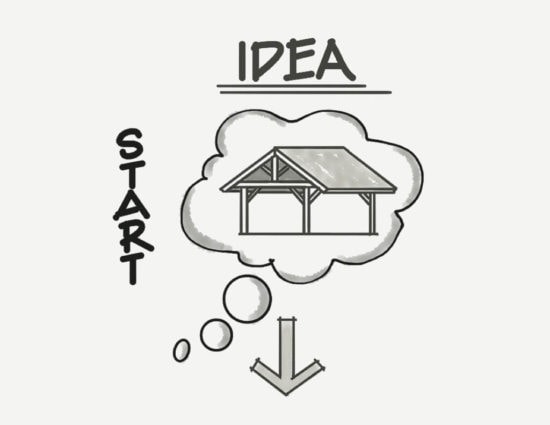
    It starts with a dream: a spark that inspires a homeowner or a business owner to build something.

    timber frame consultation

    We’ve been doing this long enough to know that we’re not the right fit for every project that comes along. We half-jokingly call this first meeting the “dating phase.” There’s an understood agreement that this meeting is about learning about one another—how we both like to work, what makes us tick, our expectations. We ask you questions, and we answer your questions. (Here are some good ones: How to Interview a Timber Frame Company). Afterward, if either of us doesn’t think the partnership is a good fit, we say so, parting ways amicably and with no hard feelings—and with no expectation of a second date.

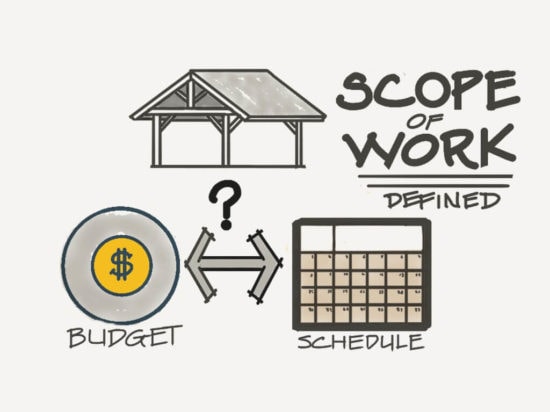
    timber frame scope of work

    But if, on the other hand, we both agree the match has potential, the discussion turns to taking the budding relationship to the next level. The rosy flush of romance may fade considerably at this point because we (Carolina Timberworks) will bring up the subject of money on only the second date. Tacky, right? To make matters worse, we’ll throw in questions about timing. Uncomfortable though it may be, this refreshingly open communication results in saving both of us a lot of time, money, and frustration. After all, you probably don’t want to spend months waiting (and paying) for a timber frame design, that when finally priced, turns out not to fit your budget.

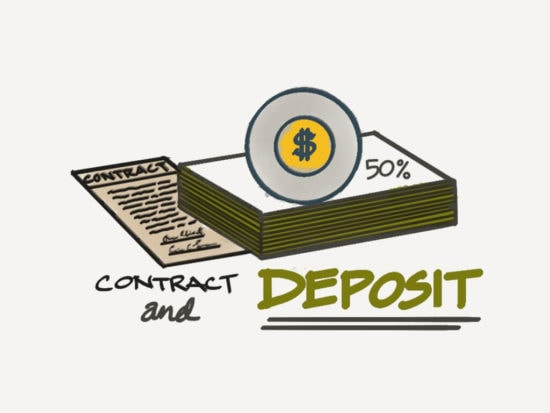
    timber frame contract and deposit

    At this point, it’s time to talk commitment. You’re about to “marry” a timber framer—something your mother probably warned you about. (Okay, maybe not. But bet you didn’t know that timber framers’ mothers warn them about marrying the wrong clients!) Doubt and fear make their appearances. But this is why prenuptial agreements (contracts) were invented. Really good timber frame contracts are all about reducing future disagreements and problems by carefully defining what success looks like. The best ones are easy to understand, fair to both parties, contain good drawings, and are typically fairly lengthy. You wouldn’t sign a one­-page prenuptial agreement, would you?

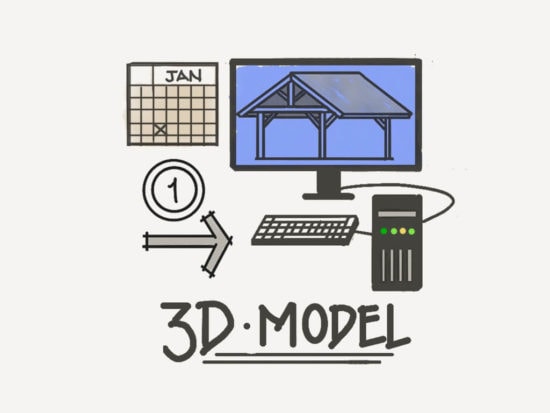
    timber frame 3d model

    Now something weird happens in the relationship: At this point your honeymoon begins, but your timber framer has to go to work. While you’re basking in the sense of accomplishment that comes from knowing that you’ve conceived the latest addition to your family, your timber framer will be spending a great many days/evenings/weekends in front of a monitor, painstakingly working out a whole lot of details.
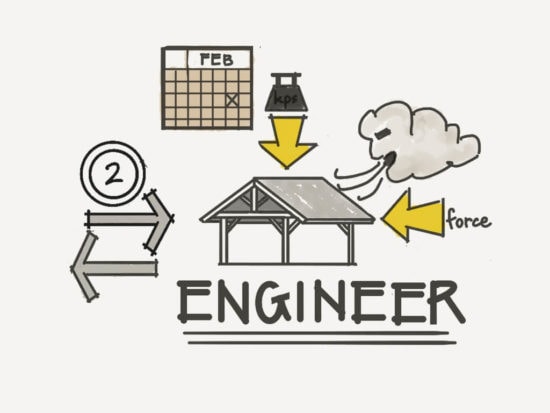
    Timber Frame Engineering

    It’s three weeks into your honeymoon. You feel a bit guilty about emailing your timber framer that breathtaking photograph of your view of the Matterhorn from the Mont Cervin hotel in Zermatt, Switzerland. Hard at work, your timber frame spouse replies rather distractedly and with some frustration: “The engineer just called. He woke up in the middle of the night worried about…” The words every timber framer dreads. The “separate honeymoon” phase continues.

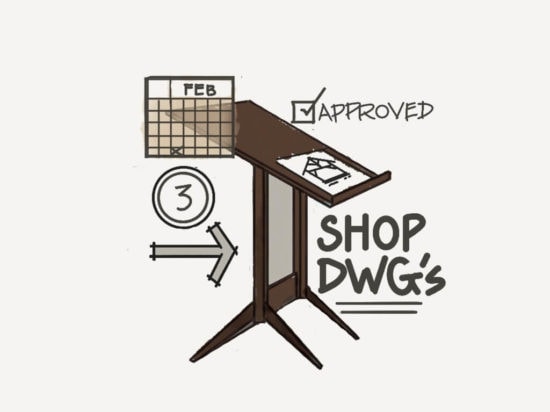
    Timber Frame Shop Drawings

    If children were produced like timber frames, sometime prior to birth, you’d receive, with a certain amount of fanfare, an amazingly complex set of drawings from the doctor with every measurement of your baby you could want—and quite a few more—including views from every possible direction or angle. To your dismay, you realize the timber frame shop drawings are pretty complex, and out of your realm of knowledge of design. It’s at this point your architect, builder, or contractor steps in with their trusty red pen, marking up the drawings and suggesting changes. Back to the timber frame shop the drawings go to the love of your life (your timber framer), and in due course, a revised set of drawings arrives in your inbox. Upon consultation with your architect or builder, one of you will sign off on the shop drawings, thereby unleashing the timber frame dogs of war (okay, that doesn’t really work, but always wanted to work that phrase in somewhere).

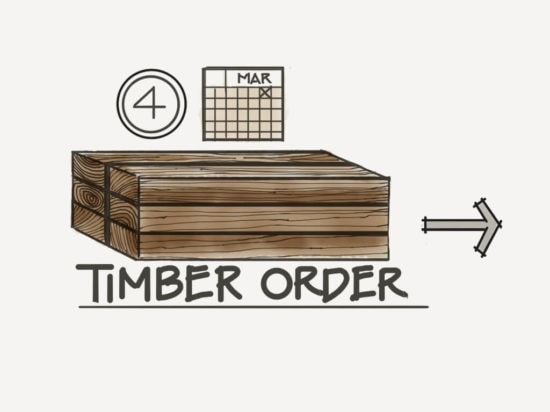
    Timber Frame Order

    The timber procurement process is a bit like gestating a baby: there are times where it seems like not much is happening. This can be a blessing, for your often hyper-focused timber frame mate appears to relax a bit, and even suggests a meeting. The subject? What to Expect When You’re Expecting a Timber Frame— The Next Steps.

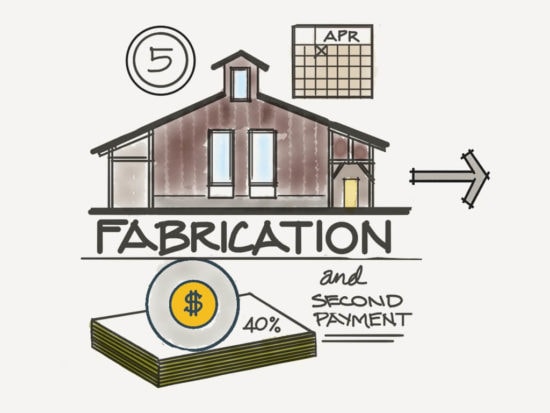
    Timber Frame Fabrication

    The first thing most people do when walking into a timber frame shop is to pause, smile, and comment how good it smells. Just like babies, freshly cut timber smells good! And just as babies symbolize new life, the beginning of a new job in a timber frame shop always feels like a fresh new start. Some timber frame parents just can’t wait for a peek at their new child, and visit the shop for an early “reveal”. Others, preferring to be surprised, are willing to wait just a few more weeks…

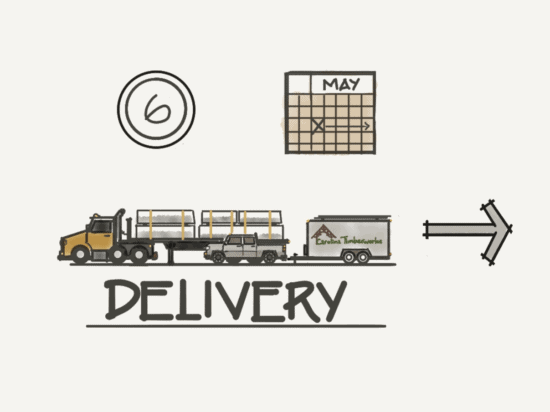
    Timber Frame Delivery
    Timber Frame Installation

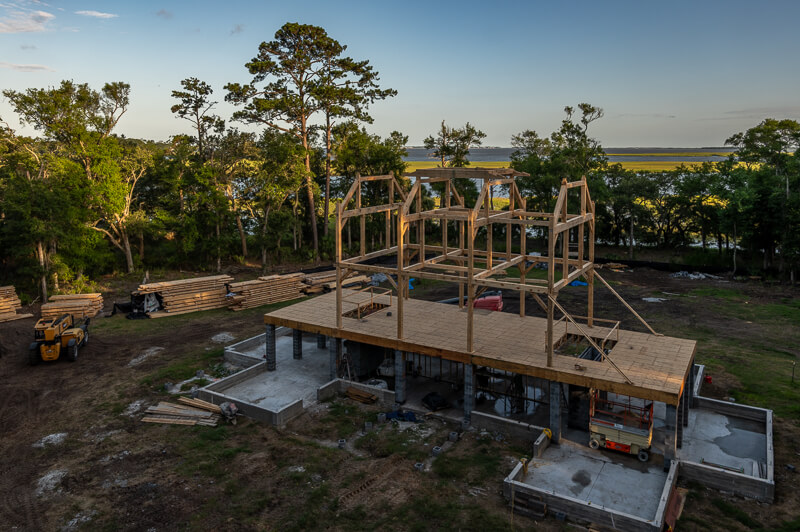
    Suddenly, after months and months of slowness, things start to happen—fast. You’ll know you’re entering the final phase when your timber frame spouse’s extended family starts arriving in their pickups to raise your timber frame. You knew the “relatives” (our crew) was part of the deal, but you never expected this many beards, that they’d be this hungry, or that they’d be this nice!
    timber frame celebration

    Here’s another family secret: Timber framers don’t really like clothes. Don’t believe me? Watch carefully. Once the timber frame is standing, the crew’s phones will come out. And if you’re lucky you’ll catch a glimpse of each member of the crew, your extended family now, casting one last glance at their baby just before they depart. And if you could read their thoughts, you’d know they think the baby will never look more beautiful than at this moment—completely naked, without a stitch of siding, roofing, or other finishing touch.