• Skip to main content

DEV Carolina Timberworks

Craftsmanship. Passion. Service.

  • Home
  • Portfolio
    • Places We Live
    • Places We Work
    • Places We Play
    • Timber Frame Videos
  • Learn
    • Timber Frame Blog
    • Timber Frame Glossary
  • For Professionals
    • Architects
    • Builders
  • Owners
  • About
    • The Crew
    • Our Story
    • Our Future
    • Our Home
    • How do you guys work?
    • Carolina Timberworks Testimonials & Reviews
    • In The News
  • Contact
    • Join Our Team

Design & Types of Frames

How to Build a Home on an Island: Challenges, Solutions, and Lessons Learned

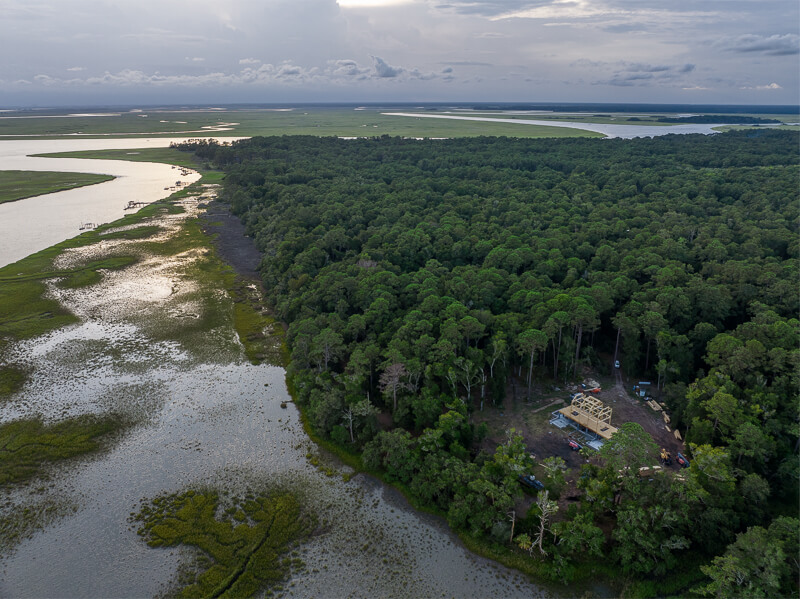
Building on an Island: What You Need to Know

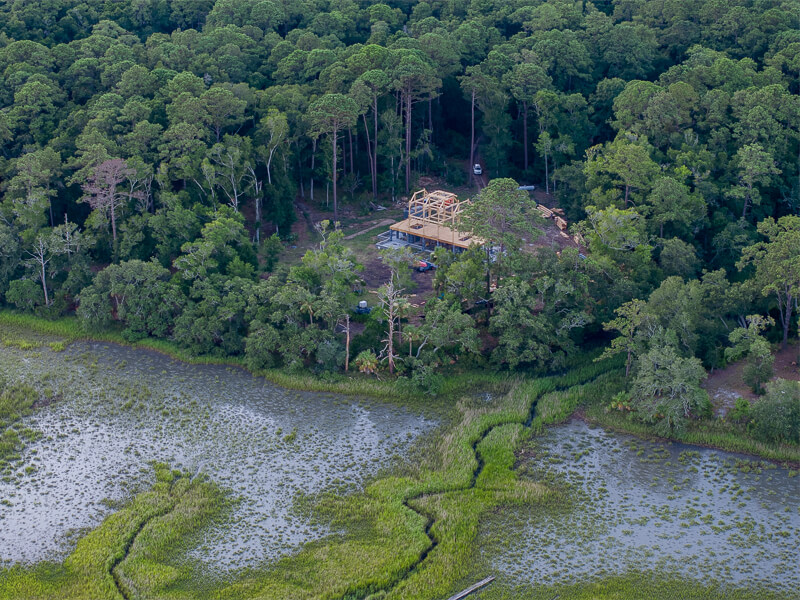
Building a home on an island is a dream for many—but the logistics can quickly turn into a nightmare if you’re not prepared. From transporting materials by barge to dealing with unpredictable weather, island construction presents unique challenges. As a timber frame subcontractor specializing in complex builds, Carolina Timberworks recently completed an island project, and we’re sharing what we learned to help you plan your own remote build.


Why Building on an Island is Different Than the Mainland
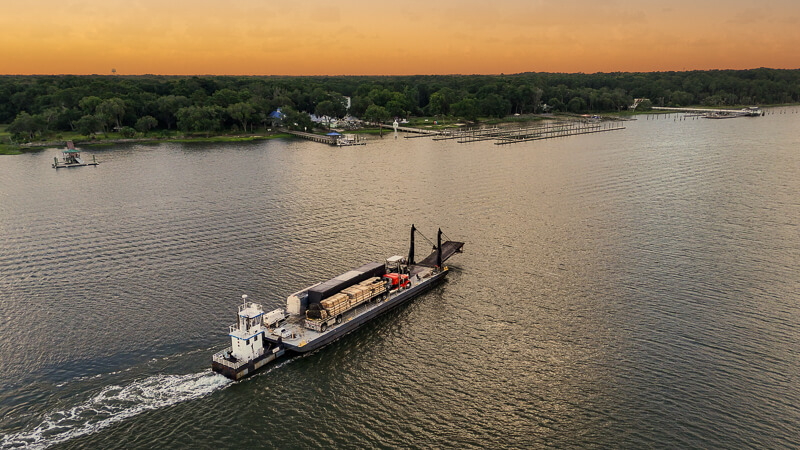
At first glance, building a home on an island may seem similar to any other construction project. But in reality, every aspect—from materials to labor to scheduling—requires a different level of planning. Here’s what makes timber frame construction uniquely challenging on an island:

1. Every Stick, Brick, and Person Arrives by Barge

On the mainland, materials roll right off a truck and onto the job site. On an island? Not so much. Every single piece—timbers, nails, tools, even lunch—must be carefully staged, loaded, and ferried across the water. That means no last-minute hardware store runs, no quick resupplies, and no margin for error. The logistics resemble a military operation, requiring precision, planning, and a team that understands the stakes.

2. Forget Something? Prepare for Costly Delays

On a typical job site, a miscut timber or a forgotten handful of ¾” white oak pegs might cost you a day. On an island, that same mistake could set you back a week. There’s no quick trip to the supplier—every extra run across the water depends on barge schedules, tides, and availability, all of which are beyond your control. In remote construction, small problems don’t stay small for long.

3. Rain, Tides, and Isolation Demand Next-Level Logistics

On an island, nature calls the shots. Tides dictate when barges can run. Rain stalls work, but the crew is still on the clock. A passing storm can upend the schedule, while a broken-down barge can ripple delays across the entire project. It takes a certain mindset to thrive in conditions where predictability is a luxury.

4. Food and Lodging: More than Just a Place to Sleep
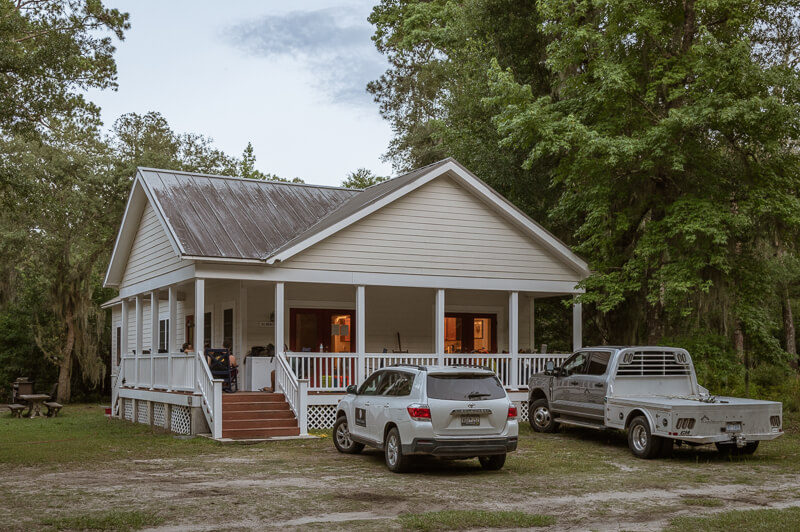
Getting materials across the water is only part of the challenge—you also have to get the crew there and make sure they’re taken care of. Lodging is rarely luxurious, but it needs to be comfortable enough for a team working long, physically demanding days.

And then there’s food. When the nearest grocery store is miles (and a boat ride) away, you don’t just “grab something” after work. That’s where having a crew member like Tommy makes all the difference. A former restaurant owner, he took charge of meals—wearing gloves, using a thermometer, and treating dinner prep with the same level of care and precision as a timber frame layout. One night, he put together a classic Low Country boil—shrimp, potatoes, corn, and sausage—the kind of meal that makes the challenges of building in a remote location a little more enjoyable, and a lot more memorable.


Why Timber Frames Are Ideal for Island Homes

1. Speed: Faster Assembly, Less Time on Site
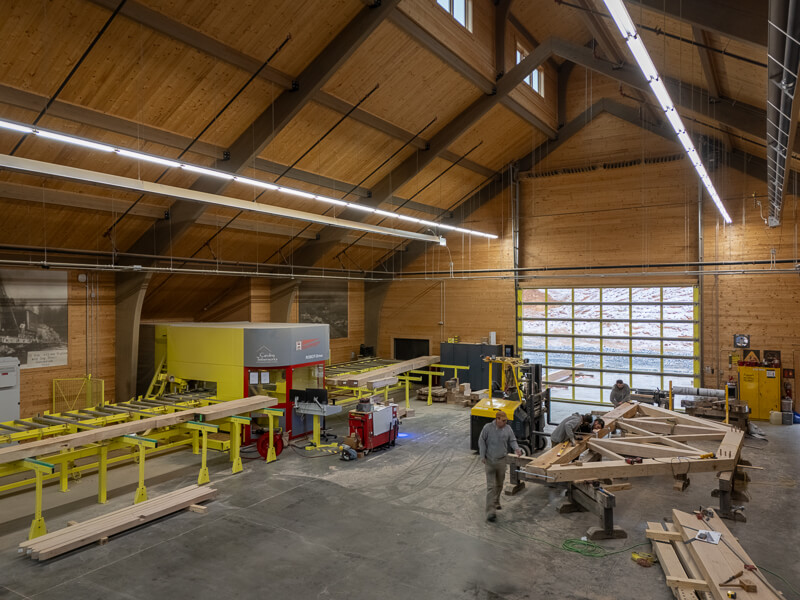
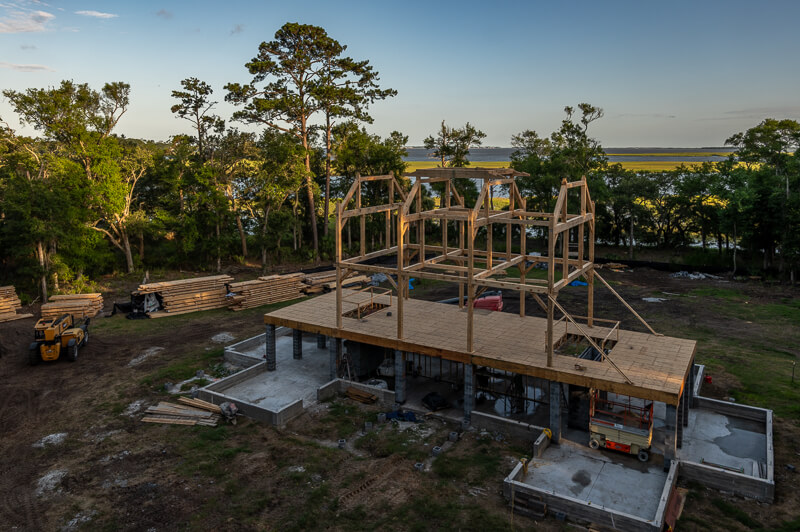
On an island, every extra day of construction adds logistical headaches and costs. Timber framing changes the equation. Instead of cutting and fitting each piece on-site, the entire structure is precision-cut in our shop using state-of-the-art CNC machinery. When the timbers arrive, they’re ready to go—slotted together like a giant puzzle by the same crew that fabricated them. What takes months with conventional framing can often be completed in weeks, minimizing time, risk, and weather exposure.

2. Strength: Built to Withstand Nature’s Fury
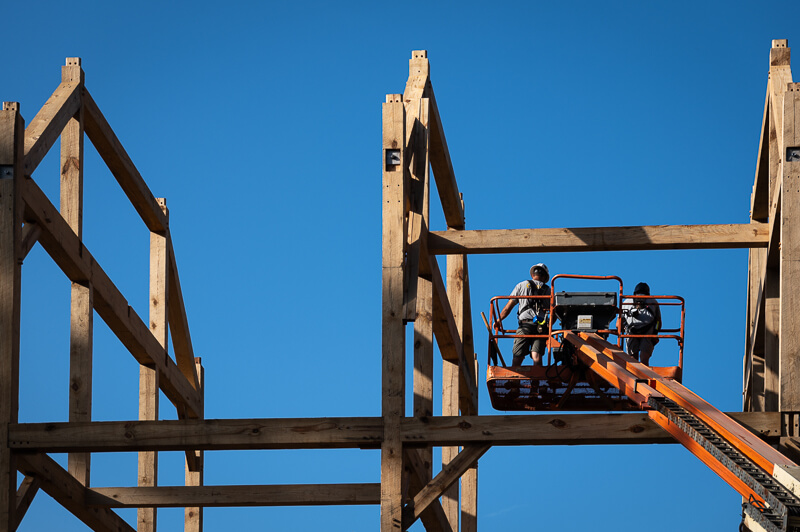
Island homes don’t just need to be beautiful—they need to be strong. Timber frames are engineered to handle the extreme: hurricane-force winds, heavy storms, and the relentless coastal climate. The interlocking joinery and massive timbers create a structure that is as durable as it is stunning, standing firm where lighter, conventionally framed homes might flex or fail.

3. Timelessness: Built to Last—and Loved for Generations

Timber framing isn’t a trend—it’s a building tradition that has been relied upon for over two thousand years. Long before mass-produced lumber and steel-framed glass boxes, people built with heavy timbers because they worked. These homes don’t just stand the test of time structurally; they endure because people love them. Timber-framed homes are cherished, maintained, and restored rather than torn down for something new. Their warmth, character, and craftsmanship make them worth preserving—whether on an island or anywhere else.
4. Less Waste, More Efficiency

On the mainland, construction waste is an afterthought—just toss it in the dumpster and schedule a pickup. On an island, every scrap of excess material has to be barged back off, turning waste disposal into a costly logistical challenge. Because we pre-cut every timber in our shop, there’s almost zero job-site waste. Fewer cutoffs, no piles of unusable material, and no need for expensive, hard-to-schedule dumpster hauls.


Considering Building on an Island? Here’s What to Know

Island construction isn’t for the faint of heart, but with the right team, it’s absolutely possible. If you’re considering a timber frame home in a remote location, the most important decision you’ll make is choosing experienced professionals who understand the unique challenges involved.
At Carolina Timberworks, we specialize in tackling complex builds—whether on an island, in the mountains, or anywhere that demands more than just the ordinary. Want to talk about your project? Get in touch with us.


Related

  • A Primer on Timber Frame Construction
  • Timber Frame Truss Ideas
  • How to Interview a Timber Frame Company
Filed Under: Blog, Design & Types of Frames, Featured Post, What's New

Timber Frame Barn Homes

The beauty and charm of timber frame barn homes have captivated property owners seeking a private getaway worlds apart from busy cities and suburban sprawl.

What’s so ideal about a barn home? There’s something about the drama of the open interior space and the coziness of the barn structure.

In recent years, timber framing has become increasingly popular in barn homes. We might be a little biased, but it’s easy to see why. Known as “cathedrals on the prairie,” timber frame barns are both majestic and familiar—a wonderful concept to inspire a living space.

What Are Timber Frame Barn Homes?

These structures incorporate traditional timber frame building methods into a barn-style home. At Carolina Timberworks, we build them with heavy timber and wood-to-wood joinery, using timber frame trusses and pegged mortise and tenon joints.

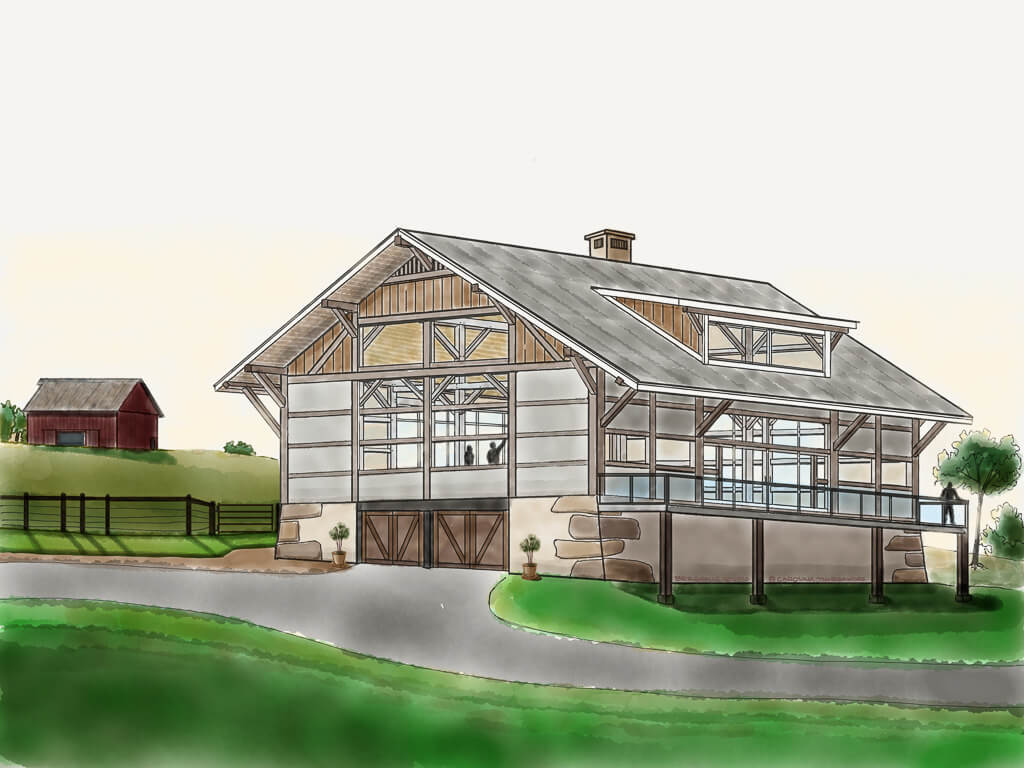
Timber Frame Barn Home

Although they offer plenty of room for customization, most timber frame barn homes feature open-concept floor plans with large interior spaces and plenty of room for entertaining.

How Can You Build a Timber Frame Barn Home?

If you truly love the concept of an antique barn, you might like the idea of reclaiming one of these structures and turning it into a home. This option is a nice way to preserve a piece of history while turning it into a usable space.

NC Timber Frame Barn Home
A home designed around an antique timber frame barn. Design by PLATT. Photography copyright David Dietrich.

The only catch is that this approach requires finding, purchasing, and moving an antique barn. In the past, we’ve purchased antique barns for this purpose. But as you might imagine, supply is running short, and they’re increasingly difficult to find.

Building New Barn Homes

Energy Efficient Barn Home

Fortunately, reclaiming old barns isn’t your only option for a timber frame barn home. It’s far more common for these homes to be new construction, using traditional building methods.

Why Build a Barn Home?

To begin, we happen to think barns are special (click here to read why).

Barns are the original multi-purpose structures. The open floor plans offer lots of space and flexibility for customization with both wide-open and tucked away spaces. Why compromise? Start a list. Bedroom(s), living room, kitchen and bathrooms–check. Workshop? Garage for your antique truck collection? Entertainment? Gym? Office? Guest bedroom suite? Game room? Basketball court (yes, it’s been done). Instead of building several buildings, build a timber frame barn home that efficiently houses everything under one roof.

The benefits of building new include substantially improved energy efficiency, as timber frame barn homes are often wrapped in a blanket of high-performance SIPs (structural insulated panels). These panels are delivered to your site pre-cut (including all door and window openings), are labeled, and go up fast (meaning you can be in the dry in days, not weeks). Later, sheetrock or wood paneling is applied to the interior walls, and the exterior can be anything you’d like (siding, wood, stone, etc.).

Timber Frame and SIPs

Assuming your building site permits orienting one roof slope facing south, the typical large barn roof shape is ideal for solar panels. Timber framing also happens to be one of the most sustainable building methods available for residential construction (and we even make our timber frames with renewable energy).

The future-proof nature of timber frame barns make them an attractive option. They’re certainly durable structures (probably because they’re loved and useful, and possibly because the simple roof shapes are less likely to leak). The open floor plans in barn homes permit reconfiguration to accommodate different stages of life. And of course, barns have a timeless and enduring appeal that has outlived quite a few other architectural styles over the past thousand or so years…

Want to learn more about the timber elements that make barn homes unique? Check out our Timber Frame Glossary for insights into key timber framing terms.

Traditional Barn Homes

High Performance Barn Home

We’d argue that traditional barn homes appeal to our connection with the past. Maybe we’re consciously or unconsciously re-creating something we experienced in our childhood or travels. Or perhaps it’s just the way a traditional barn home just “fits” certain pieces of property and naturally blend with, and compliment, the setting.

Barn Home

Modern Barn Homes

Building new also gives you significantly more opportunities for customization and the option to create a more contemporary aesthetic. Curious how a modern barn home might look?

Above, you can see a glimpse of the clean lines, open spaces, and modern finishes you can expect in this kind of space.

How Can I Build a Timber Barn Home?

We’re glad you asked. In our guide to timber frame barns, we’ve answered many of the questions that homeowners ask about building a barn, including:

  • How much will it cost?
  • Should I hire an architect?
  • How long will it take to build?

If this is the first time you’re considering a timber frame project, you might have questions about that process, too. We’ve answered a lot of them in our homeowner guide, which we like to call What to Expect When You’re Expecting a Timber Frame.

If you’d prefer to talk with our team or if you’d like to discuss a project in North Carolina or beyond, we’d be more than happy to do so. Send us an email or call us at 828-266-9663 – we’re nice!

These timber frames don’t just offer shelter, they tell stories

Filed Under: Blog, Design & Types of Frames

Timber Frame Barn

A big timber frame barn out of oak really does show off what timber framing is all about.

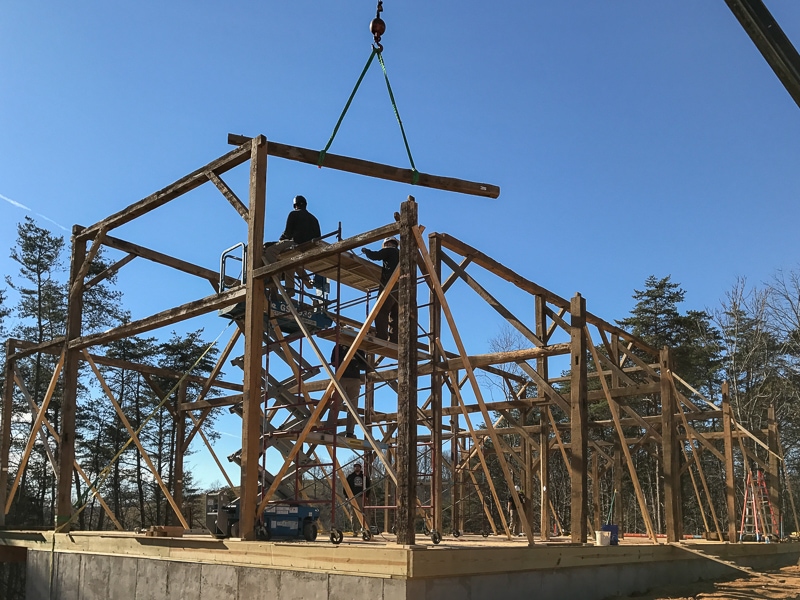
Within the confines of a 5 minute video, the essence of a timber frame raising: the bent assembly, the manhandling and futzing to fit up, the excitement of the first bent going vertical. Dropping the posts over the hardware. Pulling timbers together and that audible/visible jolt when they finally fit together.

The mud.

Filed Under: Blog, Design & Types of Frames, Videos

Reclaimed Hand Hewn Beams

Hand Hewn Beams

Hand hewn beams

or: putting old wood back to work

What are hand hewn beams?

A builder who purchased reclaimed wood trusses for his client asked if we’d send some information on the original source of old hand hewn beams.

He acknowledged we probably wouldn’t know exactly which building or where the beams came from. But he wanted to know some general information—the approximate age of the reclaimed hand hewn beams; what they might have originally been used for; what some of the original holes and joinery were for; and anything else that might be of interest to his clients.

where do your antique beams come from?

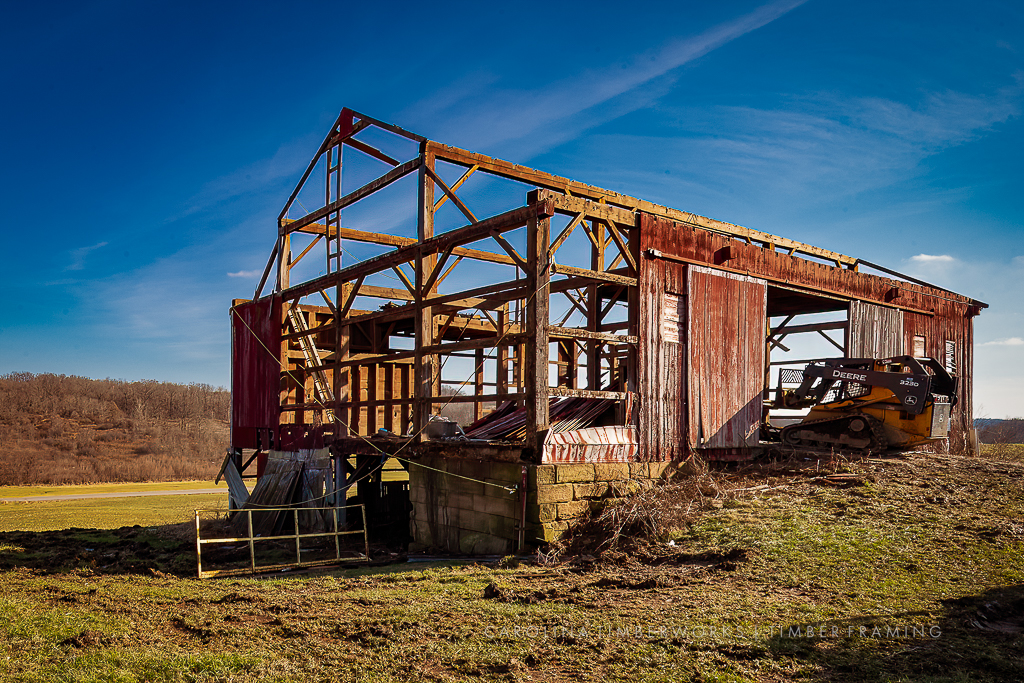
From painstakingly dismantled barns that have weathered many storms (both literal and economic) but reached the end of their useful life.

Reclaimed timber frame barn using hand hewn beams

why would somebody sell their old barn?

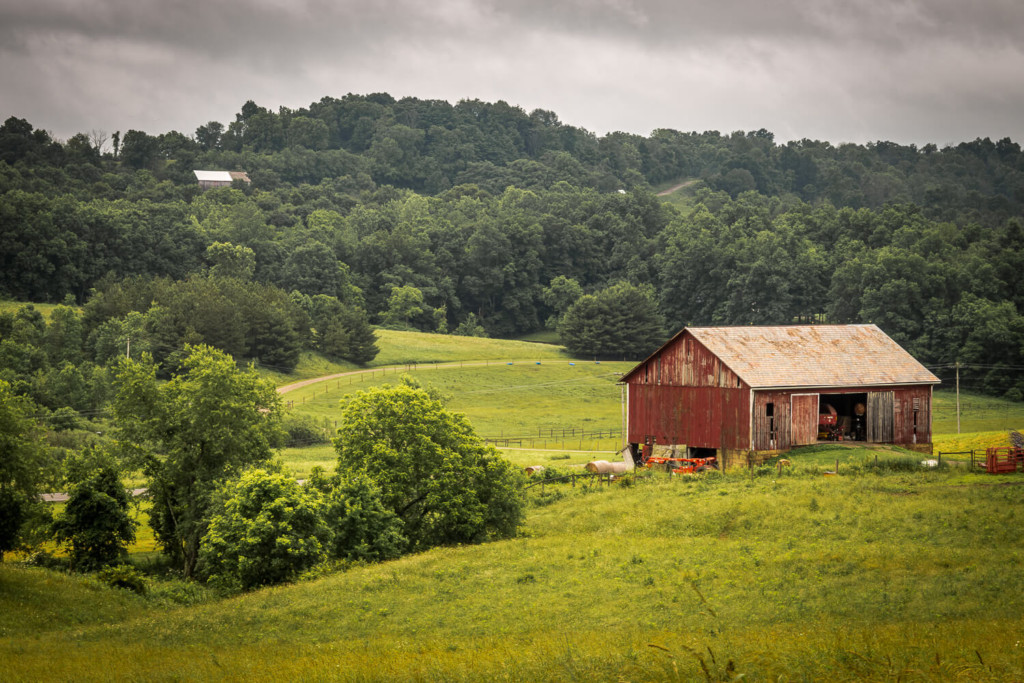
Usually because the nature of farming has changed and the old barn layout (think posts in the way, haylofts, milking parlor) doesn’t work as well as a wide-open metal pole barn building on a concrete slab. Other times the barn hasn’t been used (or maintained) for years and a hard winter delivers a coup de grâce.

Occasionally the family farm is sold to a developer, or the heirs don’t have any sentimental connection to the barn and simply want to maximize the value. Tragically, not many years ago, these old barns were burned or scrapped. Today, thanks to television and social media, people are more aware of the value.

how old are the barns?

If the reclaimed beams are hand hewn, it’s a good bet that the barn was built before sawmills–from the mid-1700s to the mid to late 1800s. That makes the barn from 170 to 270 years old, with the average reclaimed barn about 220 years old.

reclaimed barn

okay, so how old is the wood?

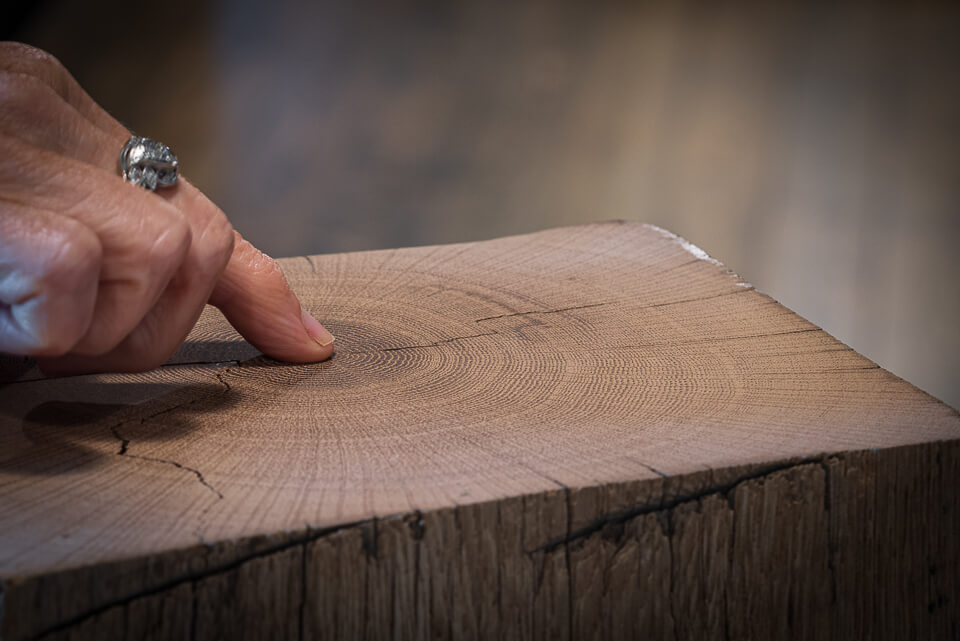
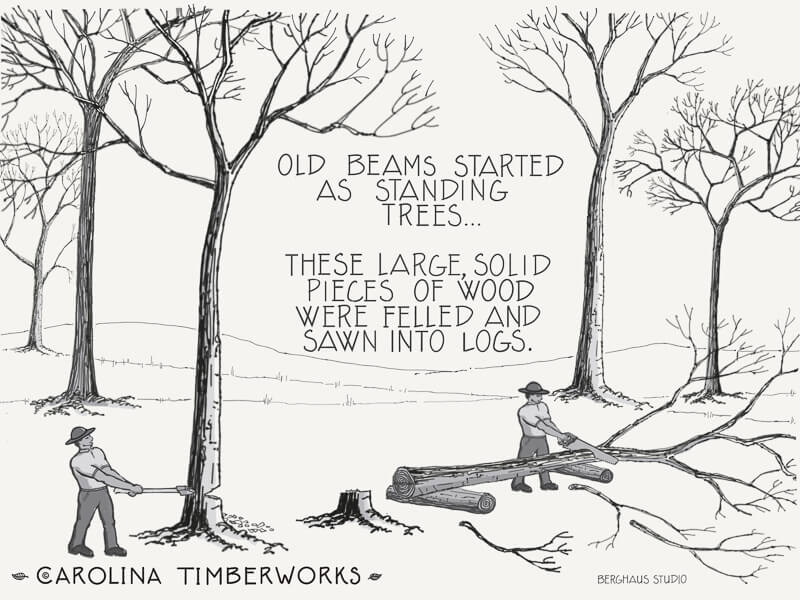
The trees for the barn were cut down from forests that had never been logged. Known as old-growth, virgin, or first-growth forest, these were forests that had grown for centuries undisturbed by axes or saws (fire is another story). A typical tree would have been from 200 to 400 years old. Assuming an average of 300 years at time of felling, the tree began life as a seedling 520 years ago (circa 1502).

Old Growth Reclaimed Hand Hewn Beam
Put your finger on the innermost growth ring on the end of a reclaimed beam and you’re touching wood that was likely already a mature tree in 1587 when 118 men, women and children came ashore on Roanoke Island to establish a permanent English settlement in the New World.

why not just hew new wood beams?

It can look contrived. It’s been said that the look is a bit like cultured stone: good from afar, but far from good.

how did the old-timers do it?

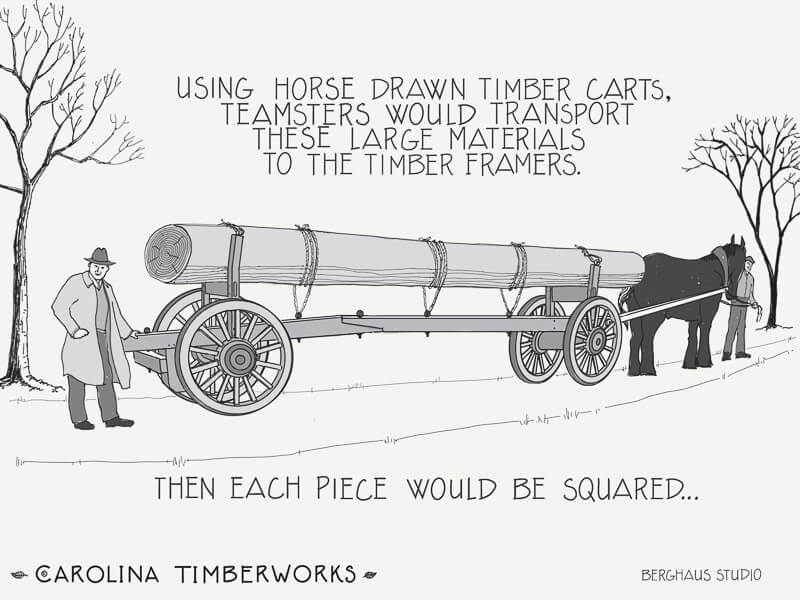
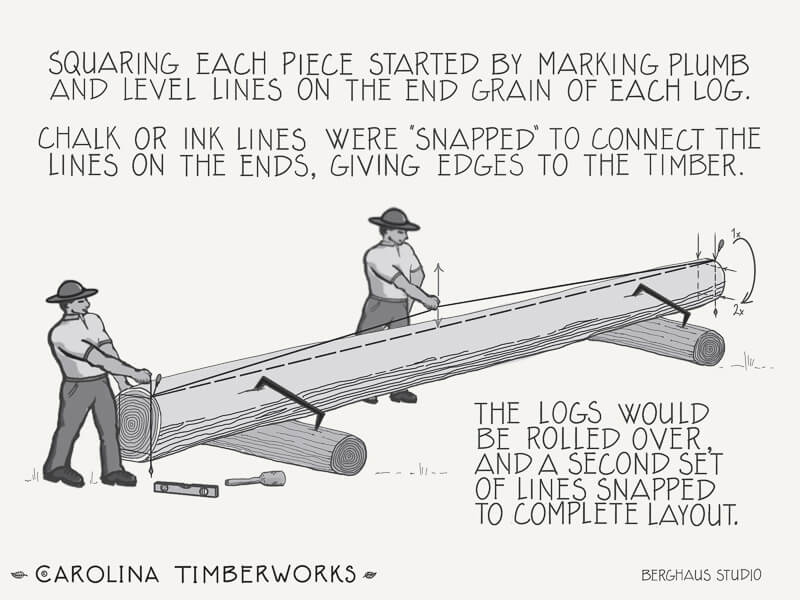
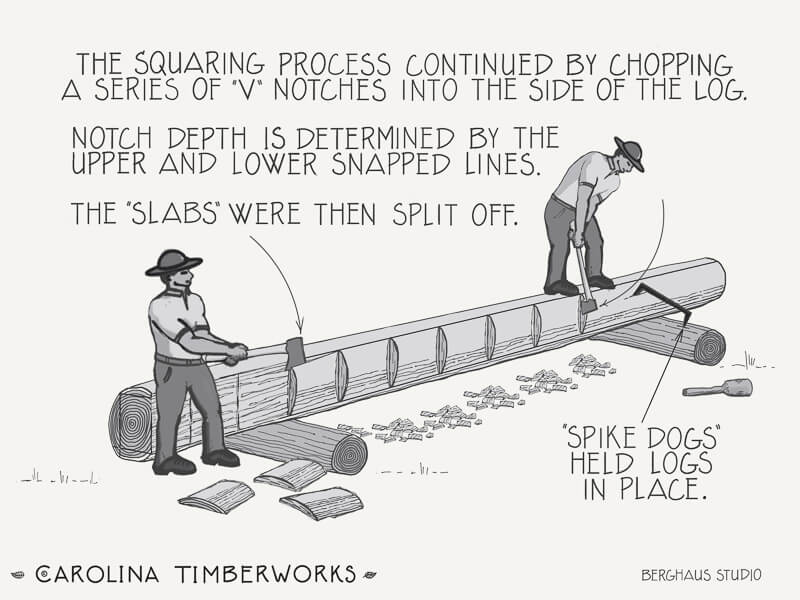
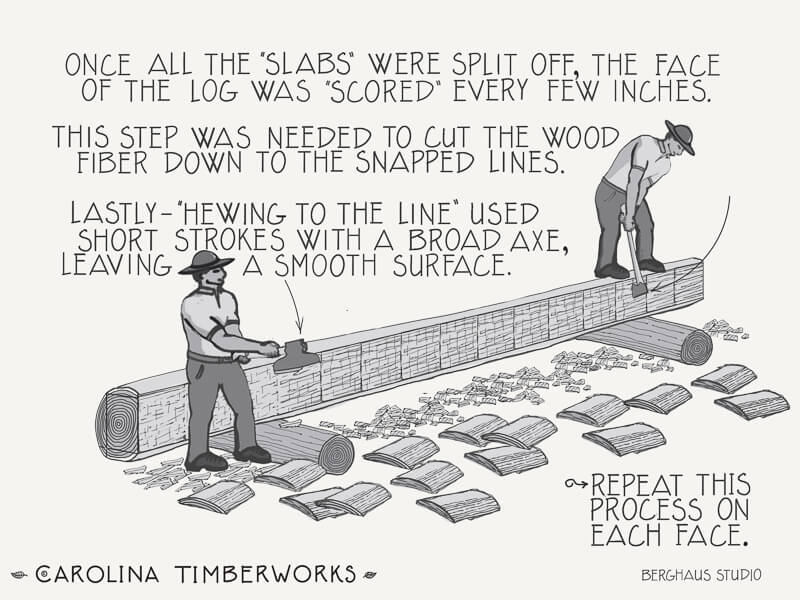
hand hewn beam history

what was the original purpose of the holes and joinery in my antique wood beams?

why old beams have holes

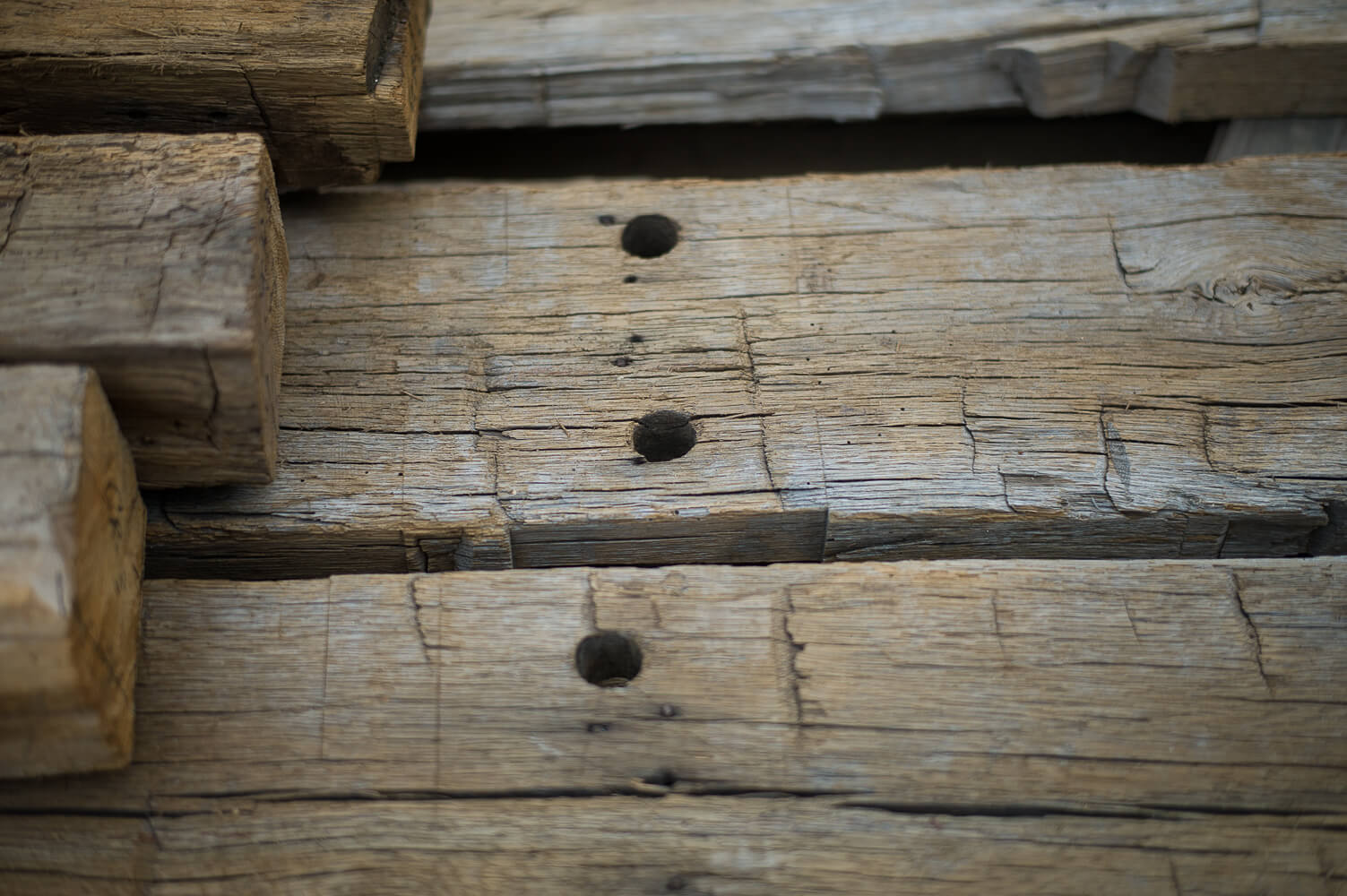
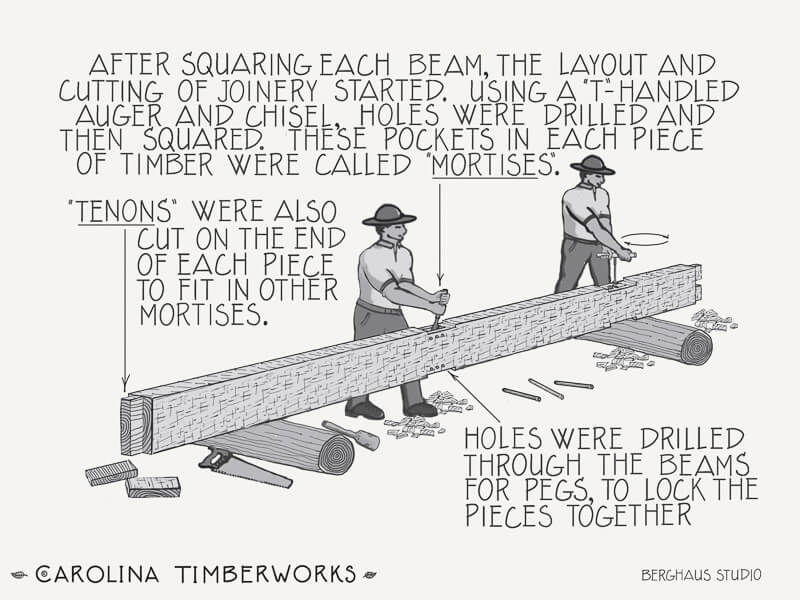
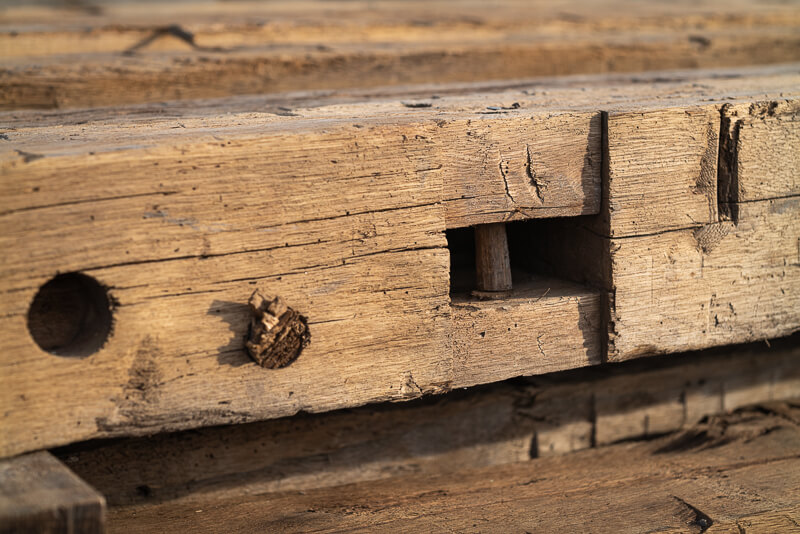
If the barn was timber framed (here’s the difference between timber frame and post and beam if you’re curious), your reclaimed beams will likely contain rectangular holes (mortises) and round peg holes similar to those shown above.

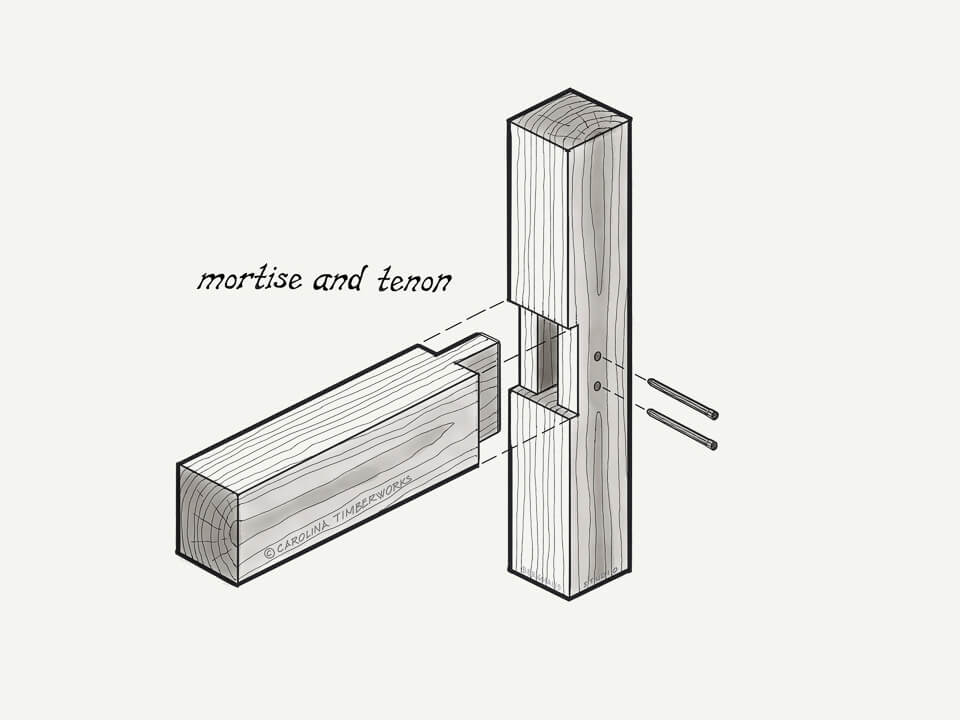
Timber framed structures were (and still are) connected using traditional pegged mortise and tenon joinery–meaning without nails, bolts, or metal plates.

timber frame mortise and tenon joint

So the the mortise holes and other joinery you’re seeing are evidence that your beams were recovered from an antique timber frame (often an old barn).

hand hewn barn timber

If your reclaimed wood beams don’t contain any joinery, it’s likely they came from an industrial post and beam structure (usually a factory or mill, but occasionally a WWII era military building).

By the way, we do not fill or patch mortise holes in reclaimed beams. It just doesn’t seem right to cover up examples of historical pre-industrial craftsmanship that was cut by hand.

Here in our North Carolina timber frame shop, we never tire of looking at old joinery; guessing what piece of the antique structure we’re looking at (was it a post, a plate, a rafter, or something else); and marveling at the work it took to cut joinery by hand. It’s also a fine way to fall asleep on a Sunday afternoon…

hand hewn beams flat ceiling

did you ever find out where the builder’s hand hewn beams came from?

We got lucky.

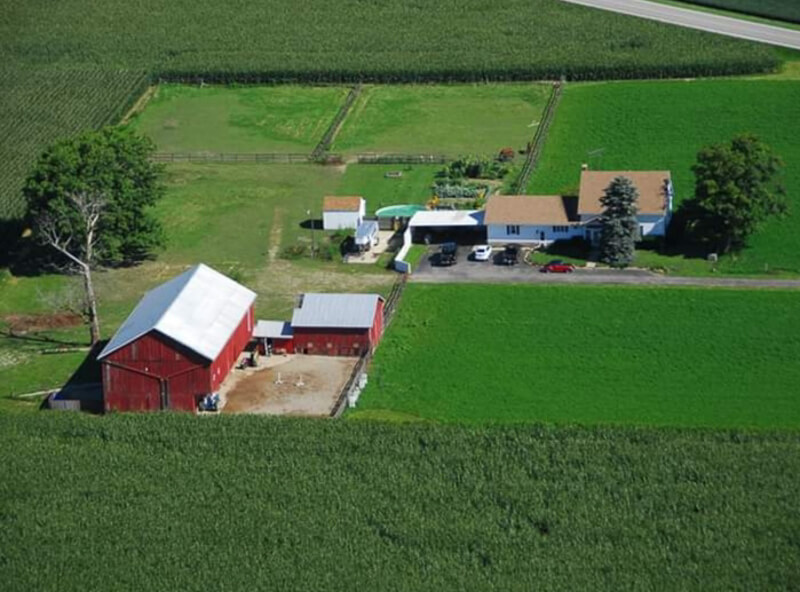
The owner of the barn had only one picture that survived:

Repurposed Antique Barn

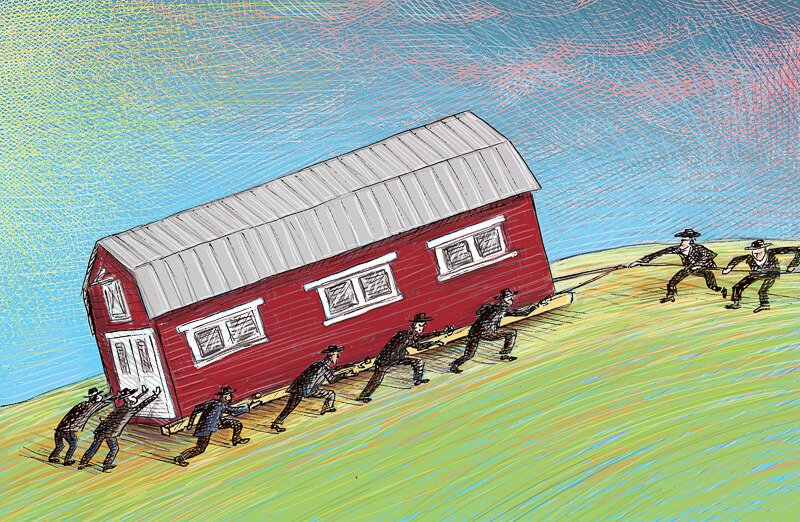
As it turns out this barn was not only erected once but erected twice and has been passed down through the family since the 1850s when it was originally erected. Within a few years of the barn being built, the railroad came through the valley and basically told the family their barn was in the way and they were taking it.

They were given a 3 month notice to vacate the property and remove all the livestock.  Anything that remained after the 3 month window would be burnt down to make way for the railroad. They received a $300 payout for the barn, land, and the house.

moving antique barn
Illustration by Barbara Kelley (used with permission)

Given that the barn was only a few years old, the family elected to move the barn! They disassembled it piece by piece from the roof down, transported all the material about 5 miles away via horse and cart and then began to rebuild it in a new location.

Unfortunately, the customer couldn’t give me the exact location where the barn originally sat. Apparently his grandfather had developed Alzheimer’s before his passing and the story had changed several times over the years.

The current owner opted to sell the barn because he is in the armed forces and primarily staged overseas. He was quite proud of the legacy that followed along with the barn and said it gave him a “great peace of mind” knowing that the “heart of the barn” would continue to live on with somebody else.

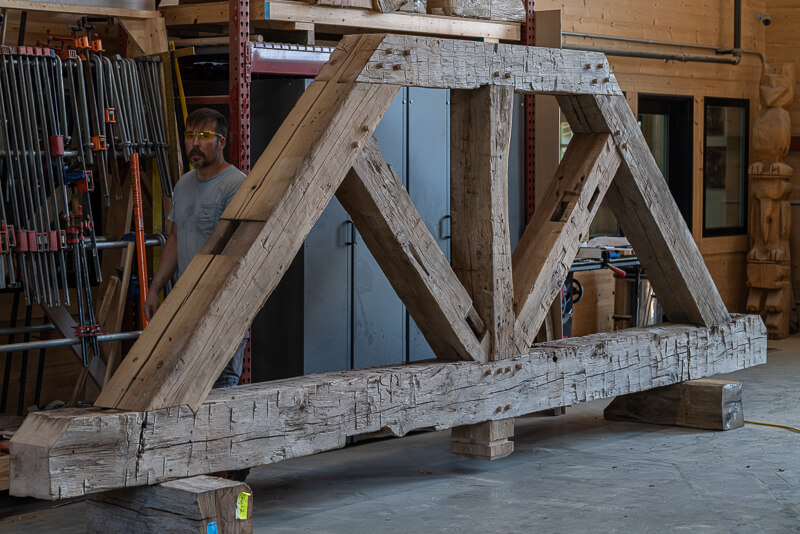
Hand Hewn Truss
WHAT WE BUILT

(4) 18′-6″ architect-designed non-structural King Post trusses using traditional hand-cut pegged mortise & tenon joinery.
View more of our work with reclaimed wood

Ready to give some old wood a new life?

"*" indicates required fields

Since the first timber frame we built more than 20 years ago, we’ve been building great timber frames for great people. We build people’s dreams and do what we said we’d do–when we said we’d do it. Sometimes we’re not the right choice for a particular job. So, we ask questions and listen–because that’s the only way we know to determine if what’s most important to you matches what we do well.

Tel: (828) 266-9663

Directions to our timber frame shop.

Send us your question or comment by filling out the form below and we’ll reply to you personally within one business day.
Name*
We promise to protect your privacy.
If you’d like us to call you.

Filed Under: Blog, Design & Types of Frames

Google Fiber Charlotte: Benefits of Adaptive Reuse in Action

Key Takeaway

Adaptive reuse transforms an old building for new uses rather than tearing it down. Google Fiber’s Charlotte office sits inside a post and beam industrial building more than a century old, which was restored rather than demolished. Keeping it intact saved material and held onto its original character.

Where Google Fiber chose to put their Charlotte office was a surprise: they re-imagined the typical high-tech office space by repurposing a more than 100-year-old historic post and beam building in an incredible adaptive reuse project. North Carolina-based Carolina Timberworks was proud to partner with Google to restore the historic reclaimed beams.

What is Adaptive Reuse and How Does It Apply to Charlotte’s Google Fiber Headquarters?

Adaptive reuse is the process of repurposing an existing building for new functions while maintaining the historical significance of the building. For example, converting an old printing facility into a community center or transforming an old roller rink into a theater.

Or in this case, turning the Philip Carey Building into Charlotte’s Google Fiber HQ.

Adopting an adaptive reuse model can preserve and rejuvenate historic buildings. This approach can also promote sustainability, slow urban sprawl, and encourage cultural development in urban areas.

Why Sustainability Matters

After demolishing an existing building, new construction requires a hefty amount of highly embodied resources (such as steel and aluminum) as well as new materials that produce large amounts of carbon emissions.

Adaptive reuse is different. It recycles highly embodied resources and prolongs the building’s life. When a building lives longer, it protects from the high carbon footprint of demolition waste—not to mention construction waste.

How Reuse Honors a Building’s Heritage

The benefits of adaptive reuse go beyond sustainability alone. This method also honors a building’s heritage by conserving and maintaining the architecture and history. For example, an old bank turned into an office center may maintain its original vaults.

Conservation through adaptive reuse can save many historic buildings from extensive modifications or even demolition. At the same time, this approach may also encourage related cultural development—which is something we can all enjoy.

Key Challenges of Adaptive Reuse

Of course, adaptive reuse isn’t without challenges. Lead paint, mold, and asbestos often surface in older buildings. Structural deterioration can also pose a safety concern. In many instances, building codes and regulations can be challenging to meet due to outdated and incompatible materials.

Despite these barriers, the benefits of adaptive reuse outweigh the possible drawbacks. We find that it’s important to focus on the benefits rather than the challenges in order to improve sustainability and preserve the historical significance of these buildings.

How Does Carolina Timberworks Support Sustainability? 

Wood is one of the very few renewable sources on earth. It’s also biodegradable and recyclable and it’s a carbon sink—meaning it stores more carbon than it releases. But that doesn’t mean we support the practice of chopping down fast-growing trees and turning them into inexpensive 2x4s.

Instead, we believe that a functional and delightful timber frame is best realized with magnificent, mature trees. We honor trees that have produced oxygen and stored carbon for decades by turning them into structures that can endure for a century or more.

We’re no strangers to reclaimed wood either. Did you know that some post and beam homes using recycled wood can be constructed without cutting down a single tree? Dedicated to sustainability, Carolina Timberworks strives to construct homes that will last for generations. After all, we find that buildings that are well-loved are also well-maintained. 

Charlotte’s Google Fiber Building Project

Google understands its footprint on the environment, an issue that’s always on our minds here at Carolina Timberworks. Did you know that renovating an old building like this releases 50 to 75 percent less carbon than building a new one from the ground up? We’re all for sustainable timber framing!

Above all, Google wanted our team to develop an office space worthy of Google Fiber’s mission to deliver high-speed internet to Charlotte, North Carolina, and beyond. Google prioritizes speed and ambition – and they expected the same from our team. Critical deadlines? Not a problem: we do what we say we’re going to do when we say we’re going to do it.

Of course, our reliability wasn’t the only reason Google contracted Carolina Timberworks for the Fiber project. Our experience using reclaimed wood for structural timber framing sealed the deal.

After all, the average timber frame company doesn’t work with reclaimed wood at all. Those that do usually focus on decorative timber framing due to the challenges of structural timber framing with reclaimed wood.
One wrong move can waste a lot of materials and labor, setting back a project significantly. Our team’s skill, experience, and background in structural timber framing ensured that we could deliver this project on time for Google.

After meeting with the general contractor (Pepper Construction Company) and the owner’s rep, they looked at each other and said, “I think we’ve found our timber frame company.” We couldn’t agree more, and we were happy to partner with Lineberry Architectural Group, which produced the drawings.

Carolina Timberworks is proud to add the Google Fiber Charlotte building to our growing portfolio of once-in-a-lifetime projects we’ve worked on across the United States. Our team’s strong background in structural timber framing leads to incredible adaptive reuse projects, as proven by being chosen by Google to lead the Fiber project.

We rise to the task when other timber framing companies skimp on using reclaimed wood. And we strive to promote sustainability in timber framing — despite the many challenges.
Read More: Is Timber Framing Sustainable?

Filed Under: Blog, Design & Types of Frames, Sustainability, Videos

Timber Porte Cochere

How to make a grand entrance and enjoy unloading groceries in the rain

We always enjoy driving into a porte cochère: there’s a certain sense of making a grand entrance, of feeling important, tinged with our nostalgia for more elegant times.

Wood Porte Cochere
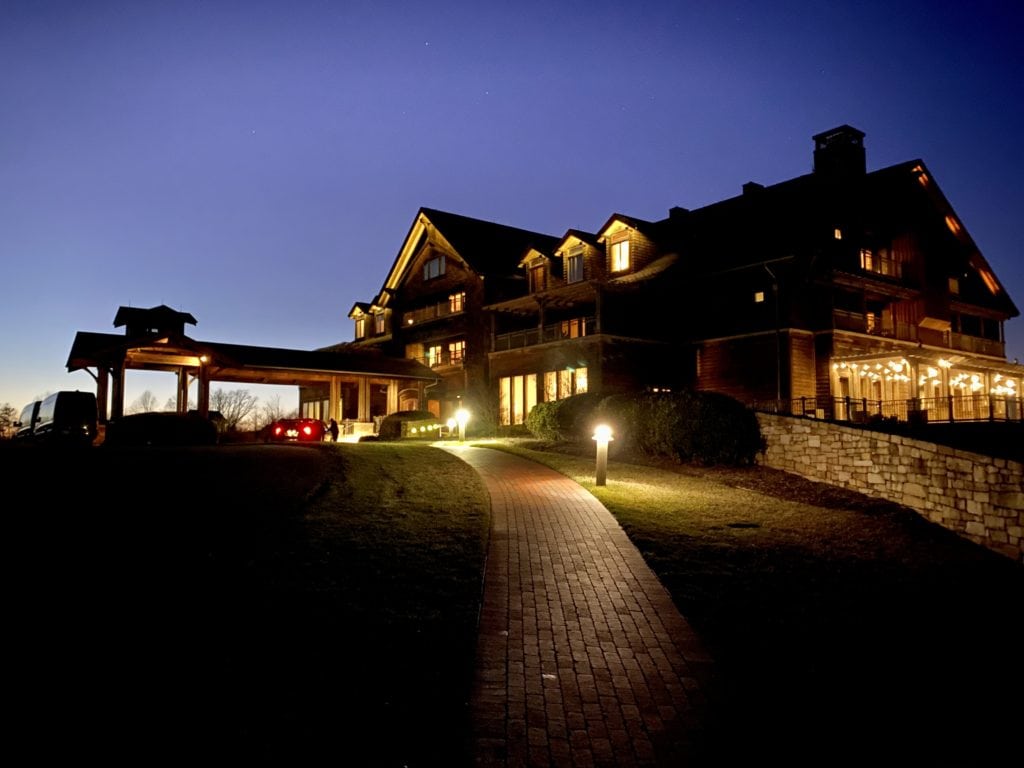
If you haven’t stayed at Primland, you’re in for a treat.

So what is a porte cochère? The literal translation from French is “Door Coachman”, and is sometimes (erroneously) defined as “carriage porch” or “Carport”. We define it as “a sheltering roof without walls over a driveway next to the entrance of a residence or business.” And in case you were wondering, here’s the correct pronunciation: /ˌpôrt kōˈSHer/.

“The front desk had already made a great fuss of Johnny and Mary, lining up to greet him at the famous porte-cochère as soon as his splendid old Rolls-Royce had arrived…”
Stephen Fry
More Fool Me, 2014

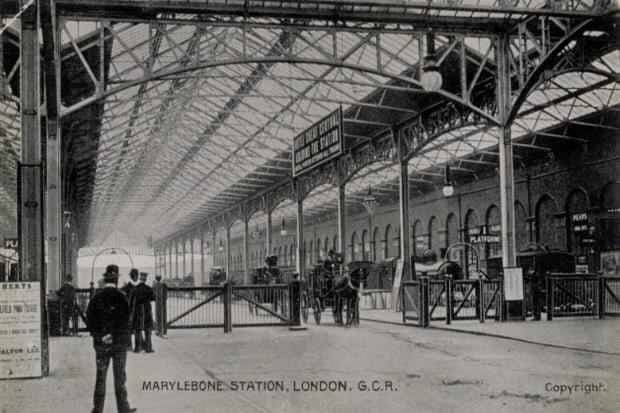
Although we readily admit our bias for heavy timber porte cochères, examples of beautiful steel porte cochères do exist. To wit, Marylebone Station in London:

Marylebone station porte cohere

In addition to providing embarking and disembarking vehicle passengers with a glimpse into the ageless past, adding a heavy timber porte cochère to a home or business brings another benefit: it shields guests and customers from the weather.

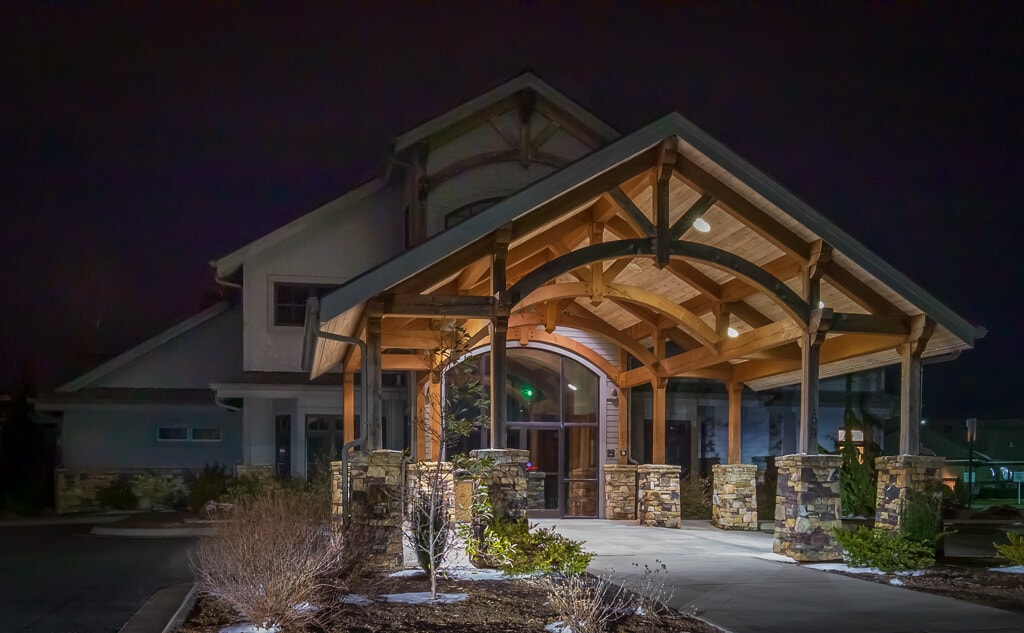
Wood Porte Cochere for a business
A welcoming timber frame porte cochère at Boone Dermatology designed by David Patrick Moses Architect, PLLC

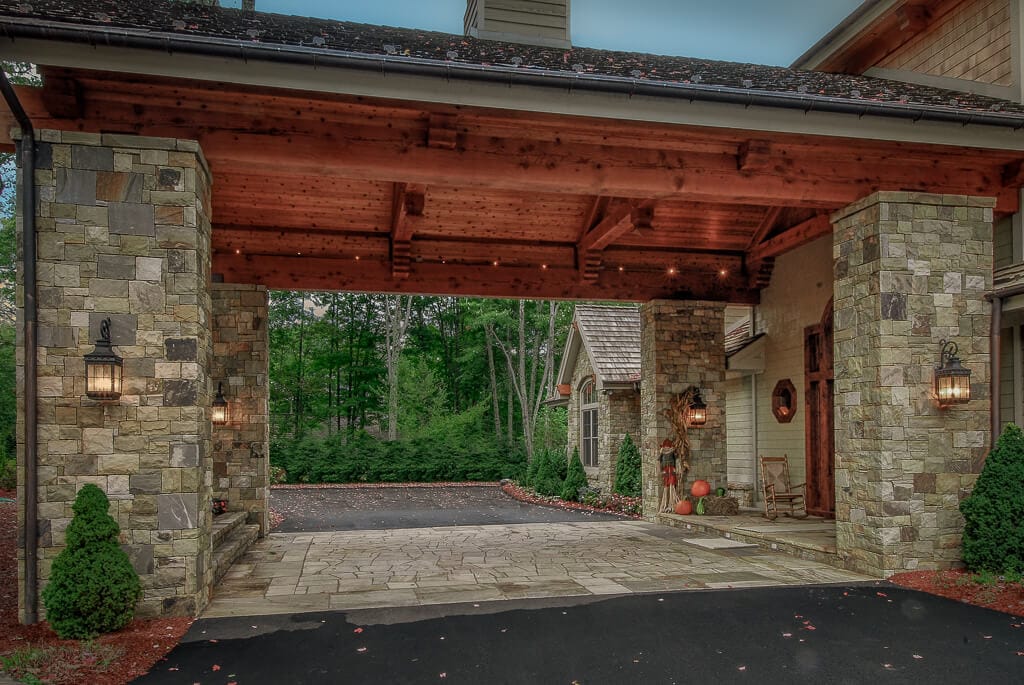
Build a timber frame porte cochère driveway at your residence, and you’ll appreciate it every time you unload groceries in the rain or snow. Here are some porte cochere ideas to inspire you:

Timber Porte Cochere
This timber framed porte cochère is even bigger than it looks. For a sense of scale, the two horizontal timber plates are 12″ wide x 24″ deep beams 46′ long! Design by Bradley G. Dowdy, AIA Architect.

Stay tuned: my wife wants to add a timber frame (what else) porte cochère to our home and she’s designing a contemporary shed type roof version with large overhangs.)

Learn more about our timber frame projects for places we live.

From raw timber to complete structures, see timber framing in action

Want to make your own grand entrance?

Call us at 828.266.9663 (we’re nice!) or email below:

Architect Contact

Filed Under: Blog, Design & Types of Frames

Biggest Horse Barn in the US

No, they won’t let you live there.

This video generated lots of interest and questions in online discussions. Kaitlin Mitton did a great job answering the most-asked questions on Horse Collaborative (now Horse Network):

  1. This is in Wellington, Florida.
  2. It is the home barn of a professional polo team.
  3. Yes there is a state-of-the-art sprinkler system and fire extinguishers.
  4. Polo players don’t need arenas to ride in.
  5. These horses are happy, healthy, and very well loved.
  6. They also host tournaments and polo matches as well as entertain at this facility.
  7. This facility is owned by a very well respected and charitable equestrian family in the polo and hunter jumper world.

Barn specifications for the largest horse barn in the US:

  • Total square footage under the roof of the entire building: 78,000 sqft
  • Total square footage of horse barn area: 62,267 sqft
  • 130 stalls
  • 10 tack rooms
  • Custom Aquatrainer Equestrian aquatic rehab treadmill and cold soak therapy area
  • Equine Veterinarian Area
  • Two commercial-grade laundry rooms
  • Two Feed Storage Rooms
  • Four Interior Wash/Tack Stalls
  • Eight exterior wash stalls (6 to 8 horse capacity in each)
  • 4,800 sqft Central Courtyard with Banyan trees
  • Eastern White Pine Timber Frame Trusses, Hand-Hewn by Adze

Attached functions:

South Wing
Private Owner’s Suite
Guest and entertaining Areas
Catering kitchen
Argentine Asado Grilling Area
Three Sided Fireplace
Wine room

North Wing
Three bedroom “Pro’s” Living Quarters
1,300 sqft gym with physical therapy room

Use:  Equestrian center for a professional polo team

Location:  Wellington, Florida

Copyright 2015 Carolina Timberworks, All Rights Reserved

Ready to be blown away by timber framing craftsmanship? Watch now

Filed Under: Blog, Design & Types of Frames, Videos

Barns for Sale

Sadly, the age of antique timber frame barns is drawing to a close. Put simply, time, the elements, and neglect are hard on old barns. There are lots of barns for sale, but most aren’t worth saving.

At North Carolina-based Carolina Timberworks, we usually have a couple of antique timber frame barns in inventory that we couldn’t resist buying an old barn for sale. And we’ve also built brand new timber frame barns using traditional methods.

Why all the fuss about old fashioned barns? Perhaps Tedd Benson said it best when he opened a timber framing talk with these two words:

Barns resonate.

Tedd Benson

Let’s look at how old wood barns create memorable experiences—and how you can build or refurbish one of your own.

What Is a Timber Frame Barn?

A timber frame barn is a large structure built using traditional timber framing methods for agricultural and storage purposes. Well, at least that’s how they were historically used.

These days, some traditional barns have taken on new lives as gathering spaces or entertainment venues. No matter their function, however, timber frame barns are built to last—often for generations.

Timber Frame Antique Barns vs. Conventional Barns: What’s the Difference?

Known as stick framing, the conventional method of barn building requires minimal skilled labor. When you build a barn with stick framing, you build with smaller pieces of wood—typically 2x4s or 2x6s. Then you assemble the pieces with screws, nails, or other metal hardware.

To build a timber frame barn that has ample open space, you start with lots of heavy timber (mere 2x4s could never do this kind of job). Then you connect the pieces of the frame using traditional joinery methods, such as mortise and tenon.

What about post and beam barns? Aside from the joinery, they’re pretty similar to timber frame barns. Post and beam barns typically use heavy timber connected by exposed metal fasteners and steel plates, as opposed to the traditional wooden-pegged joinery in a timber frame barn.

Want to learn more about the timber elements that make this barn unique? Check out our Timber Frame Glossary for insights into key timber framing terms.

What Are the Four Traditional Barn Styles?

Whether you’re on the hunt for the perfect antique barn or you’re planning to build a brand new s barn, you’ll want to get familiar with the most common styles. Here are four to consider:

  • Think of a classic barn. What kind of image do you see? There’s a good chance it’s a gambrel barn, which most closely fits the typical “classic barn” definition. This type of barn also has great storage space, thanks to its double-sloped gambrel roof.
  • Another timeless style, a gable barn has a pointed roof that looks a bit like the letter A. It also features that classic barn aesthetic but generally has a bit less storage space than a gambrel barn. 
  • Bank barns are two-level structures built right into a hill—or a bank. The design gives you access to two levels. The main entrance at the bottom of the hill leads to the first floor, while the second-floor entrance opens to the top of the hill.
  • Saltbox barns have slanted roofs and eye-catching asymmetrical profiles. You’re most likely to spot these unique designs in New England.

Barn accessories give all these styles added functionality. For example, swinging or sliding barn doors can completely transform the entrance and change the space.

Barn windows can determine light levels and define both interior and exterior aesthetics. To complete the exterior, add an original touch with a cupola or a weathervane.

What are Creative Uses for Timber Frame Barns?

You don’t have to own a working farm to find a good use for a timber frame barn. There are countless creative ways to enjoy a new or antique barn:

  • How about a timber frame party barn? This type of structure can add rustic charm to any event you host, and it’s especially popular for weddings. Did you know? Even Carolina Timberworks’ very own Eric Morley got married in a timber frame barn.
  • Do you have a lot of equipment to store? A timber frame barn doubles as an oversize shed and provides ample storage space.
  • Are you ready to move your workshop out of the garage or basement and into a dedicated space? If you’re a fan of building or repairing things, a barn can easily become a workspace. In a big timber shed like this, you’ll have plenty of room for tools, equipment, and much more.
  • Do you want to bring a barn-inspired aesthetic into your living space? Using a timber frame barn as a cabin, bunkhouse, or carriage house is a wonderful way to capture the rustic appeal of this structure.
Timber Frame Barn Home

Do you own horses? Old wooden barns are perfect for creating a safe, comfortable space for horses—and these structures can come in a range of sizes to meet your needs.

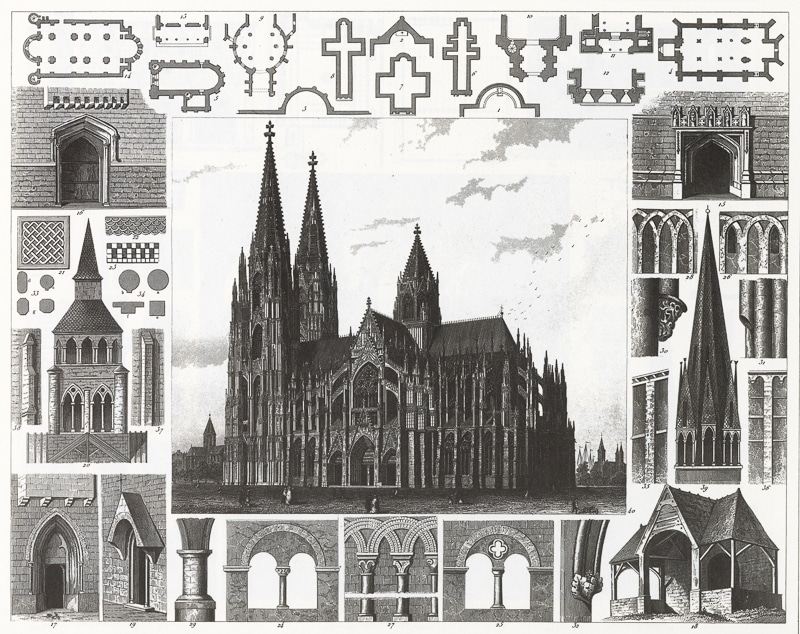
Timber Frame Cathedral
Engraved illustrations of Cologne Cathedral; Medieval Architecture from Iconographic Encyclopedia of Science, Literature and Art, Published in 1851.

It doesn’t seem too great a leap to assume that some of our ancestors who built the great halls and cathedrals of the Middle Ages would also be charged with constructing the other great buildings of the era (barns).

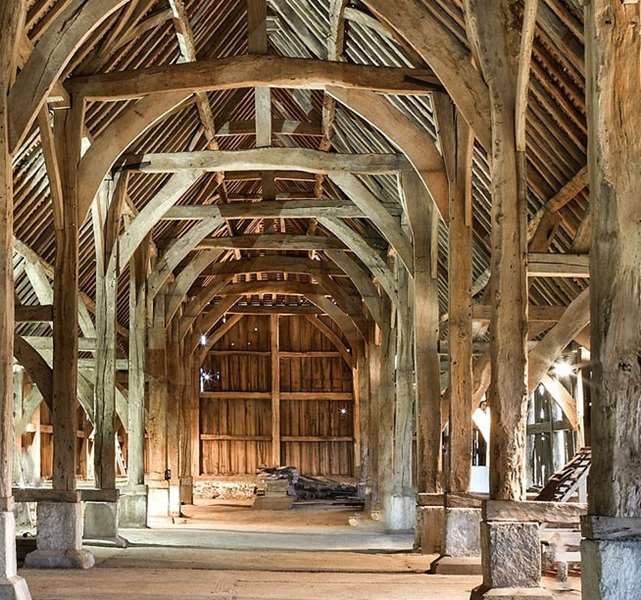
Perhaps then, it’s not surprising to note how both the size and aisles of barns evoke the space and shape of a cathedral:

The barn at Harmondsworth
Cathedral barns: The barn at Harmondsworth is almost 600 years old, is one of the largest ever known to have been built in Britain (37 feet 6 in wide by 192 feet), and was used mainly to store crops before threshing.

Fast forward a few hundred years, and it makes sense that immigrants to the United States would bring those skills to bear on the barns (and houses) they built on the shores and prairies of a new land.

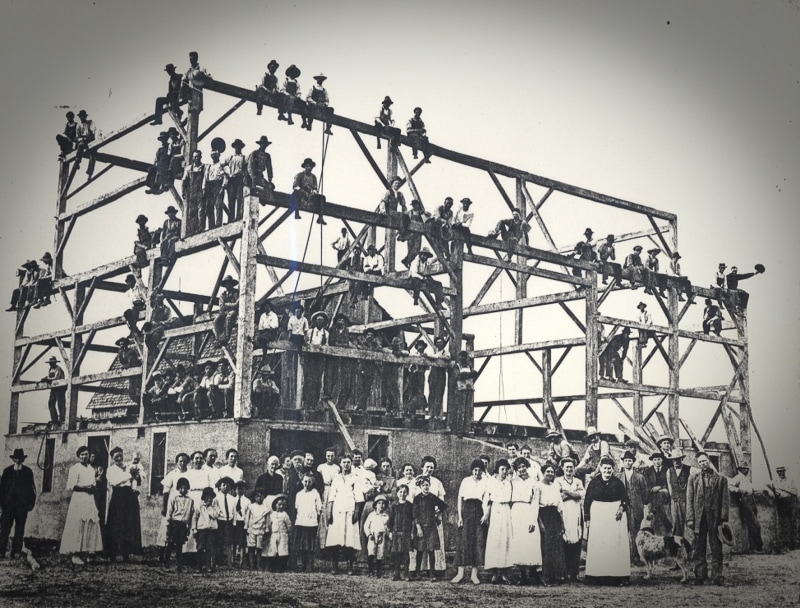
Old fashioned barn raising
Cathedrals on the Prairie.

With their wide-open spaces, soaring ceilings and weathered wood, antique post-and-beam barns of centuries past are being reborn.

THE WALL STREET JOURNAL

So What Can You Do With Old Barns for Sale?

Barn projects, like their owners, vary widely…

Wedding and Event Venue Barns for Sale

wedding venue barn
Our friends Kristin & Kara located a 90 year old timber-framed bank barn which we helped them disassemble, engineer, repair, move, and re-erect on a different property as a wedding venue. Here we are putting it back to work for another hundred years as Cana Barn, a wedding venue in Staunton, Virginia.
Cana Barn interior
Open plan barns work nicely for event venues.

Party Barns

Barn conversion interior
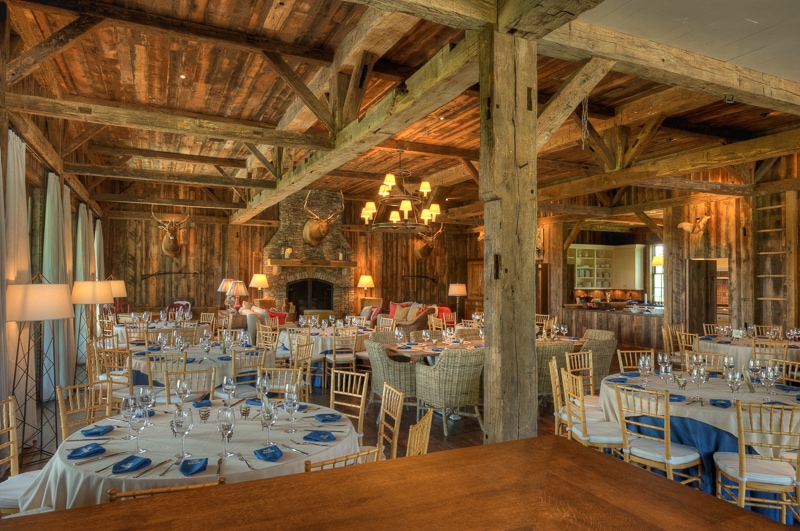
Inspired by a visit to Blackberry Farm in Walland, TN, the owners converted part of an existing barn on their property to a gorgeous Party space–using reclaimed timbers from two Pennsylvania barns. Design by Meyer Greeson Paullin Benson. To see more Party Barns we’ve built or to read the Garden & Gun article about this project, click here.

Barn Conversions

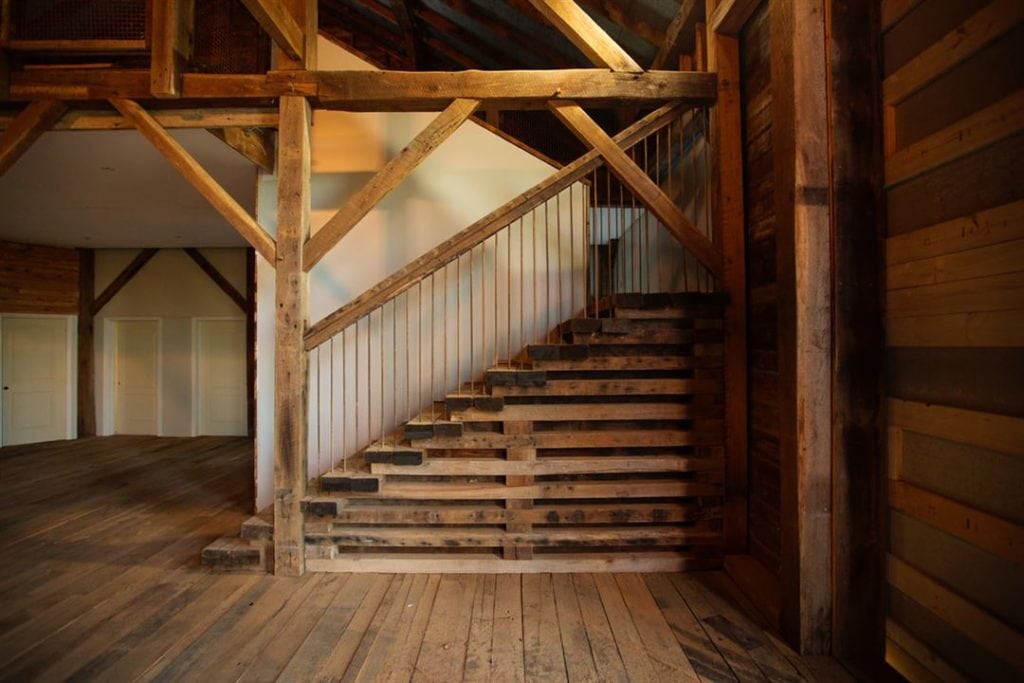
Barn conversion
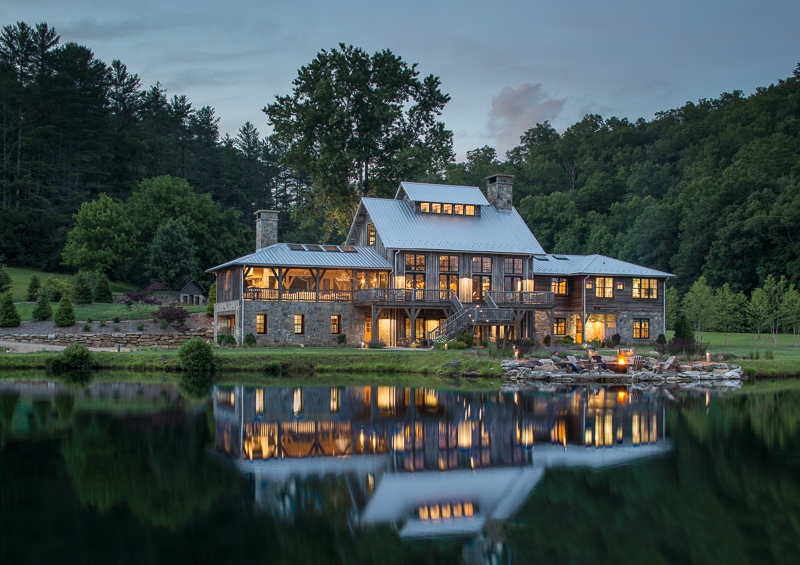
The center portion of this home began life as an antique barn. Design by Platt Architecture

Two of Our Favorite Old Barns

All the beautiful projects above began life as old barns, much like the two structures below. There’s a certain logic to the idea that the best barns were built on the most fertile land–the idea being that these farmers were the most successful financially, and therefore had the means to build unusually nice barns (usually timber framed as opposed to nailed or bolted together).

Although we don’t have these two used barns for sale any longer, we would be happy to discuss an antique barn project with you. Have one in mind? Tell us about it, and we’ll keep an eye out for a specific size barn for you. Or talk with us about our custom timber frame barns and learn how an old style barn could create an experience that’s just as memorable.

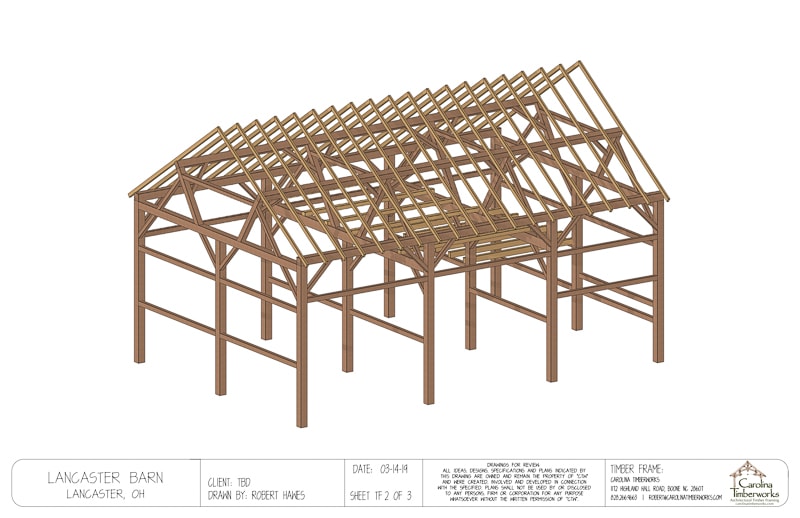
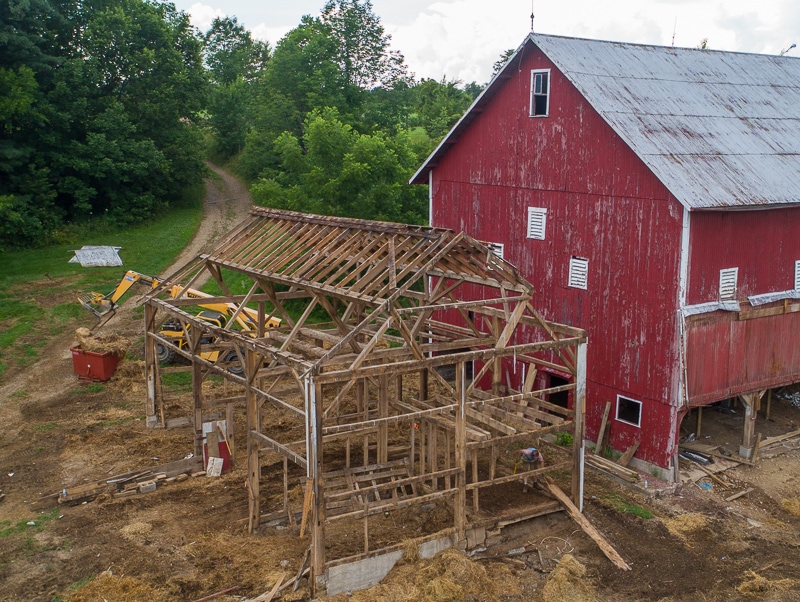
Lancaster Barn: 26′ x 38′ 4″

Lancaster barn rendering
Barn during construction
Built in 1901 on Wilson Road in Lancaster, Ohio to house livestock

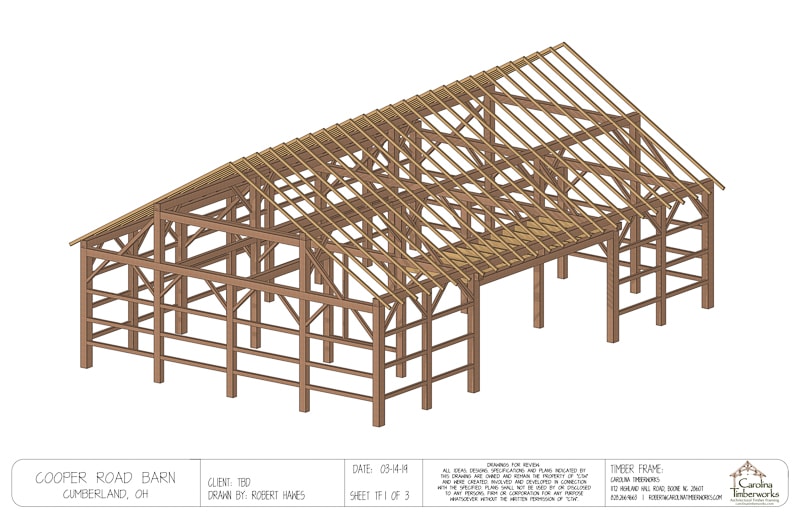
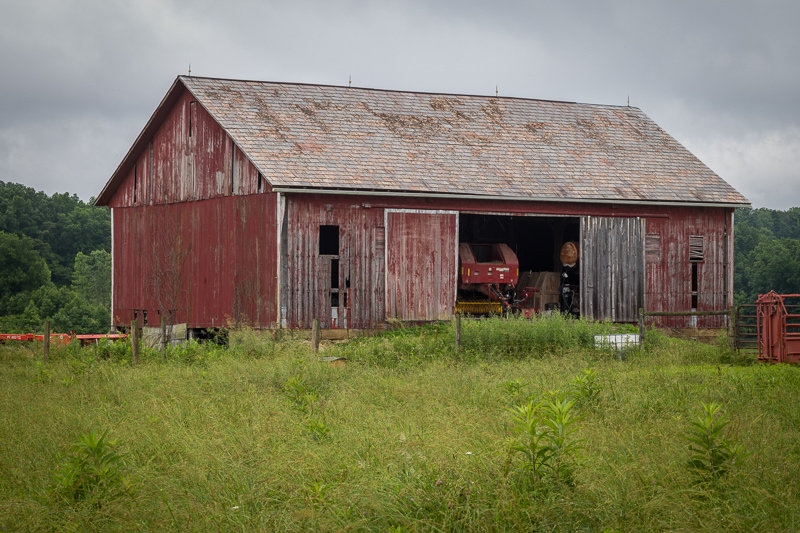
Cooper Road Barn: 40′ x 60′

Barn rendering
oak barn for sale
Exterior of Cooper Road barn–note slate roof
hand hewn oak barn
Interior of Cooper Road Barn just prior to dismantling (timber frame is hand hewn)

Who Buys Old Barns?

The allure of antique barns attracts a diverse group of enthusiasts and professionals:

  • Homeowners seeking a property with rustic charm
  • Architects and builders looking for authentic, aged timber for unique construction projects
  • Collectors passionate about preserving historical structures

Many buy old barns both because of the structure and the stories and heritage they embody.

How Much Do Old Barns Sell For?

Old barns can vary greatly in cost, depending on size and condition. On average, a small barn of 30 by 30 feet or less in reasonable condition can cost around $10,000. This cost does not include the dismantling, packaging, and shipping of the barn and its materials.

Barn wood and vintage hardware can also be valuable, but the prices vary widely depending on the species and quality of the wood. Values can reach $50,000+. Old-growth barn timbers do not have a definitive value; their worth is determined by what a buyer is willing to pay.

From the aesthetic to the experience, we’re big fans of timber frame barns here at Carolina Timberworks. In fact, we’ve even refurbished a number antique barns and built “brand-new old barns”. Take a look at a few of our favorite timber frame barns in and around North Carolina, learn more about timber frame barn homes, and don’t hesitate to get in touch if you have a project in mind. We’re nice!

Pondering an antique barn project?

Call us at 828.266.9663 (we’re nice!) or email below:

Architect Contact

Filed Under: Blog, Design & Types of Frames

  • Page 1
  • Page 2
  • Go to Next Page »

© 2026 Carolina Timberworks. 210 Industrial Park Way, West Jefferson, NC 28694 T: 1-828-266-9663


Our Privacy Policy