• Skip to main content

DEV Carolina Timberworks

Craftsmanship. Passion. Service.

  • Home
  • Portfolio
    • Places We Live
    • Places We Work
    • Places We Play
    • Timber Frame Videos
  • Learn
    • Timber Frame Blog
    • Timber Frame Glossary
  • For Professionals
    • Architects
    • Builders
  • Owners
  • About
    • The Crew
    • Our Story
    • Our Future
    • Our Home
    • How do you guys work?
    • Carolina Timberworks Testimonials & Reviews
    • In The News
  • Contact
    • Join Our Team

Timber Framing Basics

Timber Frame Building

Key Takeaway

A basic timber frame building uses large posts and beams joined with traditional techniques to support the structure. Many projects pair the frame with structural insulated panels for the enclosure. Key ideas include how different trusses work, how joints are shaped, and how timber framing compares with post-and-beam or standard construction.

Here’s the thing about timber frame building: it might be the perfect construction method. After all, the origins of timber framing date back nearly 2,000 years—and the basic elements haven’t changed much over nearly two millennia. Today, timber framing still features wood-to-wood joinery, much like centuries-old homes and temples in locations as varied as England and Japan.

How have timber frame buildings withstood the test of time? Let’s look at the basics of this building method and the types of structures that fit best with timber framing.

What is a Timber Frame Building?
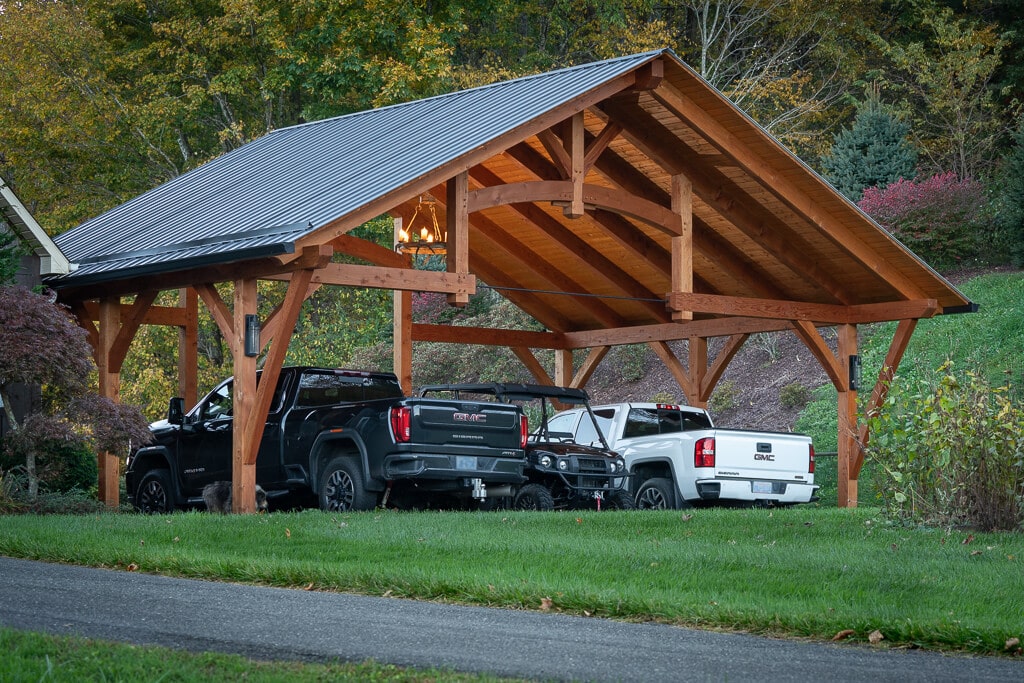
Timber Frame Carport

From classic barns to custom homes to rustic pavilions, timber frame buildings come in all shapes and sizes. Here are a few of our favorites:

For centuries, timber frame barns have provided shelter and created storage space. They’re still popular today, whether you need them for a practical purpose like equipment storage or you’d rather use them for an entertainment space like a party barn. 

Timber frame pavilions are great for making outdoor space more usable. Whether they stand tall or span a single story, they can provide much-needed shade or create a much-loved space for family and friends to gather.

Another multipurpose structure, a timber frame carport can protect vehicles and equipment from the elements. It can also serve as a space for outdoor entertainment, similar to an open pavilion or gazebo.

What Are the Basics of Timber Frame Building?

What are the defining elements of a timber frame structure? Most buildings include these key components:

Timber Frame Trusses
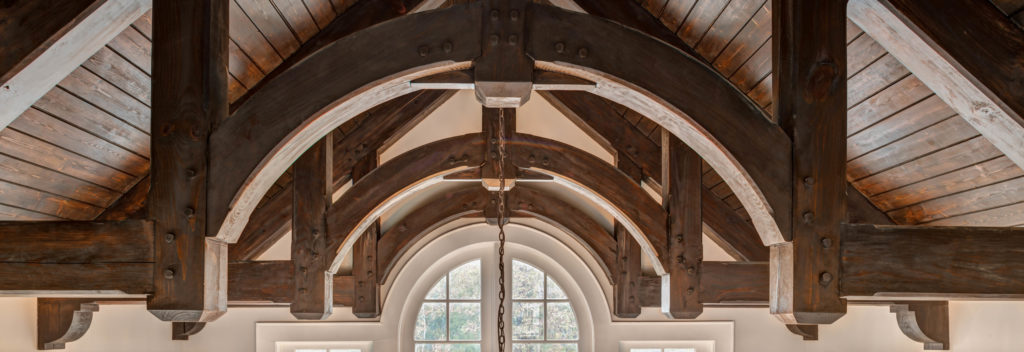
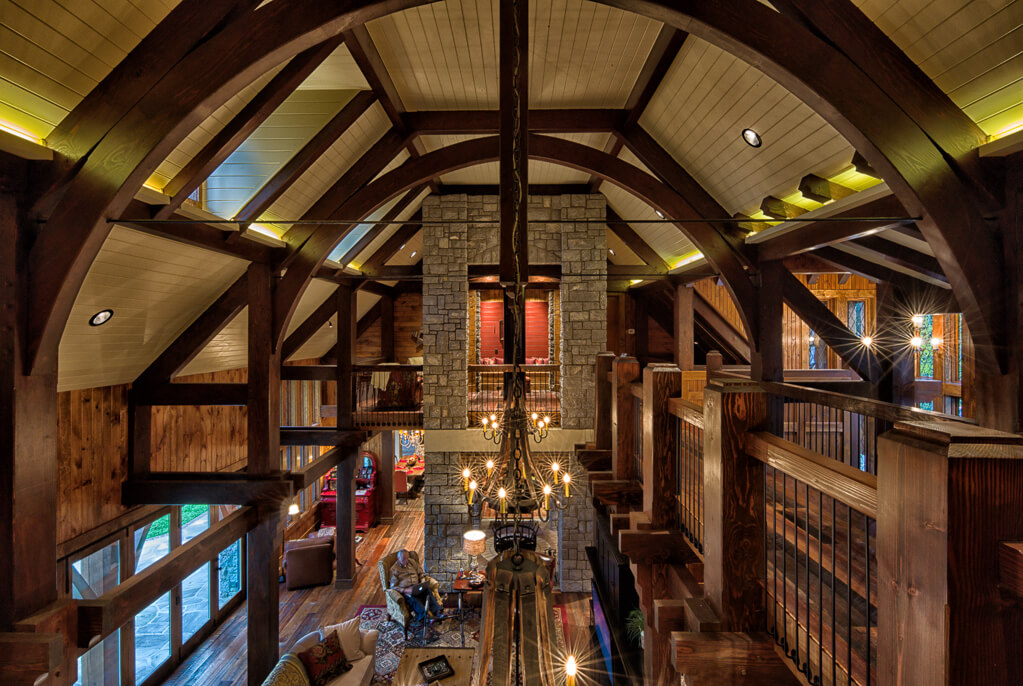
Curved Timber Trussses in Great Room

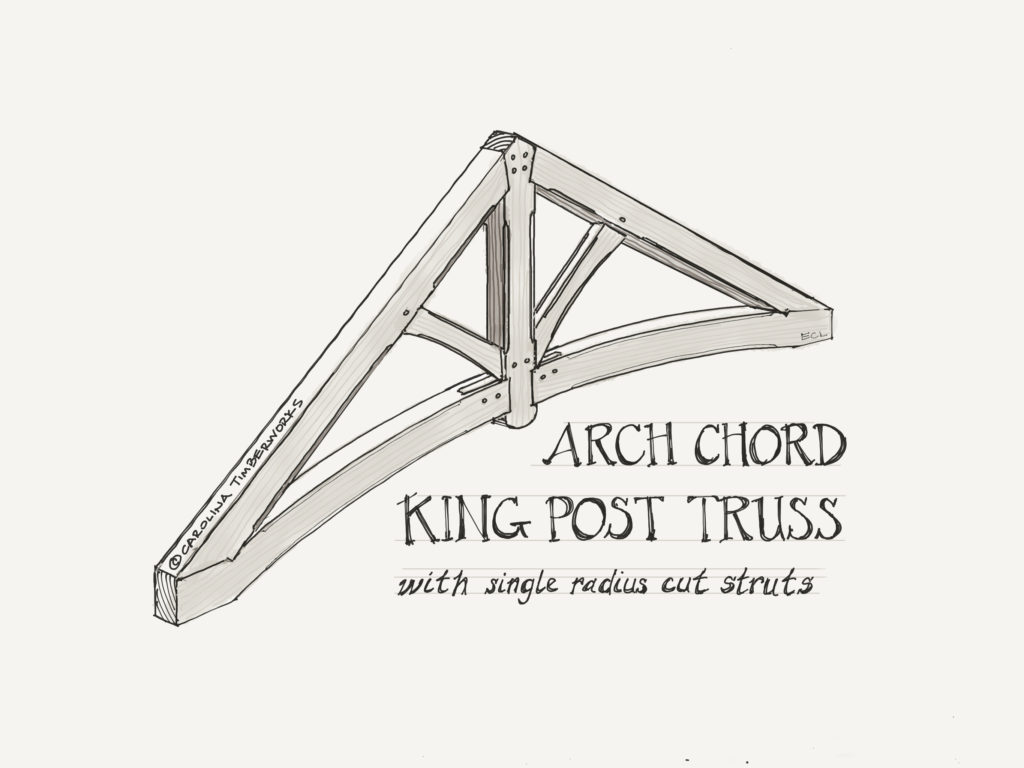
With their distinctive triangular shapes, timber frame trusses form the framework and provide essential support for this type of structure. They can be quite large, with some spanning up to 60 feet. They also come in a wide range of styles, from classic king post trusses to more complex hammer beam timber frame bents.

Timber Frame Joints
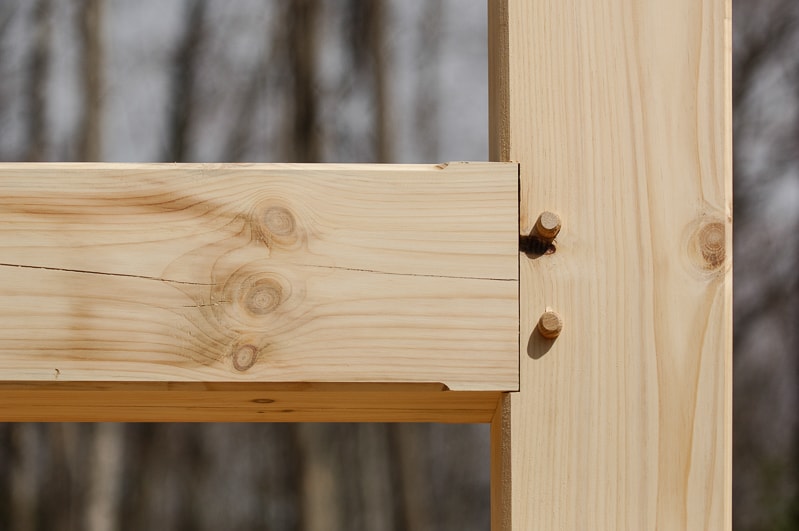
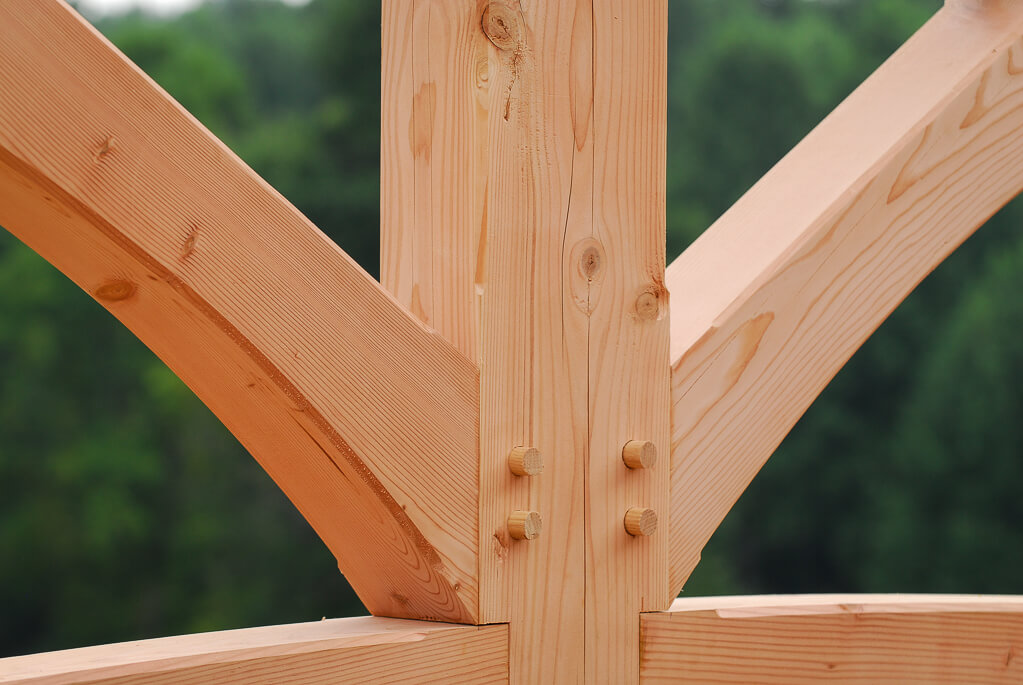
Eastern White Pine Timber Frame mortise and tenon joint

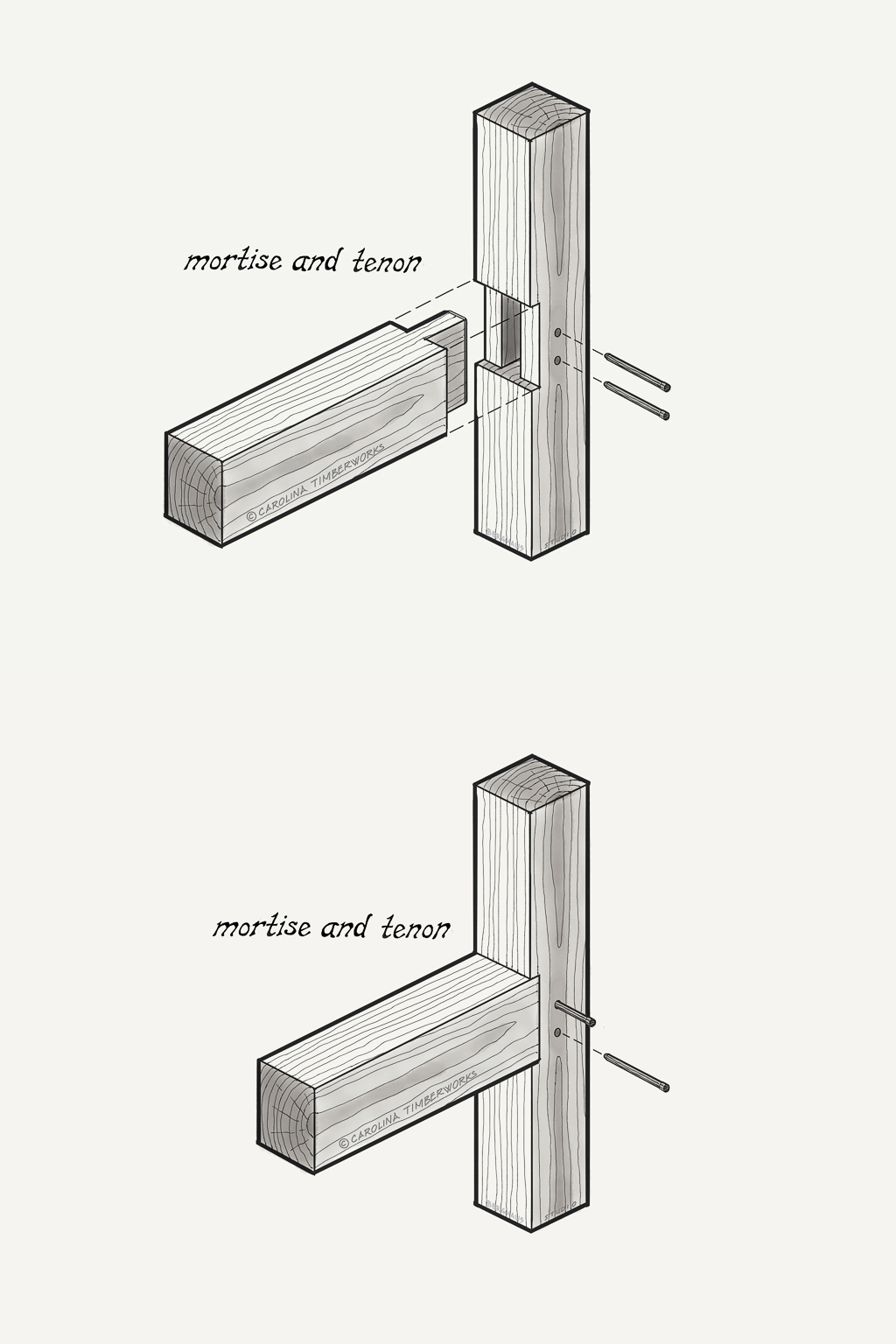
Like trusses, timber frame joints also vary widely in terms of appearance and functionality. From traditional mortise and tenon joints to scarf joints to knee brace joints, all connect heavy timber with wood-to-wood joinery and without the need for metal plates.

Structural Insulated Panels (SIPs)

SIPs feature two wooden panels with a layer of insulating foam sandwiched in between. They enclose a timber frame building tightly, providing outstanding protection from the elements and other pests. They also tend to be more energy-efficient than conventional alternatives, making timber framing more sustainable.

Post and Beam vs. Timber Framing

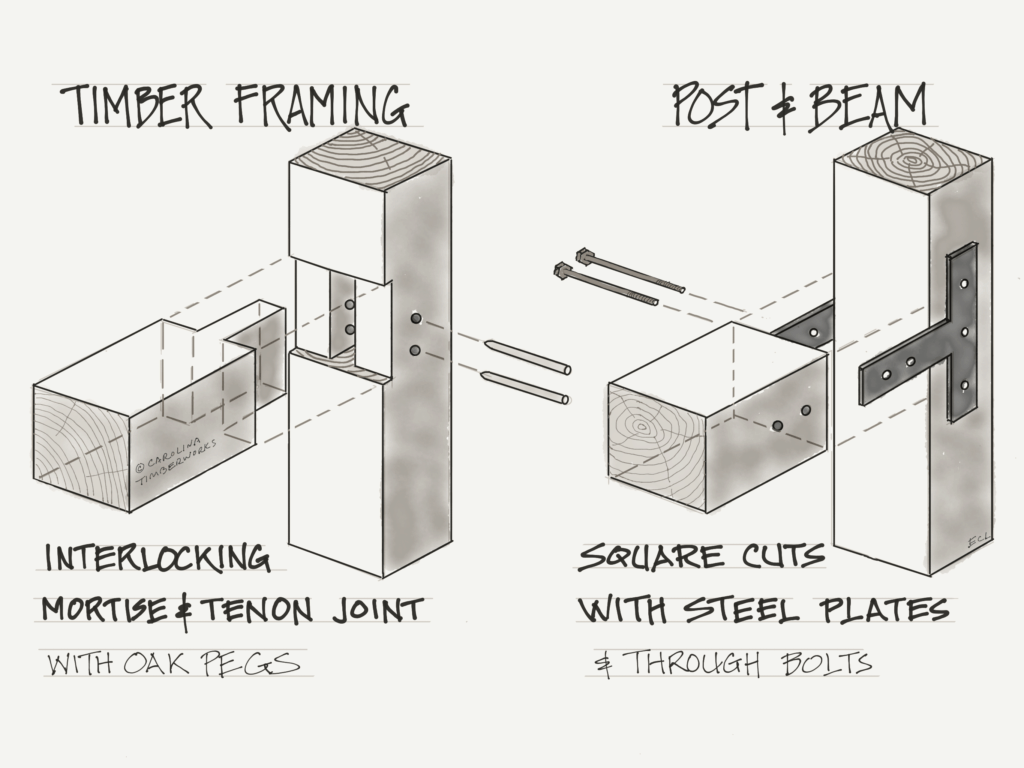
Post and beam buildings are similar to timber frame structures in that both use heavy timber. However, there are key differences between the two. Post and beam construction often uses simpler joinery and typically relies on metal plates and/or hardware for structural purposes.

Why Do Timber Frame Buildings Stand the Test of Time?

With their heavy timber and wood-to-wood joinery, timber frame buildings are designed to last. The many historic timber structures that are still standing today are testaments to the longevity of this building method.

When you build a timber frame home or cabin today, you can take extra steps to ensure that it lasts as long as possible. The most important step? A roof in good condition. Houses that are well-maintained can last indefinitely. Finally, keeping the indoor humidity level of around 50% is ideal for preventing timber from drying out too quickly and helping it retain its shape without excessive twisting or cracking.

At Carolina Timberworks, we believe in the beauty and longevity of timber framing. Take a look at our timber frame portfolio to see some of the buildings we’ve raised over the years and learn more about why this method can last for generations to come.

Learn More: Our Timber Frame Glossary

From raw timber to complete structures, see timber framing in action
Filed Under: Blog, Timber Framing Basics

What is Timber Framing?

Key Takeaway

A timber frame uses large posts and beams joined with wood-to-wood connections rather than metal fasteners. The frame usually stays visible inside, while insulated wall panels wrap around the structure to keep the house comfortable.

You’ve heard a bit about timber framing, you might even be interested in incorporating it into your project. But how does it work and what does it look like? And more importantly, is it right for you? From the key timber frame components to the biggest benefits of this building method, we’ll walk you through the timber framing basics.

What is a Timber Frame? from Carolina Timberworks on Vimeo.

What Defines a Timber Frame?

A Definition of Beauty and Grace

Traditional timber framing is the art of connecting two or more pieces of timber using wood-to-wood joinery. Before metalworking, this is how timber posts and beams were attached to frame the homes, barns, and businesses our ancestors lived and worked in. Held together without nails, bolts, or metal connectors, the timber frames of old tended to withstand the test of time—lasting centuries instead of decades.

Joinery

Although there are many joinery variations, the mortise and tenon joint has been used to connect pieces of wood for well over 1,000 years. The basic joint comprises two components: the mortise hole and the tenon tongue, locked together by one or more wooden pegs. You’re probably already familiar with mortise and tenon joinery, as you’ll see it in finely made furniture.

Mortise and Tenon Joint Animated

Trusses

Trusses are timber frameworks that support a roof (or bridge).  Their primary function is structural (to span distances impractical for solid members), but today are often designed to be aesthetically striking as well. They can also be decorative, and there are many types of timber frame trusses from which to choose.

Timber Frame Truss curved arched lower chord

Structural Insulated Panels (SIPs)

Structural insulated panels, or SIPs, are a popular way to insulate a timber frame structure. A SIP looks a bit like an ice cream sandwich: two structural OSB (oriented strand board) sheets  “sandwich” a thick layer of foam in the center.

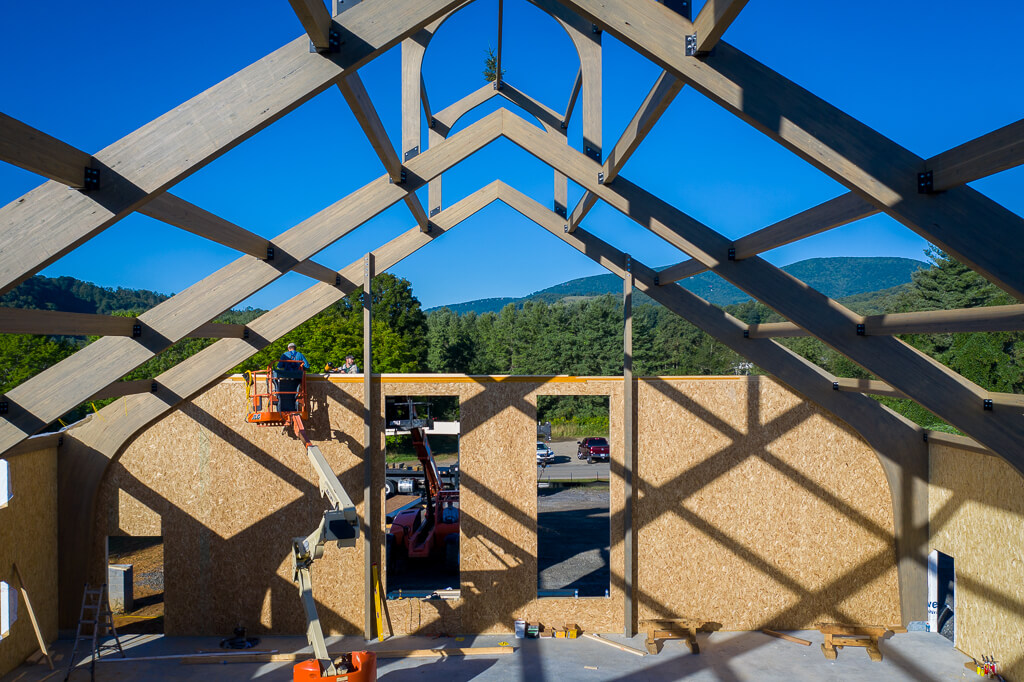
In timber frame structures, SIPs are used on the outside of the timber frame—wrapping the whole frame in a high-performance insulating blanket. This leaves the gorgeous timber frame fully exposed on the inside of the building. 

Structural Insulated Panel and Timber Frame
SIPs being installed at Carolina Timberworks’ new shop

Like any construction method, there are pros and cons:

  1. Here are the main benefits of SIPs buildings: The panels insulate the structure with a higher R-value than you’d get from a standard stick-built structure with stud walls. Comparing 2x stick building to SIPs isn’t an apples-to-apples comparison because a SIP building is a high performance energy-sipping structure which will reduce energy bills for decades. Because the panels arrive from the factory pre-cut and pre-labeled, and because SIPs work as framing, insulation, and exterior sheathing, the building can be erected and in the dry more quickly–thereby reducing the overall time to build, financing costs, mold, and jobsite waste. Incidentally, SIPs do a pretty good job of soundproofing.
  2. Naturally SIPs aren’t perfect:  They are more expensive (at least initially) than 2x stick building. Although not difficult to install, most construction personnel have not been trained in SIP installation, and this is not something you want your timber frame builder to learn on your job. Moisture control is important: SIPs are typically made with oriented strand board (OSB) which doesn’t like getting wet. Because wiring (but not plumbing) gets hidden inside exterior walls, holes must be created in the foam for wiring. This is done at the SIP factory and isn’t a big deal except that you need to have your electric plan figured out (where outlets and light switches will go). Finally, foam insulation has a relatively high embodied carbon content compared to other insulation options, and therefore some do not consider foam insulation to be a sustainable building method.  So… what did we do? We built our new timber frame shop using SIPs. Why? We wanted to get our new  building up as quickly as possible, and we rationalized that the energy the super insulated building envelope will save over the coming years will outweigh the higher initial cost and the carbon used in making foam.

Want to deepen your understanding of the timber frame elements showcased here? Visit our Timber Frame Glossary to explore the vocabulary of timber framing.

What Are Timber Frame Buildings?

We like the French word for brace/knee brace/struts a lot better: Jambes de force (translation: strong legs).

Timber frame buildings come in all shapes and sizes. From the outside, sometimes it’s impossible to tell that it’s a timber frame (they can be brick or wood-sided just like any other building). Sometimes architects incorporate some timber framing on the exterior (perhaps a timber framed entry) to suggest what’s hidden inside.

Timber Frame Homes

We believe the primary interest in timber framing is the aesthetics and the experience of living in the structures. When thoughtful design and craft work together, these buildings can be built poetry.

Barn Home Conversion
Built Poetry designed by PLATT

You might be surprised to learn that a timber frame home doesn’t have to use this building method exclusively. Many of the timber frame homes we’ve been a part of over the years are hybrid timber frames, which seamlessly combine timber with conventional 2x framing.

Non-Residential Timber Frames

Not only are timber frames wonderful places to come home to, but commercial timber frames (or non-residential as engineers prefer us to call them) are also inspiring and pleasant places to work (and shop).

Google Fiber Charlotte: Benefits of Adaptive Reuse in Action
Google Fiber’s timber framed offices in Charlotte

Timber Frame Kits

Let’s be clear: we believe in custom design because we’ve repeatedly seen the process and end result improve people’s lives. A pre-designed plan or kit is a bit like cultured stone–good from afar, but far from good. Like an off the rack suit, it won’t fit particularly well (you or the land). We came up with our kits as an idea to keep our people working during COVID-19 (if our building was shut down, they could load up their truck with timber and cut a kit at home). We’ve since discontinued our timber frame kits and are happy to discuss custom timber frame projects with you.

Timber Frame Kits

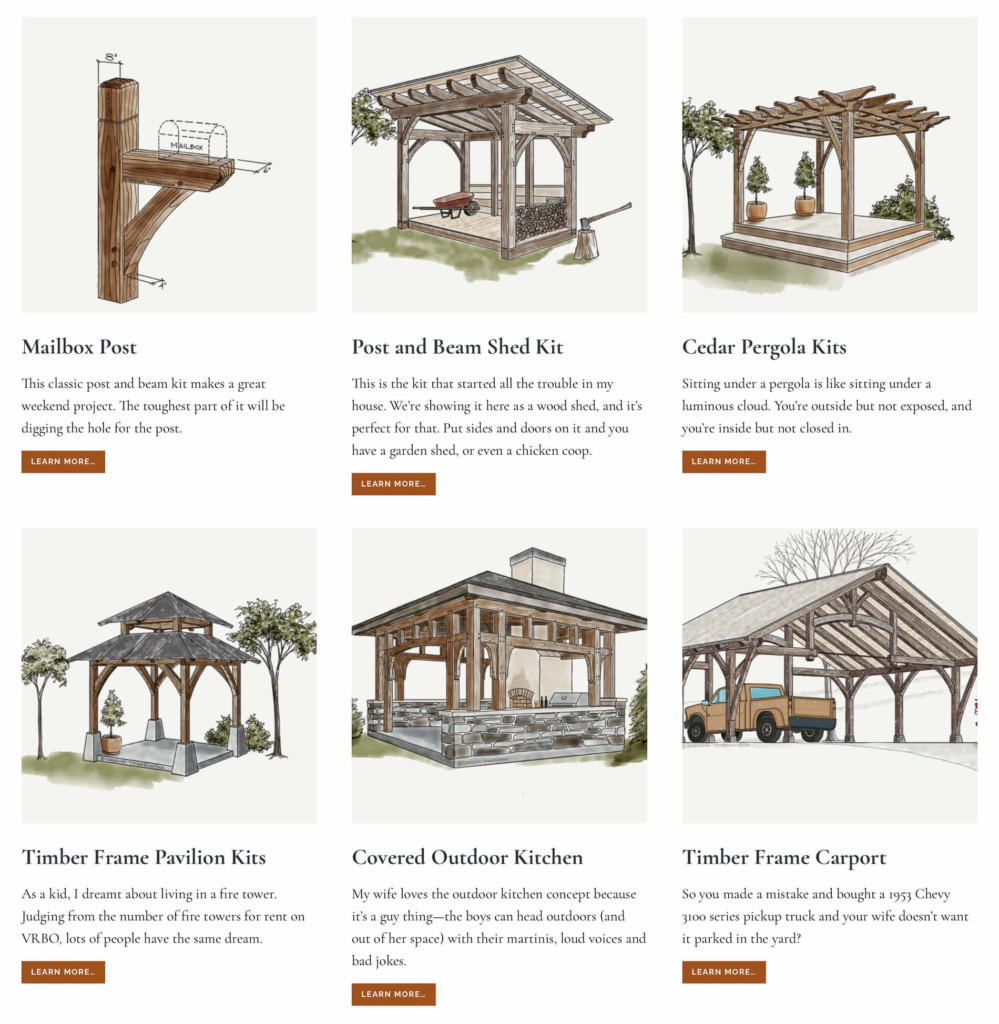
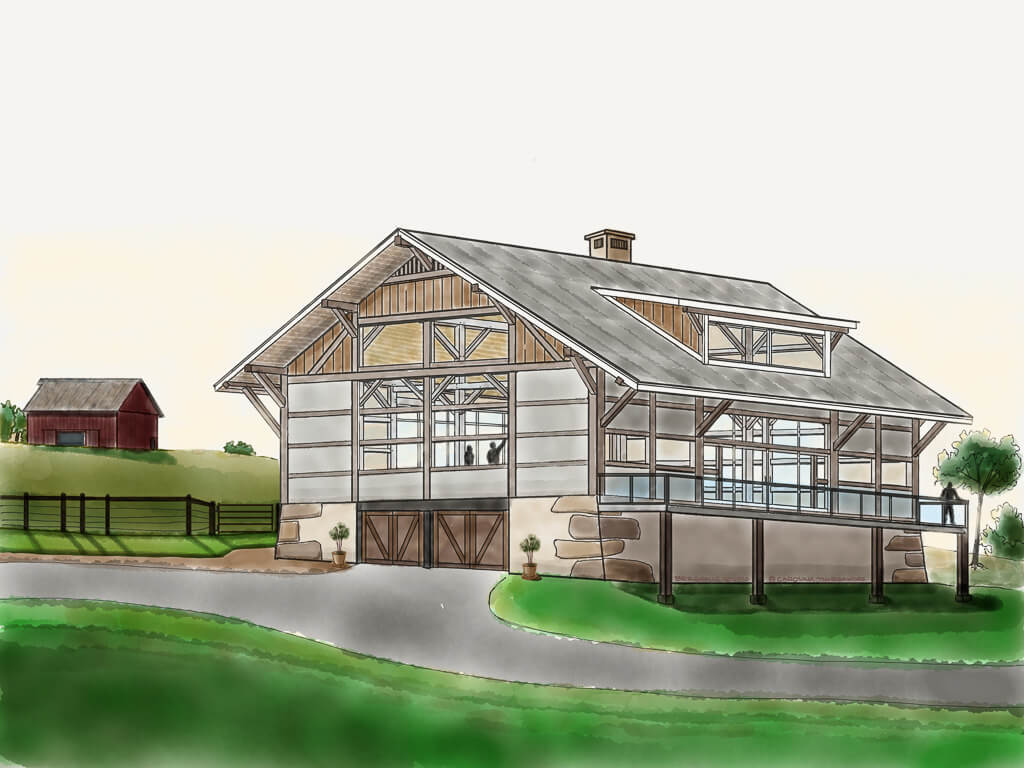
Want even more ideas? Here you can find our concept drawings for timber frame structures including a solar panel carport, an RV garage, outdoor pavilions, a boat house, a farmers market, and more.

Timber Frame Idea Book
Idea Book

How Does Timber Frame Construction Compare to Post and Beam and Conventional Construction?

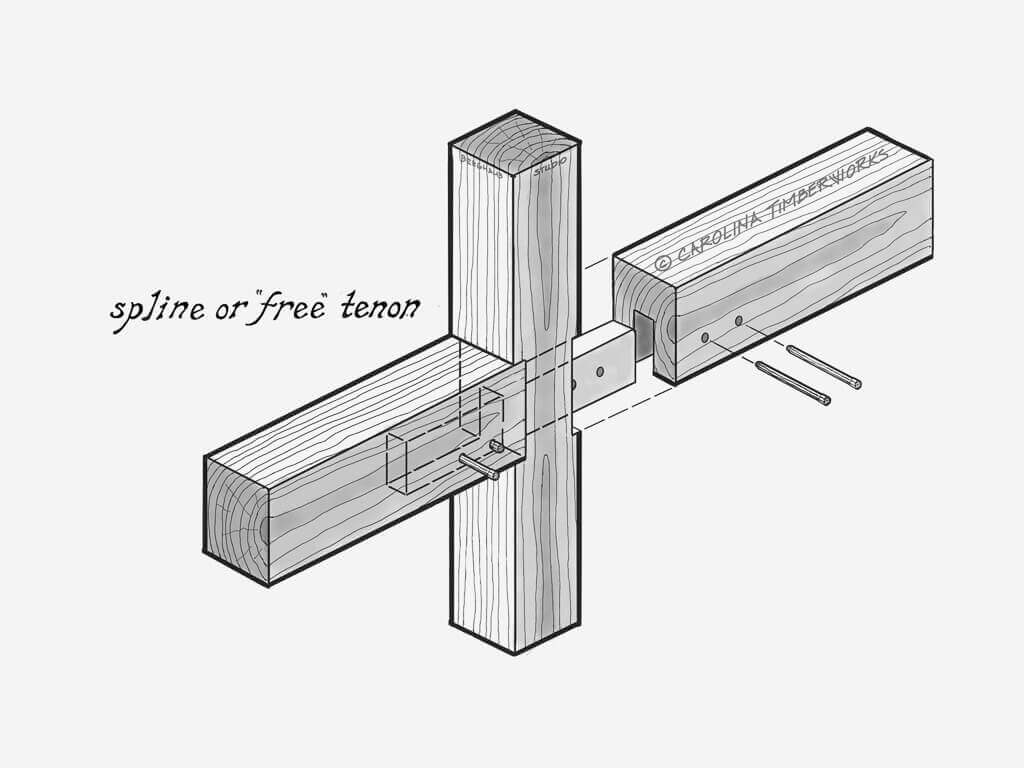
Timber Frame Spline Joint

Traditional timber frame techniques rely on beautiful (and sometimes exquisite) wood-to-wood joinery to connect heavy timbers. Traditional timber framing doesn’t use much metal–and what metal is required by engineering, is typically hidden.

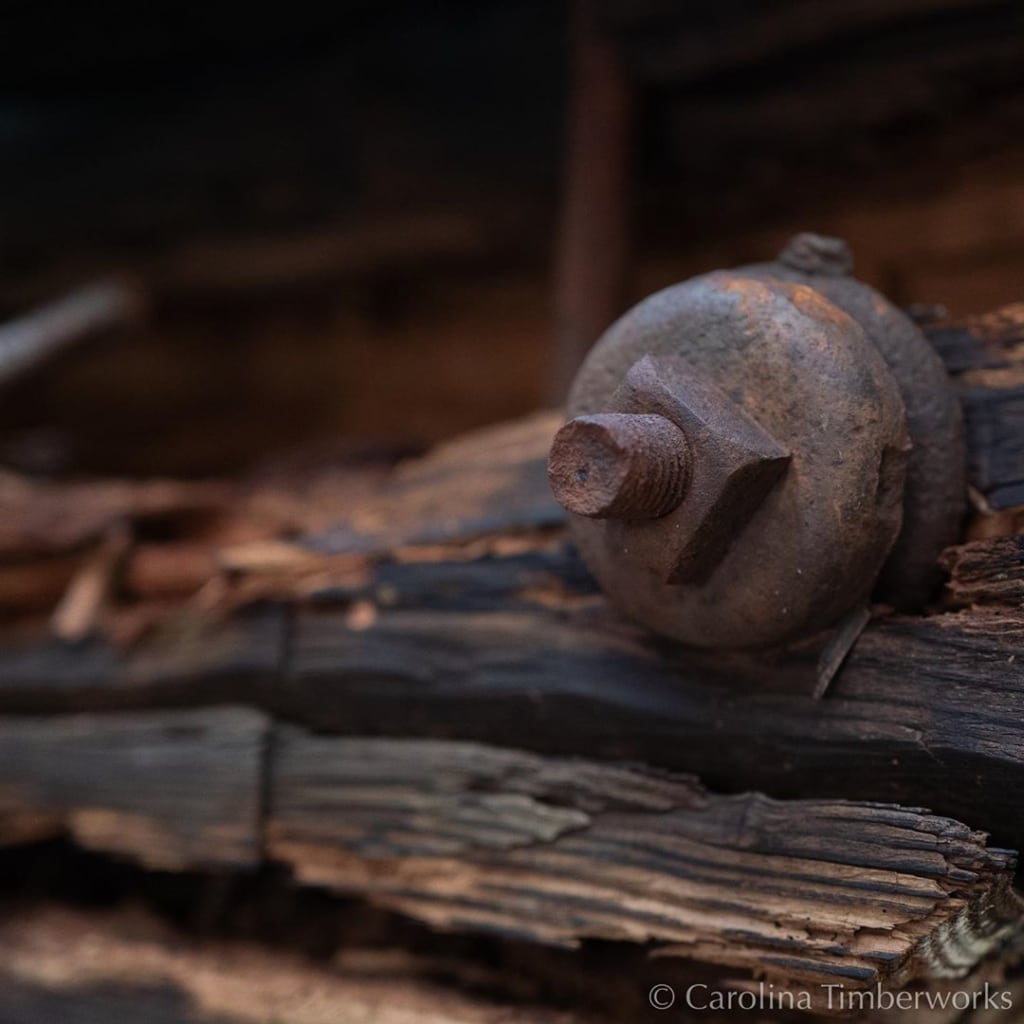
Wood and metal both age gracefully...

Post and beam construction also uses heavy timber, making it similar to timber framing. But the main difference between post and beam construction and timber frame construction is the way the pieces of timber are connected. Post and beam structures rely on metal fasteners like steel plates and bolts.

As an aside, we’re not traditional timber frame purists. We happen to think that steel and timber can be striking:

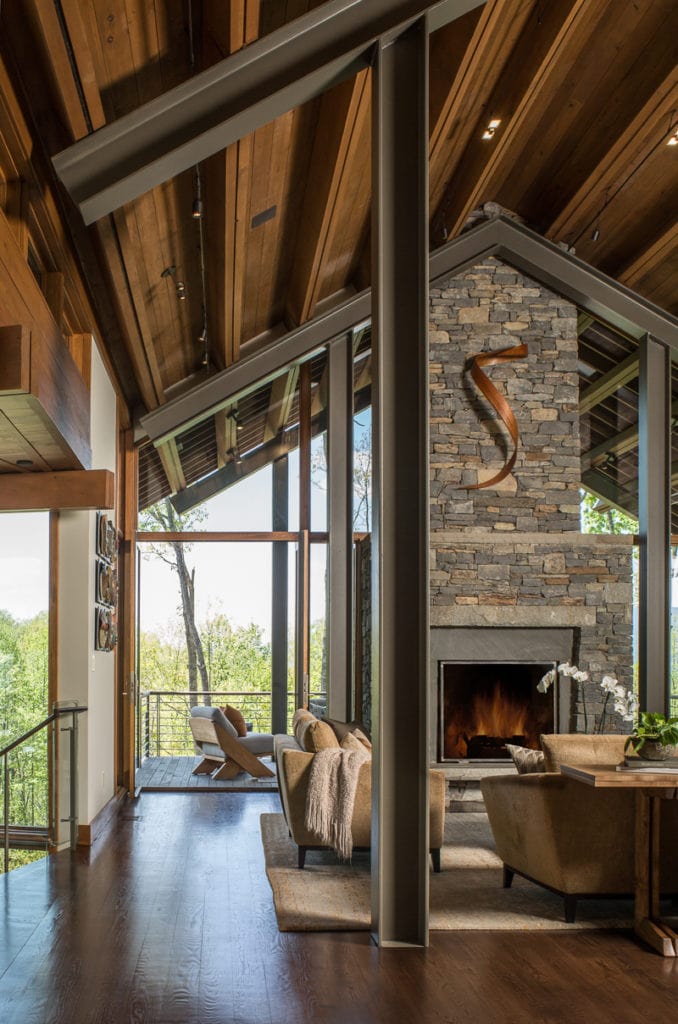
Modern Contemporary Timber Frame
Contemporary timber frame homes often blend Natural materials like timber and stone with steel and glass.

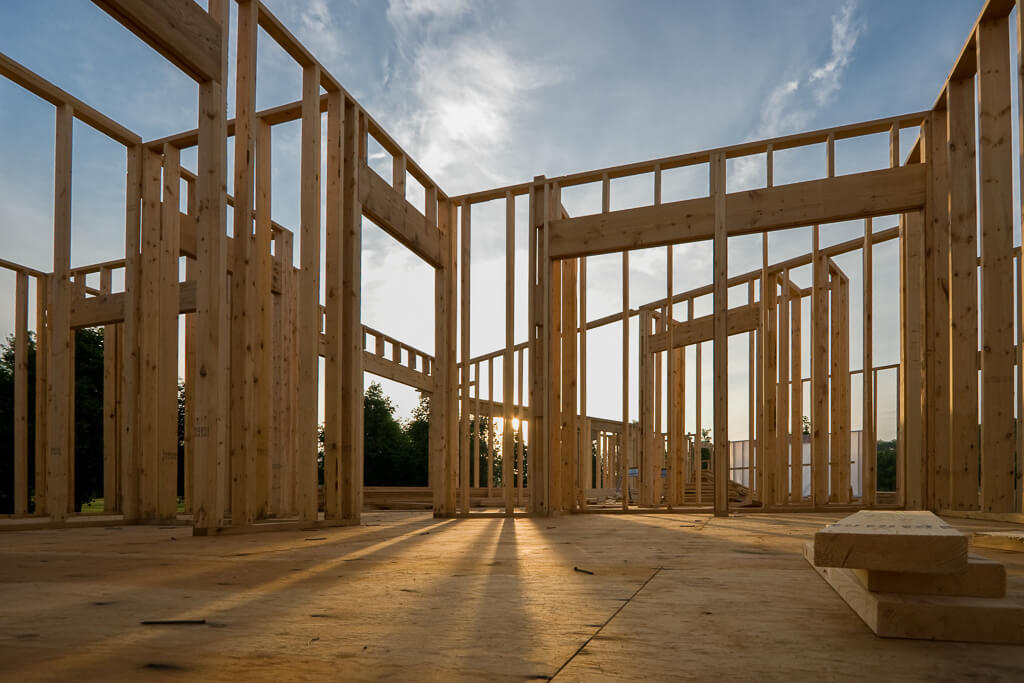
Conventional construction and stick-built 2×4 and 2×6 structures don’t use heavy timber. They use smaller pieces of lumber connected by nails and metal fasteners, and load-bearing walls provide additional support. 

Conventional 2x construction
Conventional stick-built construction

What Are the Benefits of Timber Framing?

We’re glad you asked. We think there are quite a few advantages of timber framing.

Timber framing is sustainable. About ten years ago we wrote an article (here) about what makes timber framing sustainable, and it’s still widely quoted.

Learn more about the benefits of timber framing with our take on it.

Finally, we’d add that we find timber framing to be a satisfyingly tactile antidote to the virtual world.

A Thousand Years of Craftsmanship

Timber framing has quite a rich history. Centuries ago, builders used timber framing to construct temples in Japan, cathedrals in Europe, and manors in England–many of which still stand today in silent testimony to the durability of timber framing. Go anywhere in New England, peel back a couple of hundred years of remodeling from the original homes and churches, and you’ll discover that they also were timber framed (as were their barns, which often were the first structure a farmer would build).

Timber framing’s popularity declined in the early 1800s for practical reasons. Water-powered sawmills made smaller and easier-to-handle dimensional lumber cheaply. Railroads permitted sawmills to ship the new lumber wherever it was needed (as opposed to utilizing the trees that grew on the building site). A new framing system (balloon framing) using standard 2×4 lumber nailed together to form a light framework didn’t require the skilled craftsmen that timber framing demands. Then, in about 1880, the proverbial nail in the coffin: we invented machines to make wire nails (nails used to be so valuable that after a fire people would sift through the ashes to recover the wrought iron nails).

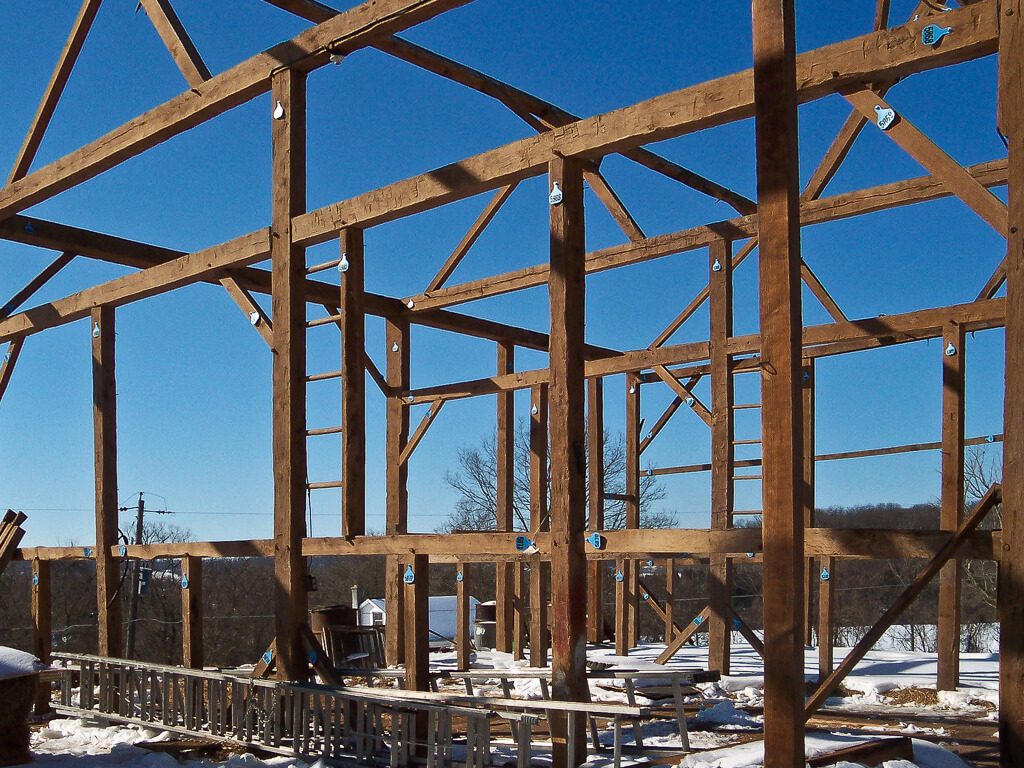
antique timber frame barn for sale
An antique timber frame barn during careful disassembly (note cow tags used to ID timbers)

In the 1970s, builders rediscovered the allure of timber framing while taking down old houses and barns. Ever since, a small but enthusiastic group of craftspeople worldwide—including our team at Carolina Timberworks—have continued to dedicate themselves to this building method.

Timber Framing Traditions

Building a timber frame structure is a fascinating process that involves a long list of traditions. The most important? The raising of course. On raising day, you get to see your dreams and hard work realized.

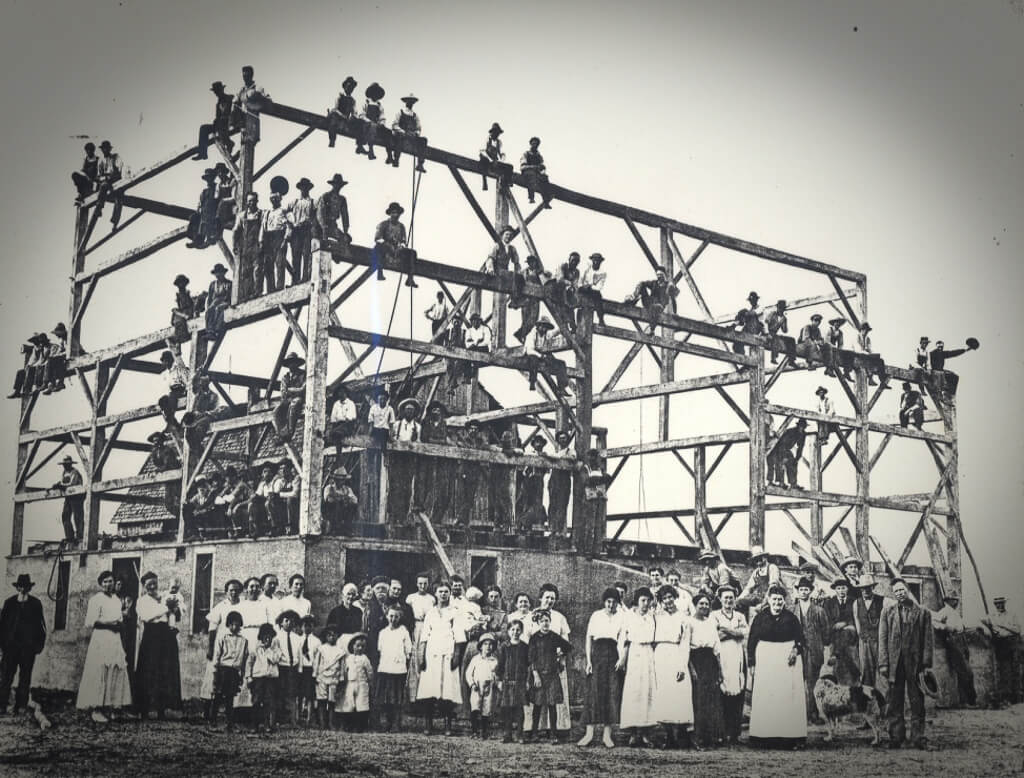
Not too long ago, raising involved ropes and pulleys and feeding a whole team of very hungry people. As the structure was raised, the community could see the building come to life and celebrate all the hard work with a feast. 

Old fashion barn raising
(Note to younger Carolina Timberworks employees: no, Eric Morley was not present at this raising.)

Today, we have machinery and safety meetings to make the job a little bit easier. But we still honor the traditions. After all, why not celebrate your new timber frame home or building in style?

Some other timber traditions include:

  • Carving the date into the frame once it’s complete and signing the timber in a hidden place.
  • Placing a coin minted in the same year as the structure under a post.
  • There’s a superstition that feeding a timber framer will give you and your building good luck. What can we say? Timber framers always appreciate a good meal.
  • Everyone loves to see how their hard work turned out. After that timber frame is raised, it’s a tradition to take a group photo.
  • The lady of the house has the honor of driving the last peg. For every blow it takes to drive the peg home, she owes the crew one drink. 
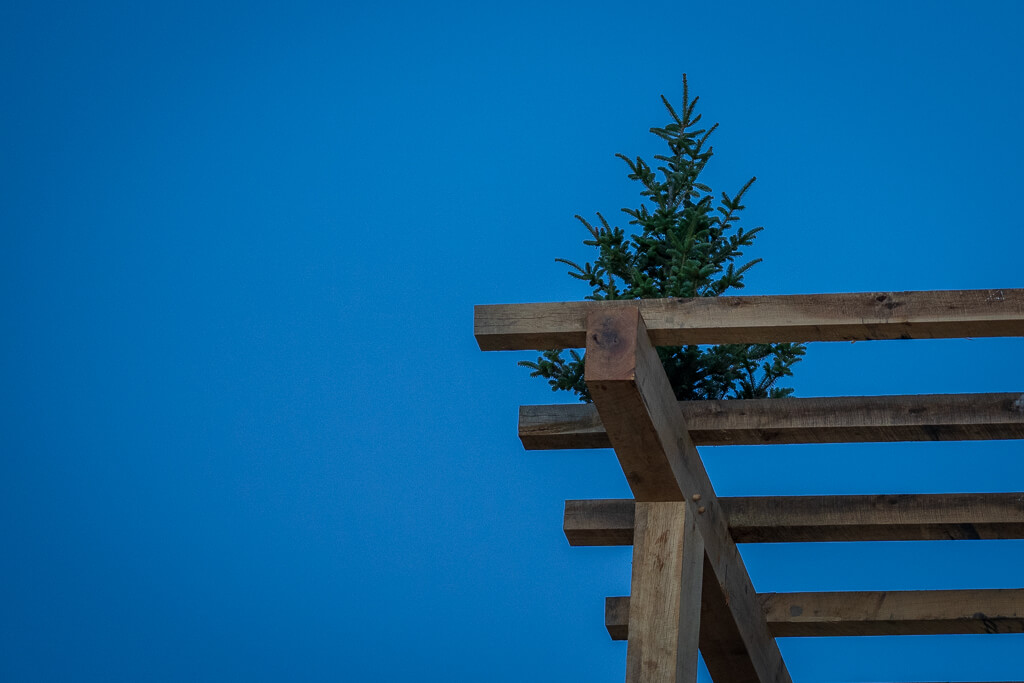
  • When building a new structure, timber framers have historically attached a wetting bush to the highest point to symbolize its roots.
Wetting Bush Tradition
A Wetting Bush pays homage to the trees that went into the frame and the hands that built it

We Build Cool Timber Frame Projects

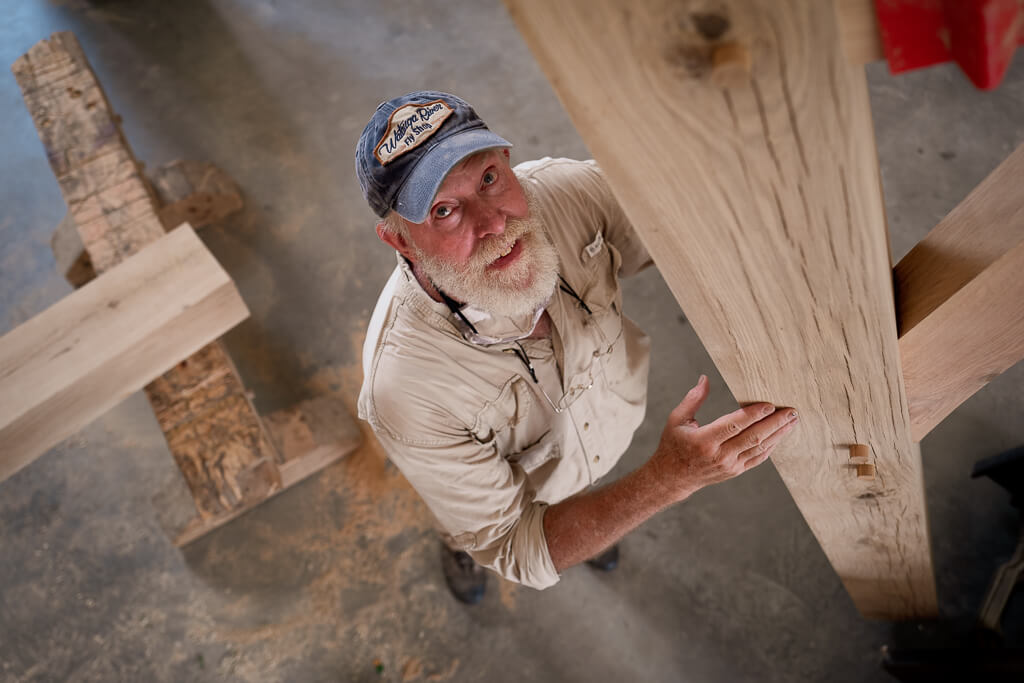
timber frame master craftsman

For almost 20 years, Carolina Timberworks has collaborated with some of the country’s most talented architects and builders to craft timber frame homes and businesses, timber frame barns (including the largest horse barn in the United States), porches, porte-cochères, tree houses, entryways, natatoriums, pavilions, and even the world’s best mailbox post. We’ve worked for billionaires and non-millionaires alike. From New York to Nebraska to Washington State. Take a look at the cool stuff we’ve built in North Carolina where we’re located and beyond.

Remember Lao Tzu’s words: “A successful first step is always preceded by great questions“. Call us. We’re nice.

Filed Under: Blog, Featured Post, Timber Framing Basics Tagged With: Timber Frame 101

What Tools Are Used in Timber Framing?

Key Takeaway

A timber framer can build with simple tools like a pencil, a square, a string line, chisels, a mallet, a saw, and a drill. Larger versions of these tools make the work quicker and more accurate. Many crews use power tools and layout systems made for cutting big joinery in heavy timbers.

When you admire the majestic beamwork and intricate joinery of a timber frame structure, you might wonder just what it takes to build something like that. Although it’s possible to lay out and cut a timber frame with surprisingly few tools (pencil, square, string line, chisel, mallet, saw, and drill), it’s easier and faster to use specific timber frame tools. Most of these “timber frame” tools would be familiar to any woodworker—but they’re much larger versions.

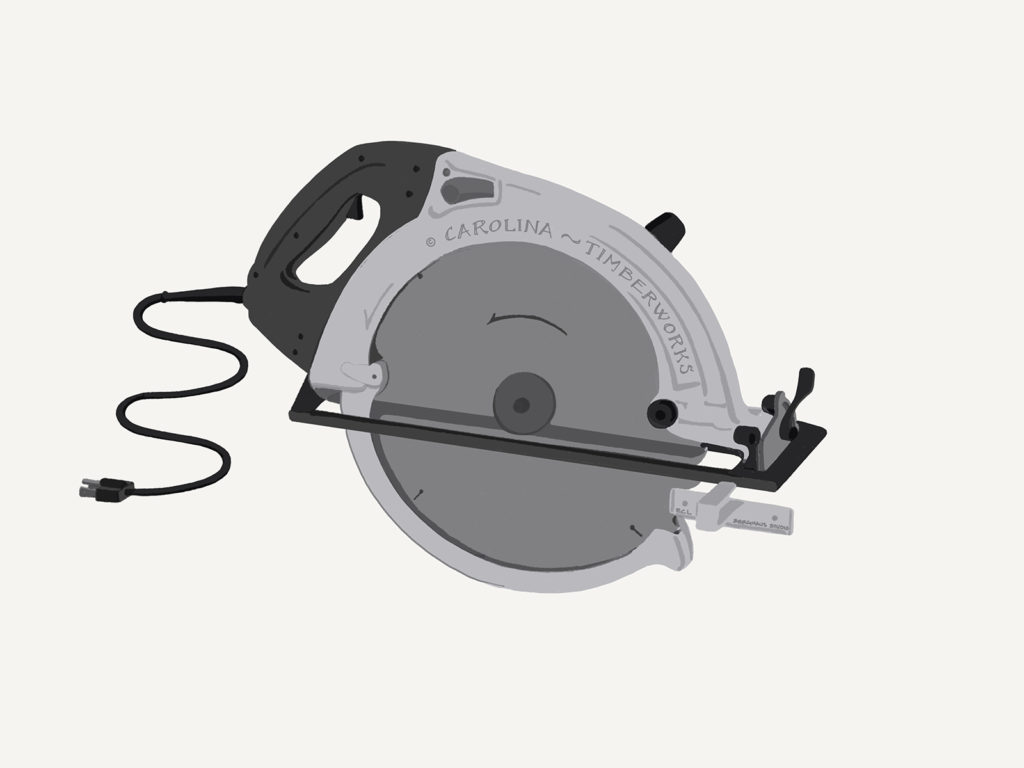
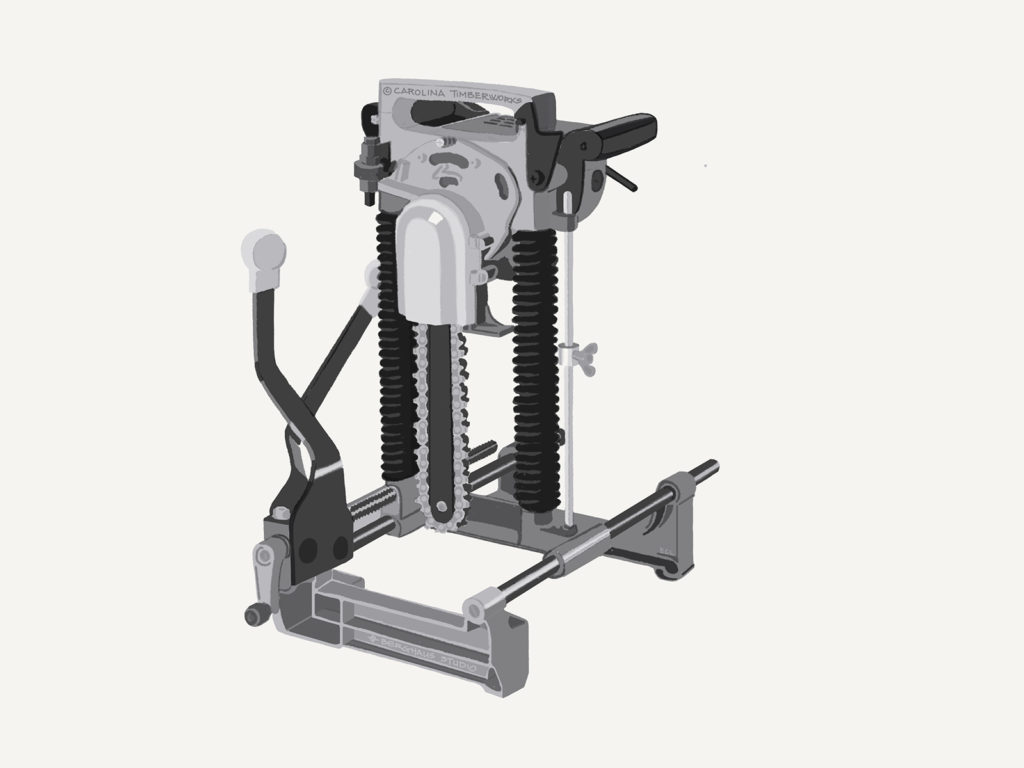
The first power tools most new timber frame companies acquire are a (large) circular saw and a chain mortiser. These two tools do a lot of work (and make a lot of sawdust), quickly. From there, the sky’s the limit—up to state-of-the-art, 6-axis computer-controlled timber frame joinery cutting machines.   

So what’s in our timber frame shop in North Carolina? We compiled a list of our team’s preferred timber framing tools so you get a better sense of how we build timber frames—or so you can put together  your own tool set.

Our Timber Frame Tools Guide

Timber Frame Layout Tools

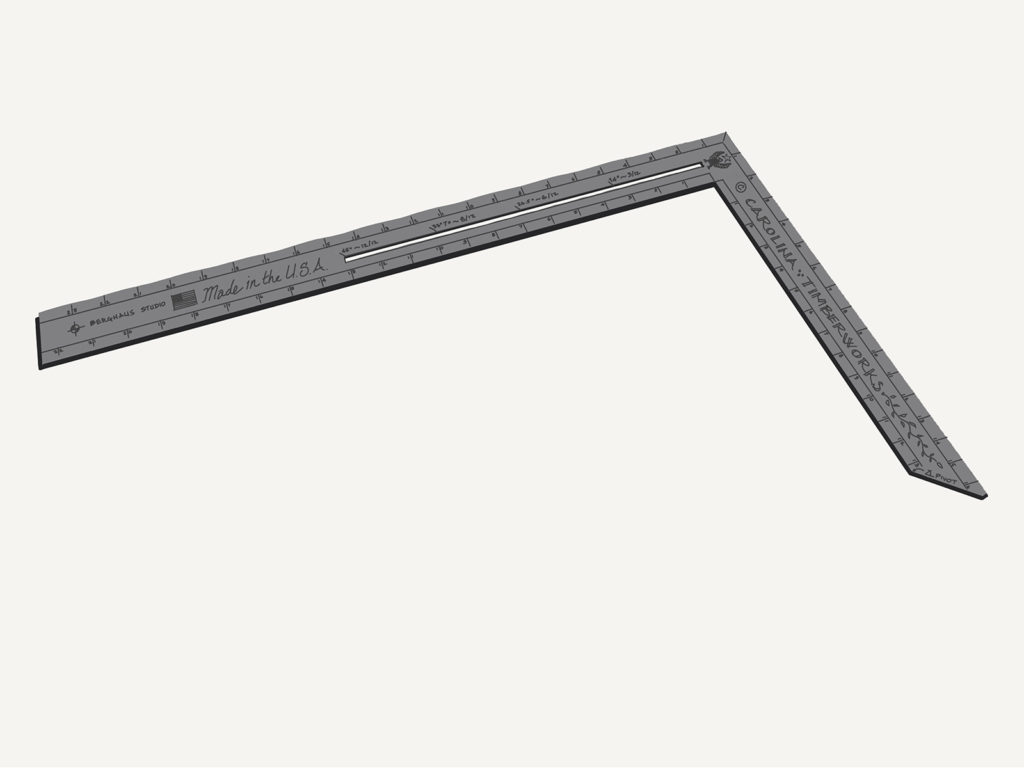
Timber Framing Square

Framing square

A framing square, also known as a carpenter’s square, is an essential timber frame layout tool for measuring and marking angles. Despite its name, a framing square typically has an L shape—but some variations may be square.

The L shape features a wider and longer side (body) that meets the shorter and thinner side (tongue) to create a perfect 90-degree angle (at least until it’s dropped—AKA the concrete kiss). The sides also act as rulers and have scribed notches that indicate measurements.

We appreciate the versatility of framing squares, and in addition to using them daily to lay out and check angles and lines on timbers, we also use them as straightedges and winding sticks among other uses.

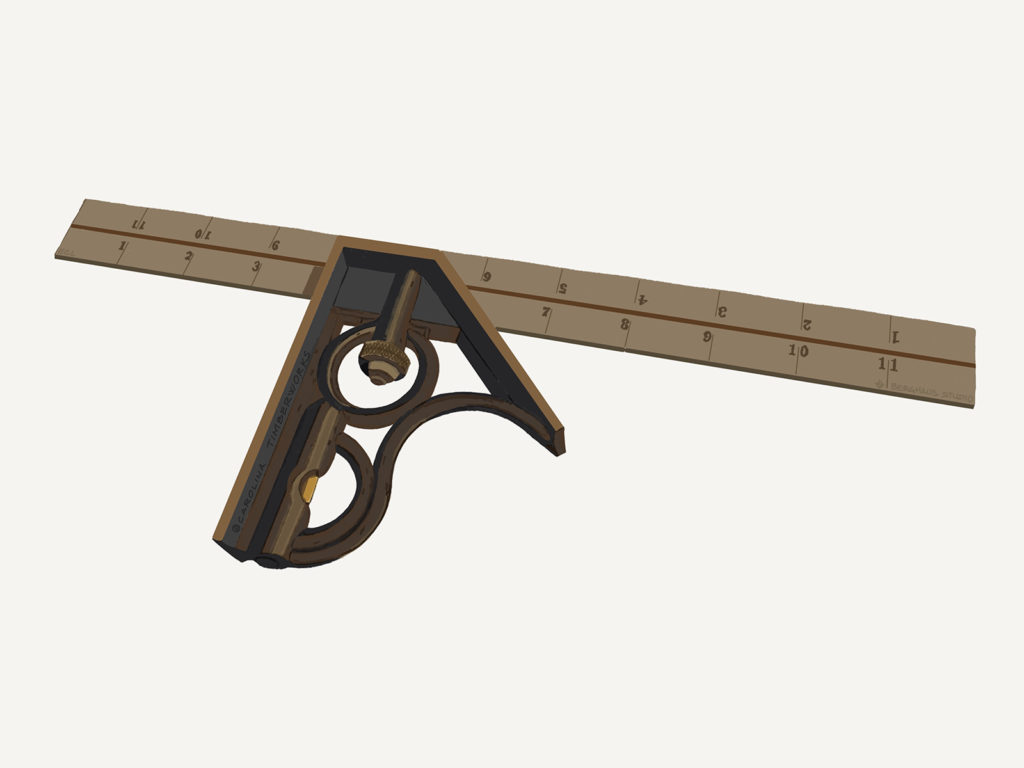
Combination Square

Combination square

Combination squares are similar to framing squares in that the long flat arm acts as a ruler. However, combination squares also have adjustable heads that slide along the ruler. These components can include a simple fence for 90-degree angles, adjustable knobs to transfer measurements, bubble levels for measuring level and plumb, or protractor heads to change the ruler to any angle between 0 and 180 degrees.

If you need to measure something, simply move the adjustable head to the specific measurement you need from the end of the ruler. We like to use combination squares for any project that requires measuring depth and squareness of adjacent surfaces such as mortise depth. By setting a specific measurement along the ruler, the combination square can speed up joinery layout for repetitive measurements.

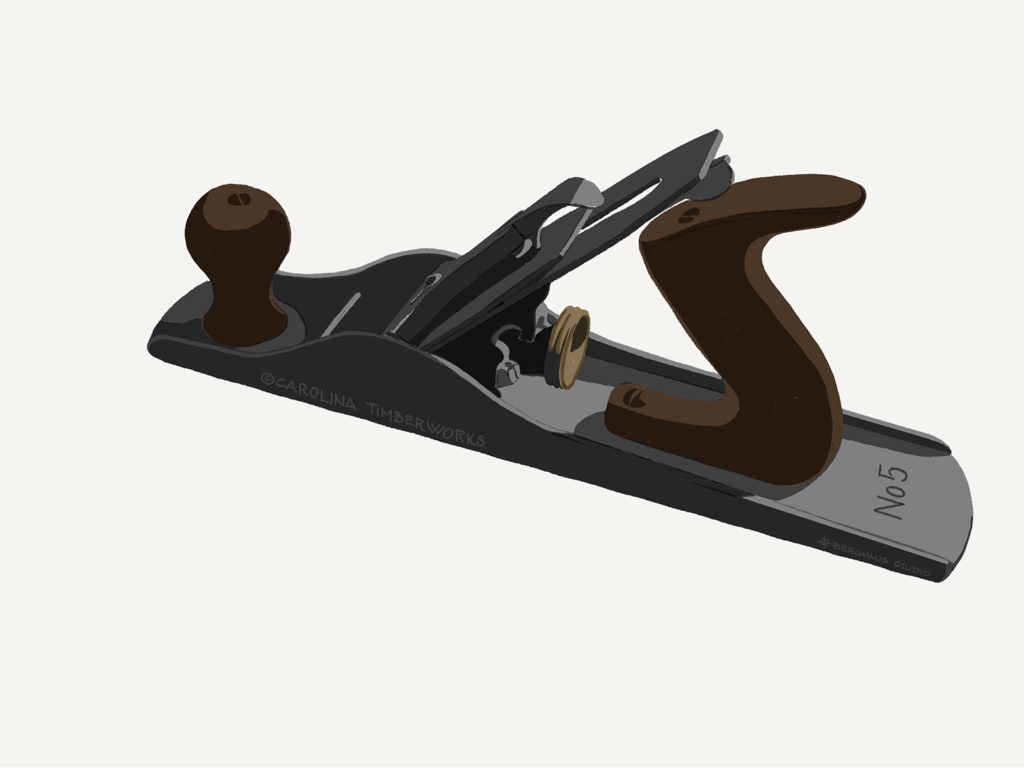
Block Plane

Block plane

Block planes are small and versatile tools that can smooth the end grain of timber. Since the blade is set at a low angle, it performs this job better than a standard woodworking plane. These planes are great for beveling the edges of tenons on timber joinery.

Timber Framing Hand Tools

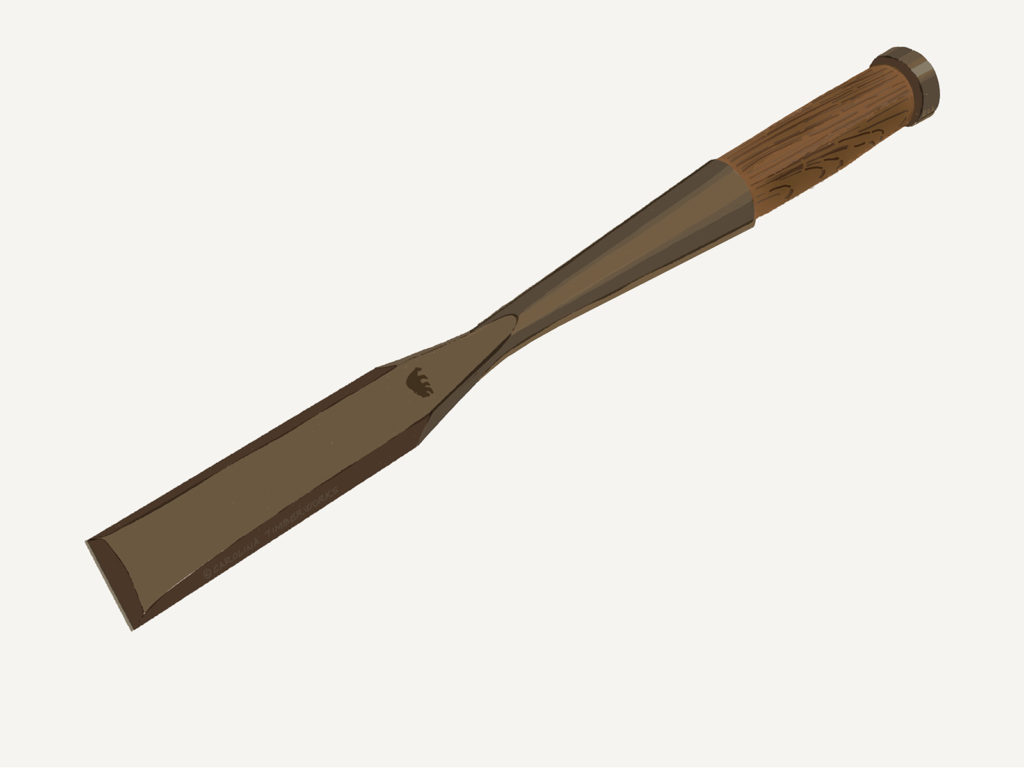
Framing Chisel

Timber frame chisel

A framing chisel is a handheld tool that can cut or shape timber joinery. These longer and more robust chisels typically have a 1- to 2-inch blade width. When pushed by hand or struck with a mallet, they can cut almost any type of joinery. Either way, when using a framing chisel, you aim for a close, precise cut.

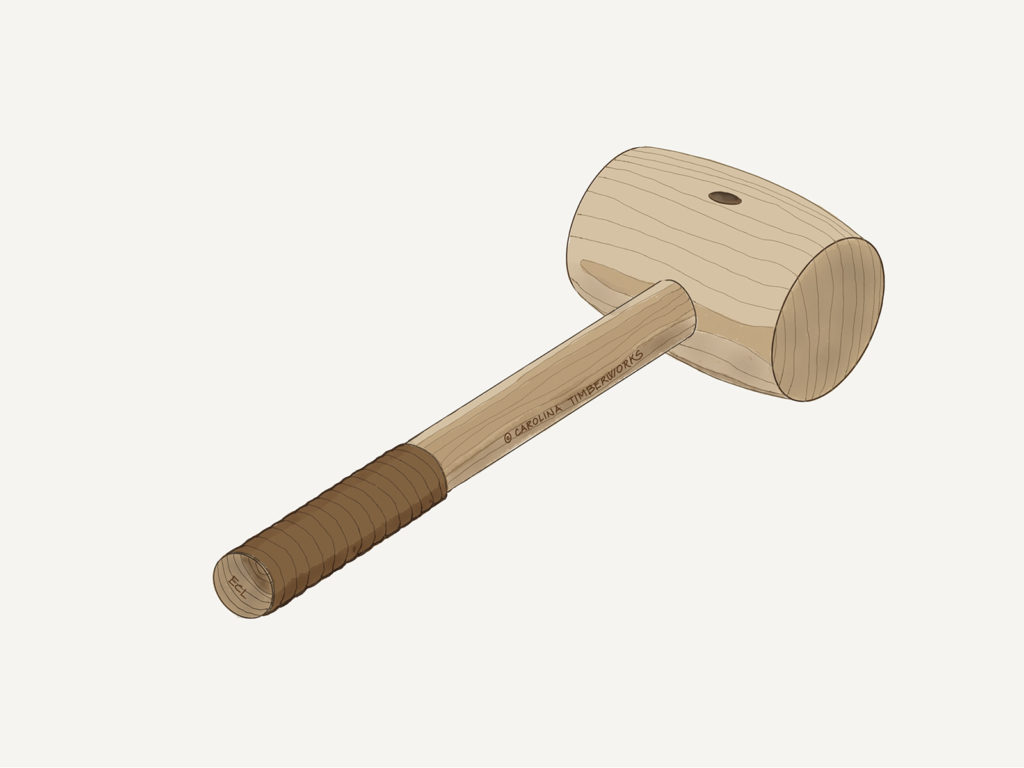
Timber Frame Mallet

Mallet

Mallets and chisels go hand in hand, as we use the former to strike the latter. A good mallet is neither too heavy nor too light. We look for well-balanced mallets designed to minimize impact when striking the chisel. Dense wood makes a better mallet head than metal as it transfers all of the driving force through to the chisel, without splitting or damaging the chisel handle.

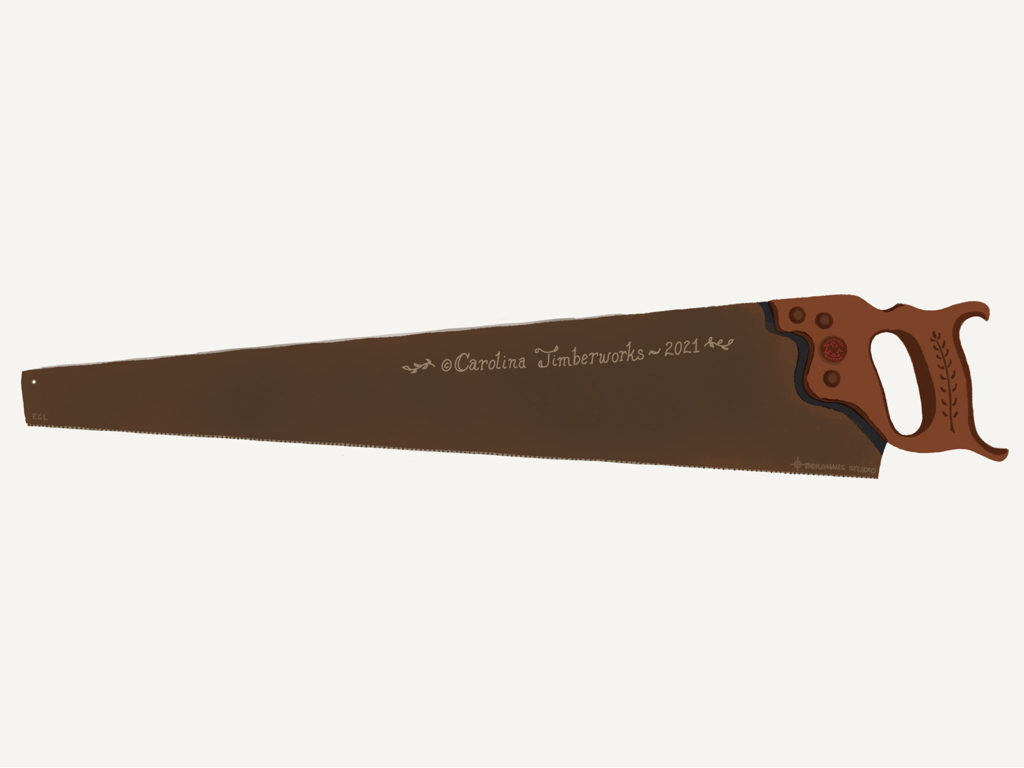
Hand Saw

Hand saw

Hand saws can come in many variations and can cut any type of wood. Some timber framers prefer a Japanese hand saw, which cuts on a pull stroke, while others prefer a western-style hand saw that cuts on a push stroke. We often prefer to cut with hand saws instead of electric saws for more control over finer details and small cuts.

Power Tools

Power Saw

16-inch circular saw

Electric saws are similar to hand saws, but with built-in electrical motors for power. Some timber framers cut material using chainsaws, circular saws, or bandsaws (with metal guides and long blades):

  • Chainsaws can do the rough work of segmenting longer timbers into smaller pieces.
  • Circular saws do most of the cross and rip cuts for timber joinery.
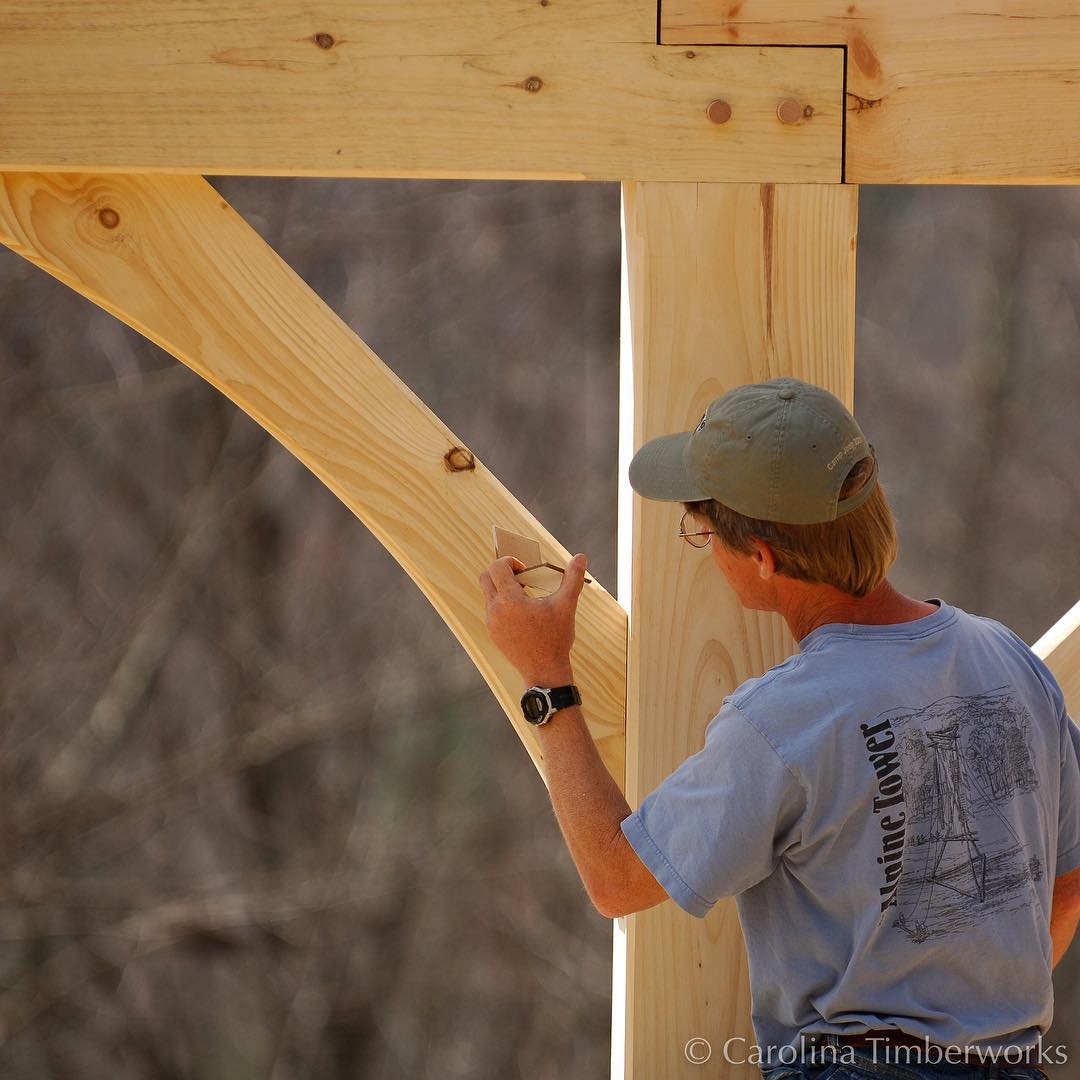
  • Bandsaws are preferred for long radius cuts like curves in knee braces or arches.

Chain Mortiser

Chain mortiser

Chain mortisers cut recessed “pockets” into timbers. Like a chainsaw, this tool has a rotating toothed chain that removes material from the timber to create the mortise. Because mortise and tenon joinery is integral to timber framing, this is one of our most used tools. This work was previously done in two steps by drilling and chisel work, but is now much faster with this specialized type of tool.

Chain Slotters

Similar to chain mortisers, chain slotters cut narrow “slots” into timber. This specialized timber frame tool is more precise than a chainsaw, although it is less common than a chain mortiser.

Drilling Stations

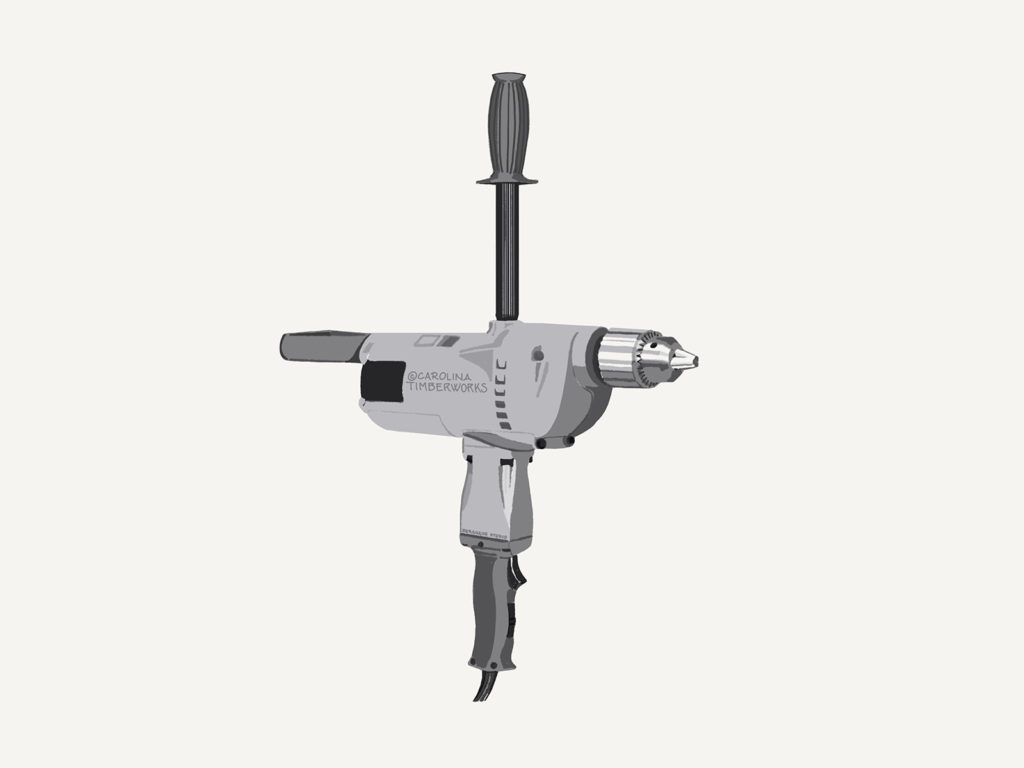
Drill

Also known as a drill press, a drilling station is an alternative to a portable drill. This setup has an adjustable drill table, as well as a base and pillar to keep the drill stationary. A clamp keeps smaller timbers in place, allowing for more accurate drilling.

Unlike handheld drills, drilling stations offer larger and more powerful motors that can speed up any repetitive processes and improve efficiency for larger projects or mass produced timber components. There are also portable drill presses that can be clamped to large timbers when moving the tool is more efficient than moving the timber.

Planers and Sanders

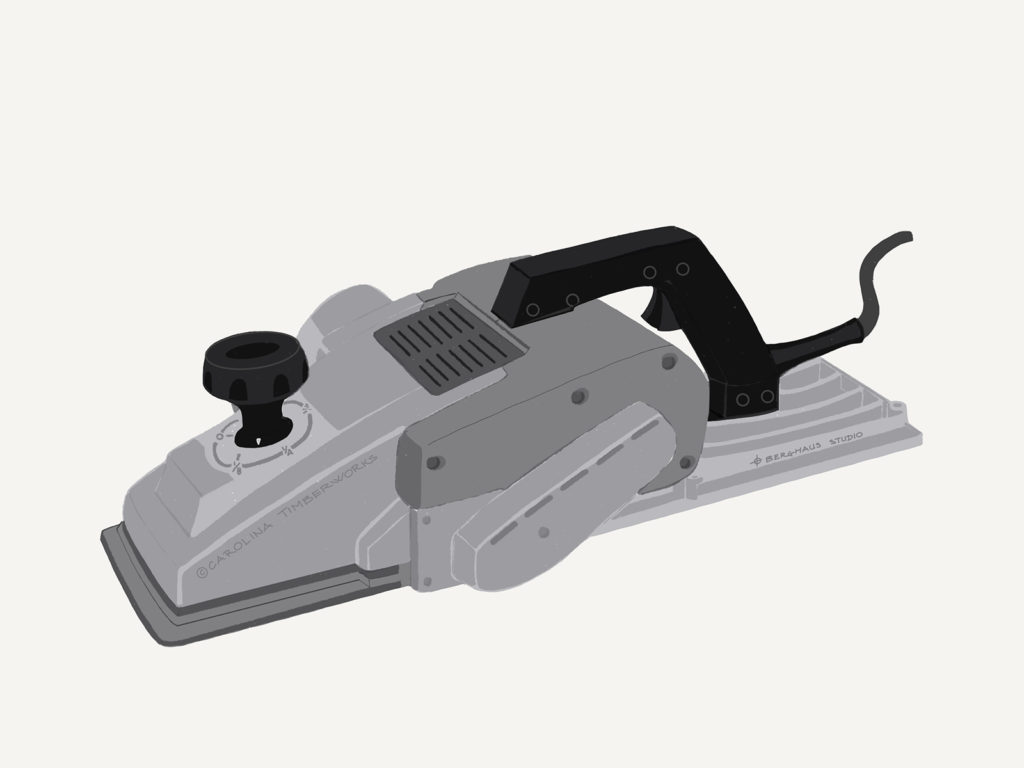
Electric hand planer

Electric or power planers are mechanized versions of block planes in that they can quickly remove, even, and smooth out the surface of the wood.

We typically opt for power planers when working with large timbers. Similar to planers, sanders smooth out imperfections and provide a softer finish using a rough or fine grit sandpaper disc or belt.

Routers and Notchers

Routers and notchers make grooves in the surface or certain profiles along the edge of timber components. A router can use a variety of differently shaped bits to create various decorative effects. We also rely on routers to create housings or notches for some specialized timber frame joints.

Oversized Timbe Frame Tools

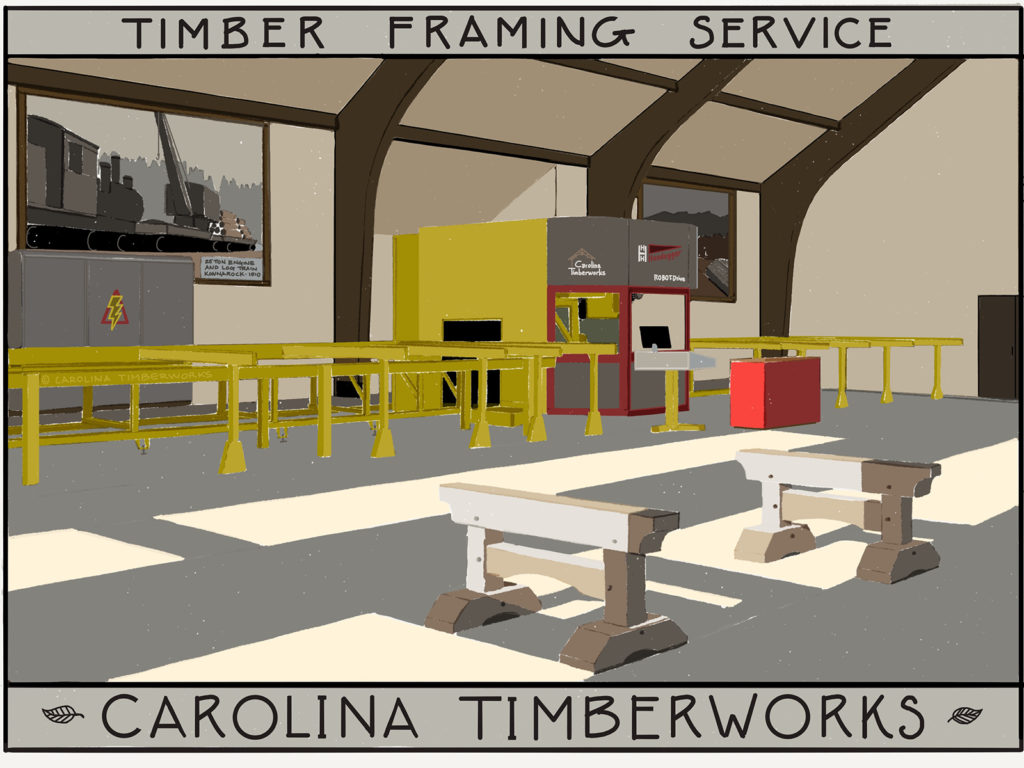
Hundegger ROBOT-Drive CNC Machine

Hundegger

By this point, you can likely tell that timber framers have a tool addiction problem. In photography, it’s known as GAS (Gear Acquisition Syndrome)—pity the spouses of timber framers who also dabble in photography.

Craftsmen have always looked for the best tools for timber framing to execute their craft, and for us, that means robotics: state-of-the-art, CNC (computer numeric control), timber framing machines.

These machines offer speed, precision, reliable delivery times, and sustainability.

  • Reliable delivery times because the software tells us, in advance, how many hours it’s going to take to cut a job—so we can schedule our workflow in the shop very precisely.  
  • And sustainability, because the software optimizes every cut—to get the most out of a given timber with the least possible waste.

These machines are a fusion of old-world craftsmanship and new-world technology, combining the best of the nineteenth century with the best of the twenty-first.

The 6-minute video below tells the story of a radical investment Carolina Timberworks made. It’s radical for two reasons:  

  1. There’s an inherent conflict with our passionate 16-year commitment to hand-cut traditional timber framing.
  2. The cost of the investment is significant.

Carolina Timberworks 2.0 from Carolina Timberworks on Vimeo.

The story of why we did it is here.

We’re not giving up traditional craftsmanship—in fact we’re growing and plan to hire even more craftspeople. And whether or not you’re a timber framer, we think you’ll agree that there’s something truly mesmerizing about watching our Hundegger in action.

Curious how timber frames come together? Watch and learn

Filed Under: Blog, Timber Framing Basics

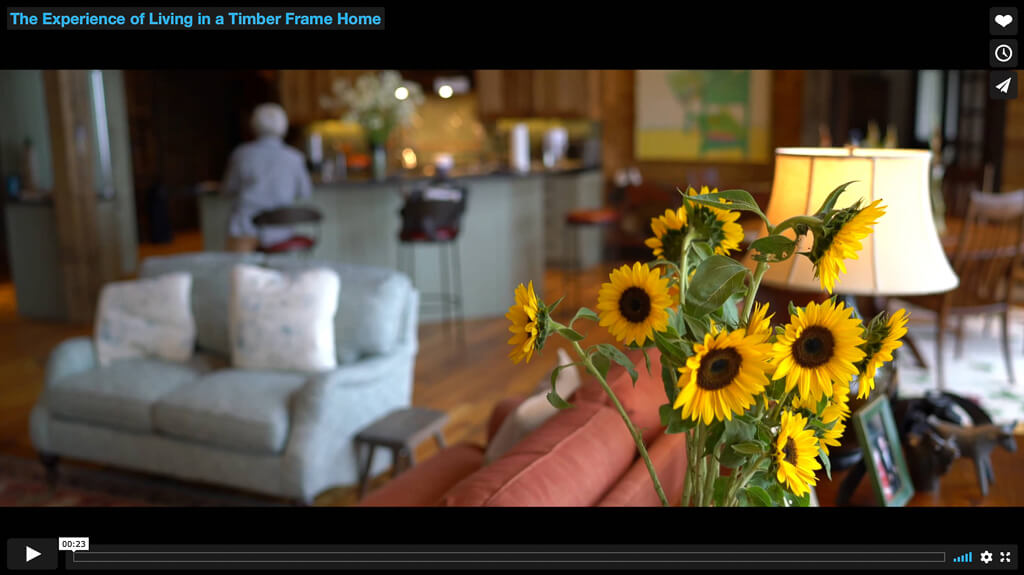
The Experience of Living in a Timber Frame Home

Living in a Timber Framed Home

“I’ve never been in a timber frame home”

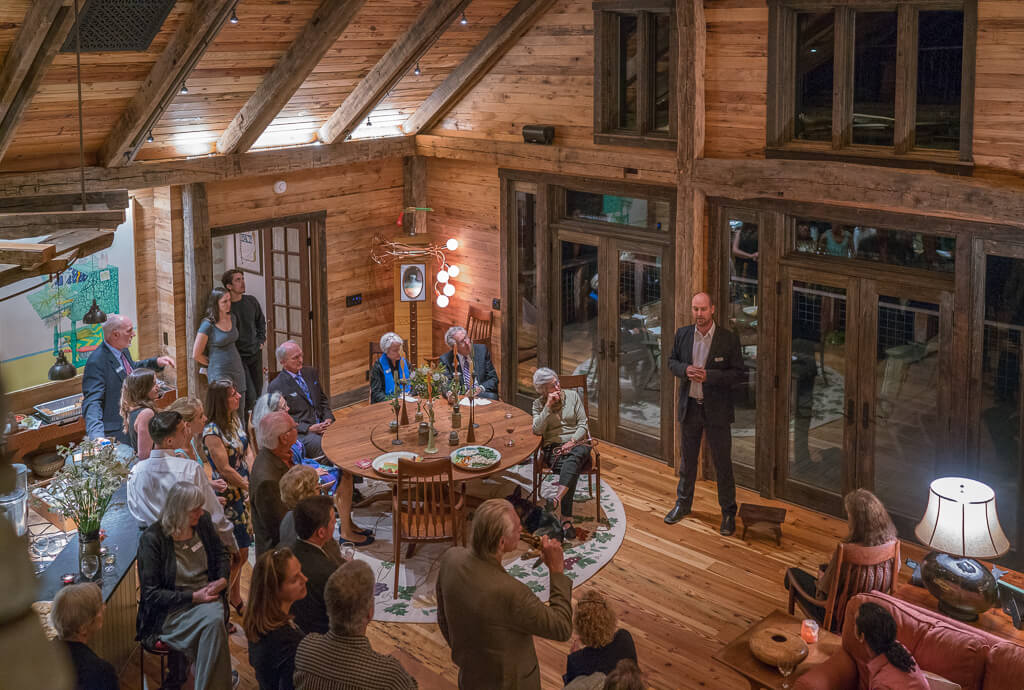
Joe Pinciotti’s words stopped me in my tracks. Hired by the Timber Framers Guild to convey what timber framing is about, Joe was trying to get up to speed on timber framing quickly. Despite knowing that timber framing represents a fraction of one percent of all construction, it had never occurred to me that most people have never actually been in timber frame homes. So this is my attempt to convey that feeling using quotes and observations I’ve jotted down over the years.
“The primary interest in timber framing is the aesthetics and the experience of living in the structures.”

—Jeff Arvin

Timber Frame Home
Living in a timber frame home

Know the one thing almost everyone does upon entering a timber frame home?

Timber framing is an architectural solution to a structural problem.

NC timber frame home
timber frame construction
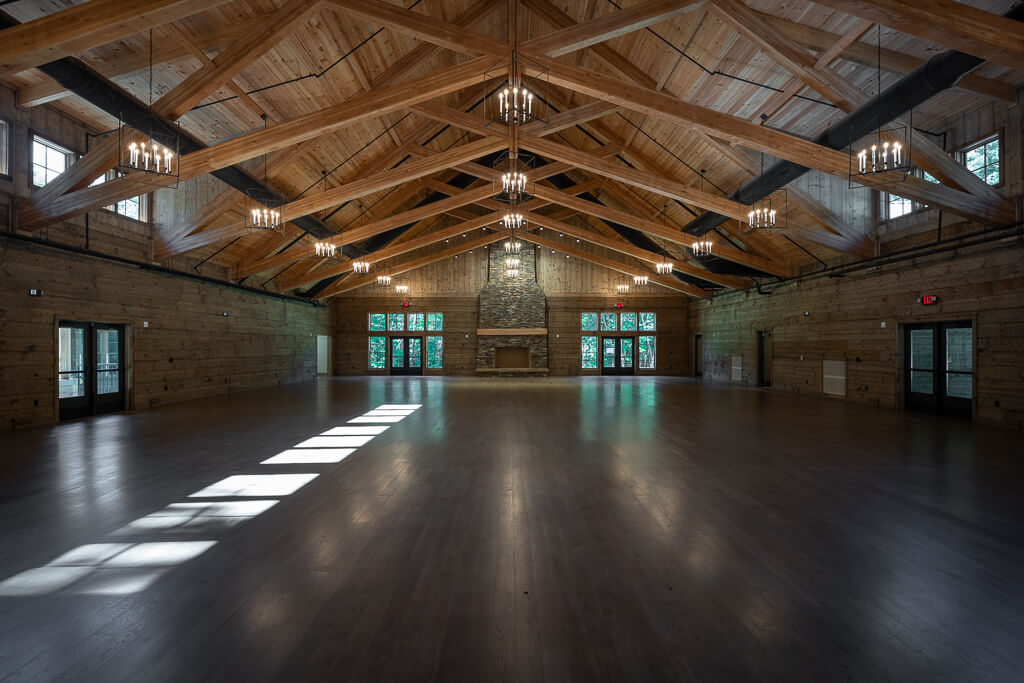
You can sense the appeal: simple lines, clear proportions, exposed construction.

Wood is an aesthetic material. There’s a warm environment in these buildings.

timber frame home reclaimed beams
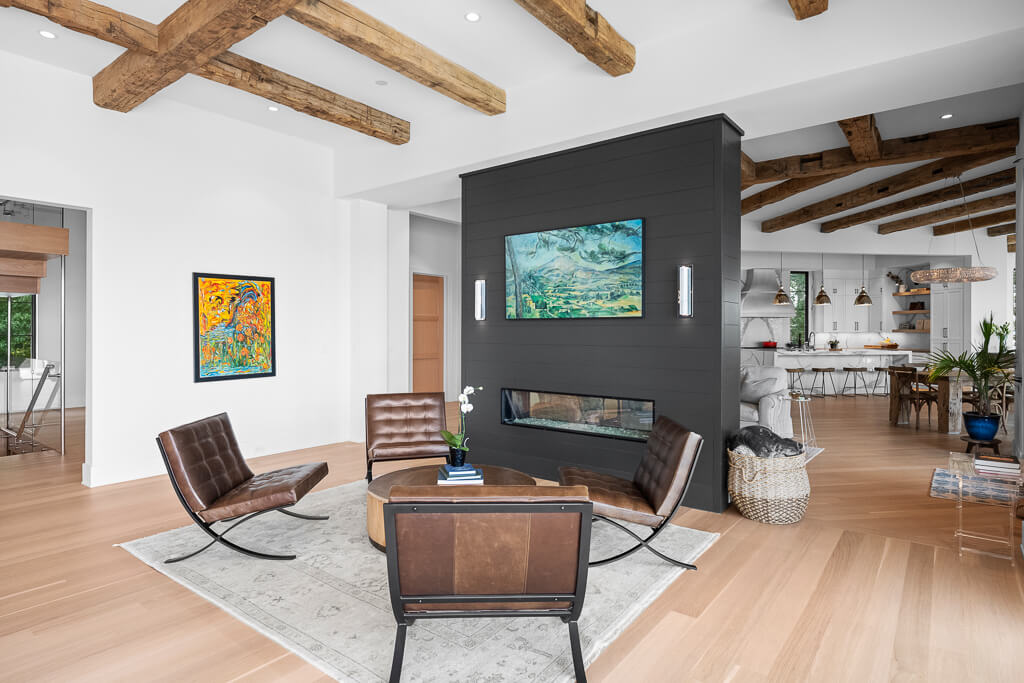
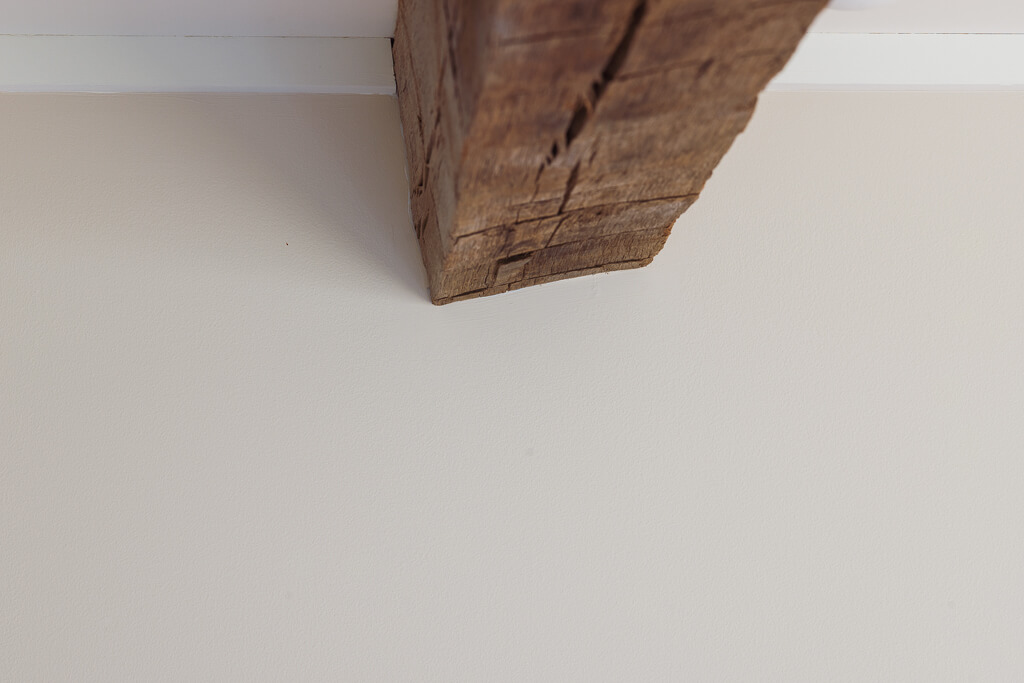
A take on the Modern Farmhouse with reclaimed hand hewn beams

It doesn’t have to be rustic.

“True Authenticity is a lack of perfection”.

—Architect Gil Schafer

twisted reclaimed beam
timber frame home design winner

Built Poetry.

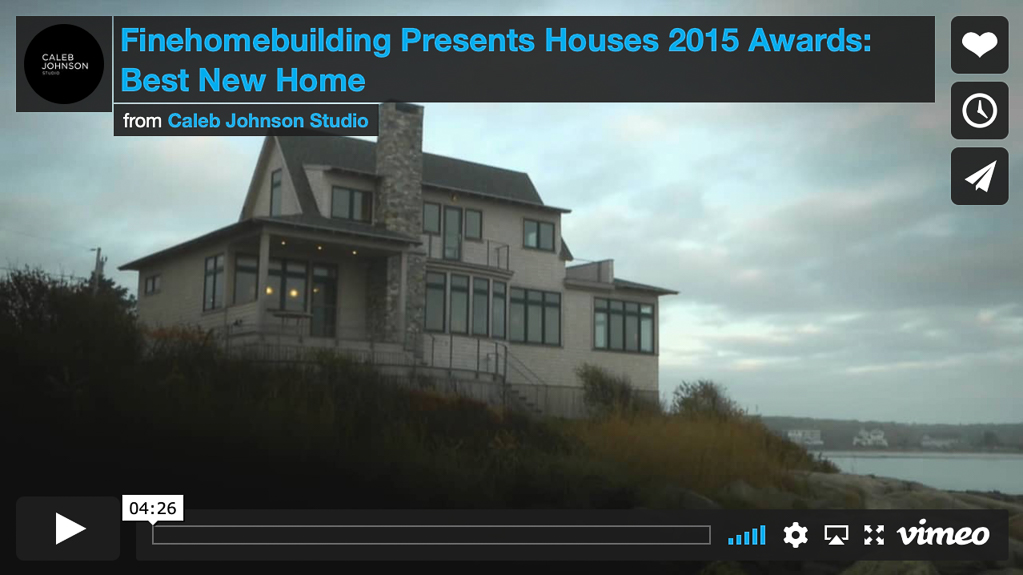
While watching architect Caleb Johnson of Biddeford, Maine discuss the winner of the 2015 Best New Home award, we were struck by his profound insights into the benefits of timber framing and why we were drawn to, and love timber framing.

Read More

“The whole structure can be understood as one thing, all the heavy timbers giving a clear integrity and visual coherence to it”.

—Architect Sarah Susanka, author of The Not So Big House

timber frame scissor trusses
Timber Frame Sustainability

Wood is part of the solution to climate change.
Learn More

Ever notice that man-made materials look best the day they’re installed (and go downhill thereafter), while natural materials get better and better looking with every passing year?

reclaimed antique heart pine
New Jersey Timber Frame Barn

“Buildings are a permanent record of ourselves—an effort to do something remarkable.”

—Tedd Benson, author & founder of a timber frame company

“Open pavilions are among the most compelling timber frames. There is no siding or interior portions to disrupt the concept’s pure architecture, engineering and craft at work”.

—Ben Brungrabber, Ph.D., P.E. Fire Tower Engineered Timber

virginia timber frame pavilion
timber frame houses master craftsman

Broadly, timber framing is everything that today’s sleek, mass-produced, technology saturated culture isn’t.

“I sometimes dream in timber frame.”

—James Lung

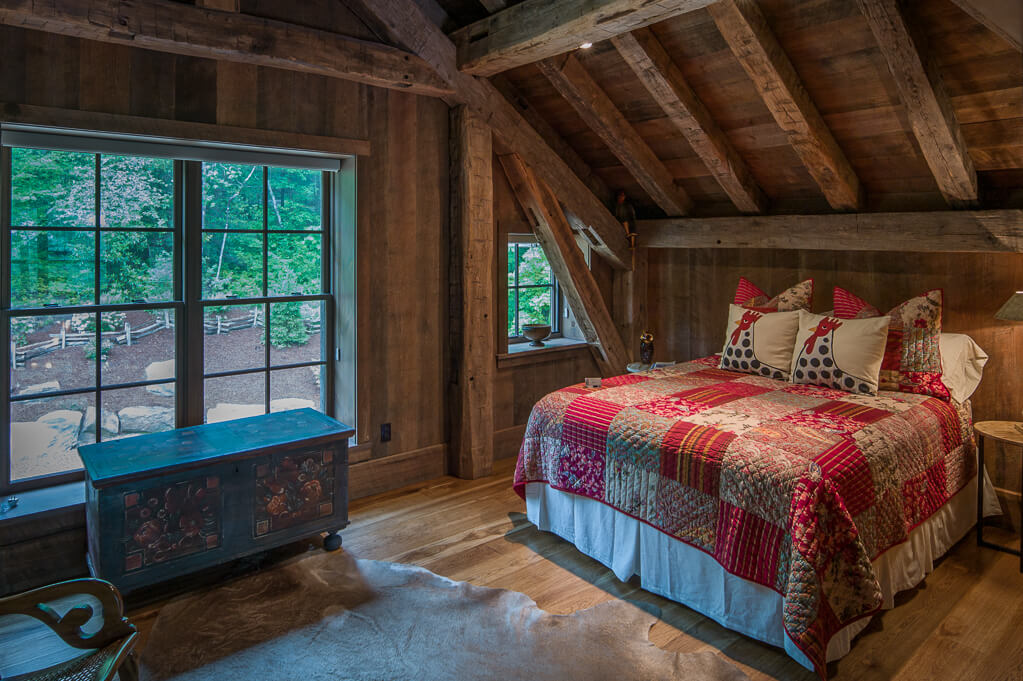
reclaimed beams in bedroom
modern timber frame porch

We build some of the world’s best timber frames.

And we’re nice.

Inquire

Filed Under: Blog, Timber Framing Basics

What the hell is a timber frame, anyway?

Answering the question everybody is afraid to ask: “What the hell is a timber frame, anyway?”
Filed Under: Blog, FAQs, Timber Framing Basics, Videos

The Grumpy Old Timberframer on… Bosses

The Grumpy Old Timberframer from Carolina Timberworks is back with a few thoughts about bosses. You don’t want to miss this one.

Filed Under: Blog, Timber Framing Basics, Videos

Building a Custom Timber Frame Home: The Process

The custom timber frame home building process starts with a dream. The Owners find the right architect, who then defines the dream. Their builder manifests the dream.

In what we think is our best video yet, dreams become reality one step at a time.

A Pursley Dixon Architecture English inspired summer retreat perches proudly on a mountainside. This sanctuary, consisting of multiple porches and balconies along with linear room arrangements, ensures breathtaking views of the National Forest and beyond.

From a timber framer’s perspective, it’s a work of art: A majestic cantilevered terrace supported by massive timber brackets and impossibly slender cantilevered joists..made possible by engineered structural steel artfully concealed inside Western Red Cedar timber framing. Supported by pairs of 9′ tall brackets, the timber deck joists taper gracefully to impossibly slender profiles as they reach further and further out over the gorge–making those not privy to the secret ask, “how did they do that?”

General contractor: Paradigm Custom Home Builders.

Roof thatcher: William P. Cahill

Music written and produced by Paul Defiglia | Performed by Mickela Mallozzi.

The Custom Home Building Process: Dream

  • Something inspires the Owner(s) to build something.
  • Owner(s) then looks for an architect.
  • Something makes the Owner(s) confident in their choice of architect.

Definition

  • Architect identifies their program–the Owners’ lifestyle, personality, and budget.
  • What it’s really about: great architects put their ego aside and design something that is a “total reflection of homeowner’s personality and lifestyle.”

Manifestation

  • How to choose a builder: his or her custom home building process.
  • Builder builds. Builder takes 2D architectural drawings and turns them into 3D reality.

Filed Under: Blog, Featured FAQs, Timber Framing Basics, Videos Tagged With: timberframing

Timber Frame Construction vs. Post and Beam Construction

Key Takeaway

Both methods use heavy timbers and create open interiors. Timber framing relies on traditional joinery, while post-and-beam construction uses metal plates, brackets, and bolts for connections.

At first glance, timber frame and post and beam structures may appear similar. After all, both rely on heavy timber to create open spaces with exposed beams. Yet the difference between timber frame and post and beam construction is the way the individual parts are connected: 

  • Timber framing uses wood joinery and rarely uses steel parts
  • Post and beam structures use metal fasteners and connectors

What Is Post and Beam Construction?

Post and Beam Essentials

To understand post and beam structures, it’s important to understand the difference between beam vs. post. Post and beam structures are built with vertical beam posts and horizontal beams. Metal brackets and steel plates join the timbers and hold the structure together, but they aren’t always visible. In some cases, they’re decorative, but in other cases, they’re structural and placed out of sight.

Pros of Post and Beam

Post and beam building generally has lower-skilled labor costs than timber frame construction. Although post and beam structures require plenty of labor, they tend to be less complex in engineering, construction, and fabrication. Additionally, decorative or structural metal plates can add a specific style to a post and beam structure.

Cons of Post and Beam Construction

Moisture can condense on steel surfaces, causing the steel to rust and the surrounding wood to decay. Depending on the complexity of the metal plates, steel post and beam construction material costs can be more expensive than traditional timber framing. Dissimilar materials (metal and wood) also tend to work loose over time.

What is Timber Frame Construction?

Timber Frame Construction Essentials

Timber frame construction relies on wood-to-wood joinery—so there’s no need for metal brackets. The timber frame is almost always exposed, creating a space that’s simultaneously open and cozy.

Pros of Timber Frame Construction

Usually (but not always), timber frames are more attractive, elegant, and expensive than post beam structures. Traditional wood-to-wood joinery, if kept dry, can endure for centuries. In addition, traditional wood joinery is somewhat elastic–in other words, it can deflect and give a little under loads. This is one reason that certain examples of Japanese architecture have survived for over a thousand years–despite the destructive earthquakes that occur several times each century.

Cons of Timber Frame Construction

Timber framing has a higher cost of skilled labor to design, engineer, and fabricate traditional joinery. Some structures increase timber cost when timber sizes increase, which may occur during engineering to accommodate joinery.

Post and Beam vs. Timber Frame

difference between timber frame and post and beam

What Do Both Methods Have in Common?

Ultimately, timber frame and post and beam structures have a similar visual style. Both tend to create open spaces with exposed beams and natural elegance. That’s because both types of construction use heavy timbers rather than 2x4s.

How Joinery Makes a Difference in Construction

Some timber framers believe that wood should be the only component in a true timber frame structure. When it comes to timber frame construction, mortise and tenon joinery bring everything together—both aesthetically and structurally.

In contrast, post and beam construction uses metal plates and bolts. While that may not seem like a big difference, some would argue that this method isn’t truly timber framing.

Learn More: Our Timber Frame Glossary

Curious how timber frames come together? Watch and learn

Filed Under: Blog, FAQs, Timber Framing Basics

  • Page 1
  • Page 2
  • Page 3
  • Go to Next Page »

© 2026 Carolina Timberworks. 210 Industrial Park Way, West Jefferson, NC 28694 T: 1-828-266-9663


Our Privacy Policy