• Skip to main content

DEV Carolina Timberworks

Craftsmanship. Passion. Service.

  • Home
  • Portfolio
    • Places We Live
    • Places We Work
    • Places We Play
    • Timber Frame Videos
  • Learn
    • Timber Frame Blog
    • Timber Frame Glossary
  • For Professionals
    • Architects
    • Builders
  • Owners
  • About
    • The Crew
    • Our Story
    • Our Future
    • Our Home
    • How do you guys work?
    • Carolina Timberworks Testimonials & Reviews
    • In The News
  • Contact
    • Join Our Team

Timber Framing Basics

Timber Frame Trusses Guide

Key Takeaway

Timber frame trusses are engineered assemblies that hold up a roof and shape the room below. Builders use queen post, king post, arched chord designs, or versions that add purlins or bolsters. Each one spans differently and gives the room a distinct look.

truss, n. A collection of timbers or members forming one of the principal supports, as of a roof or bridge, and framed together so as to give mutual support and prevent distortion, as by the forces of gravity and wind loads.

Wood trusses, whether structural or decorative, are usually named in one of five ways: 1. from the construction in which they are used; as in, roof truss or bridge truss, etc.;  2. from their form; as in, lenticular truss, etc.; 3. from their resemblance to certain objects; as in, scissors truss, etc.; 4. from some prominent feature in their construction; as in, king post truss, hammer beam trusses, etc.; 5. from the person by whom they were in invented; as in, Howe truss, etc. (adapted from the Funk & Wagnalls Company 1943 Standard Dictionary of the English Language)

What Types of Timber Frame Trusses Are There?
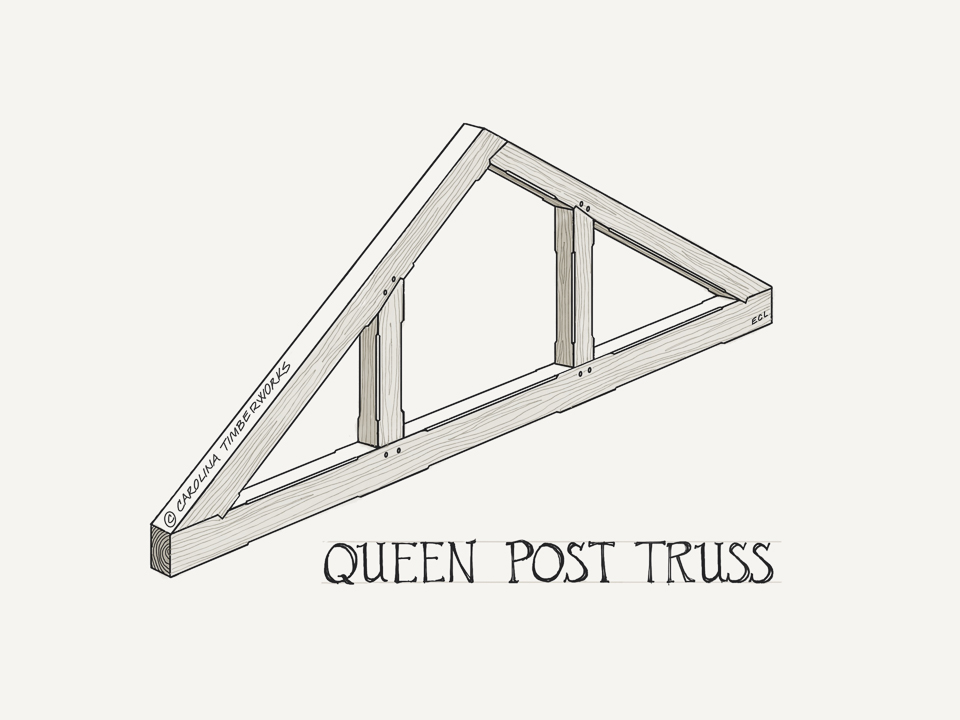
Queen post truss

Queen Post Truss

The queen post truss with with paired queen posts is a classic truss design, with many variations. The basic double posted version may also have a horizontal crossmember between the two verticals. Additionally, diagonal braces and/or struts may be added for increased strength and visual appeal.
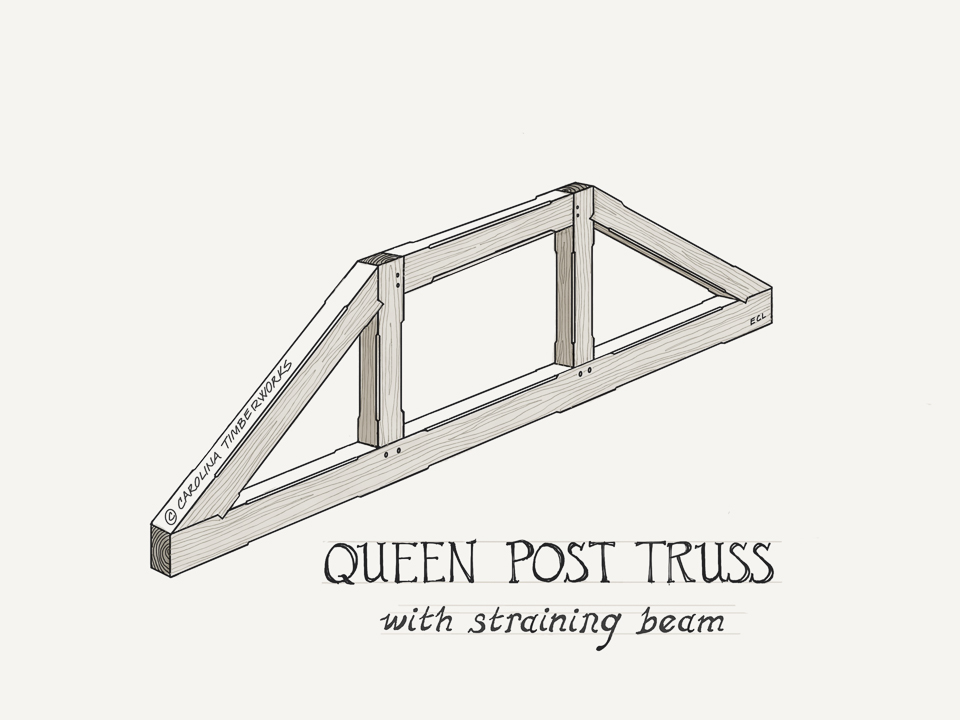
Queen post truss with straining beam

Queen Post Truss with Straining Beam

The queen post truss with straining beam between the tops of the posts (the true queen post truss), forms a configuration capable of much longer spans. Wood trusses of this type have been developed for distances over 50′. Straightforward geometry and pleasing lines make it timeless and honest.
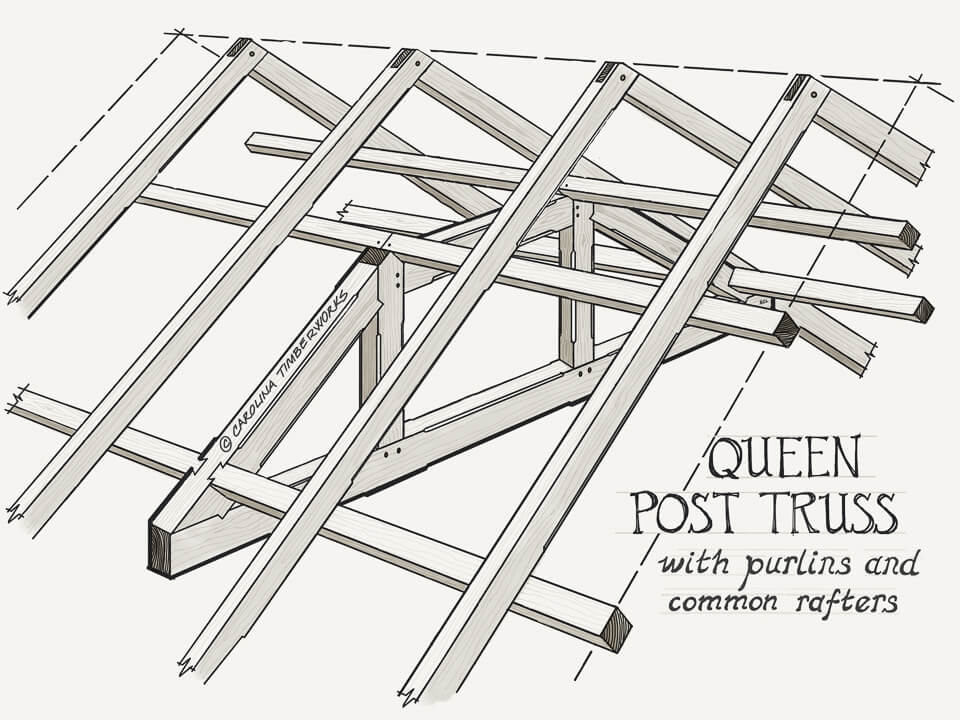
Queen post truss with purlins and common rafters

Queen Post Truss with Purlins and Common Rafters

Queen post trusses can be integrated with smaller members to form a more complex roof system. In this version, purlins are placed between wood trusses, to support pairs of common rafters above. These 3 components merge aesthetics and structure to create a striking multi-layered timber frame roof. Note that the tops of the purlins are a great place to hide indirect lighting.
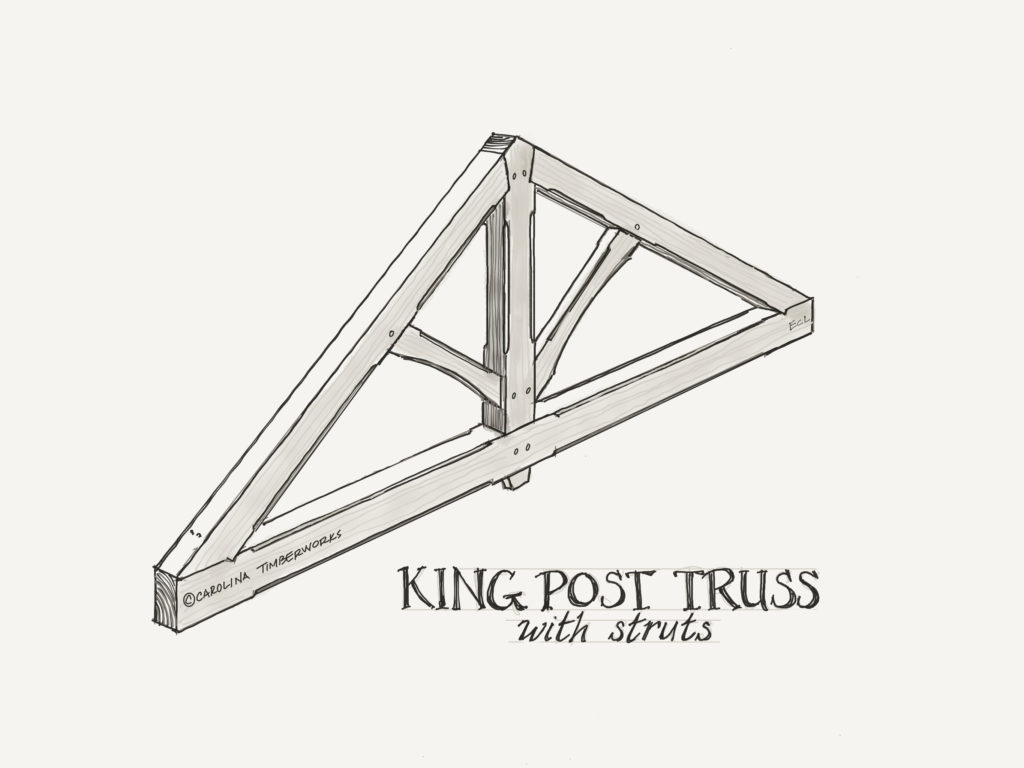
King post truss with struts

King Post Truss

The king post truss with struts is popular, timeless, very strong, and an elegantly simple truss design. This style can be embellished with radius cuts on the struts and a through tenon at the base of the king post (as pictured above). This truss is very adaptable with regard to desired span and roof pitch.
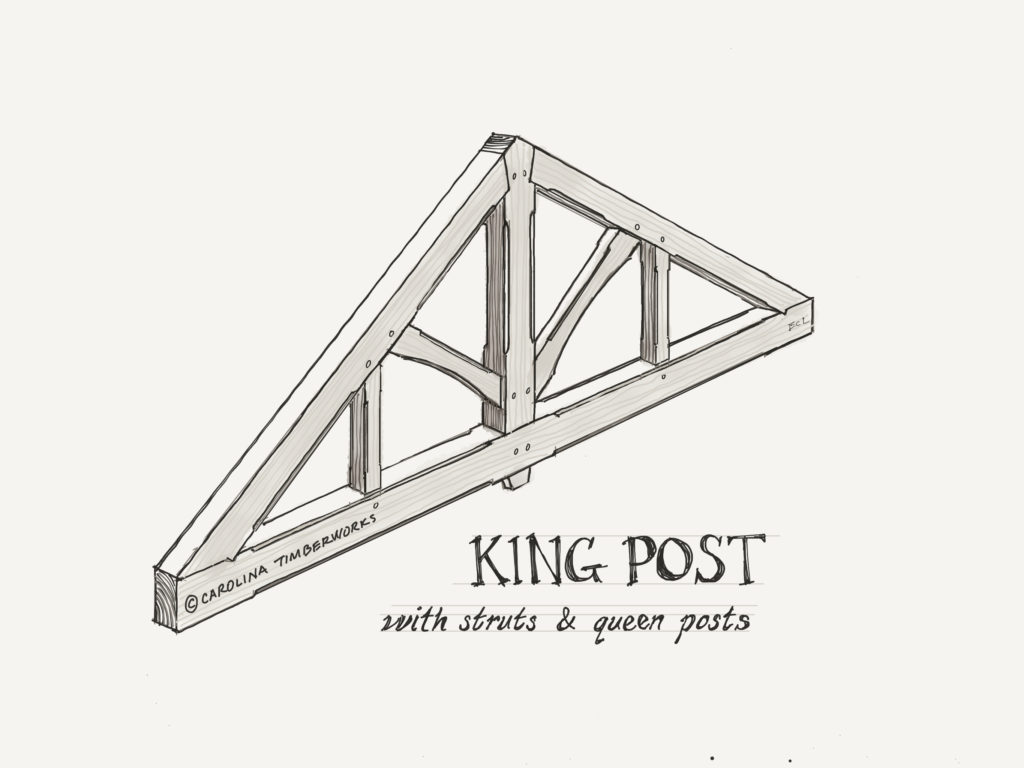
King post twith struts and queen posts

King Post Truss With Struts and Queen Posts

The king post truss with struts & queen posts is based on the popular king post truss design, but with the addition of two queen posts (pictured above). This timber truss is also very strong, and adaptable with regard to desired span and roof pitch. This arrangement is particularly good for longer timber frame truss spans (in excess of 24’ feet).
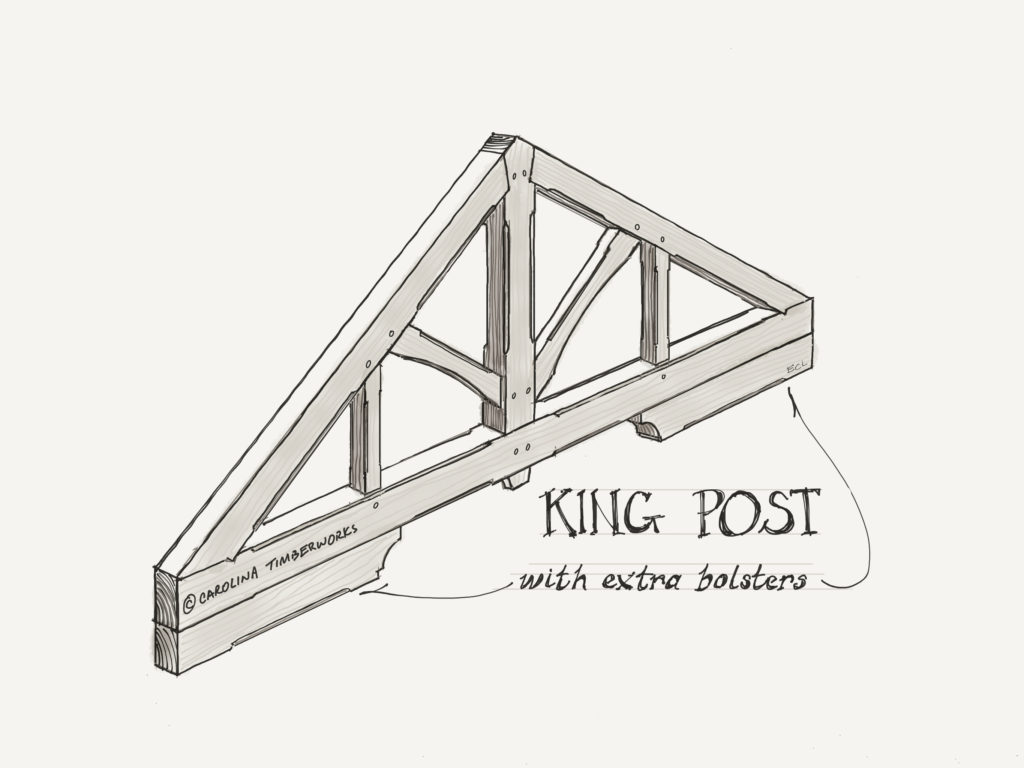
King post with extra bolsters

King Post Truss With Extra Bolsters

The king post truss with extra bolsters builds on a favorite timber truss design with two added bolsters on the underside of the bottom horizontal chord for a heftier look. These mirror image pieces added to the underside of the bottom chord can provide a stepped transition to the vertical wall plane. The bolsters can have a wide variety of decorative profiles cut into their visible ends. Twin metal straps can also be banded around both the bolster and the bottom chord for a craftsman detail.
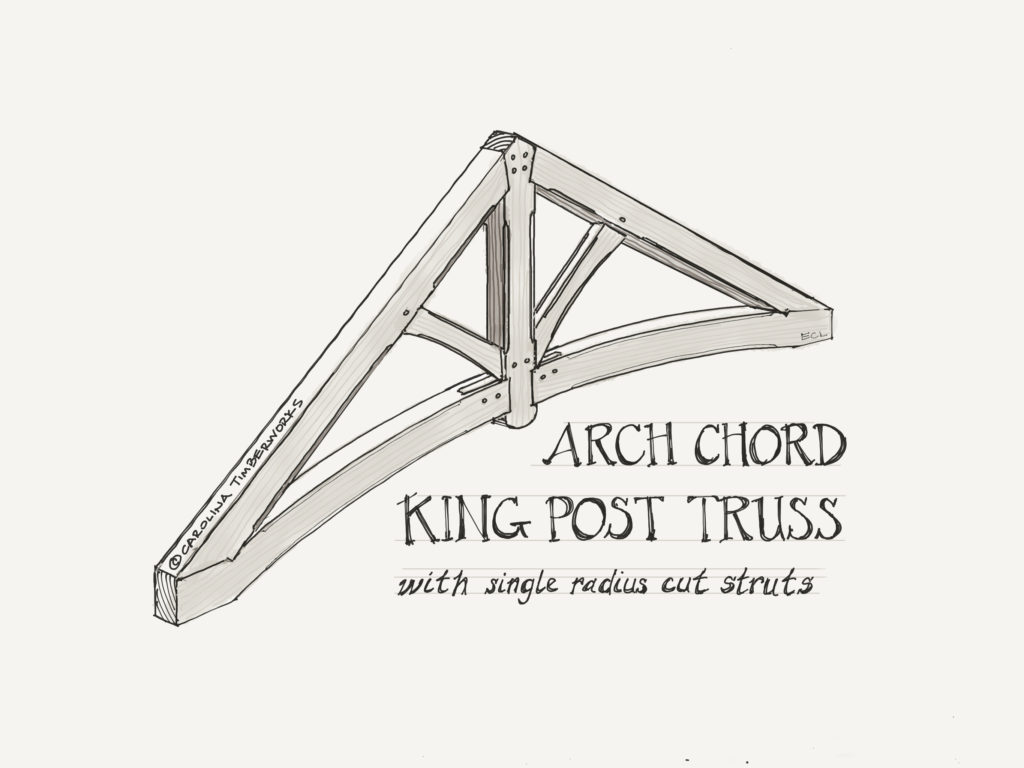
Arch chord king post truss with single radius cut struts

Arch Chord King Post Truss

An arch chord king post truss is another variation on the classic king post style, this time with an arched lower chord. This design adds a curvilinear element into the ceiling space instead of the standard horizontal timber, raising the structure somewhat and giving some extra volume below. Some of our clients have pointed out how the curves in this timber frame truss soften the lines and convey a natural aesthetic (after all, there are very few straight lines in nature). The radius cut for the arch should be shallow in order to be cut out of solid sawn timber. However, more semi-circular arches can be accommodated by using a grain matched glue laminated arch material (this is considerably more expensive than solid sawn timber).
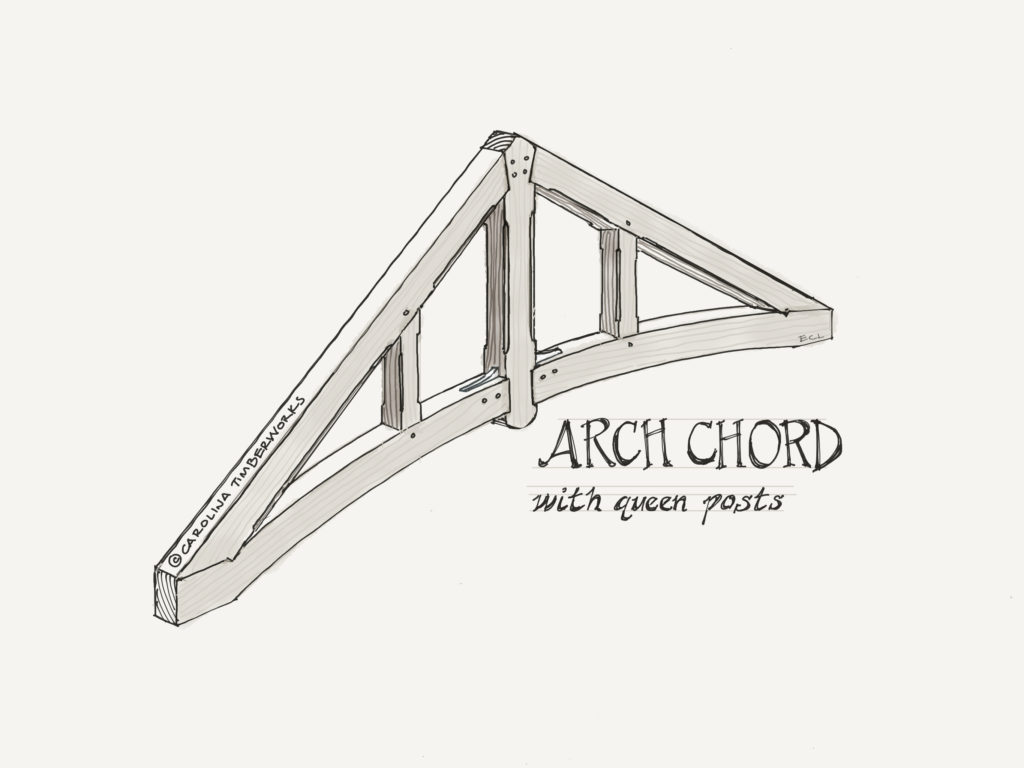
Arch cord with queen posts

Arch Chord With Queen Posts Timber Frame Truss

The arch chord with queen posts timber frame truss is another variation on the classic king post style, this time with twin vertical queen posts. This design adds more vertical elements above the arched bottom chord with the extra volume below. The radius cut for the arch should be shallow in order to be cut out of solid sawn timber. We like to use a spline tenon to joint the 2 half arches to the base of the king post. On larger spans, this configuration often requires concealed steel connectors to resist tension and spreading along the arch itself.
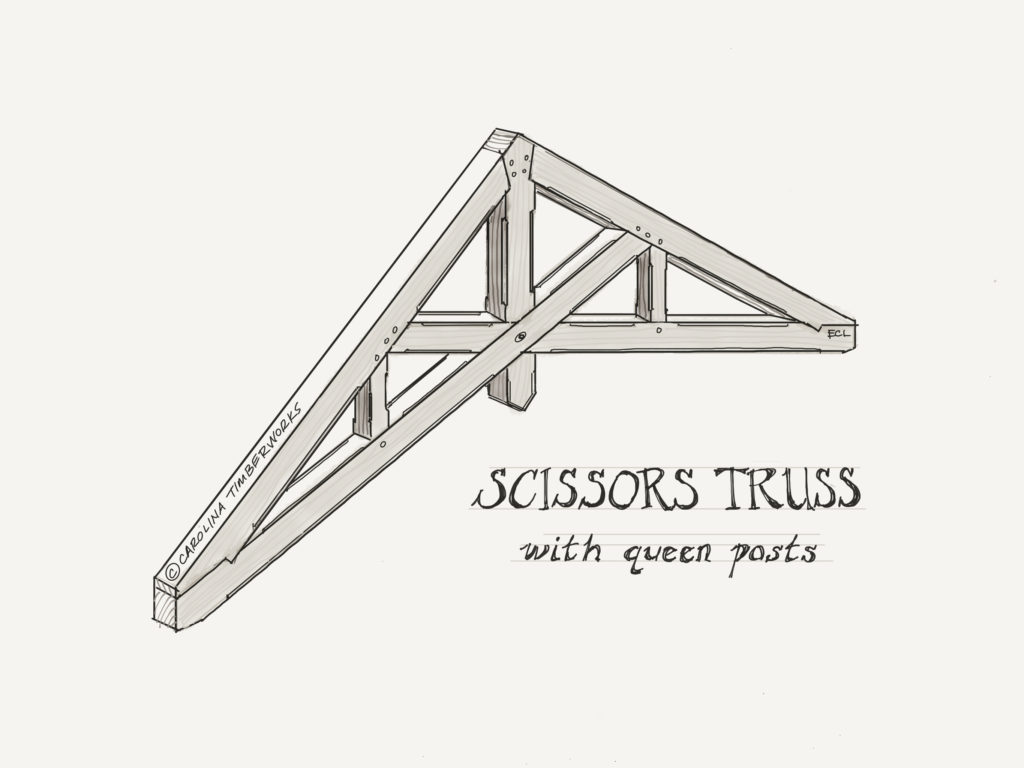
Scissors truss with queen posts

Scissors Truss

A scissors truss is a traditional truss style with many variations, this design can be used in small or large spans. Scissors trusses are not recommended for shallow roof pitches ( below 8/12 pitch ). We like to add the queen posts on either side of the central king posts. These timber frame trusses have a more complicated geometry with many angled intersections and a higher center for added space.
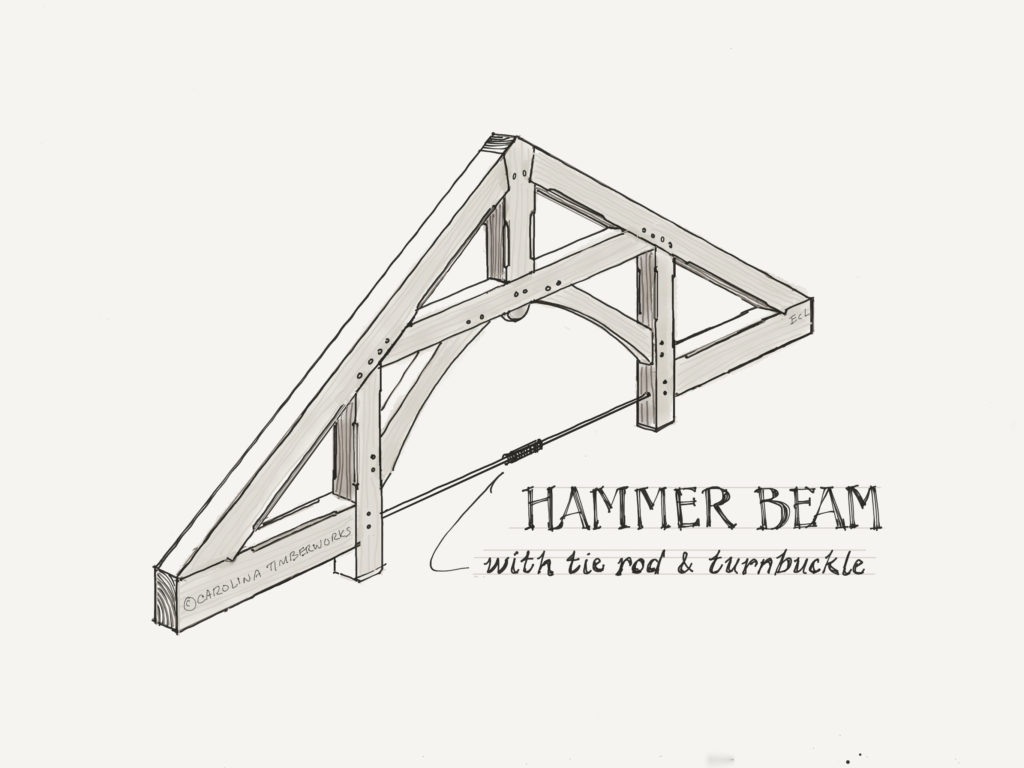
Hammer beam with tie rod and turnbuckle

Hammer Beam Truss

A hammer beam truss is based on the more elaborate hammer beam timber frame bent design. The combination of heavy timber and metal tie rods and turnbuckle is not only appealing but is often required to handle the spreading forces this configuration will develop. In case you were wondering, a hammer beam is a short beam projecting laterally from the inside of a wall, and serving as a tie beam.
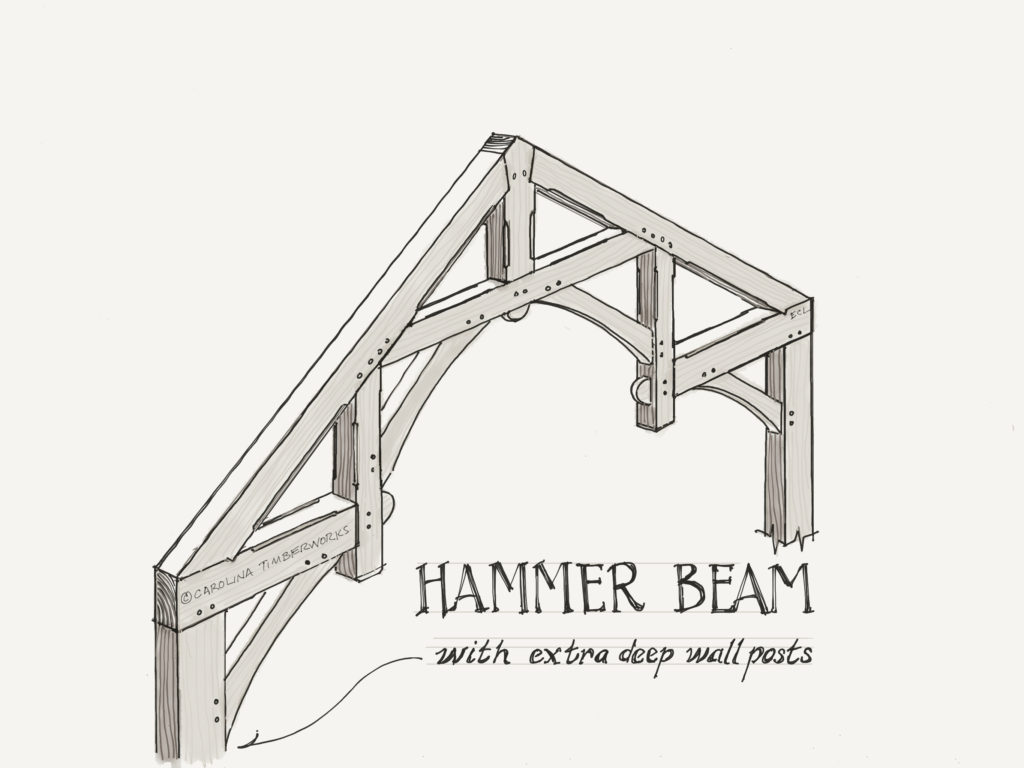
Hammer bean with extra deep wall posts

Hammer Beam Truss

A hammer beam truss, pictured above, is a beautiful and more complicated design, and creates dramatic vaulted spaces. There are many ways to embellish this design, from through tenons and radius cuts to decorative pendants or finials. The hammer beam bent is often associated with religious structures, great halls, or great rooms. Without a metal tie rod and turnbuckle, deep wall posts and/or concealed steel connectors are needed to handle the forces this configuration will develop.
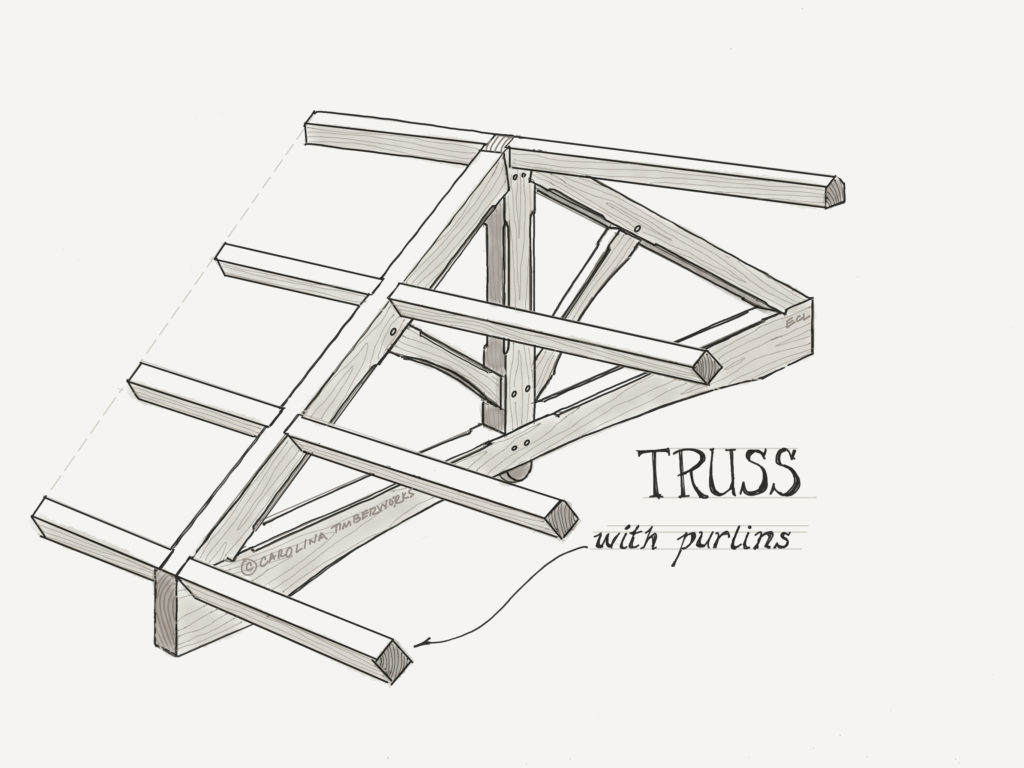
Truss with purlins

Truss with Purlins

Truss and purlins: adding purlins between heavy timber trusses is an elegant way to reduce the cost of a timber frame roof because purlins permit an increased on-center distance between trusses (so you purchase fewer trusses). An added benefit are the strong lines that purlins create by running parallel to the ridge beam(s). (Another benefit is that purlins are a great place for placing LED lighting fixtures). Purlins often sit in pockets cut into the truss rafters (as shown) but can also sit on top of the truss rafter to create a secondary layer to the roof structure. There are some span restrictions based on the purlin size ( beam width x depth) and how close they are together. This is a very traditional concept in heavy timber roof framing. (purlins are a series of horizontal timbers laid across (or connected to, as depicted above), the principal rafters, and support the roof covering–typically 2×6 tongue and groove boards, conventional or structural insulated panels (SIPs), and roofing)
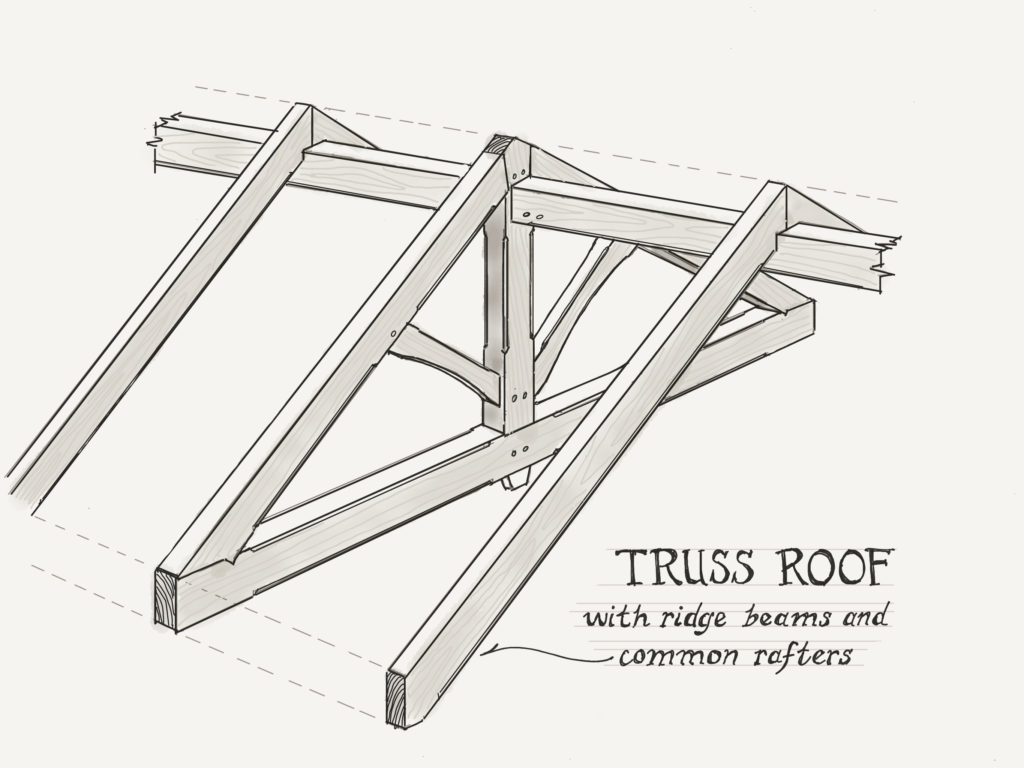
Truss roof with ridge beams and common rafters

Truss Roof With Ridge Beams and Common Rafters

A truss roof with ridge beams and common rafters can provide a larger space between each truss. We like common rafters between each truss thereby giving a rhythm to the roof structure. The common rafters are often smaller than the truss timbers to differentiate between the primary and secondary timber frame elements.
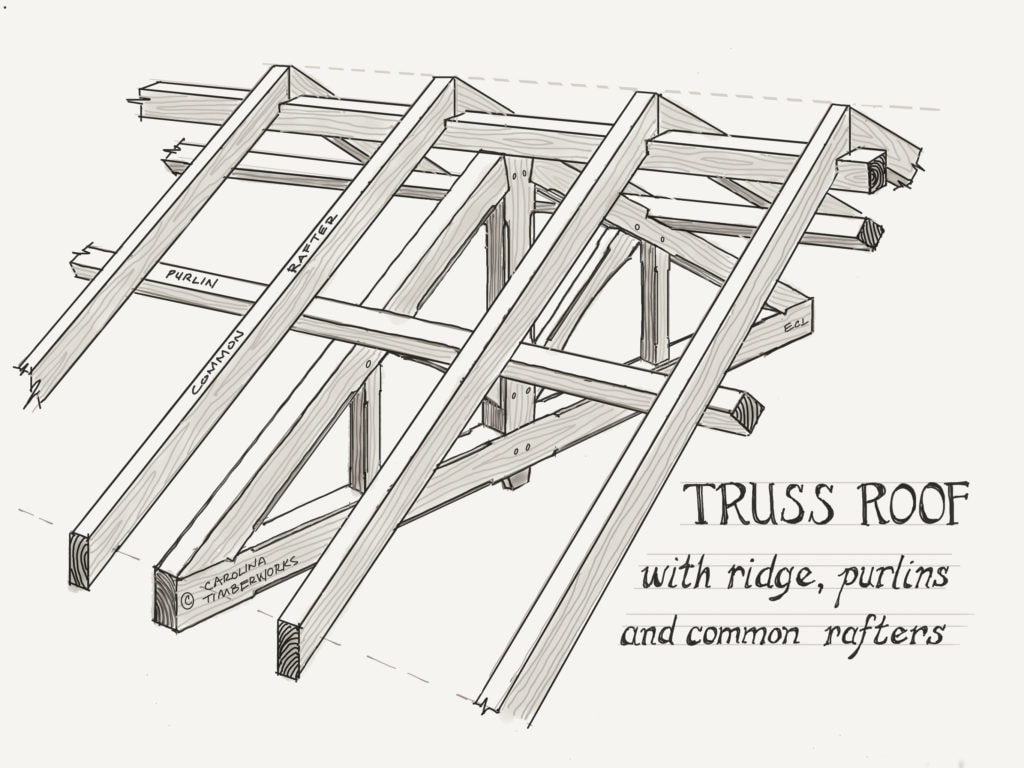
Truss roof with ridge, purlins and common rafters

Truss Roof With Ridge Beam, Purlins, and Common Rafters

A truss roof with ridge beam, purlins, and common rafters is a stunning combination that creates visual interest and structural complexity. There is a hierarchy of timber framing at work here, with trusses supporting the ridge and purlin beams. Above these components is a rack of common rafters. Typically wooden trusses are made from the biggest timbers, followed by intermediate sized ridge and purlins followed by the common rafters as the smallest timbers. One of our favorite combinations!
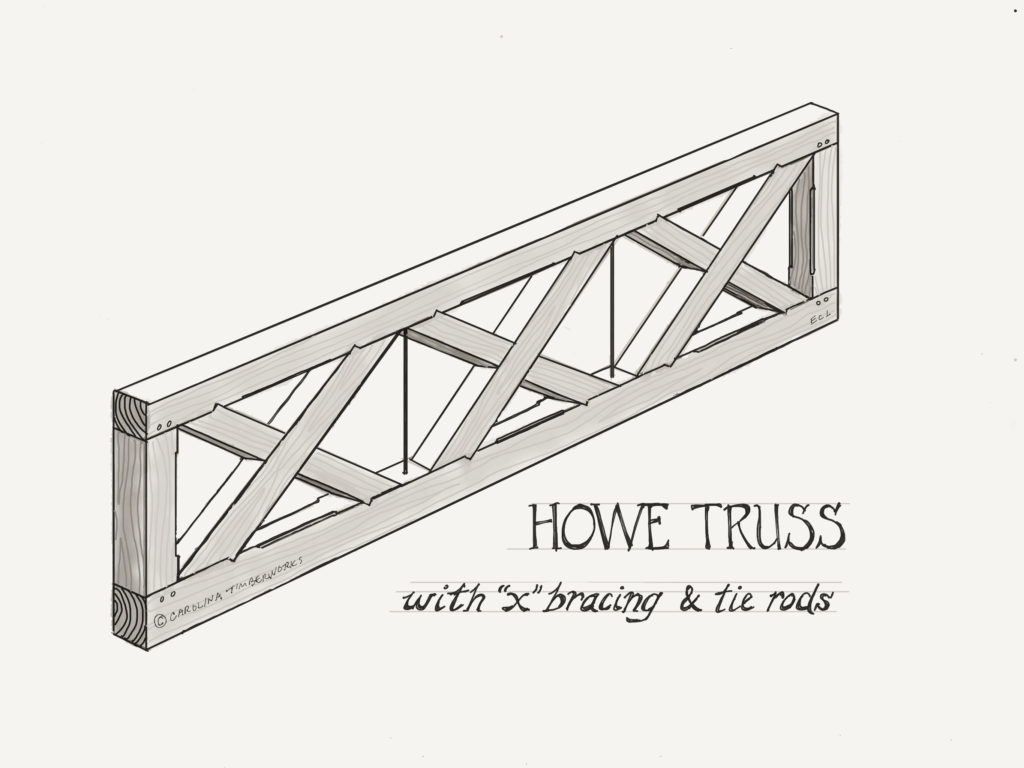
Howe truss with "x" bracing and tie rods
Warren truss
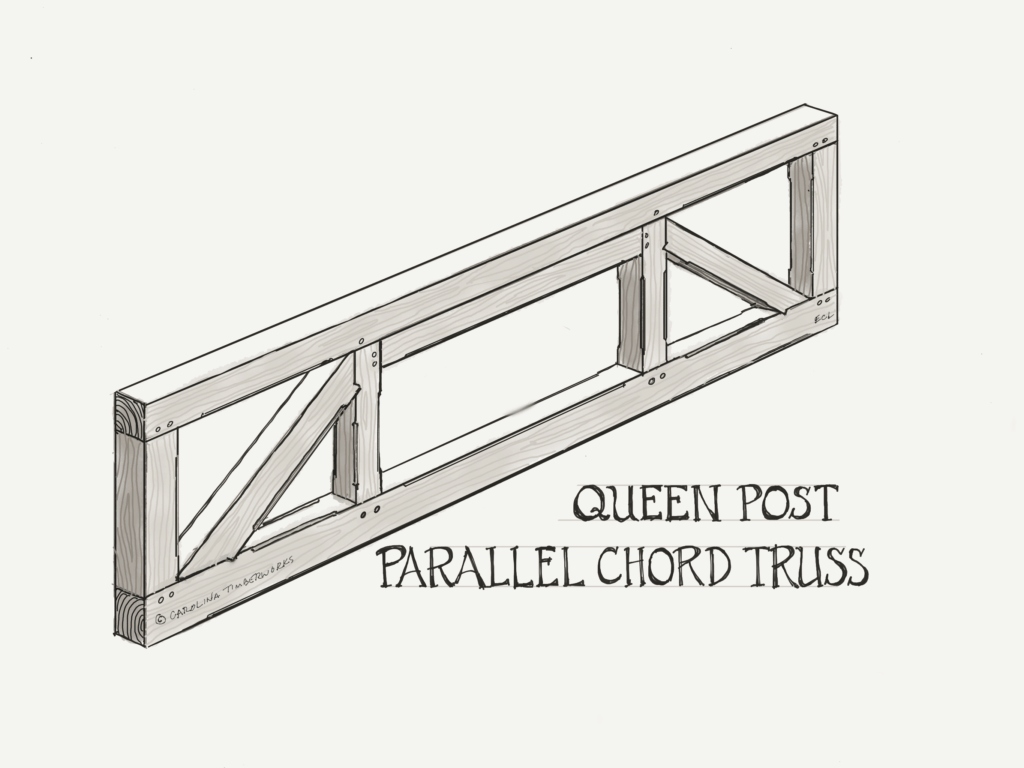
Queen post parallel chord truss

Bridge Trusses

The Howe, Warren, and Queen Post Parallel Chord Trusses, sometimes referred to as Bridge Trusses are relatively simple designs used in the construction of everything from the earliest 19th century modern bridges to WW II aircraft hangars. They’re efficient, strong, and characterized by the joining of numerous smaller members into a series of interconnected triangles. In addition to being a proven way to solve the engineering problem of long spans, we think they look great in modern timber framing (see an example here) and are one of the best examples of form following function.
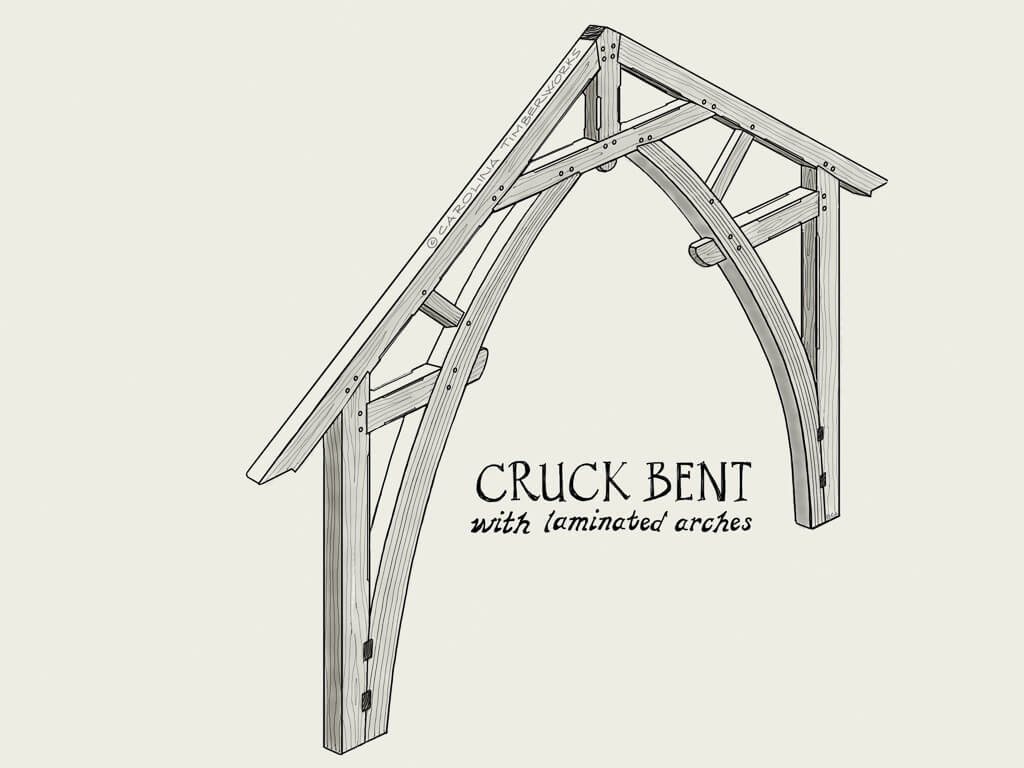
Cruck bent with laminated arches

Cruck Frame Bent

Cruck Frames, found primarily in the UK, were the original A-frame. According to Cruck Building: A Survey, the definitive definition of a cruck is as follows: “a true cruck consists of a pair of timbers (blades), straight or curved, serving as the principals of a roof, and stretching to point at or close to the apex of the roof, from a level well down the side walls.”

Learn More: Our Timber Frame Glossary

From raw timber to complete structures, see timber framing in action

Copyright 2019 Carolina Timberworks. All rights reserved. Illustrations by Eric Lubsen.
Timber Frame Trusses Inquiry

  • We promise to protect your privacy.
  • If you’d like us to call you.

Filed Under: Blog, FAQs, Featured Post, Timber Framing Basics Tagged With: heavy timber roof, timber frame roof, timber frame trusses

how we do it | moving timber

Sometimes you have to do it the hard way: installing timbers when the roof is already in place. Whether you call it retrofitting timber or the hard way to build a timber frame, the idea is similar to building a ship in a bottle–only harder. For starters, you’ve got to figure out how to budge 800 lb. timbers inside the building…

Filed Under: Blog, Timber Framing Basics, Videos Tagged With: timberframing

The Grumpy Old Timberframer on… Power Tools

Filed Under: Blog, Timber Framing Basics, Videos

The Grumpy Old Timberframer on… Hand Drafting

Filed Under: Blog, Timber Framing Basics, Videos, What's New Tagged With: #architecture, #CAD, #computer aided design, #homebuilding, #woodworking, Design

What is the Best Wood for Timber Framing Projects?

what is the best wood for timber framing

Key Takeaway

Builders often use Douglas fir, bald cypress, Port Orford cedar, western red cedar, or eastern white pine. The right choice depends on strength requirements, the look you want, cost, local availability, and how much weather or moisture the wood will encounter.

We’re often asked, “What is the best wood for timber framing?” Although it’s estimated that 60% of timber frames in North America are built from Douglas fir, there are other timber frame wood species that may work as well, or better, for your building project.

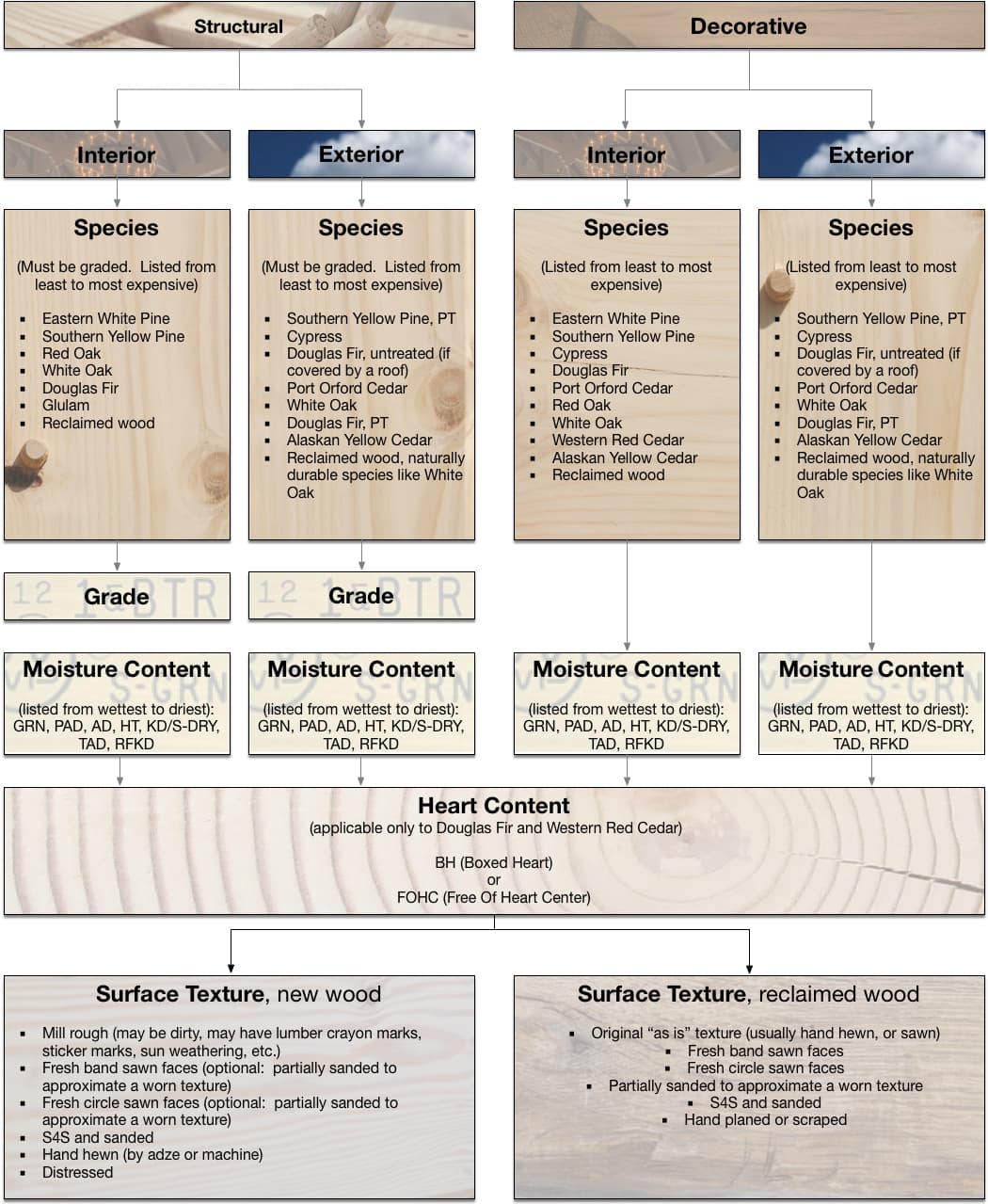
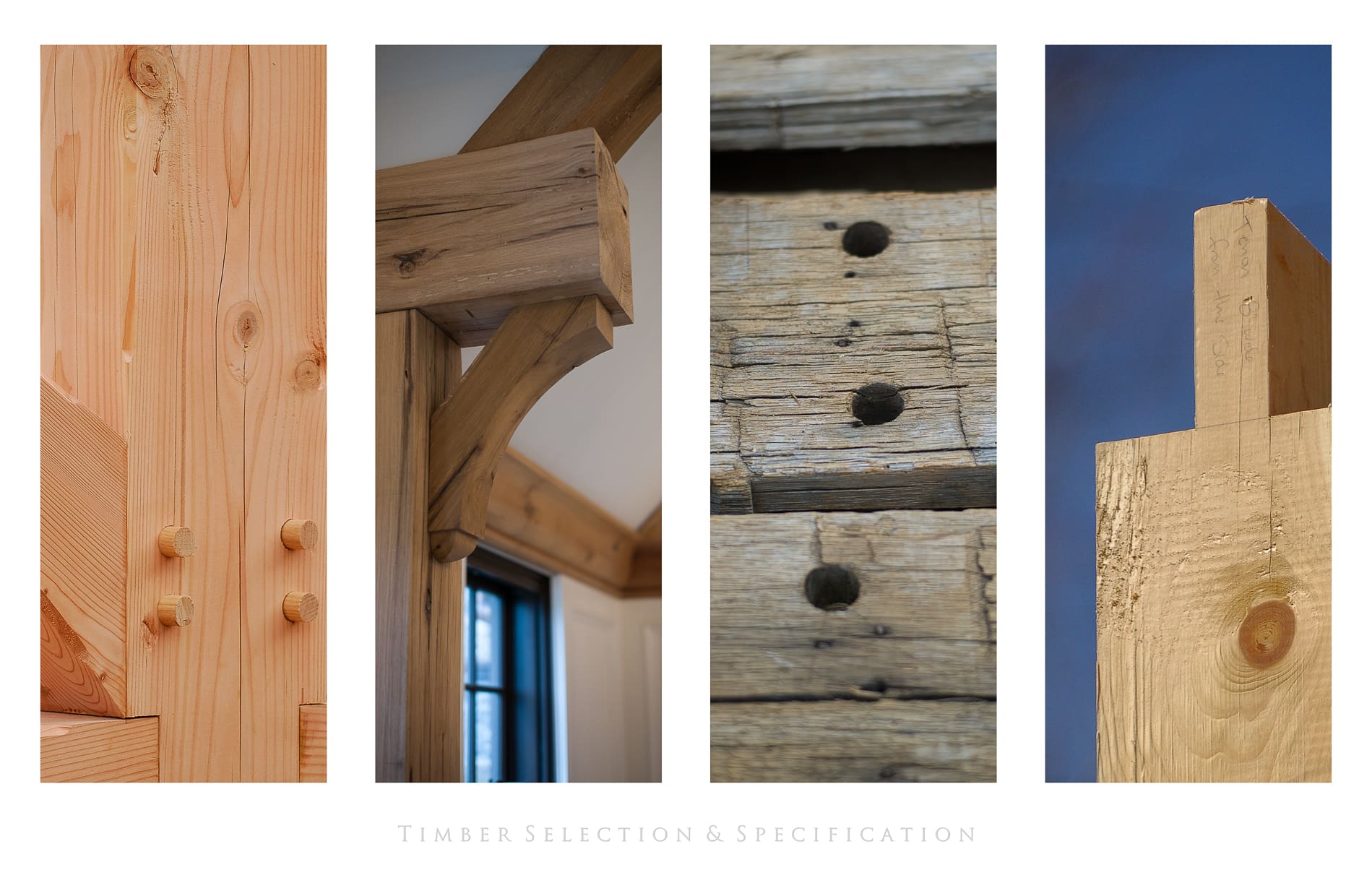
So, here in one place, is exactly how to select a timber species from the most common woods used in timber framing. Perhaps as important, you’ll learn how to specify the other important wood characteristics for a timber frame — things like timber grade, moisture content, heart content, and surface texture.

What Type of Wood is Used for Timber Framing?

What Are Common Timber Frame Abbreviations?

  • AD: air-dried
  • BH: boxed heart
  • FOHC: Free of Heart Center
  • Glulam: glued laminated timber
  • GRN: green (freshly cut, wet)
  • HT: heat-treated (reclaimed wood is sometimes heat-treated to kill bugs)
  • KD: kiln-dried (when timber is dried in a conventional kiln, only the outer inch or so is dried)
  • PAD: partly air-dried
  • PT: pressure-treated (with chemicals to resist decay)
  • RFKD: radio frequency kiln dried (dry to the core, but only applicable to Douglas fir
  • S4S: surfaced four sides
  • S-Dry: surface dry
  • TAD: thoroughly air-dried

Confused by timber framing jargon? Our Timber Frame Glossary is a handy resource to make sense of it all.

Characteristics of Common Timber Frame Wood Species

For each of the common timber frame materials used in the construction below, we’ve noted the characteristics, decay resistance, and the relative cost ($ less costly, $$ average, $$$ more costly). Some of the information below is adapted from the USDA Forest Service’s Forest Products Laboratory book: Wood Handbook–Wood as an Engineering Material.

What is the Best Wood for Timber Framing Projects?

The ideal types of wood for timber framing include bald cypress, Port Orford cedar, western red cedar, and eastern white pine. Bald cypress is a popular choice for wetter climates due to its moderate resistance to decay. Port Orford cedar offers a straight grain, a distinctive scent, and high decay resistance, making it a favorite for specialized architecture. Western red cedar is lauded for its very low shrinkage and natural fungicidal properties, increasing durability. Eastern white pine develops a beautiful patina over time, balancing quality with affordability.

What is the best wood for timber frame homes and projects?

Bald Cypress (Taxodium distichum)

Also known as southern cypress, tidewater red cypress, yellow cypress (inland), and white cypress. Southern US softwood; moderately heavy, moderately strong, and moderately hard. Old-growth is resistant or very resistant to decay, but no longer readily available. Second growth is moderately resistant to decay. Sapwood is narrow and white-colored. Heartwood color varies from light yellowish to reddish-brown color. Shrinkage is moderately low but somewhat higher than the cedars. Difficult to obtain longer than 20′.  $$

Port Orford Cedar  (Chamaecyparis lawsoniana)

Straight-grained, fragrant, and durable. A softwood that grows along the Pacific Coast from Coos Bay, Oregon, southward to California in a narrow band less than 40 miles wide. Fine texture, generally straight-grained, with a pleasant spicy odor (it reminds us of ginger). Moderately lightweight, stiff, moderately strong, and hard. The heartwood is highly resistant to decay. Moderate shrinkage with little tendency to warp. Prized by Japanese temple builders as it resembles Japan’s sacred and rare, Hinoki Cedar.  $$

Western Red Cedar (Thujaplicata)

Straight grained, low shrinkage, durable. A softwood that grows in the Pacific Northwest and along the Pacific Coast to Alaska. The heartwood is reddish or pinkish brown to dull brown, and the sapwood is nearly white. Narrow, and usually less than 1″ wide. Very low shrinkage, lightweight, moderately soft, low in strength. The heartwood is very resistant to decay because the chemical substance Thujaplicin, found in mature western red cedar trees, is a natural fungicide.  $$$

Eastern White Pine Timber Frame

Eastern White Pine (Pinus strobus)

The “moderate” timber: moderately soft, moderately low in strength, moderately durable, and moderate shrinkage. A softwood that grows from Maine to northern Georgia and in the Great Lake States. Challenging to obtain graded for structural timber framing. Creamy white or pale straw to light reddish-brown. Darkens with time to a light caramel color, then after many years to a deep rich golden tan. Stains well.  $

Learn More: Our Timber Frame Glossary

Want to see what timber framing is all about?

Filed Under: Blog, FAQs, Timber Framing Basics

Timber Frame Inspiration

How do timber frame dreams become reality?

Timber Frame Plans and Ideas
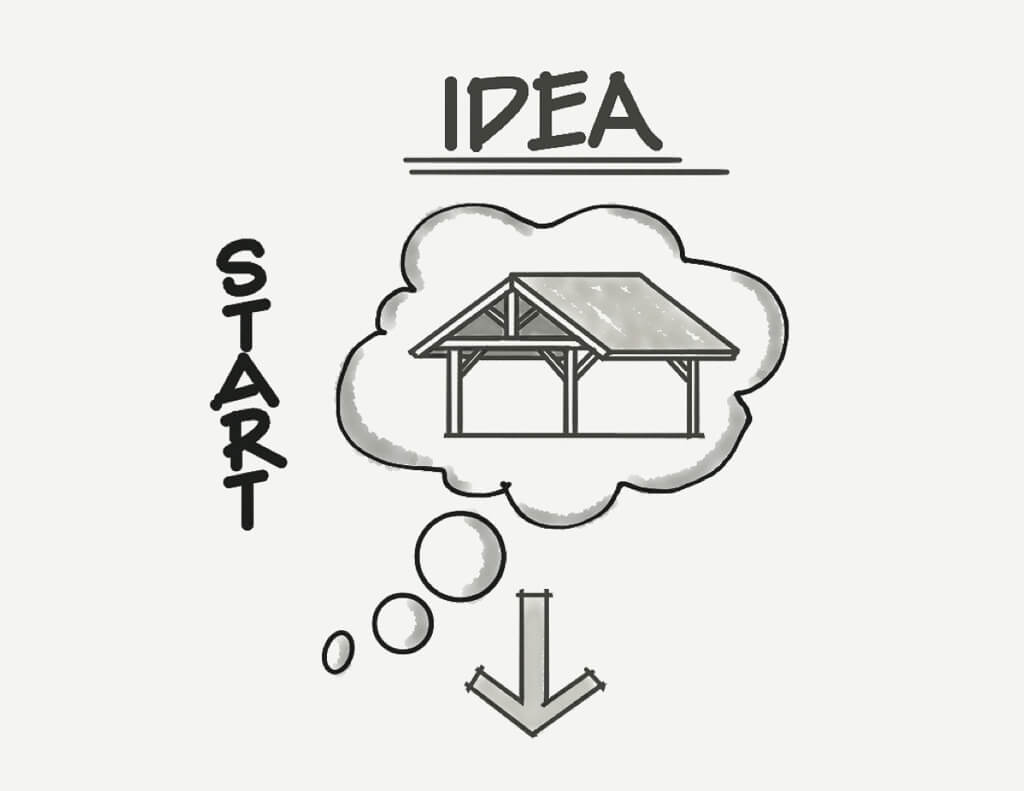
Timber Frame Concept Drawing

We’re always excited to dream along with a new client because every one of our timber frames started the same way: someone had a dream and was inspired to build something. What we do, our process, and more important, why we do it, is really about making that dream a reality.

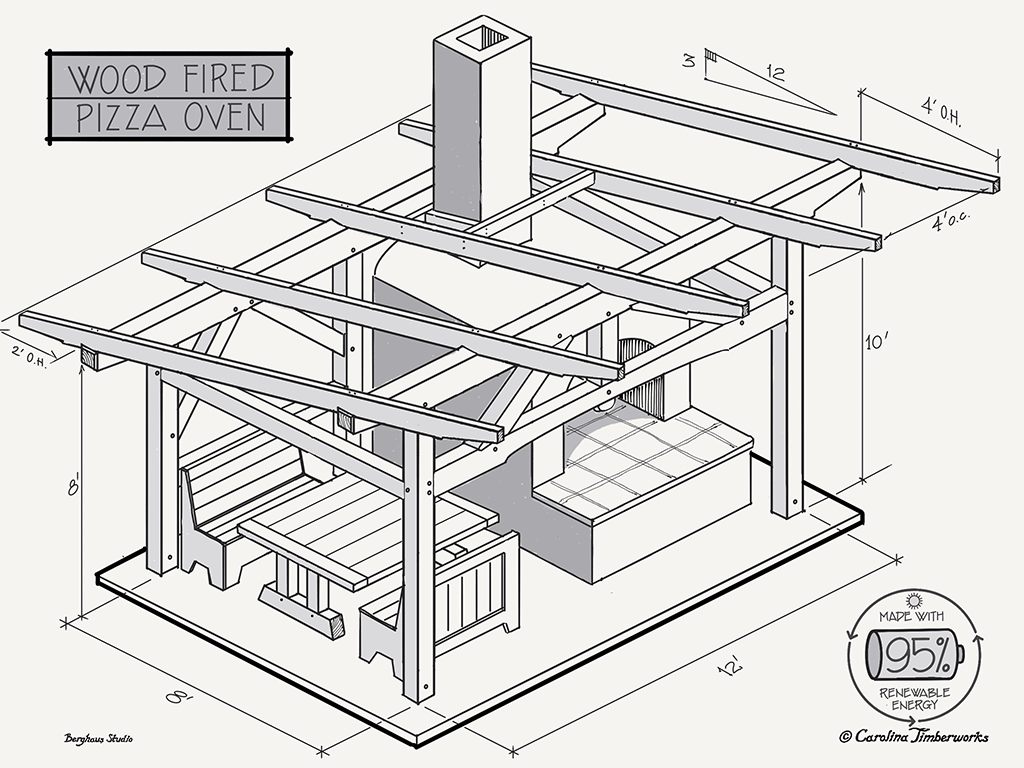
Timber Framed Wood Fired Pizza Oven
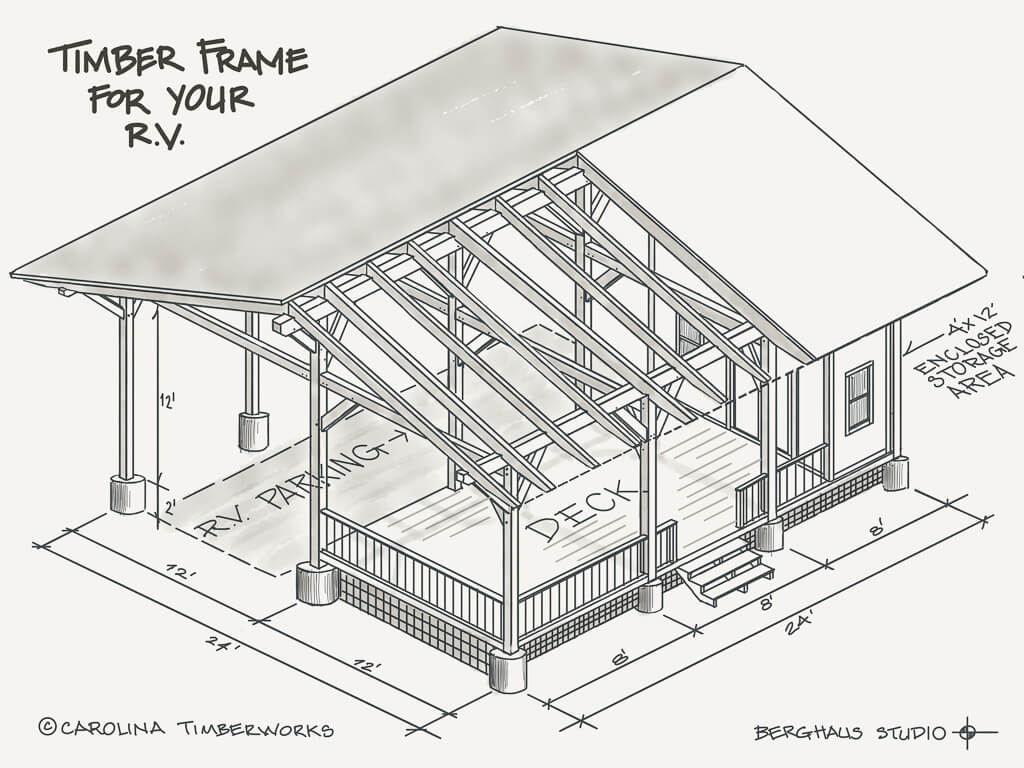
Post and Beam RV Garage
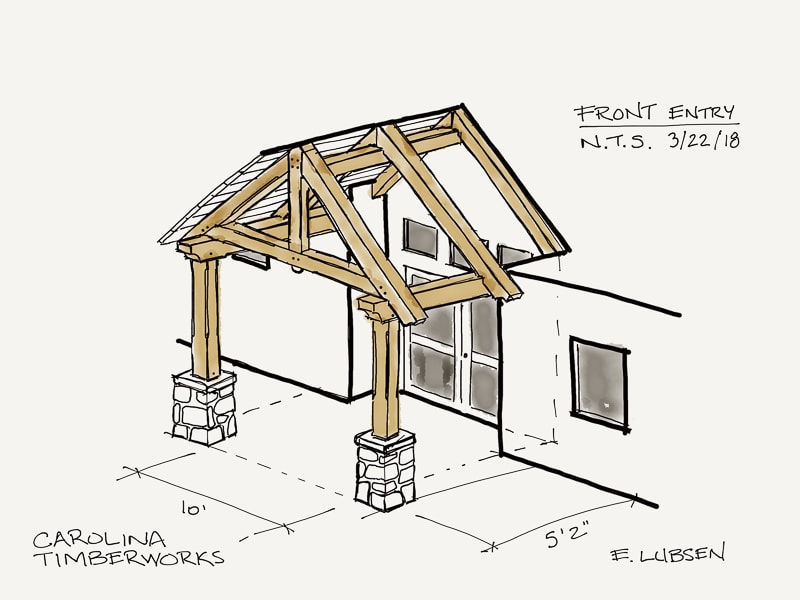
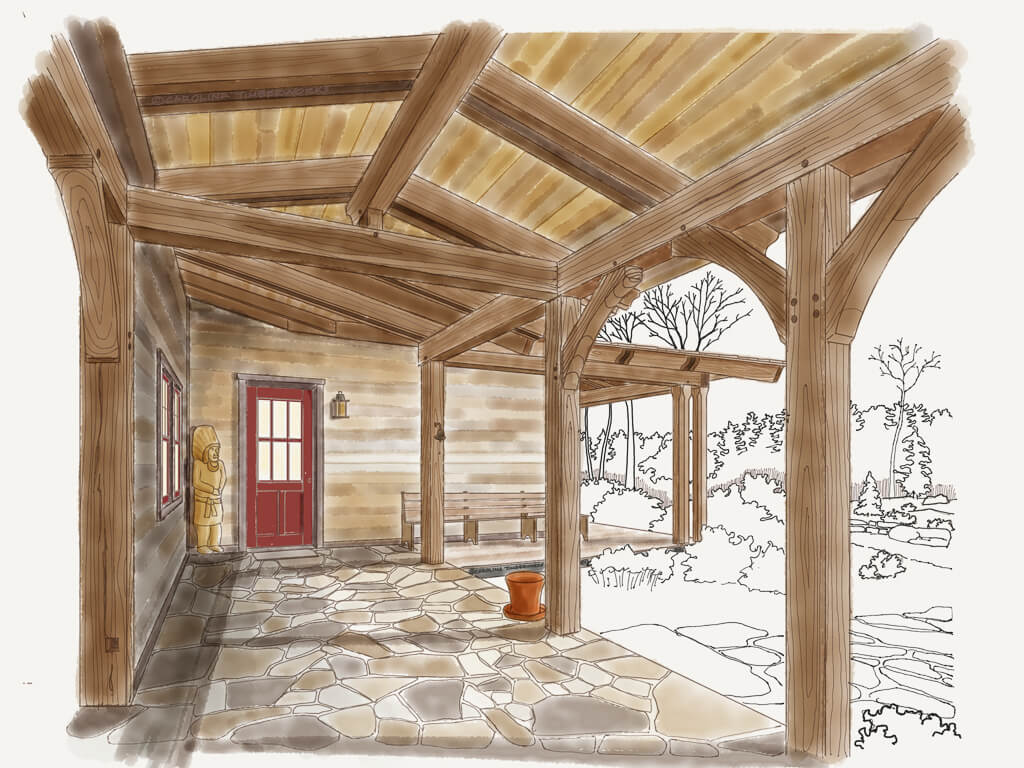
Timber Frame Entry Drawing
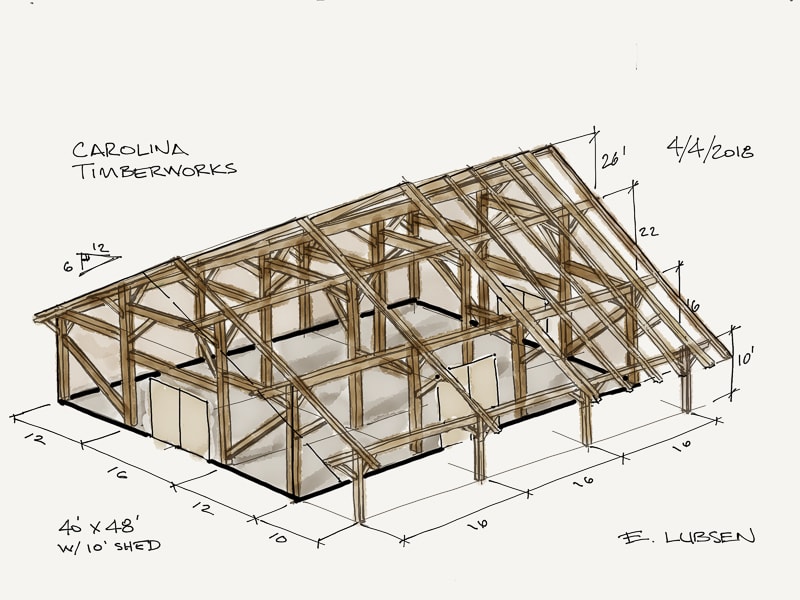
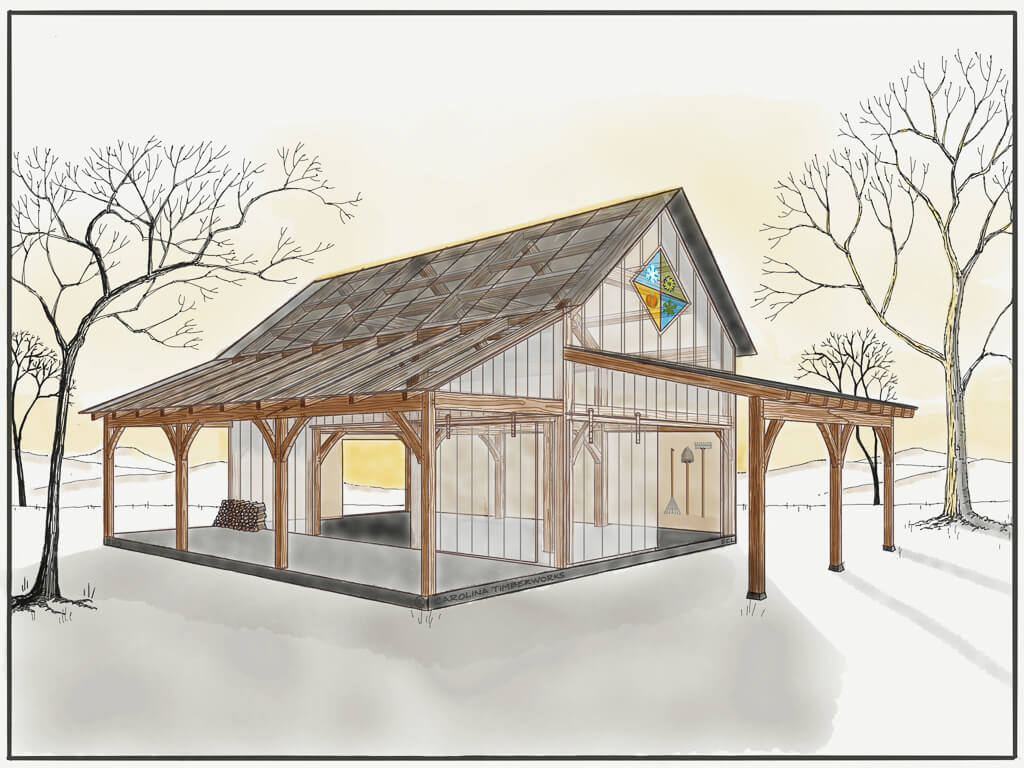
timber frame barn design
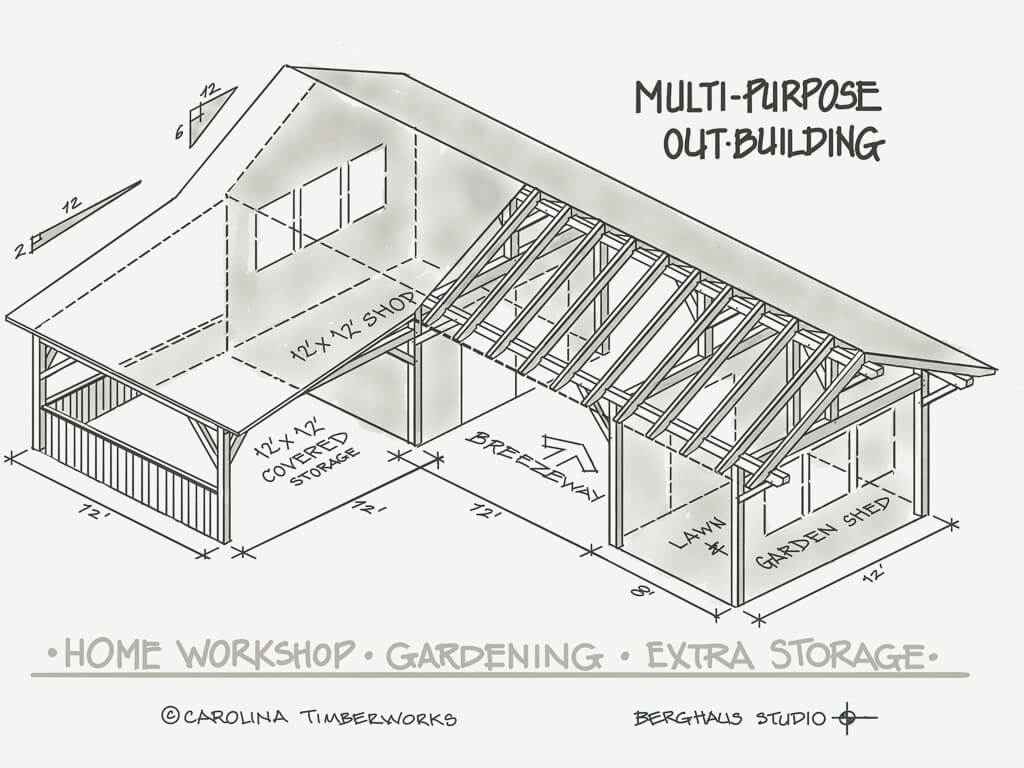
Multipurpose Timberframe
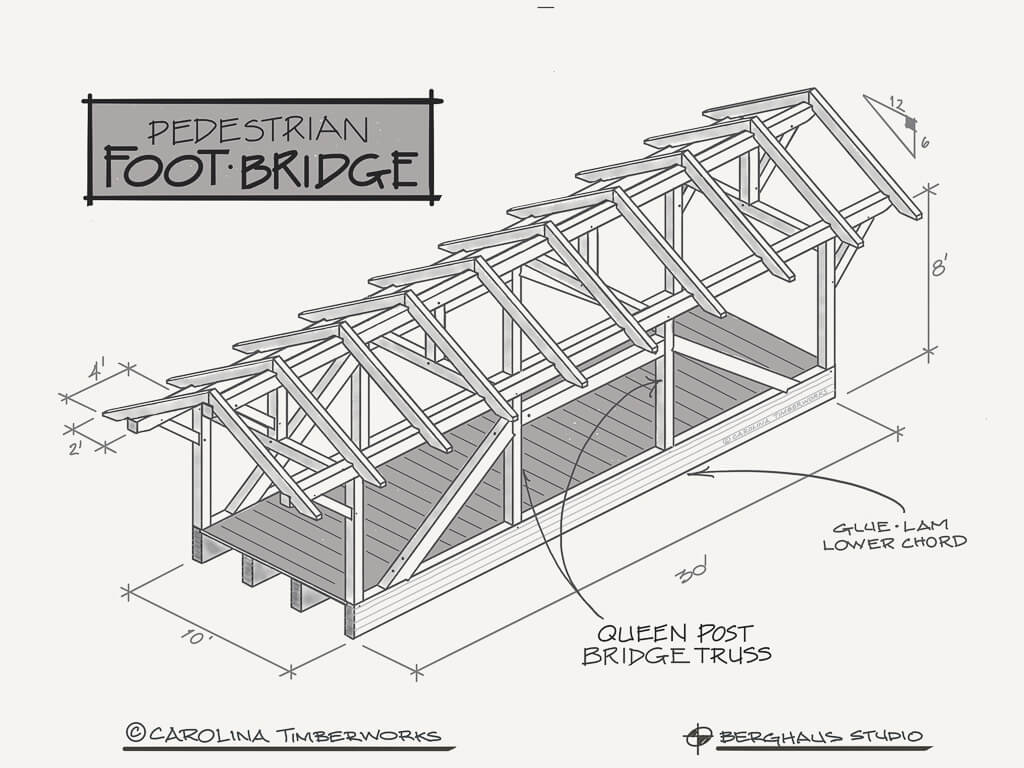
wood bridge
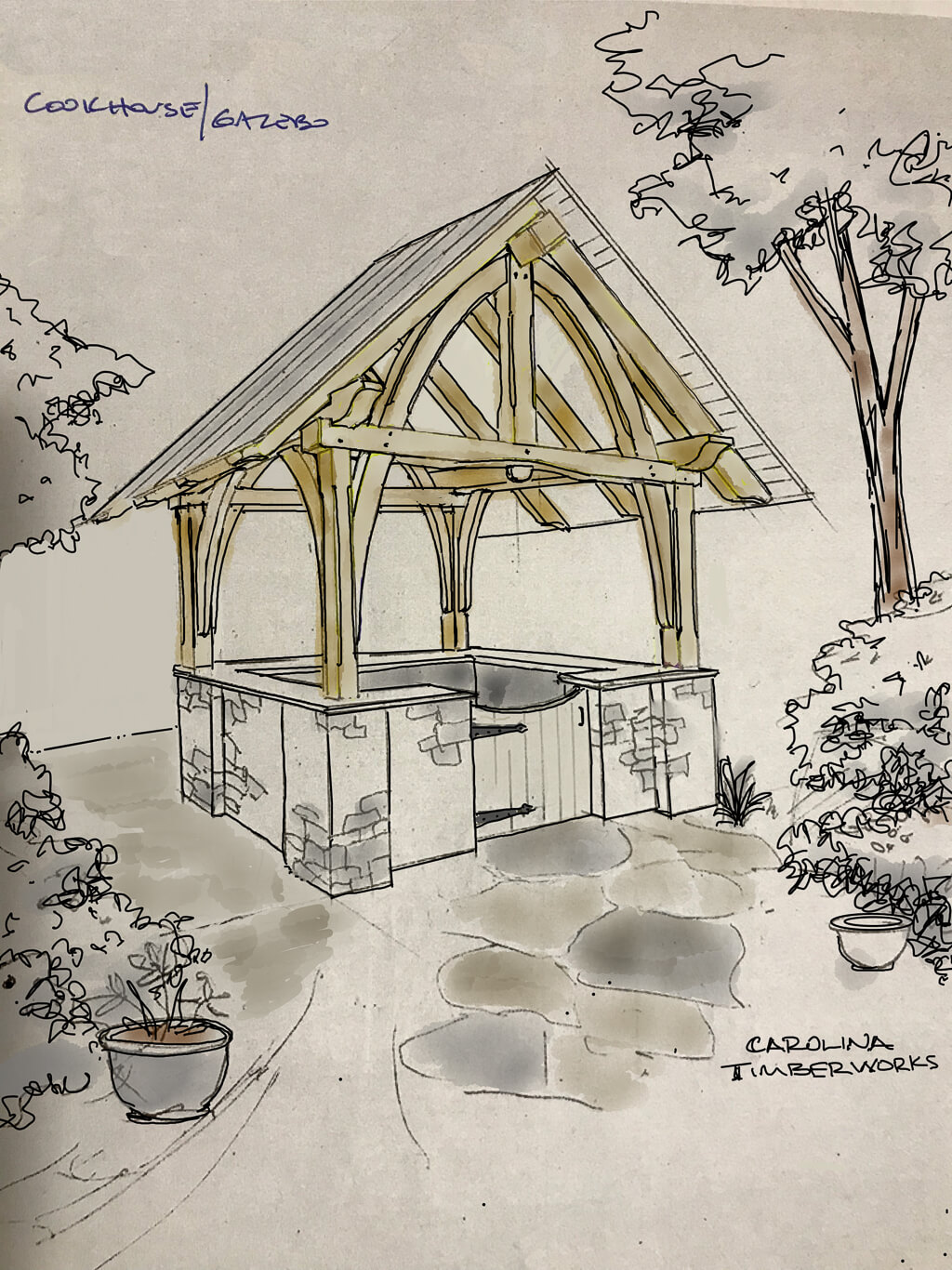
post and beam outdoor kitchen
Timber Frame Barn
Timber Frame Backyard Shed
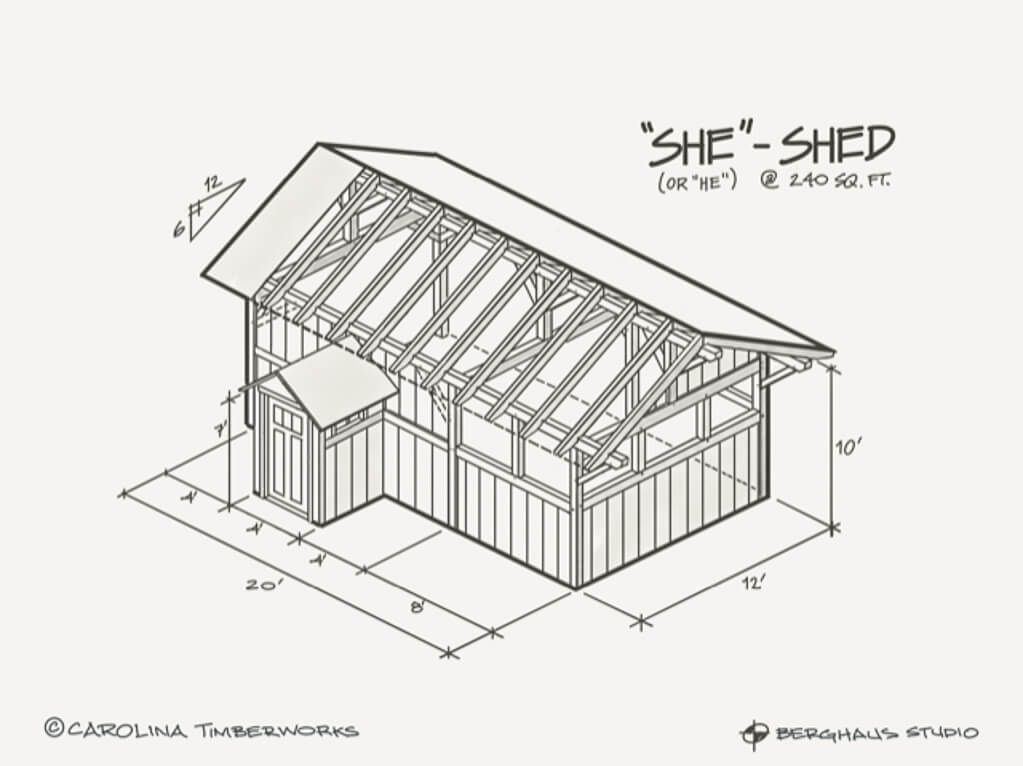
Post and Beam She Shed
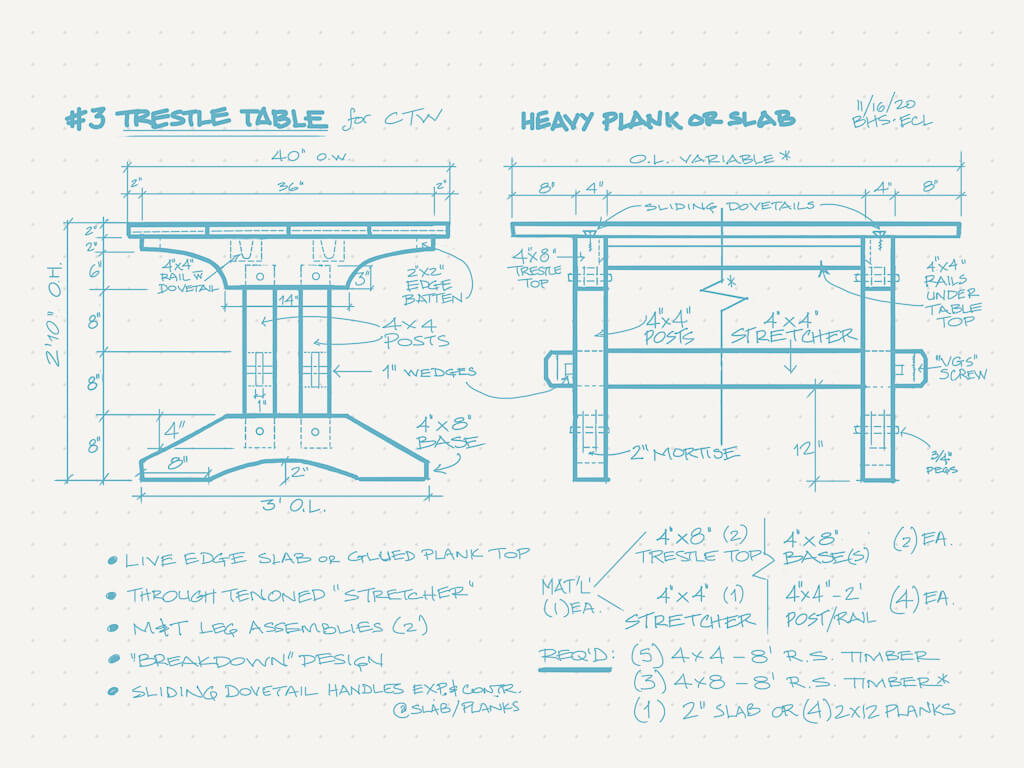
Timber Trestle Table
wood wall art
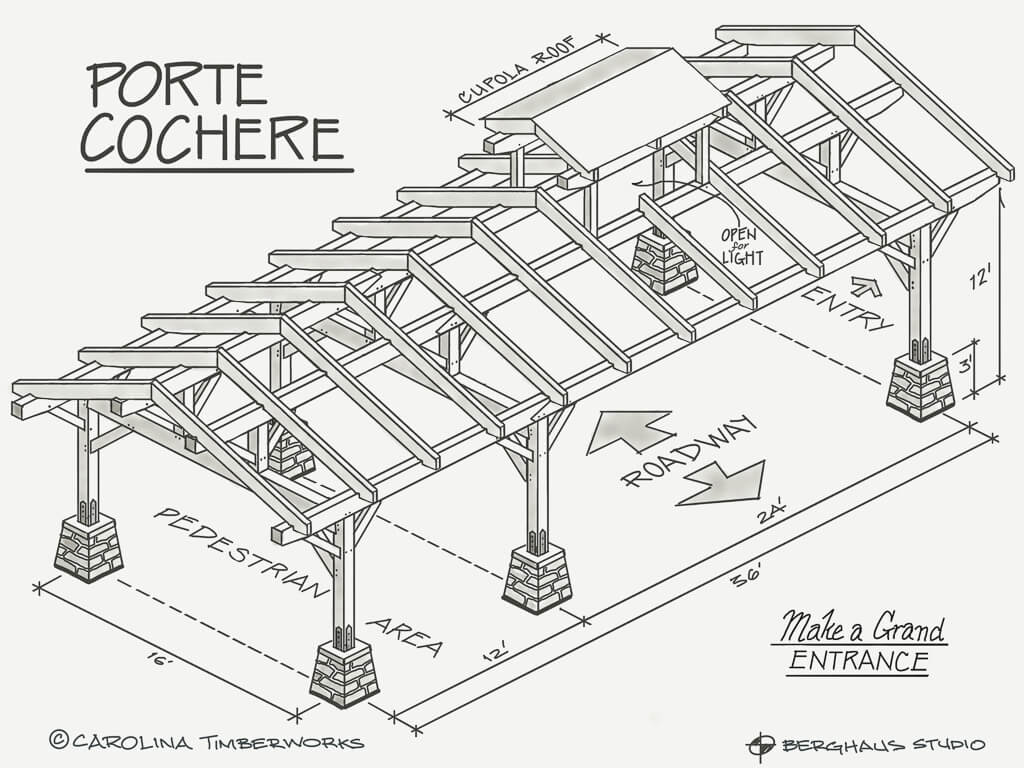
Timber Frame Porte Cochere
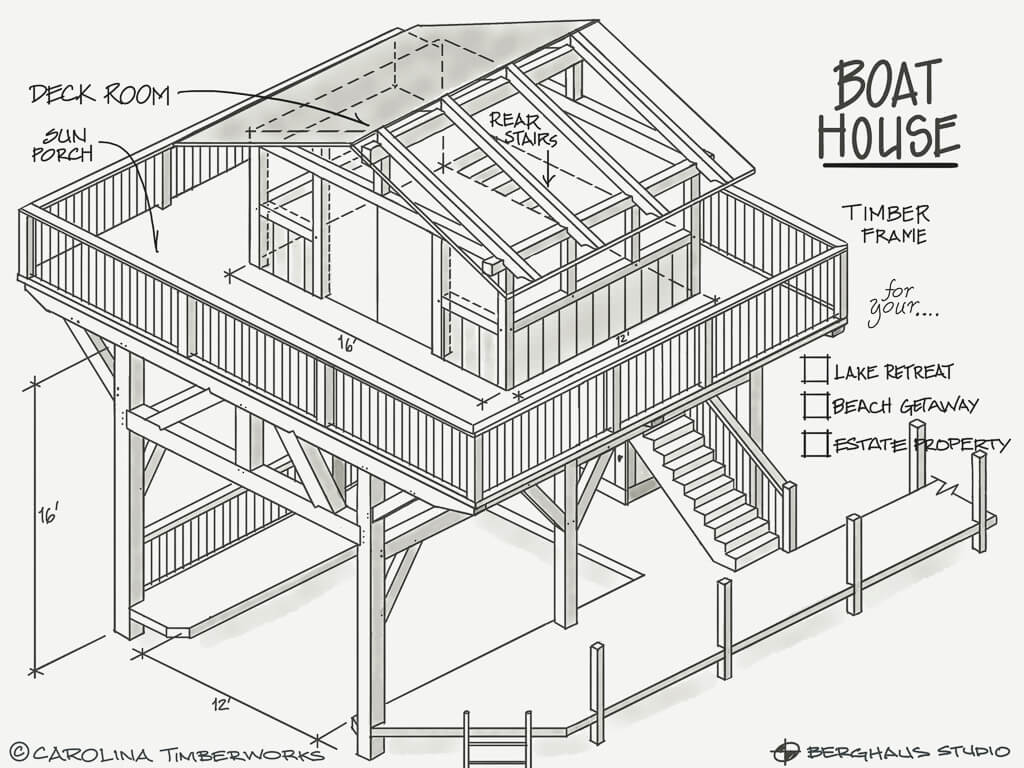
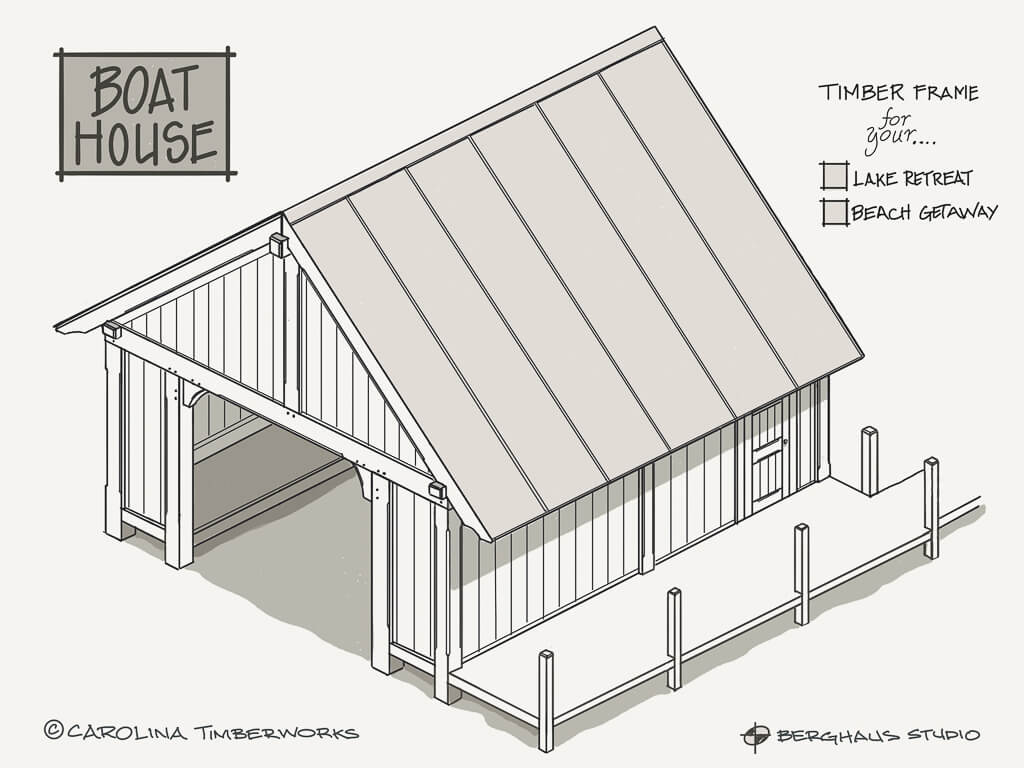
Timber Frame Boat House
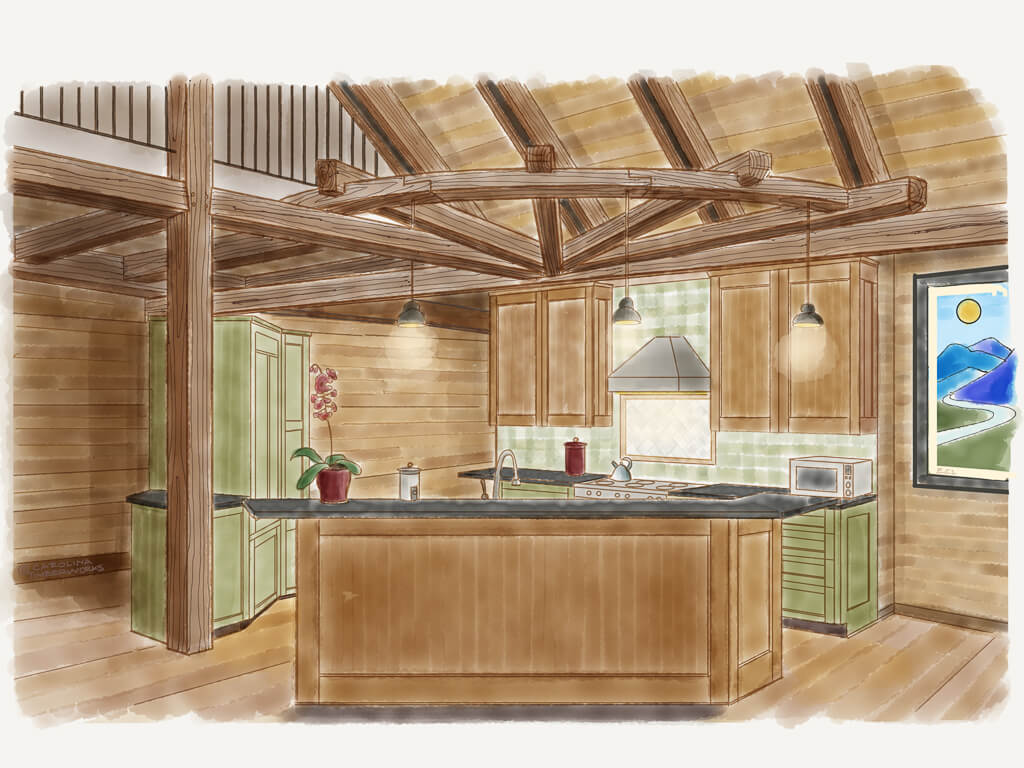
Timber Frame Kitchen Island
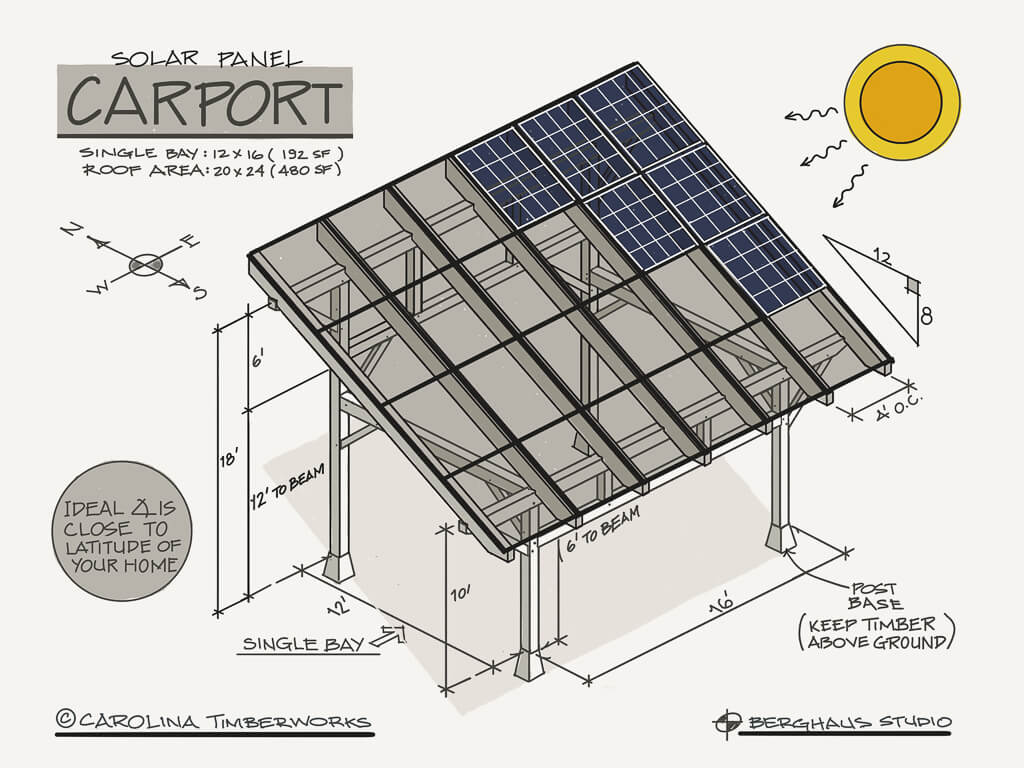
Timber Frame Solar Panel Carport
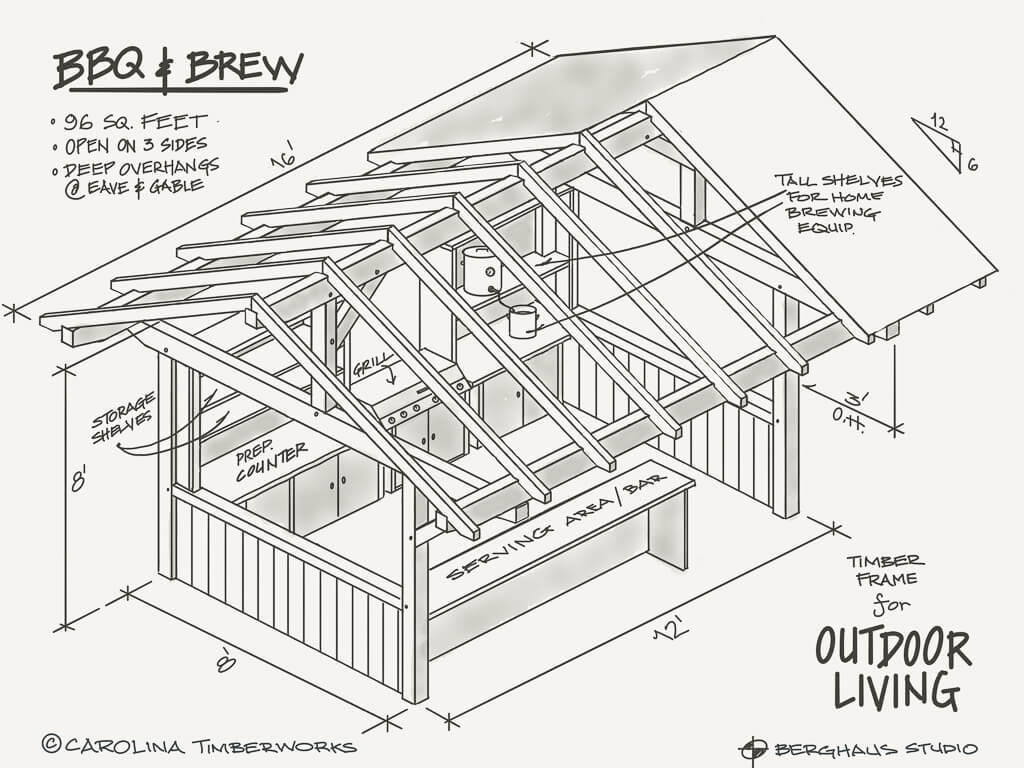
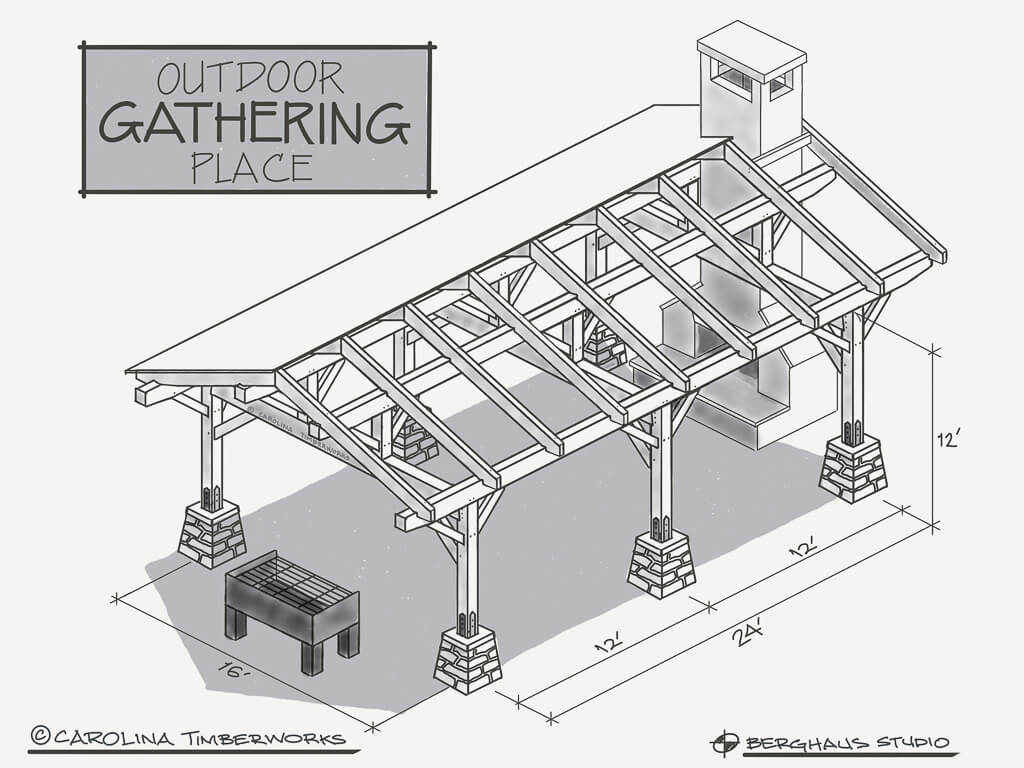
Timber frame outdoor living
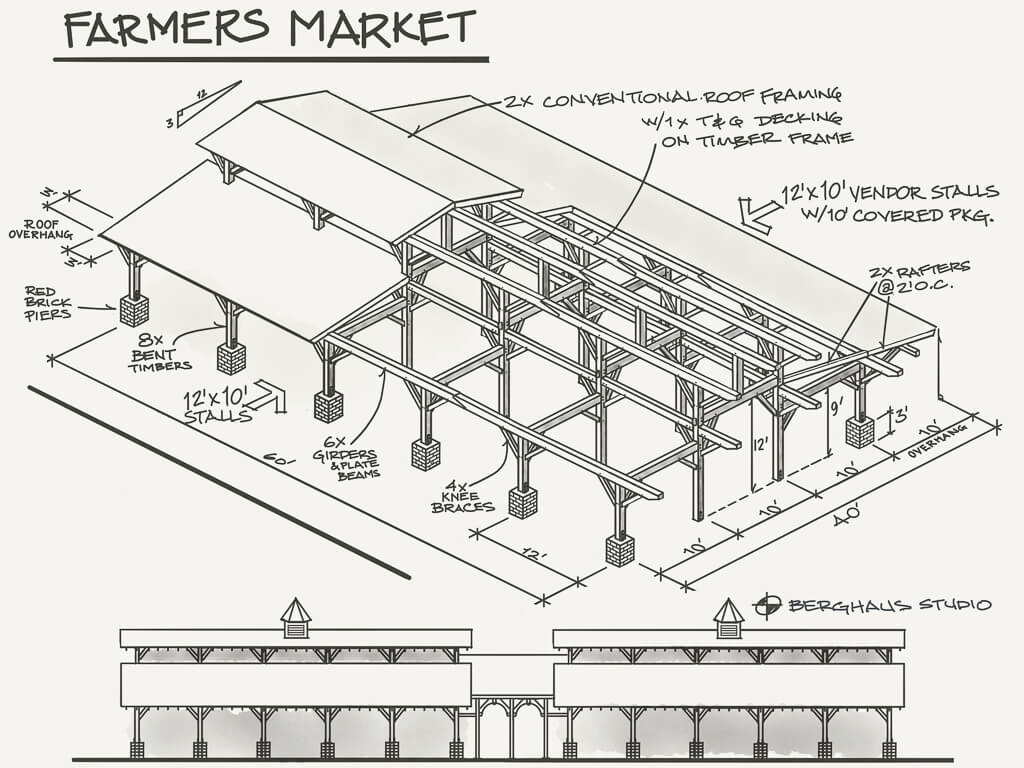
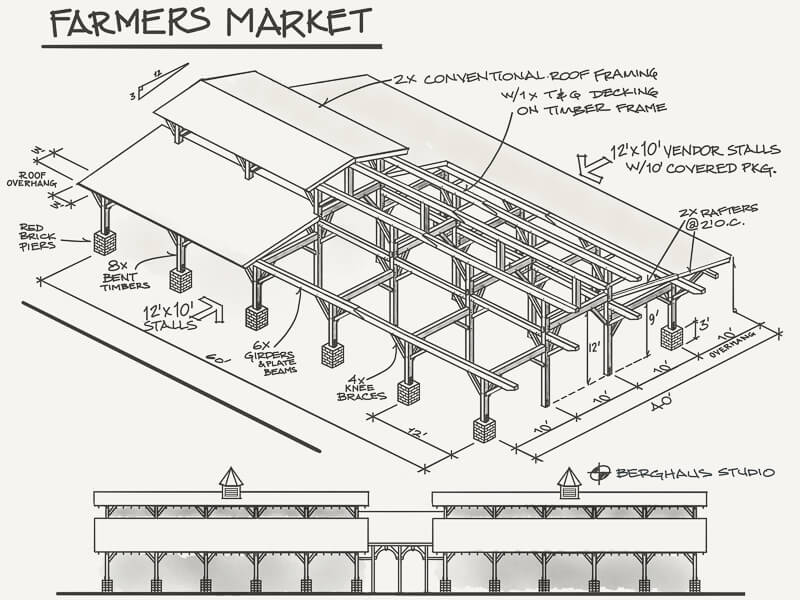
Timber Frame Post and Beam Farmers Market
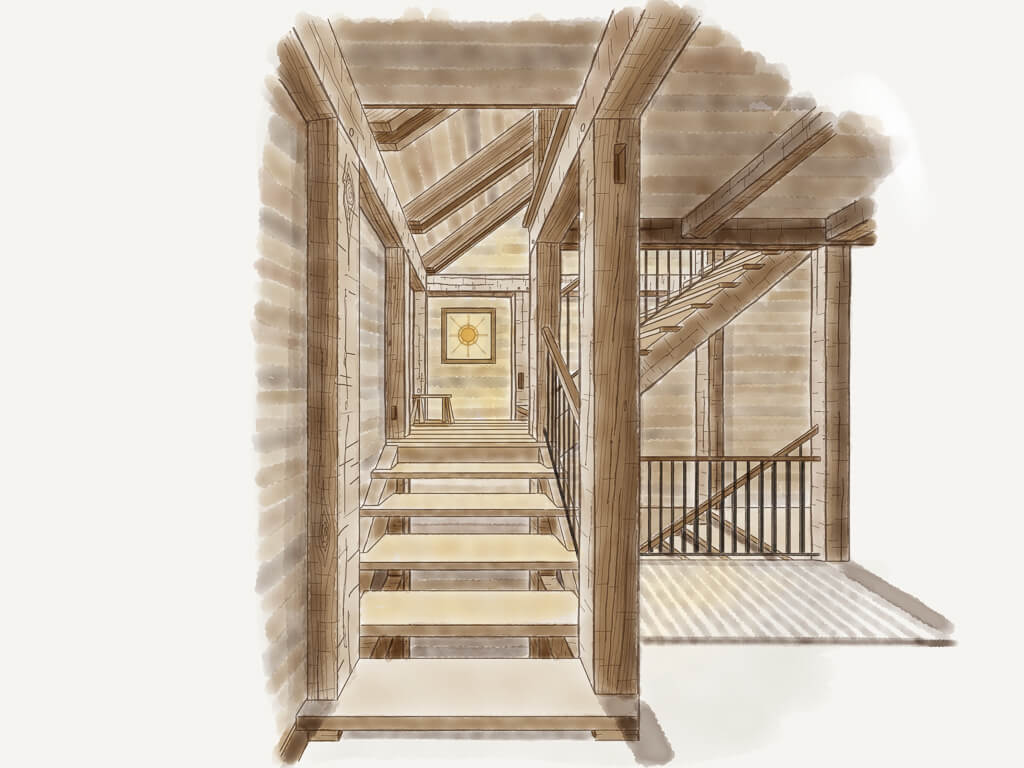
Timber Stairway
Timber Frame Covered Walkway Breezeway
Post and Beam Covered Shelter
Timber Frame Tower House
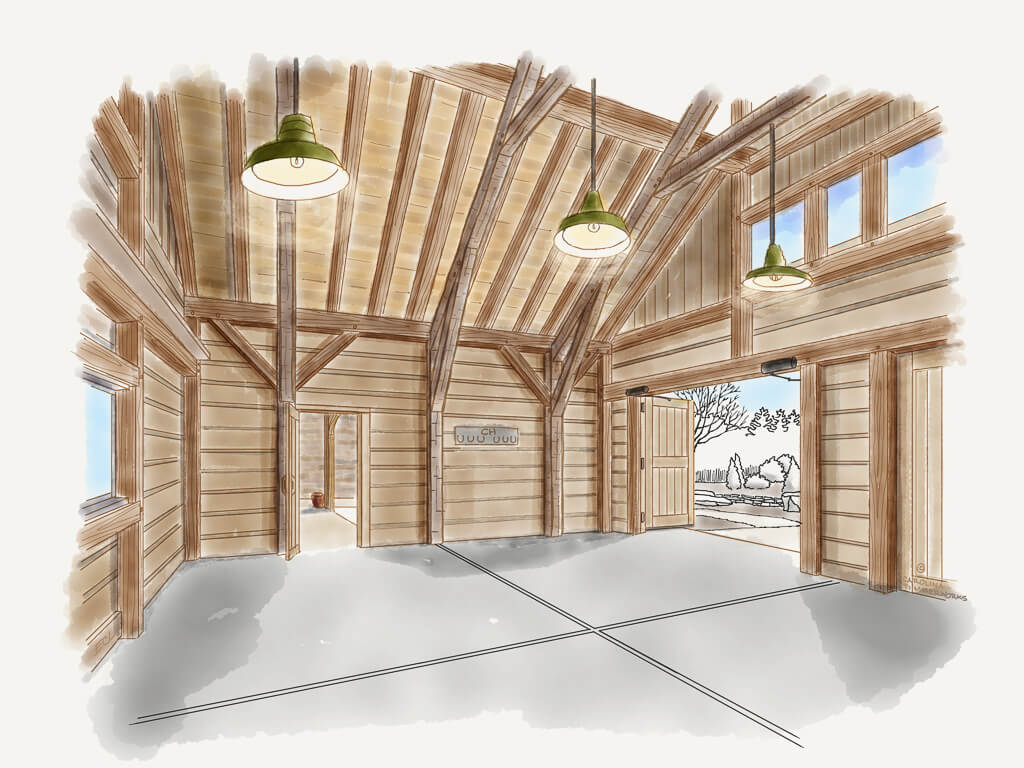
Timber Frame Car Barn
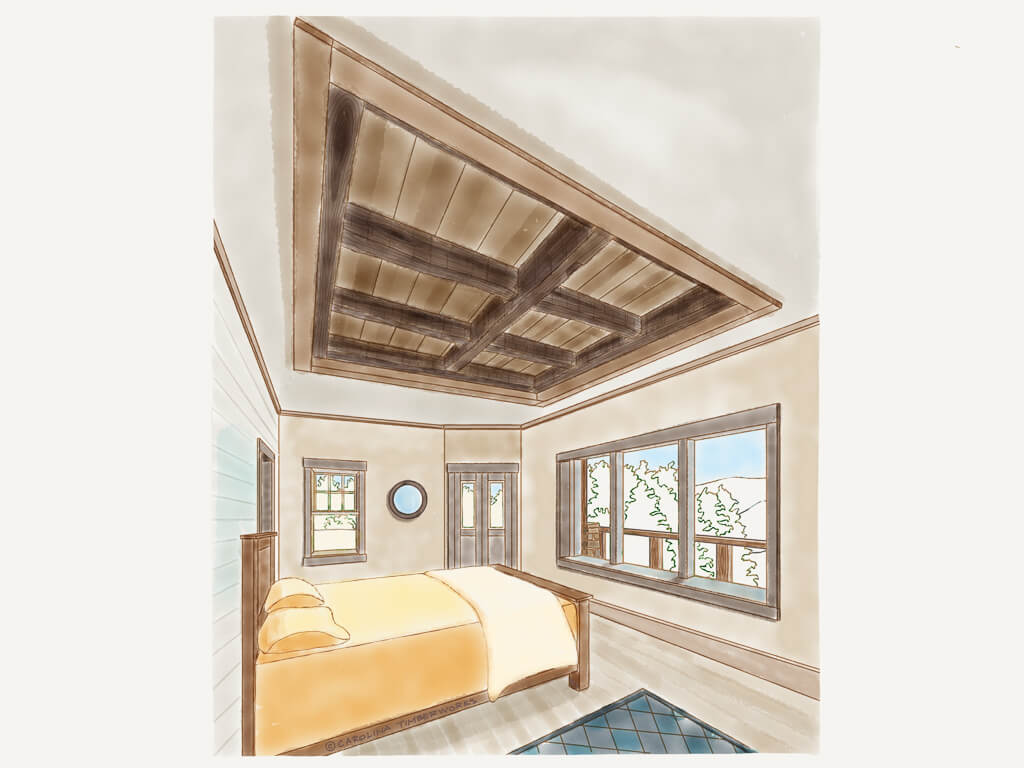
Beams in Bedroom
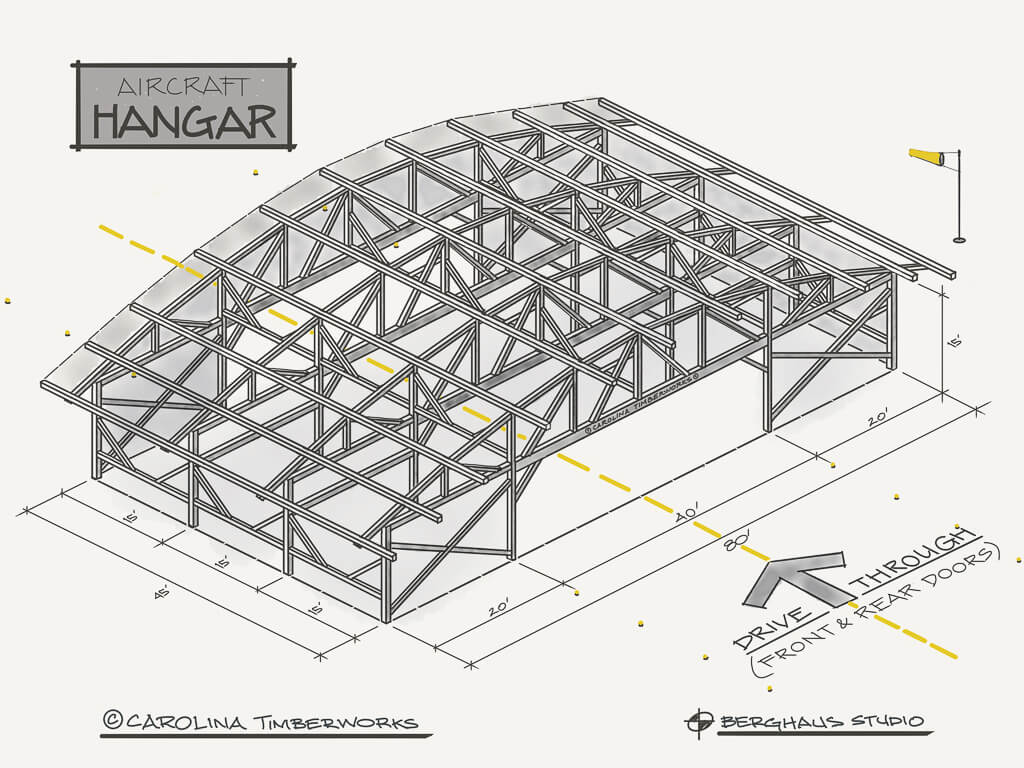
Timberframe Aircraft Hangar
Post and Beam Boathouse
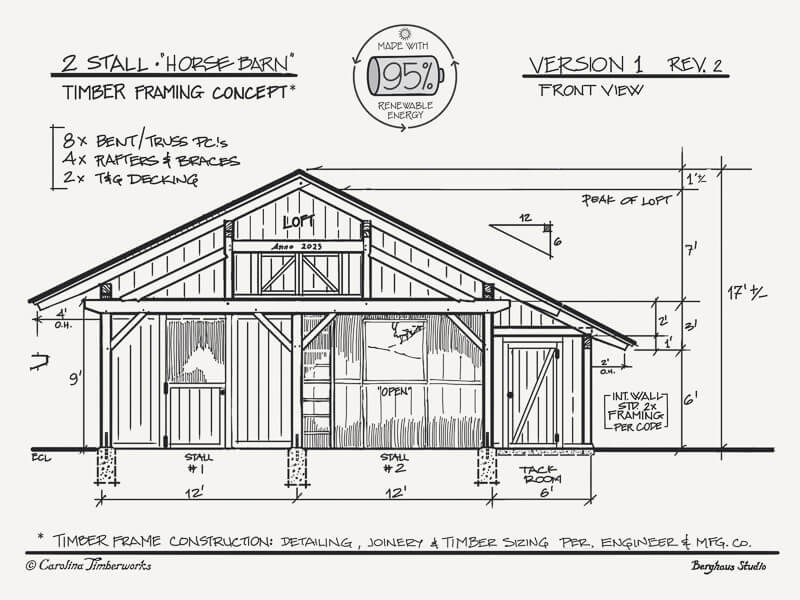
small horse barn design
post and beam farmers market design
dressing up a house's curb appeal with timber
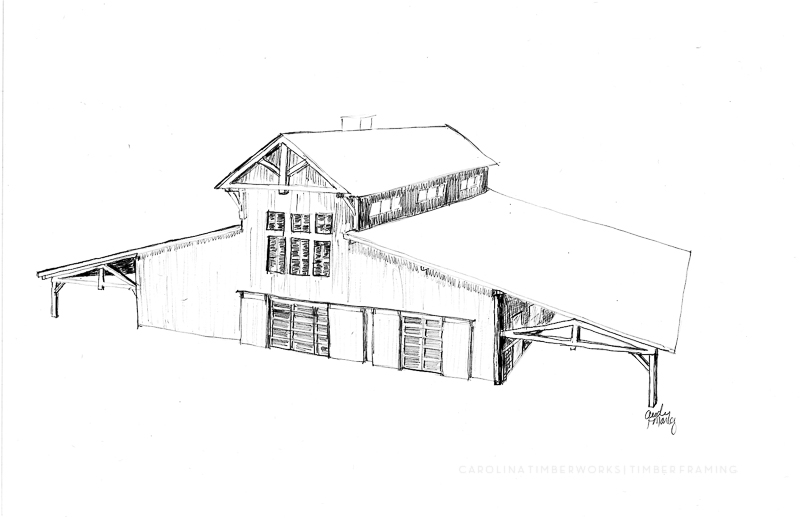
Timber Frame Monitor Barn
75′ x 80′ Monitor Barn with 25′ porches
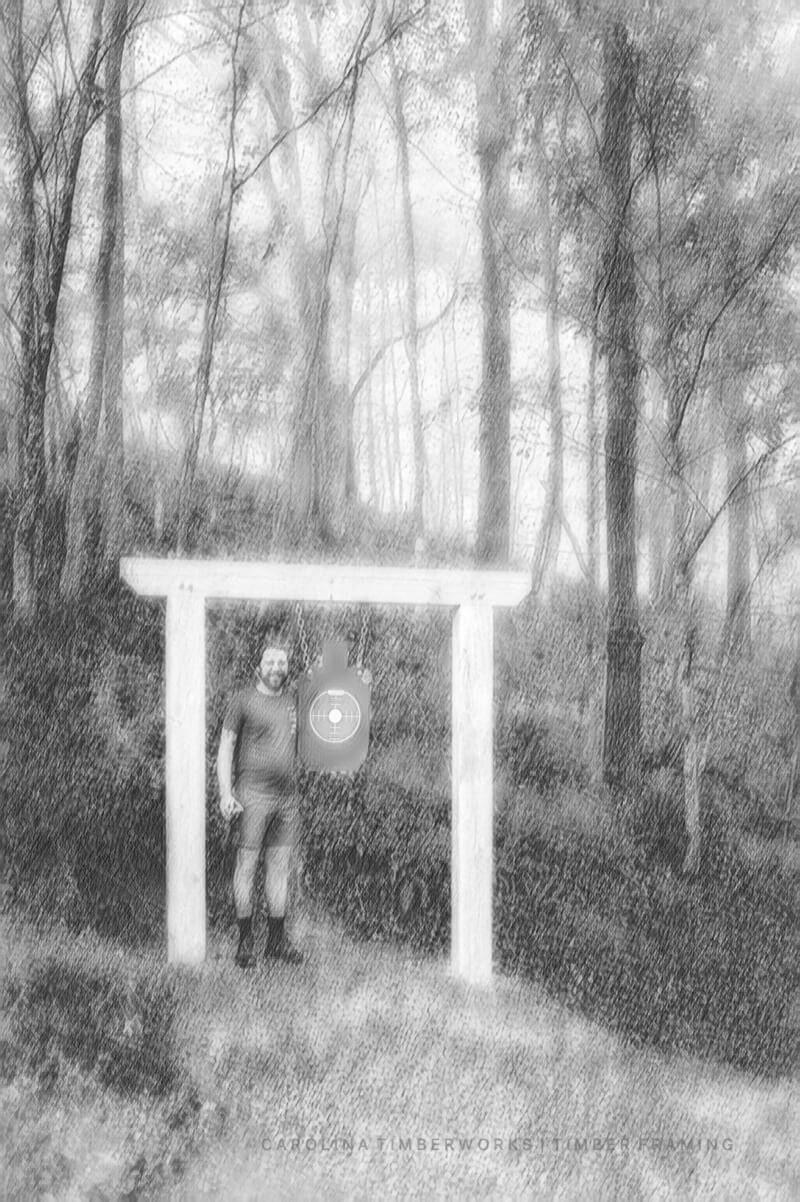
Timber Frame Shooting Range
timber frame design

All timber frame projects, images, renderings, and ideas contained on this page are the sole property of Carolina Timberworks and may not be used without permission in writing. Copyright Carolina Timberworks.

Binge-worthy timber framing viewing starts here

Filed Under: Blog, Timber Framing Basics

Timber Traditions: Our Industry Customs

Key Takeaway

Timber framing traditions often come to life on raising day, when the frame goes up and everyone pauses to celebrate. Crews sometimes place a small tree at the peak, carve initials or dates into hidden spots, set a coin under one of the posts, share a meal, and take a group photo before the tools get put away.

Timber framing has been around, in some form or another, for over 2,000 years. So it stands to reason, some interesting timber framing traditions and customs have sprung up in connection with timber frame construction. We thought we’d share some of the more interesting ones…

What Are Some Common Timber Frame Traditions?

Topping Out Ceremony and the Wetting Bush

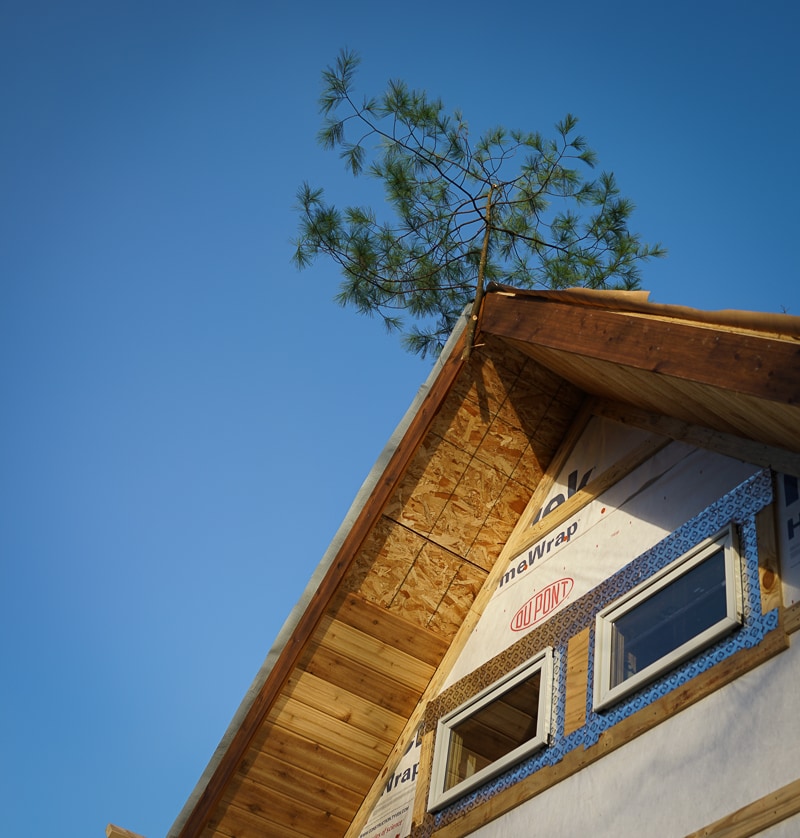
Timber framing traditions topping out ceremony

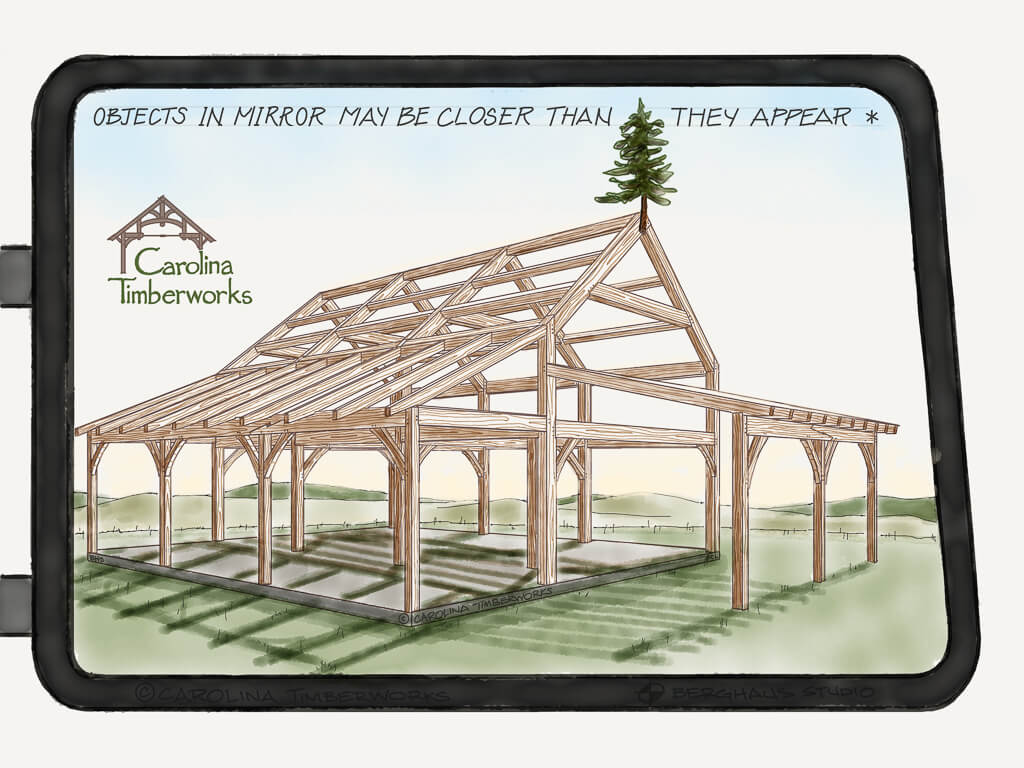
One of the more well-known timber traditions involves nailing a bough or small evergreen tree to the highest point of the timber frame.  According to Fine Homebuilding Magazine,

The ritual serves two purposes. One pays homage to all the trees that went into the construction of the house, and to the many hands that built it.  The other symbolizes the establishment of the house’s roots, which will nourish a long and prosperous life.  The young tree is called a “wetting bush”, likely derived from the German tradition of watering it as a sign of the home’s first nourishment.

So, who gets to set the wetting bush?  The youngest carpenter present.

The Barn Raising

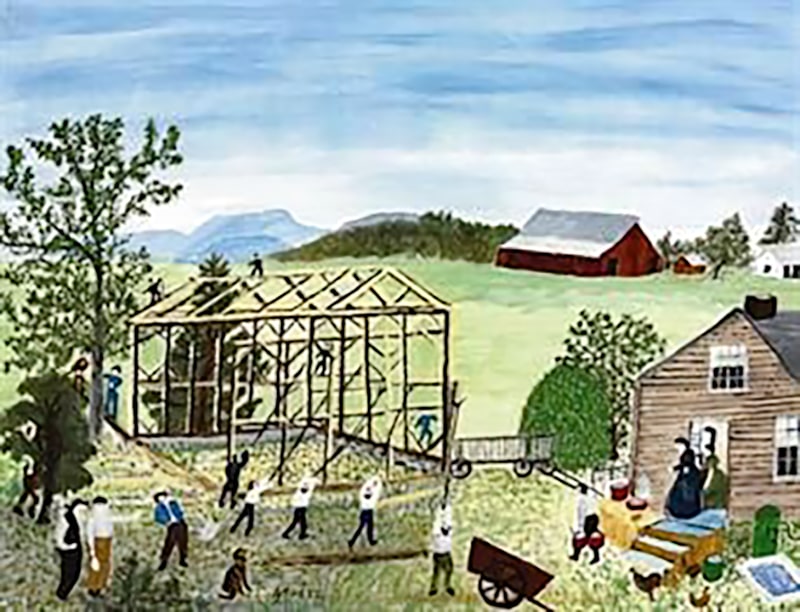
grandma moses barn raising

Of course, this might refer to a home, an outbuilding, or even a post and beam shed, but Barn Raising evokes an image familiar to most of us–a community coming together to accomplish something big.

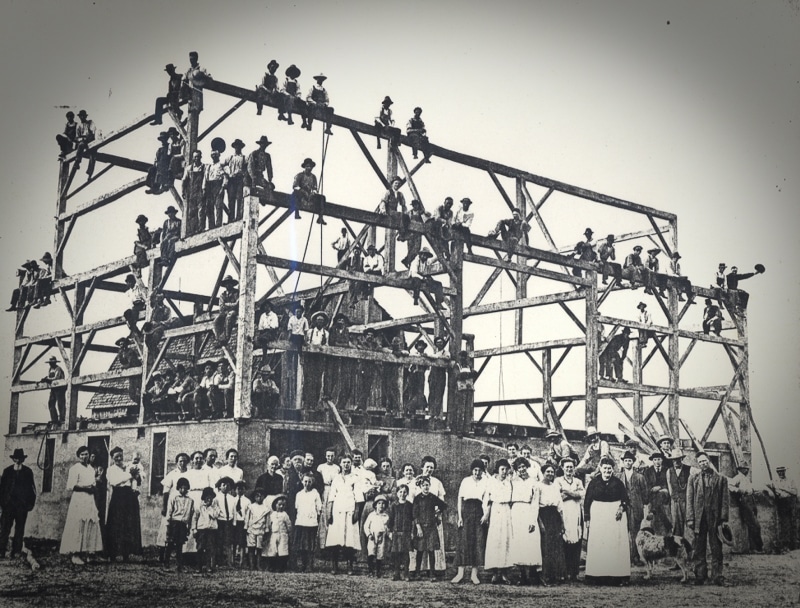
In the “olden days” the individual timbers for a house or barn would be cut and fitted by just a few men or a family. When all the individual walls were ready, the whole community would come together to raise the walls into position and set the rafters and ridge beam in place. This would be done using gin poles, ropes and pulleys, and of course, strong men. Although hard physical labor was required, “many hands make light work”, and the day ended with a celebration and party. The wives and children participated and a feast was held. There’s a real nostalgia in the thought of honest labor and participation in a feat that none of the individuals could have accomplished alone.
The Group Photo

timber frame barn raising

This doesn’t happen when the sheetrock goes up…but once the last timber is raised and pegged, the moment is documented with a photograph.  Why?  Perhaps because timber framers often feel that the timber frame will never be more beautiful than at that moment (before it is covered by walls and a roof), perhaps because all present sense that this structure will outlast every one in the picture.

Feeding the Framers

Whether it’s a tradition, or simply good manners, timber framers always appreciate a hearty meal! So they perpetuate the superstition that feeding the crew will bring the building (and Owners) good luck…

Slaking the Framers’ Thirst

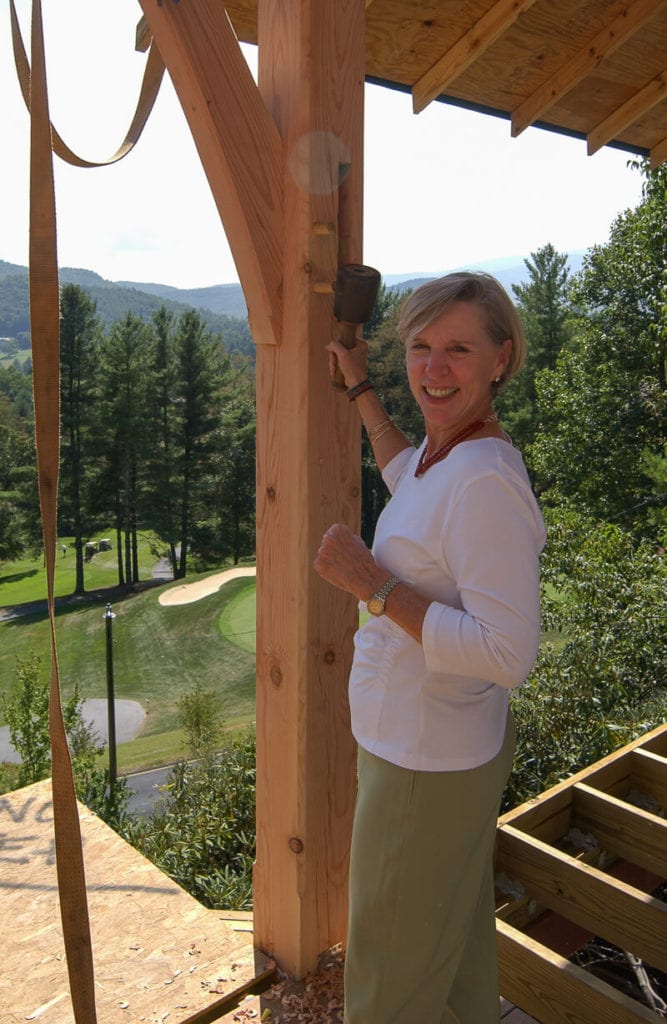
A French tradition, courtesy of Charpentiers Sans Frontières (Carpenters Without Borders), is to give the lady of the house the honor of pounding in the last peg.  She is expected to owe the crew one drink for every blow of the mallet required to drive the peg home.

Timber frame client pounding in peg

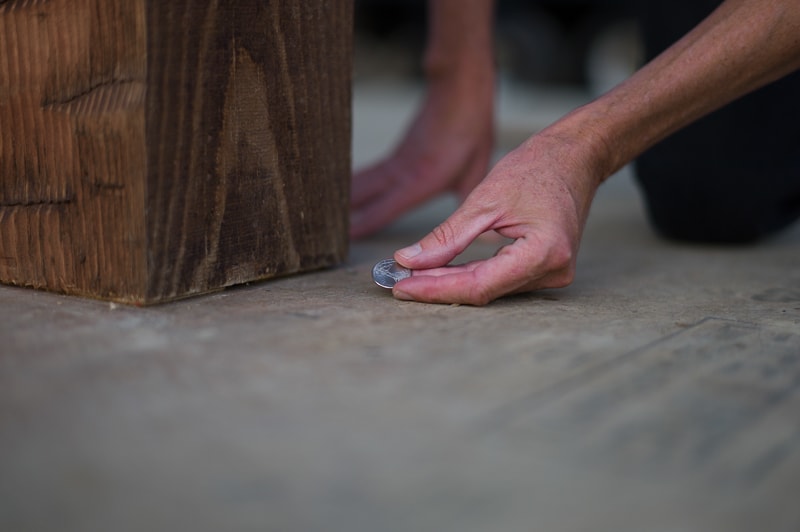
Using a Coin to Date the Building

placing a coin under a post

Think of this as a very abbreviated time capsule! A coin minted the same year as the structure is built is placed under a post, where it (presumably) will not be found until the building is dismantled (and hopefully the timber frame reclaimed).

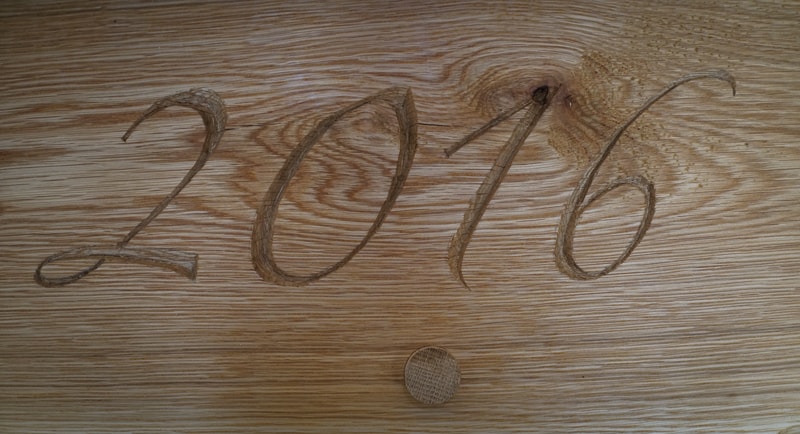
Carving the Date

carving the date into a beam

The date of completion is carved into the frame. This may be done in a visible and conspicuous place, such as over a doorway, but it might also be done in a less obvious spot.  For example, some timber frame companies carve the date in the location on the frame closest to where the home shop is located. In our case, the date would be carved on the side of the building closest to West Jefferson, North Carolina.

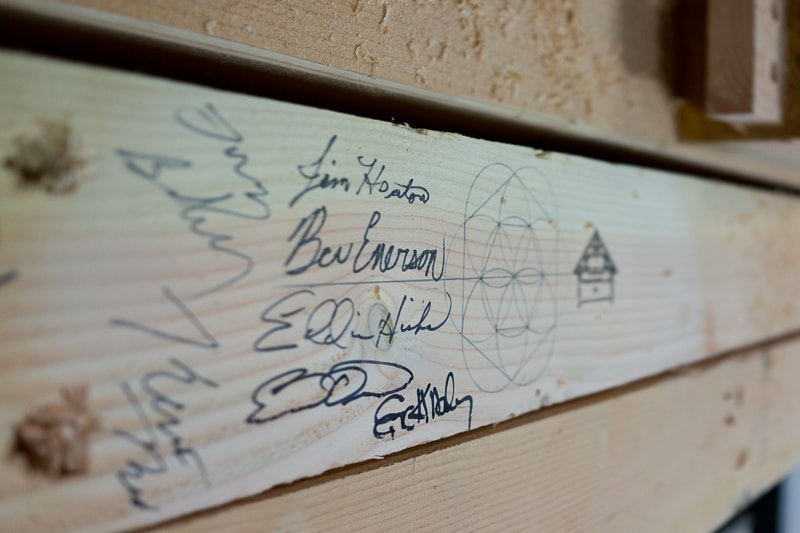
Signing the Frame

craftsmen signing work

All the timber frame craftsmen (and craftswomen) who worked on the frame sign one of the timbers in a hidden place where it may lie undiscovered for a century or more.

Topping Out in Space

topping out ceremony

One of our clients worked for NASA and sent a photograph of Mission Specialist Joe Tanner topping out the International Space Station.  The evergreen tree represents the highest point (top of the P-6  integrated truss structure) of the ISS.
Learn More: Our Timber Frame Glossary

See timber framing like you’ve never seen it before

Filed Under: Blog, Timber Framing Basics Tagged With: Timber Frame 101, Timber Frame Construction

Why Do Timbers Split and Crack?

Key Takeaway

Timbers split as they dry because wood shrinks at different rates in different directions. These cracks, often called checks, show up on the surface or deeper inside. They change the look but rarely affect strength when the timbers are sized correctly.

Eric Morley on why timbers split and crack, how long it takes timber to dry, where to get dry timbers, and why gunshots in the night are nothing to be afraid of when you understand wood checking and splitting.

Wood checking and splitting, a natural phenomenon in timber, occurs as the wood dries and loses moisture. This process leads to split wood and cracked wood, known as “checks.” While they do alter the appearance of the timber, checks also add unique character without affecting the wood’s structural integrity.

What Causes Wood to Crack?

Drying Does!

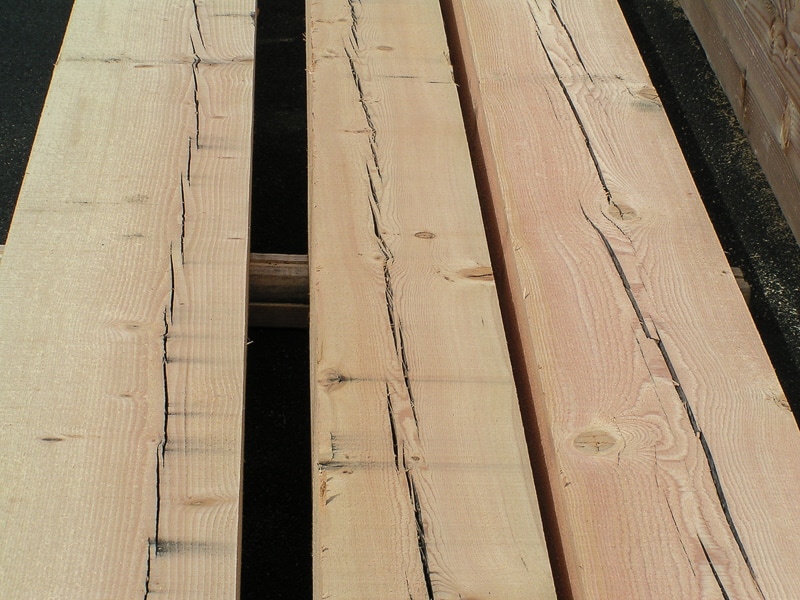
Splits and cracks (known as wood checks in the industry) occur when wood shrinks as it dries. Wood shrinks roughly twice as much along with the growth rings (radially) as it does across the rings (tangentially). It is this uneven shrinkage that causes checks to develop.

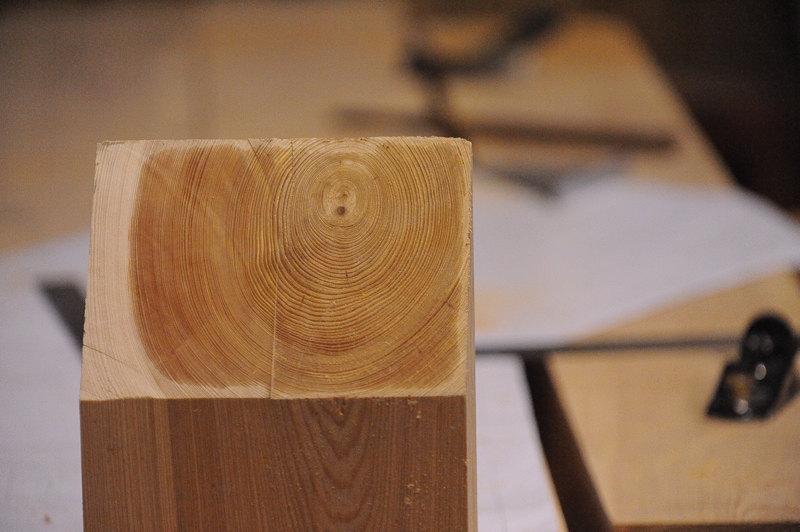
Douglas Fir Timber Checks cracks splits

Is Wood Checking Bad?

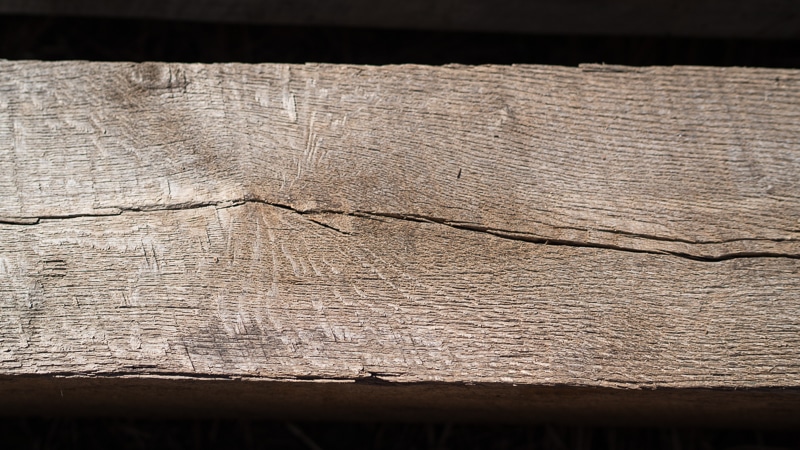
Here at Carolina Timberworks, we think of them as wrinkles in a cotton shirt. It proves the timber is real. Checks are what make a solid timber look different from a boxed beam. Look at the reclaimed timber below. It is impossible to predict where a check will appear in timber. It is the check that gives this reclaimed white oak timber so much of its character and a big part of what makes it completely unique and different from any other beam in the world.

Timber cracks (checks) in Reclaimed Wood Timber

Ever Heard the Song of the Wood?

Have you ever taken a hot loaf of artisan bread out of the oven, and put your ear to it? If you do, you’ll hear the song of the bread–pops and crackles as the crust shrinks, cracks, and dries.

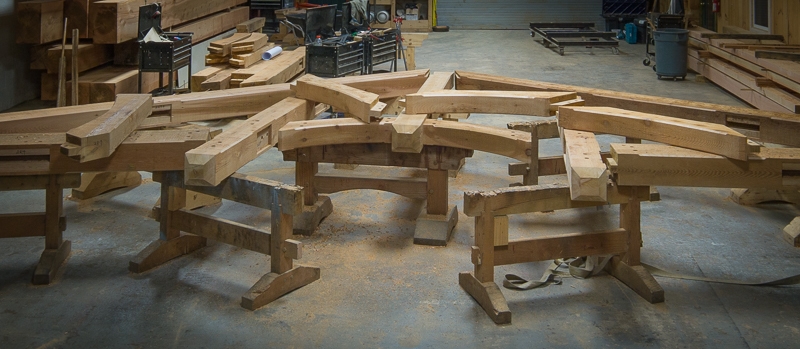
Walk into a timber framer’s shop one winter evening when everyone has gone home for the day. Throw another log into the woodstove, and listen carefully. If there are green (wet) timbers arrayed on sawhorses, within a few minutes, you’re likely to hear the song of the wood – a symphony of pops and cracks as wood checking occurs.

If one night, asleep in your new home, you’re awoken by a loud crack a little like a gunshot. Don’t worry.  Roll over and go back to sleep. It’s just your timbers singing to you. That’s wood checking in action.

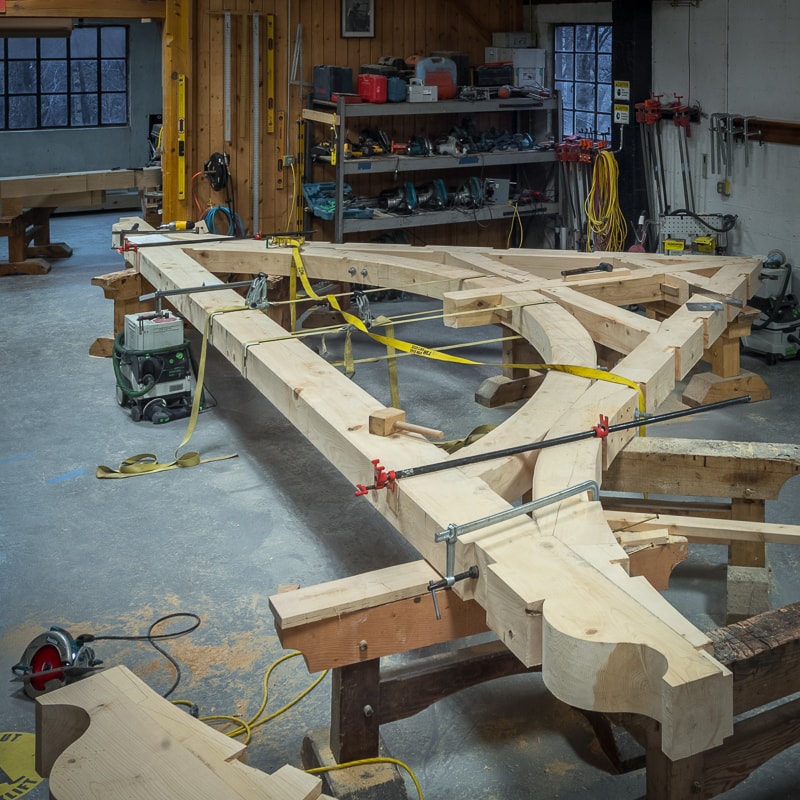
cedar hammer beam truss on sawhorses

Why Does Wood Shrink?

It sometimes surprises people to learn that roughly half of a living tree’s weight is water. Let’s consider a 24’ long Douglas Fir log that measures 34” diameter at the large end and 14” at the small end as an example. This hypothetical green (wet) log would contain a little over 1 ton of water or about five 55-gallon drums of water.

Sometimes when we drive a chisel into green (wet) timber, water spurts out of the wood. Wood is hygroscopic – meaning it’s like a sponge in that it can absorb, hold and release water. When freshly cut, approximately half of a tree’s weight is water. The photograph below shows water in a freshly cut cypress timber–and how the timber is drying from the outside in.

Water in Cypress Beam

How Long Does It Take a Timber to Dry?

It’s not exactly a fast process. It depends on the humidity of the environment in which the timber is located, but a rule of thumb is that timber air dries about one inch per year.  Thus a 12” x 12” timber would take about six years to dry to the center.

How Dry Will the Timber Become?

A timber will eventually air dry to the Equilibrium Moisture Content (EMC) of its environment.  The EMC is the point at which wood is neither losing nor absorbing water.  A timber’s moisture content is determined by the atmospheric humidity of the timber’s environment.

That environment varies, of course.  Is the timber located inside, or outside?  What part of the country is it located in? What time of year is it? For example, in the dry mountain air of Denver, the outdoor EMC of wood exposed to the outdoor atmosphere in July is 9.4%, while New Orleans is 15.3% (Forest Products Laboratory:  Equilibrium Moisture Content of Wood in Outdoor Locations in the United States and Worldwide, August 1988).

How Wet (or Dry) Are My Timbers?

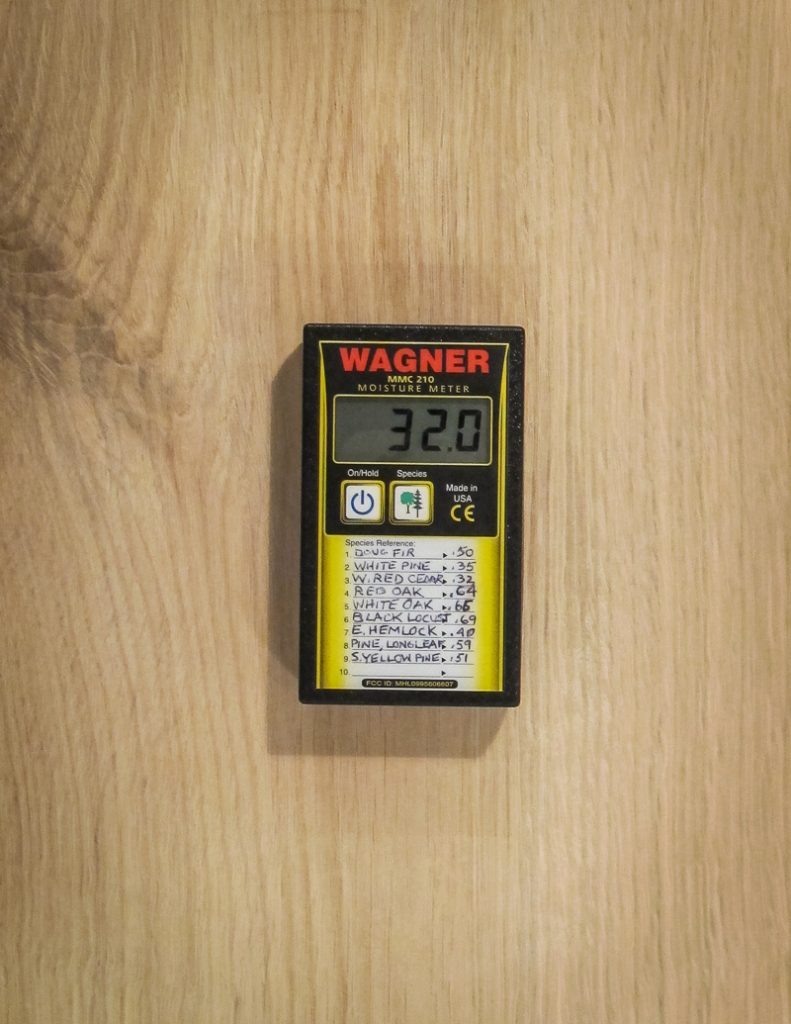
Since we can’t see the water in the wood, moisture meters are used to measure moisture content. Inexpensive moisture meters measure the surface moisture content which works ok for 3/4” boards, but not 8” thick timbers. Professional moisture meters use electromagnetic scanning to read the moisture in the wood, not on the surface of the beam.

wagner moisture meter measuring oak timber

What is the Average Moisture Content in the U.S.?

The majority of the U.S. has an 8% average moisture content, the Southeast and California coastal areas have an 11% average moisture content, and the Southwest desert areas are closer to 6%.

Most Timber Frames Are Built From Green (Wet) Wood

It is impractical (it takes years) to air dry timber, and timber frame customers are nothing if not impatient, so for the last two thousand years, people have been building timber frames from green (wet) timber. Yes, green timber will shrink, check, and sometimes twist as it dries, but timber framers and engineers understand and account for the movement. Checks begin on the exterior surface of the timber and almost always stop at the heart (center) of the timber, and are almost never a structural concern.

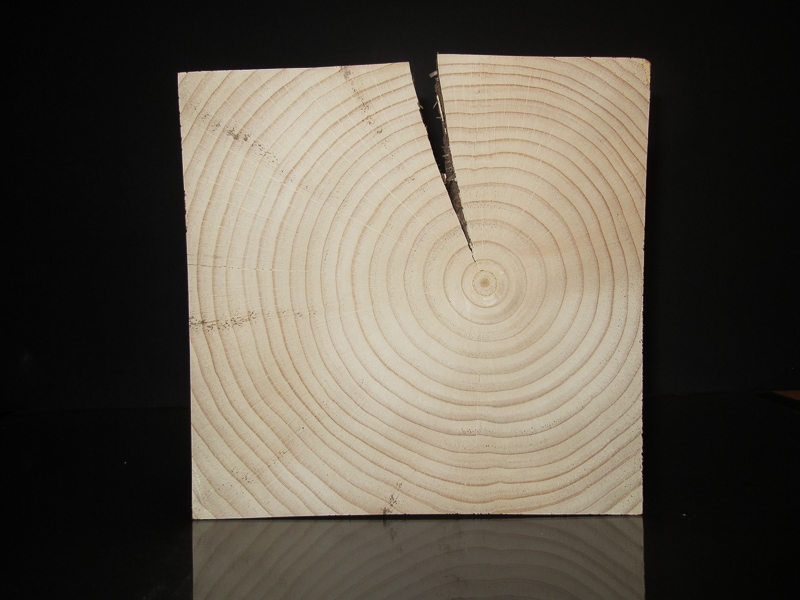
By the way, if a crack were to develop all the way through a timber (splitting timber it into two separate pieces), it would be called a split and might be cause for concern.

Learn more about timber framing all the ways timber can be used here.

white pine timber with split or woodchecking

How Much Does Green (Wet) Timber Shrink as It Dries?

Shrinkage depends on the species, but more than you may think!

Since many timber frames are built from Douglas Fir, let’s start by looking at a 12×12 Douglas Fir (Coastal) timber. This particular green (wet) Douglas Fir timber, dried to a final moisture content of 8%, would be expected to shrink a little less than 9/16” on each face from 12” x 12” to a final size of 11-7/16” x 11-7/16”.

Western Red Cedar shrinks less:  The same size timber in Western Red Cedar timber would shrink a bit less about 5/16” to 11-11/16” x 11-11/16”. Finally, how about a species with a high shrinkage rate, like White Oak? It would be expected to shrink a bit less than 3/4” to slightly larger than 11-1/4” x 11-1/4”.

6 Ways to Minimize Problems with a Green (Wet) Wood in a Timber Frame:

  1. Specify Free-Of-Heart-Center (when available) instead of the lower Boxed Heart grade.
  2. Apply a wax-based end sealer to the end grain to slow the drying process. We use Anchorseal, available at https://uccoatings.com/products/anchorseal/.
  3. Utilize housed joinery wherever possible.
  4. Drawbore pegged joints.
  5. The slower the wood cracking when drying, and the more gradual the process, the better (i.e., the worst thing you can do is enclose the timber frame and immediately turn on the heat or air conditioning full blast.)
  6. Do not apply a film-forming finish (i.e., polyurethane) to green (unseasoned) wood. 
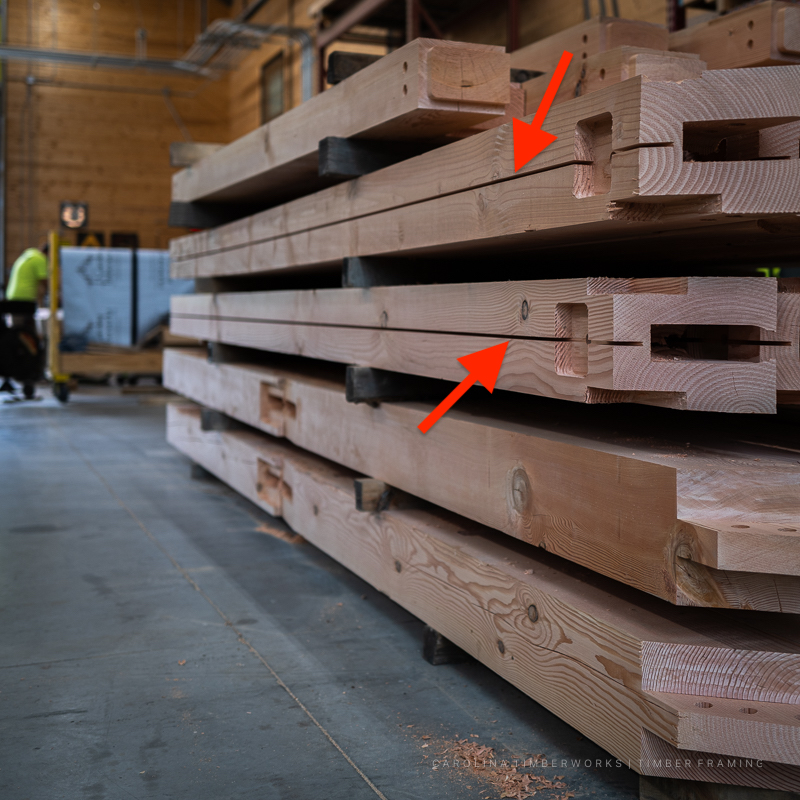
  7. Sawing checking kerfs on an unseen timber face is a good practice and can help mitigate the visual checking. 

I Don’t Want Wood Checking or Cracks in My Timbers. What Are My Options?

Don’t build with solid timber. Instead, ask us to price glulam beams for the timber frame, or to fabricate box beams from kiln-dried new or well-dried reclaimed lumber.

If you’re ok with some checks, but would prefer to avoid some of the characteristics of green lumber, consider purchasing your timber like you do your high-quality organic cotton t-shirts–pre-shrunk. There are two ways to buy dry beams: new timber that’s been dried in a kiln, or reclaimed wood that’s dried slowly and naturally for 50 or 100 years during its previous life as a timber frame barn or warehouse.

Where to Buy Kiln Dried Timbers?

We offer two types of kiln-dried timber:  Conventionally kiln-dried (KD), and Radio Frequency Kiln Dried (RFKD).  Conventional kiln drying dries about the outer 1” or so leaving most of the timber wet. The other method, RFKD, is similar to a giant microwave and dries timber to the core.

What you need to know about RFKD timber is that it currently works only on Douglas Fir, it is dry to the core, and it is more expensive. It is, however, not as dry as conventionally kiln-dried hardwood flooring or lumber (6-8% moisture content). For example the driest grade of RFKD timber measures 15% or less moisture content 3” in from the surface of the timber.

What About Using Reclaimed Wood in Timber Frame Construction?

Reclaimed wood beams that have naturally air-dried for 50-100 years during their previous life as a barn, factory, or warehouse are often completely dry to the core and the driest timbers available anywhere. It’s not easy to hand-scribe and connects irregular, twisted, and non-square reclaimed beams so the finished timber frame appears to have always been one frame.

We think a timber frame built from reclaimed wood is everything that today’s sleek, mass-produced, technology-saturated culture isn’t. It celebrates the cracks and character and dirt and all the other marks that time, weather, and use leave behind.

Reclaimed Wood timber frame great room highlands nc

Interested in learning more about timber framing? Check out our timber frame blog.

Curious how timber frames come together? Watch and learn

Filed Under: Blog, FAQs, Timber Framing Basics Tagged With: Design, Engineering, Timber Frame 101, Timber Frame Construction

  • « Go to Previous Page
  • Page 1
  • Page 2
  • Page 3
  • Go to Next Page »

© 2026 Carolina Timberworks. 210 Industrial Park Way, West Jefferson, NC 28694 T: 1-828-266-9663


Our Privacy Policy